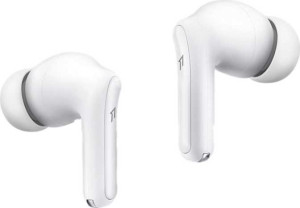
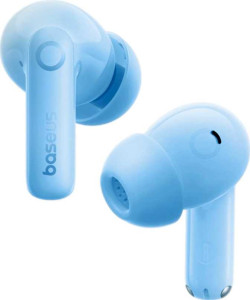
1More Q21
Baseus Bass BP1 Pro

1More Q21 Baseus Bass BP1 Pro

Overview

When choosing between the 1More Q21 and the Baseus Bass BP1 Pro, shoppers are faced with two capable true wireless earbuds that share a strong foundation yet diverge in meaningful ways. Both offer active noise cancellation, LDAC support, and fast charging, but key battlegrounds such as battery life, microphone setup, and connectivity generation make this a comparison worth exploring closely before committing to a purchase.

Common Features

  • Both the 1More Q21 and Baseus Bass BP1 Pro are in-ear earbuds.
  • Both products are water resistant.
  • Neither product uses wires or cables, as both are fully wireless.
  • Neither product is a neckband-style earbud.
  • Wingtips are not included with either product.
  • RGB lighting is not featured on either product.
  • Both products have stereo speakers.
  • UV light is not present on either product.
  • Both products support active noise cancellation (ANC).
  • Both products offer passive noise reduction.
  • The lowest frequency on both products is 20 Hz.
  • The highest frequency on both products is 20000 Hz.
  • Dolby Atmos support is not available on either product.
  • Dirac Virtuo support is not available on either product.
  • A neodymium magnet is not used in either product.
  • Both products have a charge time of 1.5 hours.
  • Wireless charging is not available on either product.
  • Neither product has a solar power battery.
  • Both products have a battery level indicator.
  • Both products have a rechargeable battery.
  • Fast pairing is not available on either product.
  • Both products include a USB Type-C connector.
  • Both products support LDAC.
  • LDHC is not supported on either product.
  • Bluetooth LE Audio is not supported on either product.
  • aptX Adaptive is not supported on either product.
  • aptX Low Latency is not supported on either product.
  • aptX HD is not supported on either product.
  • Both products feature an ambient sound mode.
  • In-ear or on-ear detection is not available on either product.
  • A find device feature is not available on either product.
  • Both products support fast charging.
  • Neither product can read notifications aloud.
  • A built-in translator is not featured on either product.
  • Both products have a mute function.
  • Both products can be used as a headset.
  • Both products have a noise-canceling microphone.

Main Differences

  • The Ingress Protection rating is IPX5 on the 1More Q21 and IP55 on the Baseus Bass BP1 Pro.
  • Spatial audio support is present on the Baseus Bass BP1 Pro but not available on the 1More Q21.
  • Battery life is 5.5 hours on the 1More Q21 and 12 hours on the Baseus Bass BP1 Pro.
  • Battery life of the charging case is 24.4 hours on the 1More Q21 and 43 hours on the Baseus Bass BP1 Pro.
  • Battery life with ANC enabled is 4 hours on the 1More Q21 and 7 hours on the Baseus Bass BP1 Pro.
  • The Bluetooth version is 5.4 on the 1More Q21 and 6 on the Baseus Bass BP1 Pro.
  • The number of microphones is 4 on the 1More Q21 and 6 on the Baseus Bass BP1 Pro.
Specs Comparison
1More Q21

1More Q21

Baseus Bass BP1 Pro

Baseus Bass BP1 Pro

Design:
Fit In-ear In-ear
Ingress Protection (IP) rating IPX5 IP55
water resistance Water resistant Water resistant
has no wires or cables
are neckband earbuds
wingtips included
has RGB lighting
has stereo speakers
has UV light
Has a display

Both the 1More Q21 and the Baseus Bass BP1 Pro share the same fundamental design profile: true wireless, in-ear earbuds with stereo playback and no neckband. Neither includes wingtips, RGB lighting, a UV light, or a display, making them straightforward, no-frills designs aimed at everyday practicality rather than style-forward features.

The only meaningful differentiator in this group is water resistance. Both are rated water resistant, but the ratings diverge: the Q21 carries an IPX5 certification, while the BP1 Pro steps up to IP55. The practical distinction matters: the ″X″ in IPX5 means the Q21 has no rated dust protection, whereas the first ″5″ in IP55 means the BP1 Pro is certified against dust ingress as well as the same level of water jets. For most gym or commute use cases this difference is minor, but for outdoor or dusty environments, the BP1 Pro's dual protection offers a tangible reliability advantage.

Overall, the two products are nearly identical in design, but the Baseus Bass BP1 Pro holds a clear, if narrow, edge thanks to its fuller IP55 rating, which adds dust resistance that the 1More Q21 simply lacks.

Sound quality:
has active noise cancellation (ANC)
has passive noise reduction
lowest frequency 20 Hz 20 Hz
highest frequency 20000 Hz 20000 Hz
supports spatial audio
has Dolby Atmos
has Dirac Virtuo
has a neodymium magnet

At the core, these two earbuds are closely matched on sound fundamentals. Both cover the full standard audible spectrum from 20 Hz to 20,000 Hz, and both feature active noise cancellation alongside passive noise reduction — a combination that layers physical sound blocking with electronic interference suppression for noticeably quieter listening in busy environments.

The single differentiator here is spatial audio support, which only the Baseus Bass BP1 Pro offers. Spatial audio processes sound to simulate a three-dimensional soundstage, making music, movies, and games feel more immersive and less like audio coming directly from inside your ears. It's a feature that adds genuine value for media consumption, even if its impact varies by content and source compatibility.

On sound quality specs, the Baseus Bass BP1 Pro takes a clear edge. The shared ANC and frequency range mean the baseline listening experience is comparable, but spatial audio support is a meaningful differentiator that the 1More Q21 simply cannot match.

Power:
Battery life 5.5 hours 12 hours
Battery life of charging case 24.4 hours 43 hours
Battery life (ANC) 4 hours 7 hours
charge time 1.5 hours 1.5 hours
has wireless charging
Has a solar power battery
has a battery level indicator
has a rechargeable battery

Battery life is where these two earbuds diverge most dramatically. The Baseus Bass BP1 Pro delivers 12 hours of playback per charge versus just 5.5 hours for the 1More Q21 — more than double the stamina. That gap is even more pronounced with ANC enabled: 7 hours for the BP1 Pro compared to 4 hours for the Q21, meaning heavy ANC users will reach for the case far more often with the Q21.

The charging case totals tell a similar story. The BP1 Pro's case extends overall listening to 43 hours, while the Q21's case caps out at 24.4 hours. For travelers or users who go multiple days between case charges, this is a meaningful real-world difference. On the positive side, both share an identical 1.5-hour charge time and neither offers wireless charging, so convenience features are evenly matched.

The Baseus Bass BP1 Pro wins this category decisively. Whether measured by earbud-only endurance or total case capacity, it substantially outlasts the 1More Q21 across every battery metric provided.

Connectivity:
has fast pairing
Has USB Type-C
Bluetooth version 5.4 6
has LDAC
has LDHC
has Bluetooth LE Audio
has aptX Adaptive
has aptX Low Latency
has aptX HD
has aptX
has aptX Lossless
has aptX Voice
has Auracast
maximum Bluetooth range 10 m 10 m
supports Bluetooth pairing using NFC
Can be used wirelessly
has AAC

Connectivity is largely a tie here, with one notable exception. Both earbuds support LDAC and AAC for high-quality wireless audio transmission, share an identical 10 m Bluetooth range, use USB-C charging, and lack fast pairing or NFC. The codec lineup is identical and reasonably strong — LDAC in particular is Sony's high-resolution wireless codec, capable of transmitting significantly more audio data than standard SBC, which benefits audiophiles pairing with compatible Android devices.

The key differentiator is the Bluetooth version. The Baseus Bass BP1 Pro runs Bluetooth 6, while the 1More Q21 uses Bluetooth 5.4. Bluetooth 6 introduces improvements in connection reliability and efficiency over 5.4, most notably through enhanced channel sounding for more precise device positioning and reduced power consumption during transmission — though real-world audible differences in day-to-day pairing are likely subtle for most users.

The Baseus Bass BP1 Pro holds a narrow edge here thanks to its newer Bluetooth 6 implementation, which offers a more future-proof connection standard. That said, given the identical codec support and range, the practical gap between these two in connectivity terms is modest.

Features:
release date March 2025 August 2025
has ambient sound mode
has in/on-ear detection
has find device feature
Supports fast charging
can read notifications
Has a built-in translator
has a mute function
can be used as a headset
control panel placed on a device
Has voice prompts
travel bag is included
Has an in-line control panel
Has a temperature sensor
Has a built-in camera remote control function

Across every feature listed, the 1More Q21 and the Baseus Bass BP1 Pro are a perfect match. Both support ambient sound mode, fast charging, a mute function, on-device controls, voice prompts, and headset use for calls — a well-rounded feature set that covers the essentials for commuters, remote workers, and casual listeners alike.

A few shared omissions are worth noting. Neither earbud includes in/on-ear detection, which means audio won't automatically pause when you remove them from your ears — a convenience feature increasingly common at this segment. Similarly, both lack a find-device feature, which can be a real inconvenience if you frequently misplace small earbuds. The inclusion of a travel bag on both, however, is a practical touch that adds everyday value.

This category is a complete tie. With no divergence across any of the 14 feature specs provided, neither product holds any advantage here. The decision between them on features comes down entirely to how much weight a buyer places on the differentiators found in other spec groups.

Microphone:
number of microphones 4 6
has a noise-canceling microphone

Both earbuds feature noise-canceling microphones, but the microphone arrays themselves differ in size. The 1More Q21 uses 4 microphones, while the Baseus Bass BP1 Pro steps up to 6 microphones. In practice, more microphones allow for more sophisticated beamforming — the process of isolating your voice while suppressing surrounding noise from multiple directions. This is particularly relevant during calls in windy or crowded environments, where additional pickup points give the algorithm more data to work with.

The Baseus Bass BP1 Pro holds the edge here. While both products apply noise cancellation to their mic input, the BP1 Pro's larger 6-microphone array provides a structural advantage for call clarity that the Q21's 4-mic setup cannot match on paper.

Comparison Summary & Verdict

After examining the full spec sheet, both earbuds prove to be well-rounded options for most listeners, but they serve different priorities. The 1More Q21 is a solid pick for those who value a compact, capable package with ANC and LDAC at a competitive level, though its 5.5-hour battery life and 4-microphone array are more modest. The Baseus Bass BP1 Pro, on the other hand, stands out with an impressive 12-hour playback time, a 43-hour charging case, spatial audio support, 6 microphones, a newer Bluetooth 6 chipset, and a more robust IP55 dust and water resistance rating, making it the stronger choice for power users and frequent travelers who need all-day stamina and call clarity.

1More Q21
Buy 1More Q21 if...

Buy the 1More Q21 if you want a reliable pair of ANC earbuds with LDAC support and do not need all-day battery life or spatial audio.

Baseus Bass BP1 Pro
Buy Baseus Bass BP1 Pro if...

Buy the Baseus Bass BP1 Pro if you prioritize significantly longer battery life, spatial audio, a higher microphone count, and a more advanced Bluetooth 6 connection.