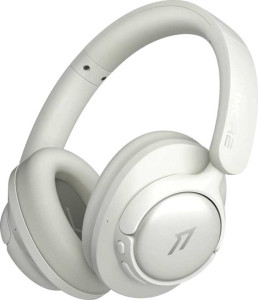
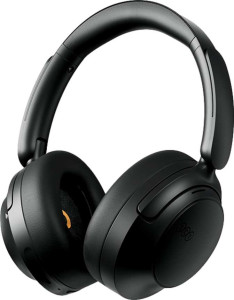
At the foundation, these two headphones are remarkably well-matched: identical 40 mm drivers, the same 20 Hz low-frequency floor, active noise cancellation, passive noise reduction, and spatial audio support across both. For most listeners, this common ground means neither has a structural disadvantage in terms of bass reach or driver size.
The single but notable differentiator is the upper frequency ceiling. The SonoFlow SE HQ31 extends to 40,000 Hz, twice the 20,000 Hz limit of the QCY H3S. In practice, human hearing typically tops out around 20,000 Hz, so the SonoFlow SE's extended range is not directly audible. However, a higher frequency ceiling is often associated with better-engineered drivers that handle the upper end of the audible spectrum with less distortion and roll-off — meaning the real benefit is likely felt as improved clarity and airiness in the 15,000–20,000 Hz range, not in perceiving ultrasonic content. It also signals compatibility with hi-res audio formats, which is relevant for users with lossless audio libraries.
On balance, the 1More SonoFlow SE HQ31 holds a narrow but meaningful edge in sound quality specs. The extended frequency response is the only differentiator, but it points to a driver tuned with more headroom — a subtle advantage that discerning listeners or hi-res audio enthusiasts are more likely to appreciate. Casual listeners will find the QCY H3S equally capable on paper.