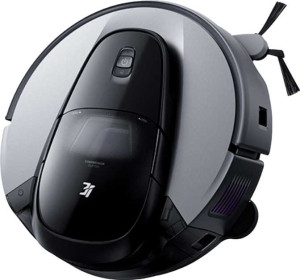
3i G10 Plus
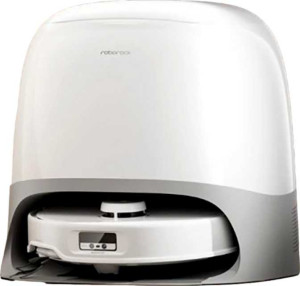
Roborock P20 Ultra

3i G10 Plus Roborock P20 Ultra

Overview

When choosing between the 3i G10 Plus and the Roborock P20 Ultra, shoppers face a genuinely compelling robot vacuum matchup. Both models share strong fundamentals — including HEPA filtration, smart mapping, and a generous 180-minute runtime — yet they diverge sharply on features like self-emptying capability, suction power, and overall design philosophy. In this detailed comparison, we examine every specification side by side to help you decide which cleaner best fits your home and lifestyle.

Common Features

  • Both products include a HEPA filter.
  • Both products include an allergy filter.
  • Both products are compatible with Google Assistant.
  • Both products work with Alexa.
  • Both products come with a 1-year warranty.
  • Both products support mapping.
  • Both products support no-go zones.
  • Both products support remote smartphone control.
  • Both products have an obstacle sensor.
  • Both products support problem area cleaning.
  • Both products have carpet detection.
  • Neither product gets stuck during operation.
  • Both products support virtual barriers.
  • Neither product has a display.
  • Neither product has twin side brushes.
  • Both products include washable filters.
  • Both products automatically adjust their height.
  • Both products clean all floor types.
  • Both products have mopping capability.
  • Both products have an electrostatic filtration system.
  • Neither product has UV light.
  • Both products have a battery capacity of 5200 mAh.
  • Both products have a runtime of 180 minutes.
  • Neither product has an overheating indicator.
  • Neither product has a removable battery.
  • Both products have auto-off functionality.

Main Differences

  • Audible noise is 65 dB on 3i G10 Plus and 64.5 dB on Roborock P20 Ultra.
  • Weight is 4220 g on 3i G10 Plus and 3800 g on Roborock P20 Ultra.
  • Width is 356 mm on 3i G10 Plus and 353 mm on Roborock P20 Ultra.
  • Height is 109 mm on 3i G10 Plus and 79.8 mm on Roborock P20 Ultra.
  • Thickness is 356 mm on 3i G10 Plus and 350 mm on Roborock P20 Ultra.
  • Volume is 13814.224 cm³ on 3i G10 Plus and 9859.29 cm³ on Roborock P20 Ultra.
  • Estimated empty time is 60 days on 3i G10 Plus and 56 days on Roborock P20 Ultra.
  • Docking station size is 1964.25 cm³ on 3i G10 Plus and 88315.8 cm³ on Roborock P20 Ultra.
  • Self-emptying capability is present on Roborock P20 Ultra but not available on 3i G10 Plus.
  • Mop cleaning is present on Roborock P20 Ultra but not available on 3i G10 Plus.
  • Mop drying is present on Roborock P20 Ultra but not available on 3i G10 Plus.
  • Dustbin capacity is 0.3 l on 3i G10 Plus and 0.77 l on Roborock P20 Ultra.
  • Full indication is available on Roborock P20 Ultra but not on 3i G10 Plus.
  • Bag-based collection is used on Roborock P20 Ultra, while 3i G10 Plus does not use bags.
  • Suction power is 18000 Pa on 3i G10 Plus and 22000 Pa on Roborock P20 Ultra.
  • Number of cleaning modes is 5 on 3i G10 Plus and 4 on Roborock P20 Ultra.
  • A dirt sensor is present on 3i G10 Plus but not available on Roborock P20 Ultra.
  • Charge time is 4 hours on 3i G10 Plus and 2.5 hours on Roborock P20 Ultra.
  • Operating power consumption is 75W on 3i G10 Plus and 50W on Roborock P20 Ultra.
Specs Comparison
3i G10 Plus

3i G10 Plus

Roborock P20 Ultra

Roborock P20 Ultra

General info:
has HEPA filter
audible noise 65 dB 64.5 dB
has an allergy filter
compatible with Google Assistant
works with Alexa
release date April 2025 March 2025
weight 4220 g 3800 g
width 356 mm 353 mm
height 109 mm 79.8 mm
thickness 356 mm 350 mm
volume 13814.224 cm³ 9859.29 cm³
warranty period 1 years 1 years
estimated empty time 60 days 56 days
docking station size 1964.25 cm³ 88315.8 cm³

Both the 3i G10 Plus and the Roborock P20 Ultra share the same foundational features in this category: HEPA and allergy filtration, compatibility with both Google Assistant and Alexa, and a one-year warranty. For allergy sufferers or smart-home users, neither product has an edge here — they are functionally identical on these points.

Where things diverge meaningfully is in physical design. The P20 Ultra's robot unit is notably more compact — lighter at 3800 g vs 4220 g, and significantly slimmer at 79.8 mm tall compared to 109 mm, giving it better clearance under low furniture. Its overall unit volume is also smaller (9859 cm³ vs 13814 cm³). However, the trade-off is dramatic when it comes to the docking station: the P20 Ultra's dock is colossal at 88315 cm³ — roughly 45 times the footprint of the G10 Plus dock at 1964 cm³. This suggests the P20 Ultra's station houses far more onboard infrastructure (likely self-washing or drying systems), but it demands significant dedicated floor space. The G10 Plus dock, by contrast, is barely noticeable in a room.

Noise output is virtually identical (65 dB vs 64.5 dB), and the auto-empty intervals are close — 60 days for the G10 Plus vs 56 days for the P20 Ultra — so neither wins outright on convenience cycles. The clear edge goes to the G10 Plus if floor space for the dock is a constraint, while the P20 Ultra wins on robot body compactness for navigating tighter home environments — but only if you can accommodate its large base station.

Features:
has mapping
supports no-go zones
supports a remote smartphone
has an obstacle sensor
has problem area cleaning
is self-emptying
has carpet detection
doesn't get stuck
supports virtual barriers
has route mapping
Has voice prompts
auto docking
has anti-fall sensor
can be scheduled
has a remote control
has water level adjustment
supports Wi-Fi
has mop cleaning
has mop raising
has mop drying

On the core navigation and control feature set, these two robots are remarkably well-matched. Both support mapping, no-go zones, virtual barriers, route mapping, obstacle sensing, anti-fall sensors, carpet detection, scheduled cleaning, smartphone control, and auto-docking. For the vast majority of smart home use cases, either robot arrives fully equipped out of the box.

The real differentiation lies in the mopping system. The 3i G10 Plus supports mop raising and water level adjustment, but it lacks mop cleaning and mop drying — meaning you must manually remove, clean, and dry the mop pad yourself after each cycle. It is also not self-emptying, so the dustbin requires regular manual attention. The Roborock P20 Ultra, by contrast, covers all three mop lifecycle features — raising, cleaning, and drying — and adds self-emptying on top. In practical terms, the P20 Ultra is engineered for genuine hands-off operation: it handles its own dustbin, washes its mop pads, and dries them to prevent mildew, which the G10 Plus simply cannot do.

The clear winner in this group is the Roborock P20 Ultra. The shared feature parity on navigation is strong, but the P20 Ultra's fully automated maintenance loop — self-emptying, mop cleaning, and mop drying — represents a fundamentally higher level of autonomy. For users who want to minimize manual intervention, the G10 Plus falls meaningfully short here.

Design:
dustbin capacity 0.3 l 0.77 l
Has a display
has twin side brushes
has included washable filters
automatically adjusts its height
Indicates when full
uses bags

Several design fundamentals are shared here: both robots omit twin side brushes, include washable filters, automatically adjust their height for different floor surfaces, and have no onboard display. These are expected baseline qualities at this product tier and create no meaningful distinction between the two.

Dustbin capacity tells a more interesting story. The Roborock P20 Ultra carries a 0.77 l bin — more than twice the 0.3 l of the 3i G10 Plus. In isolation, a larger bin means fewer interruptions mid-clean, but this is somewhat contextual given that the P20 Ultra is self-emptying (as established in the features group). Where it becomes more relevant is the bag-based collection system: the P20 Ultra uses bags, which contain dust more hygienically during disposal and also trigger a full indicator alert — a convenience the G10 Plus lacks entirely. The G10 Plus is bagless, which saves on consumable costs but puts more responsibility on the user to manage emptying proactively.

On balance, the Roborock P20 Ultra holds the edge in this group. Its larger dustbin, full indicator, and bag-based system form a more complete and hygienic waste-management design — particularly relevant for allergy-conscious households. The G10 Plus's bagless approach is simpler and cheaper to maintain, but it offers less in terms of design sophistication for hands-off use.

Cleaning power:
suction power 18000 Pa 22000 Pa
cleans all floor types
cleaning modes 5 4
mops
has a dirt sensor
Has an electrostatic filtration system
has UV light

Raw suction power is where the Roborock P20 Ultra pulls ahead most visibly in this group, rated at 22000 Pa versus the 3i G10 Plus's 18000 Pa — a gap of roughly 22%. In practical terms, higher Pascal ratings translate to stronger pickup on embedded debris, pet hair in carpet fibers, and fine particles on hard floors. Both robots clean all floor types and include an electrostatic filtration system, so the P20 Ultra's suction advantage applies consistently across surface types rather than in selective scenarios.

The G10 Plus counters with two notable differentiators. It offers 5 cleaning modes compared to the P20 Ultra's 4, giving users a marginally wider range of cleaning behaviors to tailor to specific situations. More meaningfully, it includes a dirt sensor — an active detection system that causes the robot to slow down and apply more passes in dirtier areas. The P20 Ultra lacks this entirely, meaning it cleans at a consistent intensity regardless of how soiled a particular zone actually is.

This group produces a genuine trade-off rather than a clean winner. The P20 Ultra holds the edge on brute suction power, which is the dominant factor for deep-clean performance. But the G10 Plus's dirt sensor adds intelligent, adaptive cleaning that can compensate somewhat for lower raw power — particularly in high-traffic zones. Users prioritizing maximum pickup force should lean toward the P20 Ultra; those who value smart, targeted cleaning efficiency may find the G10 Plus more compelling here.

Power:
battery power 5200 mAh 5200 mAh
runtime 180 min 180 min
charge time 4 hours 2.5 hours
operating power consumption 75W 50W
Has an overheating indicator
has a removable battery
has auto-off

At the battery and runtime level, these two robots are identical on paper: both pack a 5200 mAh cell and deliver 180 minutes of runtime per charge. Neither has a removable battery, and both include auto-off — so for coverage capacity and day-to-day endurance, users can expect the same experience from either machine.

The divergence comes in charging efficiency and power draw. The Roborock P20 Ultra recharges in 2.5 hours, meaningfully faster than the 3i G10 Plus's 4 hours — a 37% reduction in downtime. For households that run cleaning cycles frequently or need a quick turnaround between sessions, this is a practical advantage. The power consumption gap is equally notable: the P20 Ultra draws 50W during operation versus the G10 Plus's 75W, which is 33% less energy per session. Over weeks and months of regular use, this translates to a measurable difference in electricity costs and a lighter environmental footprint.

Given that runtime and battery capacity are equal, the Roborock P20 Ultra holds a clear edge in this group — it recovers from a dead battery significantly faster and consumes less energy doing the same job. The G10 Plus offers no compensating advantage in this category.

Comparison Summary & Verdict

After reviewing all available specifications, both robots prove capable, but they serve noticeably different needs. The 3i G10 Plus stands out with its dirt sensor, five cleaning modes, and a more compact docking station, making it a solid choice for users who prefer hands-on control and a lighter footprint in the home. The Roborock P20 Ultra, on the other hand, pulls ahead with a superior 22000 Pa suction power, self-emptying and mop-cleaning functionality, a larger 0.77 l dustbin, and a significantly faster 2.5-hour charge time. Its greater automation makes it the stronger pick for households that prioritize a truly hands-free cleaning experience. Neither unit offers a removable battery or UV light, and both share the same runtime, so your decision should ultimately hinge on how much automation and wet-cleaning capability you require.

3i G10 Plus
Buy 3i G10 Plus if...

Buy the 3i G10 Plus if you want a robot vacuum with a built-in dirt sensor, more cleaning modes, and a much smaller docking station that takes up minimal space.

Roborock P20 Ultra
Buy Roborock P20 Ultra if...

Buy the Roborock P20 Ultra if you want a fully automated cleaning solution with self-emptying, mop cleaning and drying, stronger suction, and a faster charge time.