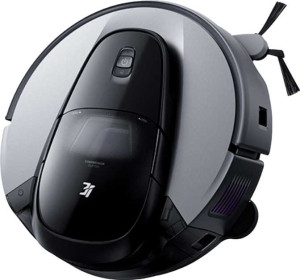
3i G10 Plus
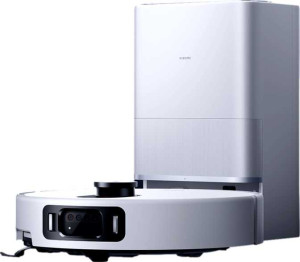
Xiaomi Robot Vacuum 5 Pro

3i G10 Plus Xiaomi Robot Vacuum 5 Pro

Overview

Welcome to our in-depth specification comparison between the 3i G10 Plus and the Xiaomi Robot Vacuum 5 Pro. Both robots share a strong foundation — HEPA filtration, smart mapping, and voice assistant compatibility — but they diverge significantly in areas like self-emptying capability, mopping features, and overall cleaning autonomy. Read on to discover which model best fits your home and lifestyle.

Common Features

  • Both products include a HEPA filter.
  • Both products include an allergy filter.
  • Both products are compatible with Google Assistant.
  • Both products work with Alexa.
  • Both products have mapping capability.
  • Both products support no-go zones.
  • Both products support remote smartphone control.
  • Both products have an obstacle sensor.
  • Both products support problem area cleaning.
  • Both products have carpet detection.
  • Neither product gets stuck during operation.
  • Both products support virtual barriers.
  • Neither product has a display.
  • Neither product has twin side brushes.
  • Both products include washable filters.
  • Both products automatically adjust their height.
  • Both products clean all floor types.
  • Both products have mopping capability.
  • Both products have a battery capacity of 5200 mAh.
  • Both products have a charge time of 4 hours.
  • Neither product has a removable battery.

Main Differences

  • Audible noise is 65 dB on 3i G10 Plus and 50 dB on Xiaomi Robot Vacuum 5 Pro.
  • Weight is 4220 g on 3i G10 Plus and 3970 g on Xiaomi Robot Vacuum 5 Pro.
  • Width is 356 mm on 3i G10 Plus and 350 mm on Xiaomi Robot Vacuum 5 Pro.
  • Height is 109 mm on 3i G10 Plus and 88 mm on Xiaomi Robot Vacuum 5 Pro.
  • Volume is 13814.224 cm³ on 3i G10 Plus and 10780 cm³ on Xiaomi Robot Vacuum 5 Pro.
  • Warranty period is 1 year on 3i G10 Plus and 2 years on Xiaomi Robot Vacuum 5 Pro.
  • Estimated empty time is 60 days on 3i G10 Plus and 90 days on Xiaomi Robot Vacuum 5 Pro.
  • Docking station size is 1964.25 cm³ on 3i G10 Plus and 96782.4 cm³ on Xiaomi Robot Vacuum 5 Pro.
  • Self-emptying capability is present on Xiaomi Robot Vacuum 5 Pro but not available on 3i G10 Plus.
  • A remote control is included with Xiaomi Robot Vacuum 5 Pro but not with 3i G10 Plus.
  • Wi-Fi version supports both Wi-Fi 5 (802.11ac) and Wi-Fi 4 (802.11n) on 3i G10 Plus, while Xiaomi Robot Vacuum 5 Pro supports only Wi-Fi 4 (802.11n).
  • Mop cleaning is available on Xiaomi Robot Vacuum 5 Pro but not on 3i G10 Plus.
  • Mop drying is available on Xiaomi Robot Vacuum 5 Pro but not on 3i G10 Plus.
  • Dustbin capacity is 0.3 l on 3i G10 Plus and 0.35 l on Xiaomi Robot Vacuum 5 Pro.
  • A full dustbin indicator is present on Xiaomi Robot Vacuum 5 Pro but not on 3i G10 Plus.
  • Dust bags are used on Xiaomi Robot Vacuum 5 Pro but not on 3i G10 Plus.
  • Suction power is 18000 Pa on 3i G10 Plus and 20000 Pa on Xiaomi Robot Vacuum 5 Pro.
  • Number of cleaning modes is 5 on 3i G10 Plus and 4 on Xiaomi Robot Vacuum 5 Pro.
  • A dirt sensor is present on 3i G10 Plus but not on Xiaomi Robot Vacuum 5 Pro.
  • An electrostatic filtration system is present on 3i G10 Plus but not on Xiaomi Robot Vacuum 5 Pro.
  • Runtime is 180 minutes on 3i G10 Plus and 140 minutes on Xiaomi Robot Vacuum 5 Pro.
  • Operating power consumption is 75W on 3i G10 Plus and 55W on Xiaomi Robot Vacuum 5 Pro.
Specs Comparison
3i G10 Plus

3i G10 Plus

Xiaomi Robot Vacuum 5 Pro

Xiaomi Robot Vacuum 5 Pro

General info:
has HEPA filter
audible noise 65 dB 50 dB
has an allergy filter
compatible with Google Assistant
works with Alexa
release date April 2025 September 2025
weight 4220 g 3970 g
width 356 mm 350 mm
height 109 mm 88 mm
thickness 356 mm 350 mm
volume 13814.224 cm³ 10780 cm³
warranty period 1 years 2 years
estimated empty time 60 days 90 days
docking station size 1964.25 cm³ 96782.4 cm³

Both the 3i G10 Plus and the Xiaomi Robot Vacuum 5 Pro share a solid baseline of smart-home compatibility — each supports Google Assistant and Alexa, and both include a HEPA allergy filter, so neither has an edge on air-quality fundamentals. Where they begin to diverge is in physical design: the Xiaomi unit is meaningfully slimmer at 88 mm tall versus 109 mm for the 3i, which translates directly to the ability to clean under lower furniture like beds and sofas. The Xiaomi is also slightly lighter (3970 g vs 4220 g) and more compact overall, making it easier to handle during maintenance.

The most striking general-info differentiator is operating noise. The 3i G10 Plus registers 65 dB, while the Xiaomi 5 Pro comes in at 50 dB — a 15 dB gap that is not marginal. Because decibels follow a logarithmic scale, this means the Xiaomi is perceived as roughly three times quieter in practice, a significant quality-of-life advantage for anyone running the robot during calls, sleep, or work-from-home hours. On the maintenance side, the Xiaomi also empties its dustbin less frequently — every 90 days versus 60 days — meaning fewer interruptions across the ownership cycle. Its warranty period of 2 years (versus 1 year for the 3i) further reinforces long-term value. One notable trade-off: the Xiaomi's docking station is substantially larger (96 782 cm³ vs roughly 1 964 cm³), which almost certainly reflects a more capable auto-empty or wash-and-dry base, but it will demand considerably more floor space.

Overall, the Xiaomi Robot Vacuum 5 Pro holds a clear advantage in this spec group. Its quieter operation, slimmer profile, longer dust-bin autonomy, and doubled warranty period make it the stronger all-around choice on general specifications — provided the user has enough space to accommodate its larger dock footprint.

Features:
has mapping
supports no-go zones
supports a remote smartphone
has an obstacle sensor
has problem area cleaning
is self-emptying
has carpet detection
doesn't get stuck
supports virtual barriers
has route mapping
Has voice prompts
auto docking
has anti-fall sensor
can be scheduled
has a remote control
has water level adjustment
supports Wi-Fi
Wi-Fi version Wi-Fi 5 (802.11ac), Wi-Fi 4 (802.11n) Wi-Fi 4 (802.11n)
has mop cleaning
has mop raising
has mop drying

At the foundational level, these two robots are well-matched: both handle mapping, no-go zones, virtual barriers, carpet detection, anti-fall sensors, and scheduled cleaning — the feature set most users consider essential. That parity, however, makes the gaps that do exist all the more meaningful. The Xiaomi Robot Vacuum 5 Pro pulls ahead decisively on mopping: it supports full mop cleaning and mop drying, while the 3i G10 Plus offers mop raising only — meaning the 3i can lift a mop pad to avoid wetting carpets, but cannot actually wet-mop floors or dry the pad afterward. For households with hard-floor areas that need regular mopping, this is a fundamental difference in daily utility.

The Xiaomi also adds self-emptying, which the 3i lacks entirely. Combined with the longer 90-day bin autonomy noted in general specs, this means the Xiaomi can run for months with almost zero user intervention — a core convenience advantage for busy households. It additionally includes a physical remote control, a minor but occasionally useful supplement to smartphone control. The one area where the 3i counters is Wi-Fi: it supports both Wi-Fi 5 (802.11ac) and Wi-Fi 4, versus the Xiaomi's Wi-Fi 4 only. In practice, a robot vacuum's network demands are minimal, so this rarely affects real-world performance, but it does offer slightly more reliable throughput on congested networks.

The feature comparison is not close. The Xiaomi Robot Vacuum 5 Pro wins this group by a significant margin, delivering a complete wet-mopping system with drying capability and hands-free self-emptying — features that meaningfully reduce user involvement. The 3i's Wi-Fi 5 support is a genuine but minor technical advantage that does not offset what it lacks on the cleaning and automation front.
Design:
dustbin capacity 0.3 l 0.35 l
Has a display
has twin side brushes
has included washable filters
automatically adjusts its height
Indicates when full
uses bags

Much of this category is shared ground: neither robot features a display or twin side brushes, both include washable filters, and both automatically adjust their height to handle transitions between floor surfaces. These overlapping traits reflect a similar design philosophy — functional, low-maintenance builds without flashy extras. The dustbin capacities are close as well, with the Xiaomi at 0.35 l versus the 3i's 0.3 l, a difference too small to have any meaningful real-world impact on cleaning frequency.

The more consequential design divergence lies in how each robot handles collected debris. The 3i G10 Plus is bagless and provides no full-bin indicator, meaning users must manually check and empty it without any prompt. The Xiaomi, by contrast, uses bags and indicates when full — a pairing that makes practical sense given its self-emptying dock (established in the Features group): bags contain allergens more hygienically during disposal and the full alert ensures the system never silently loses suction efficiency. For the 3i, the absence of a full indicator is a notable omission; on a bagless unit without self-emptying, users have no automated cue to perform what is already a more hands-on maintenance task.

The Xiaomi Robot Vacuum 5 Pro takes a narrow but real edge in this group. Its full-bin notification alone is a meaningful usability improvement, and the use of bags — while an ongoing consumable cost — delivers cleaner, more hygienic emptying. The 3i's bagless design avoids that recurring expense, but without a fullness alert, it places more responsibility on the user to stay on top of maintenance.

Cleaning power:
suction power 18000 Pa 20000 Pa
cleans all floor types
cleaning modes 5 4
mops
has a dirt sensor
Has an electrostatic filtration system

Suction power is where the Xiaomi Robot Vacuum 5 Pro claims its most direct numerical lead: 20,000 Pa versus 18,000 Pa for the 3i G10 Plus. That 2,000 Pa gap represents roughly an 11% increase, which at this performance tier can translate to more confident pickup of heavier debris — pet hair, fine sand, or particles embedded in carpet pile. Both units clean all floor types, so the advantage is not about surface compatibility but about raw extraction capability on demanding surfaces. The difference is real, though not dramatic — both are firmly in the high-suction category.

Where the 3i G10 Plus genuinely counters is in cleaning intelligence. It includes a dirt sensor that detects high-debris zones and focuses cleaning effort accordingly — a feature the Xiaomi lacks entirely. In practice, this means the 3i can autonomously identify a muddy entryway or a pet's favorite corner and clean it more thoroughly without user input. Additionally, the 3i's electrostatic filtration system adds a layer of fine-particle capture beyond the shared HEPA standard, which matters for allergy-sensitive households. The Xiaomi offers neither of these, which is a meaningful gap in cleaning sophistication.

This group ends in a genuine split rather than a clear overall winner. The Xiaomi holds the edge in brute suction, while the 3i G10 Plus compensates with smarter, more adaptive cleaning through its dirt sensor and superior filtration. Users prioritizing raw power on thick carpets may lean Xiaomi; those with allergy concerns or varied, high-traffic floor zones will find the 3i's intelligence and filtration more valuable in day-to-day use.

Power:
battery power 5200 mAh 5200 mAh
runtime 180 min 140 min
charge time 4 hours 4 hours
operating power consumption 75W 55W
has a removable battery

The battery story here starts identically — both robots carry a 5200 mAh cell and take 4 hours to fully recharge — but the runtime figures reveal a significant divergence in how efficiently each unit uses that shared capacity. The 3i G10 Plus runs for 180 minutes per charge, while the Xiaomi Robot Vacuum 5 Pro manages 140 minutes. That 40-minute gap is not trivial: it represents roughly 22% more floor coverage per cycle for the 3i, which for larger homes could mean completing a full clean in a single run rather than requiring a mid-session recharge and resume.

The underlying reason becomes clear when comparing operating power consumption: the 3i draws 75W versus the Xiaomi's 55W. The Xiaomi is the more energy-efficient unit during operation, yet it still yields shorter runtime — which points to its additional onboard systems (mop drying, self-emptying mechanics, and other active components established in prior groups) consuming power beyond just the motor. The 3i, running a leaner feature set, converts its wattage more directly into cleaning time. Neither robot has a removable battery, so long-term battery degradation is a shared concern for both.

The 3i G10 Plus takes a clear edge in this group. Despite identical battery capacity and charge times, its 180-minute runtime makes it the stronger performer for larger spaces or users who prefer longer uninterrupted cleaning sessions. The Xiaomi's lower power draw is a point in its favor for energy costs over time, but the practical coverage advantage of 40 extra minutes per charge belongs firmly to the 3i.

Comparison Summary & Verdict

After reviewing all the specs, both robots have clear strengths tailored to different users. The 3i G10 Plus stands out with a longer 180-minute runtime, a built-in dirt sensor, an electrostatic filtration system, and broader Wi-Fi support — making it a solid choice for users who prioritize thorough cleaning sessions and advanced filtration. The Xiaomi Robot Vacuum 5 Pro, on the other hand, excels in convenience and automation: it is self-emptying, supports mop cleaning and mop drying, offers a longer 2-year warranty, and runs more quietly at 50 dB. Its 90-day estimated empty time means far less manual intervention. If hands-off automation and an all-in-one wet-and-dry solution matter most to you, the Xiaomi is the stronger pick. If raw runtime, richer filtration, and more cleaning modes are your priority, the 3i G10 Plus delivers.

3i G10 Plus
Buy 3i G10 Plus if...

Buy the 3i G10 Plus if you want a longer battery runtime of 180 minutes, a dirt sensor for targeted cleaning, and an electrostatic filtration system for superior air quality.

Xiaomi Robot Vacuum 5 Pro
Buy Xiaomi Robot Vacuum 5 Pro if...

Buy the Xiaomi Robot Vacuum 5 Pro if you want a fully autonomous experience with self-emptying, integrated mop cleaning and drying, quieter operation, and a longer 2-year warranty.