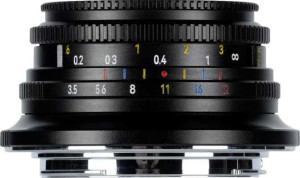
7artisans 10mm f/3.5 APS-C
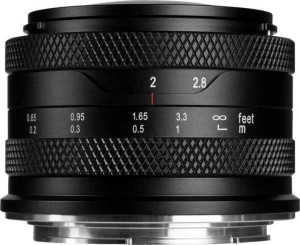
AstrHori 6.5mm f/2.0 APS-C Fisheye

7artisans 10mm f/3.5 APS-C AstrHori 6.5mm f/2.0 APS-C Fisheye

Overview

Welcome to our detailed specification comparison between the 7artisans 10mm f/3.5 APS-C and the AstrHori 6.5mm f/2.0 APS-C Fisheye. These two manual-focus prime lenses target creative photographers seeking ultra-wide perspectives, but they take notably different approaches when it comes to angle of view, maximum aperture, and build features. Read on to see how they stack up across optics, aperture, focus, and general construction.

Common Features

  • Both lenses feature a metal mount.
  • Neither lens has built-in optical image stabilization.
  • Both lenses have an optical zoom of 1x.
  • Both lenses share the same smallest aperture of f/22.
  • Both lenses can focus to infinity.
  • Both lenses support full-time manual focus.
  • Both lenses share a minimum focus distance of 0.2 m.

Main Differences

  • The 7artisans 10mm f/3.5 APS-C is a prime lens, while the AstrHori 6.5mm f/2.0 APS-C Fisheye is a prime, wide-angle, and fisheye lens.
  • The lens mount is Micro Four Thirds on the 7artisans 10mm f/3.5 APS-C and Canon RF on the AstrHori 6.5mm f/2.0 APS-C Fisheye.
  • Weather sealing is present on the AstrHori 6.5mm f/2.0 APS-C Fisheye but not available on the 7artisans 10mm f/3.5 APS-C.
  • The weight is 125.5 g on the 7artisans 10mm f/3.5 APS-C and 268 g on the AstrHori 6.5mm f/2.0 APS-C Fisheye.
  • A lens hood is included with the AstrHori 6.5mm f/2.0 APS-C Fisheye but not with the 7artisans 10mm f/3.5 APS-C.
  • The filter size is 37 mm on the 7artisans 10mm f/3.5 APS-C and 64 mm on the AstrHori 6.5mm f/2.0 APS-C Fisheye.
  • The maximum focal length is 10 mm on the 7artisans 10mm f/3.5 APS-C and 6.5 mm on the AstrHori 6.5mm f/2.0 APS-C Fisheye.
  • The minimum focal length is 10 mm on the 7artisans 10mm f/3.5 APS-C and 6.5 mm on the AstrHori 6.5mm f/2.0 APS-C Fisheye.
  • The maximum angle of view is 108° on the 7artisans 10mm f/3.5 APS-C and 192° on the AstrHori 6.5mm f/2.0 APS-C Fisheye.
  • The wide aperture is f/3.5 on the 7artisans 10mm f/3.5 APS-C and f/2.0 on the AstrHori 6.5mm f/2.0 APS-C Fisheye.
  • The number of aperture blades is 5 on the 7artisans 10mm f/3.5 APS-C and 9 on the AstrHori 6.5mm f/2.0 APS-C Fisheye.
  • A silent focus motor is built into the AstrHori 6.5mm f/2.0 APS-C Fisheye but not present in the 7artisans 10mm f/3.5 APS-C.
Specs Comparison
7artisans 10mm f/3.5 APS-C

7artisans 10mm f/3.5 APS-C

AstrHori 6.5mm f/2.0 APS-C Fisheye

AstrHori 6.5mm f/2.0 APS-C Fisheye

General info:
lens type Prime Prime, Wide-angle, Fisheye
lens mount Micro Four Thirds Canon RF
release date June 2025 April 2025
is weather-sealed (splashproof)
Has a metal mount
weight 125.5 g 268 g
Includes lens hood
filter size 37 mm 64 mm

Both the 7artisans 10mm f/3.5 and the AstrHori 6.5mm f/2.0 Fisheye are prime lenses, but they diverge sharply in almost every other general characteristic. The most immediate practical difference is mount compatibility: the 7artisans is built for Micro Four Thirds bodies, while the AstrHori targets the Canon RF ecosystem — meaning these two lenses are not cross-shoppers for most users, and mount should be the first filter applied.

Where the comparison gets more meaningful is in build and portability. The 7artisans weighs just 125.5 g versus the AstrHori's 268 g — more than double. That weight gap is significant for travel, handheld shooting, or smaller mirrorless bodies where front-heavy lenses create balance issues. The AstrHori counters with weather sealing, which the 7artisans lacks entirely; for outdoor or run-and-gun shooting in unpredictable conditions, that splashproofing is a genuine real-world advantage. The AstrHori also ships with a lens hood included, adding value out of the box, while the 7artisans does not.

Overall, the AstrHori holds a clear edge in build quality and all-weather usability, but the 7artisans wins decisively on portability. If lightweight and compact are priorities, the 7artisans is the stronger choice here; if durability and weather resistance matter more, the AstrHori is the more capable tool — assuming mount compatibility is already satisfied.

Optics:
maximum focal length 10 mm 6.5 mm
minimum focal length 10 mm 6.5 mm
has built-in optical image stabilization
maximum angle of view 108° 192°
minimum angle of view 108° 192°
optical zoom 1x 1x

The defining optical difference between these two lenses is their angle of view. The 7artisans at 10mm delivers a wide 108° field of view — already an impressively expansive perspective suited for architecture, landscapes, and tight interiors. The AstrHori, at 6.5mm, pushes that to a dramatic 192°, which exceeds a full hemisphere and is only achievable through fisheye optics. That distinction matters enormously: the 7artisans produces a rectilinear-style ultra-wide image where straight lines remain relatively straight, while the AstrHori renders the world with the characteristic spherical distortion of a fisheye — a creative tool, not a general-purpose wide-angle.

Neither lens offers optical image stabilization, so both are equally dependent on the camera body's IBIS system or the shooter's technique in low light. This is a tie that slightly penalizes both in demanding handheld scenarios, though it is a common trade-off at this focal length and price tier.

The edge here depends entirely on intent. For versatile ultra-wide shooting where natural perspective is important, the 7artisans is the more practical choice. The AstrHori's 192° angle of view is a highly specialized capability that no rectilinear lens can replicate — making it the clear winner for fisheye-specific creative work, but a poor substitute for everyday wide-angle use.

Aperture:
wide aperture (main camera) 3.5f 2f
widest aperture at maximum focal length 3.5f 2f
aperture blades 5 9
smallest aperture at maximum focal length 3.5f 2f
smallest aperture at minimum focal length 22f 22f

Maximum aperture is where these two lenses diverge most meaningfully in this group. The AstrHori opens to f/2.0, a full stop and a third wider than the 7artisans' f/3.5. In practical terms, that difference allows the AstrHori to capture roughly 2.7× more light at its widest setting — a significant advantage for low-light shooting, astro photography, or any situation where avoiding high ISO is a priority. Both lenses share an identical minimum aperture of f/22, so their range at the narrow end is evenly matched.

The blade count tells a secondary but relevant story. The AstrHori's 9-blade diaphragm will produce smoother, more circular bokeh and more aesthetically pleasing sunstars compared to the 7artisans' 5-blade design, which tends to render more angular, star-shaped highlights. At ultra-wide focal lengths bokeh is rarely the primary concern, but for videographers or photographers who stop down for starburst effects, the AstrHori's blade geometry is a tangible benefit.

The AstrHori holds a clear advantage in this group on both counts — a faster maximum aperture and a superior blade configuration. The 7artisans' f/3.5 ceiling is a notable limitation in challenging light, and for users who shoot in dim environments or value optical rendering quality at smaller apertures, the AstrHori is the stronger performer here.

Focus:
Can focus to infinity
Has full-time manual focus
has a silent focus motor built into the lens
minimum focus distance 0.2 m 0.2 m

Across most focus characteristics, these two lenses are evenly matched. Both support full-time manual focus override and share an identical 0.2 m minimum focus distance — a close-focusing capability that is genuinely useful at ultra-wide focal lengths for dramatic foreground-subject compositions. Infinity focus is available on both, as expected for lenses in this category.

The one meaningful separator is the AstrHori's built-in silent focus motor, which the 7artisans lacks entirely. A silent motor matters most for video shooters: autofocus hunting or motor noise can bleed into on-camera audio, and smooth, quiet focus transitions are essential for professional video work. The 7artisans, without this, is more reliant on the camera body's own focus-drive system — which may be noisier depending on the host camera.

For purely photographic use, the absence of a silent motor on the 7artisans is a minor concern. But for hybrid shooters or videographers, the AstrHori takes a clear edge here. Everything else in this group is a draw.

Comparison Summary & Verdict

After examining all the specifications, both lenses serve ultra-wide shooting but cater to different needs. The 7artisans 10mm f/3.5 APS-C stands out for its compact and lightweight build at just 125.5 g, making it an appealing choice for photographers who prioritize portability and a smaller kit. The AstrHori 6.5mm f/2.0 APS-C Fisheye, on the other hand, offers a dramatically wider 192° angle of view, a faster f/2.0 aperture, weather sealing, a built-in silent focus motor, and a 9-blade aperture diaphragm — making it better suited for creative fisheye work, low-light environments, and outdoor shooting in variable conditions. Neither lens includes optical image stabilization, and both share the same minimum focus distance. Your choice ultimately depends on whether you value a featherlight everyday wide-angle lens or a feature-rich fisheye with greater optical reach and environmental protection.

7artisans 10mm f/3.5 APS-C
Buy 7artisans 10mm f/3.5 APS-C if...

Buy the 7artisans 10mm f/3.5 APS-C if you shoot on a Micro Four Thirds system and want a significantly lighter, more compact ultra-wide prime lens for everyday use.

AstrHori 6.5mm f/2.0 APS-C Fisheye
Buy AstrHori 6.5mm f/2.0 APS-C Fisheye if...

Buy the AstrHori 6.5mm f/2.0 APS-C Fisheye if you need a faster f/2.0 aperture, a dramatic 192° fisheye field of view, weather sealing, and a silent autofocus motor for Canon RF mount shooting.