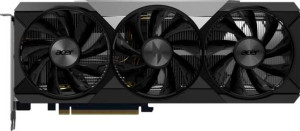
Acer Nitro Radeon RX 9070 OC
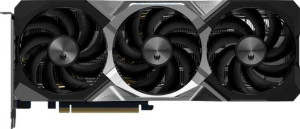
Acer Predator BiFrost Radeon RX 9070 XT OC

Acer Nitro Radeon RX 9070 OC Acer Predator BiFrost Radeon RX 9070 XT OC

Overview

Welcome to our in-depth comparison of the Acer Nitro Radeon RX 9070 OC and the Acer Predator BiFrost Radeon RX 9070 XT OC, two AMD RDNA 4.0 graphics cards that share a common memory foundation but diverge in meaningful ways. From GPU clock speeds and shading units to thermal design power and semiconductor size, there is more separating these two cards than their names suggest. Read on to find out which one is the right fit for your system and budget.

Common Features

  • Both cards share a GPU memory speed of 2518 MHz.
  • Both cards have 128 render output units (ROPs).
  • Double Precision Floating Point (DPFP) is supported on both cards.
  • Both cards have an effective memory speed of 20000 MHz.
  • Both cards offer a maximum memory bandwidth of 644 GB/s.
  • Both cards feature 16GB of VRAM.
  • Both cards use GDDR6 memory.
  • Both cards have a 256-bit memory bus width.
  • ECC memory is supported on both cards.
  • Both cards support DirectX 12 Ultimate.
  • Both cards support OpenGL version 4.6.
  • Both cards support OpenCL version 2.2.
  • Multi-display technology is supported on both cards.
  • Ray tracing is supported on both cards.
  • 3D support is available on both cards.
  • DLSS is not supported on either card.
  • FSR4 is supported on both cards.
  • Both cards have one HDMI 2.1b output and three DisplayPort outputs, with no USB-C, DVI, or mini DisplayPort outputs.
  • Both cards are built on the RDNA 4.0 GPU architecture.
  • Both cards use PCIe version 5.
  • Both cards feature 53,900 million transistors.
  • Neither card uses air-water cooling.
  • Both cards share the same dimensions of 295 mm width and 120 mm height.

Main Differences

  • GPU base clock speed is 1440 MHz on Acer Nitro Radeon RX 9070 OC and 1870 MHz on Acer Predator BiFrost Radeon RX 9070 XT OC.
  • GPU turbo clock speed is 2700 MHz on Acer Nitro Radeon RX 9070 OC and 3100 MHz on Acer Predator BiFrost Radeon RX 9070 XT OC.
  • Pixel rate is 345.6 GPixel/s on Acer Nitro Radeon RX 9070 OC and 396.8 GPixel/s on Acer Predator BiFrost Radeon RX 9070 XT OC.
  • Floating-point performance is 38.71 TFLOPS on Acer Nitro Radeon RX 9070 OC and 50.79 TFLOPS on Acer Predator BiFrost Radeon RX 9070 XT OC.
  • Texture rate is 604.8 GTexels/s on Acer Nitro Radeon RX 9070 OC and 793.6 GTexels/s on Acer Predator BiFrost Radeon RX 9070 XT OC.
  • Shading units number 3584 on Acer Nitro Radeon RX 9070 OC and 4096 on Acer Predator BiFrost Radeon RX 9070 XT OC.
  • Texture mapping units (TMUs) total 224 on Acer Nitro Radeon RX 9070 OC and 256 on Acer Predator BiFrost Radeon RX 9070 XT OC.
  • Thermal Design Power (TDP) is 245W on Acer Nitro Radeon RX 9070 OC and 340W on Acer Predator BiFrost Radeon RX 9070 XT OC.
  • Semiconductor size is 5 nm on Acer Nitro Radeon RX 9070 OC and 4 nm on Acer Predator BiFrost Radeon RX 9070 XT OC.
Specs Comparison
Acer Nitro Radeon RX 9070 OC

Acer Nitro Radeon RX 9070 OC

Acer Predator BiFrost Radeon RX 9070 XT OC

Acer Predator BiFrost Radeon RX 9070 XT OC

Performance:
GPU clock speed 1440 MHz 1870 MHz
GPU turbo 2700 MHz 3100 MHz
pixel rate 345.6 GPixel/s 396.8 GPixel/s
floating-point performance 38.71 TFLOPS 50.79 TFLOPS
texture rate 604.8 GTexels/s 793.6 GTexels/s
GPU memory speed 2518 MHz 2518 MHz
shading units 3584 4096
texture mapping units (TMUs) 224 256
render output units (ROPs) 128 128
Has Double Precision Floating Point (DPFP)

The most telling difference between these two cards lies in their raw compute muscle. The Predator BiFrost RX 9070 XT OC delivers 50.79 TFLOPS of floating-point performance against the Nitro RX 9070 OC's 38.71 TFLOPS — a gap of roughly 31%. In practice, this translates to more headroom for complex shading, ray tracing workloads, and compute-heavy tasks like AI-accelerated upscaling. That advantage is structural: the XT carries 4096 shading units and 256 TMUs versus 3584 and 224 respectively, meaning it isn't just clocked higher — it has more execution resources doing work each cycle.

Clock speeds reinforce this picture. The XT boosts to 3100 MHz under load compared to the standard model's 2700 MHz turbo — a 400 MHz advantage that compounds the shader count difference into the texture throughput numbers: 793.6 GTexels/s vs 604.8 GTexels/s. Higher texture fill rate matters most in high-resolution, texture-dense scenes, so users targeting 1440p or 4K with rich environments will feel this gap more than those gaming at 1080p. Where the two cards are genuinely equal is in render output: both share 128 ROPs and identical 2518 MHz memory speeds, meaning pixel write throughput and memory bandwidth are not differentiating factors here.

The Predator BiFrost RX 9070 XT OC holds a clear and consistent performance edge across every compute and texturing metric in this group. The ROP parity softens the gap slightly in pure rasterization pixel output, but the XT's shader and clock advantages make it the stronger card for demanding workloads. The Nitro RX 9070 OC remains competitive for its tier, but buyers prioritizing peak GPU performance should expect meaningfully better results from the XT variant.

Memory:
effective memory speed 20000 MHz 20000 MHz
maximum memory bandwidth 644 GB/s 644 GB/s
VRAM 16GB 16GB
GDDR version GDDR6 GDDR6
memory bus width 256-bit 256-bit
Supports ECC memory

On memory, these two cards are carbon copies of each other. Both feature 16GB of GDDR6 running at an effective 20,000 MHz across a 256-bit bus, yielding identical maximum bandwidth of 644 GB/s. That bandwidth figure is substantial — enough to keep both GPUs well-fed even at 4K resolutions or when running memory-intensive workloads like texture streaming in open-world titles or large-dataset compute tasks.

The 16GB VRAM capacity is particularly noteworthy as a shared strength. At this level, neither card will struggle with high-resolution texture packs, multi-monitor setups, or emerging AI-assisted rendering pipelines that are increasingly VRAM-hungry. ECC memory support on both cards is a bonus primarily relevant to professional and semi-professional workloads, adding error-correction capability that reduces the risk of data corruption during long compute sessions — less critical for pure gaming, but a reassuring feature for creators and developers.

This group is an unambiguous tie. Every memory specification — capacity, speed, bus width, bandwidth, and feature support — is identical between the Nitro RX 9070 OC and the Predator BiFrost RX 9070 XT OC. Memory will not be a differentiating factor in any real-world scenario, and buyers can confidently treat both cards as equals on this dimension.

Features:
DirectX version DirectX 12 Ultimate DirectX 12 Ultimate
OpenGL version 4.6 4.6
OpenCL version 2.2 2.2
Supports multi-display technology
supports ray tracing
Supports 3D
supports DLSS
has FSR4
has XeSS (XMX)
AMD SAM / Intel Resizable BAR AMD SAM AMD SAM
has LHR
has RGB lighting
supported displays 4 4

Feature parity is total here — every capability listed for the Nitro RX 9070 OC is identically present on the Predator BiFrost RX 9070 XT OC. Both cards share DirectX 12 Ultimate support, which is the current gold standard for modern gaming, enabling hardware-accelerated ray tracing, mesh shaders, and variable-rate shading across supported titles. Ray tracing support is confirmed on both, meaning neither card forces any compromise on that front for users who want to explore path-traced or hybrid lighting in compatible games.

The upscaling story is consistent across both cards as well. Neither supports DLSS — expected, given these are AMD GPUs — but both carry FSR4, AMD's latest spatial and temporal upscaling technology. FSR4 represents a meaningful generational leap in reconstruction quality over its predecessors, helping maintain frame rates at higher resolutions without the image quality penalties of older FSR versions. The absence of XeSS (XMX) on both is a minor footnote; FSR4 covers the same use case for most users. AMD SAM (Smart Access Memory) support on both cards allows compatible AMD CPU platforms to access the full VRAM pool, a tangible performance uplift in SAM-optimized titles.

With 4 supported displays, RGB lighting, and identical API and compute version support across the board, this group produces a clean tie. Neither the Nitro nor the Predator BiFrost holds any feature advantage — buyers choosing between them can focus entirely on performance, thermal design, and pricing rather than any capability gap.
Ports:
has an HDMI output
HDMI ports 1 1
HDMI version HDMI 2.1b HDMI 2.1b
DisplayPort outputs 3 3
USB-C ports 0 0
DVI outputs 0 0
mini DisplayPort outputs 0 0

Both cards ship with an identical port configuration: 3 DisplayPort outputs and 1 HDMI 2.1b port, totaling four display connections — which aligns with the four-display limit noted in the Features group. HDMI 2.1b is the current top-tier HDMI standard, capable of driving 4K at high refresh rates or even 8K output, making it well-suited for modern gaming monitors and high-end TVs alike without any adapters or compromises.

The triple DisplayPort layout is a practical choice for multi-monitor users, allowing up to three DisplayPort displays to run simultaneously alongside the HDMI output. Notably, neither card includes a USB-C port, which rules out direct connection to USB-C monitors or VR headsets that rely on that interface without an adapter. This is worth flagging for users with newer display ecosystems that lean on USB-C, though it is a common omission at this product tier.

As with the memory and features groups, this is a straight tie — every port type, count, and version is identical between the Nitro RX 9070 OC and the Predator BiFrost RX 9070 XT OC. Connectivity will play no role in differentiating these two cards for any buyer.

General info:
GPU architecture RDNA 4.0 RDNA 4.0
release date March 2025 March 2025
Thermal Design Power (TDP) 245W 340W
PCI Express (PCIe) version 5 5
semiconductor size 5 nm 4 nm
number of transistors 53900 million 53900 million
Has air-water cooling
width 295 mm 295 mm
height 120 mm 120 mm

Sharing the same RDNA 4.0 architecture and an identical 53,900 million transistor count, these two cards are built from the same fundamental DNA — yet two specs quietly reveal meaningful real-world differences. The most immediately practical is power draw: the Predator BiFrost RX 9070 XT OC carries a 340W TDP versus the Nitro RX 9070 OC's 245W. That 95W gap is substantial. It means the XT demands a more robust power supply, generates more heat that the cooling solution must dissipate, and will draw noticeably more from the wall during sustained workloads. Users in thermally constrained cases or with tighter PSU headroom should factor this in carefully.

The process node difference is subtle but worth noting: the Nitro is built on a 5 nm process while the XT steps down to 4 nm. A smaller node generally enables higher transistor density and better power efficiency at equivalent clock speeds — yet the XT's higher TDP shows that AMD has used that efficiency headroom to push clocks and active shader count higher rather than reduce power consumption. In effect, the 4 nm process is a tool enabling the XT's performance gains, not a pathway to lower energy use.

Physical dimensions are identical at 295 × 120 mm, so both cards fit the same cases and occupy the same slot footprint — no installation trade-offs there. Overall, the Nitro RX 9070 OC has a clear practical edge for power-conscious or thermally limited builds, while the XT's higher TDP is the direct cost of its performance advantages. Neither card is objectively superior here; it depends entirely on what a buyer's system and priorities can accommodate.

Comparison Summary & Verdict

Both the Acer Nitro Radeon RX 9070 OC and the Acer Predator BiFrost Radeon RX 9070 XT OC are built on the same RDNA 4.0 architecture and share an identical 16GB GDDR6 memory configuration with a 256-bit bus and 644 GB/s bandwidth, plus full support for ray tracing and FSR4. However, the differences in raw power are significant. The Acer Nitro Radeon RX 9070 OC offers a solid 38.71 TFLOPS at a more restrained 245W TDP, making it a sensible pick for power-conscious builds and mainstream 1440p gaming. The Acer Predator BiFrost Radeon RX 9070 XT OC raises the bar with 50.79 TFLOPS, a 3100 MHz turbo clock, and 4096 shading units, but demands a considerably higher 340W, targeting enthusiasts who prioritize peak performance above all else.

Acer Nitro Radeon RX 9070 OC
Buy Acer Nitro Radeon RX 9070 OC if...

Buy the Acer Nitro Radeon RX 9070 OC if you want capable RDNA 4.0 performance with a lower 245W power draw, making it ideal for power-conscious builds where efficiency matters.

Acer Predator BiFrost Radeon RX 9070 XT OC
Buy Acer Predator BiFrost Radeon RX 9070 XT OC if...

Buy the Acer Predator BiFrost Radeon RX 9070 XT OC if you demand maximum performance, with 50.79 TFLOPS, a 3100 MHz turbo clock, and 4096 shading units for the most demanding workloads.