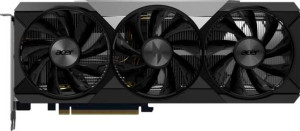
Acer Nitro Radeon RX 9070 OC
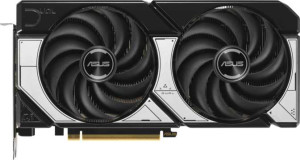
Asus Dual GeForce RTX 5070

Acer Nitro Radeon RX 9070 OC Asus Dual GeForce RTX 5070

Overview

Welcome to our in-depth specification comparison between the Acer Nitro Radeon RX 9070 OC and the Asus Dual GeForce RTX 5070, two compelling mid-to-high-end graphics cards from competing GPU architectures. Both cards share a 5 nm manufacturing process and DirectX 12 Ultimate support, yet they take noticeably different approaches to memory configuration, raw throughput figures, and feature sets. Read on to discover how these two cards stack up across performance metrics, memory bandwidth, and connectivity.

Common Features

  • Both cards support Double Precision Floating Point (DPFP).
  • Both cards support ECC memory.
  • Both cards use DirectX 12 Ultimate.
  • Both cards support OpenGL version 4.6.
  • Both cards support multi-display technology.
  • Both cards support ray tracing.
  • Both cards support 3D output.
  • XeSS (XMX) support is not available on either card.
  • LHR is not present on either card.
  • RGB lighting is available on both cards.
  • Both cards have an HDMI output with one HDMI 2.1b port.
  • Both cards have three DisplayPort outputs.
  • Neither card has USB-C ports.
  • Neither card has DVI outputs.
  • Neither card has mini DisplayPort outputs.
  • Both cards use PCI Express 5.
  • Both cards are built on a 5 nm semiconductor process.
  • Neither card uses air-water cooling.

Main Differences

  • GPU base clock speed is 1440 MHz on Acer Nitro Radeon RX 9070 OC and 2325 MHz on Asus Dual GeForce RTX 5070.
  • GPU turbo clock speed is 2700 MHz on Acer Nitro Radeon RX 9070 OC and 2512 MHz on Asus Dual GeForce RTX 5070.
  • Pixel rate is 345.6 GPixel/s on Acer Nitro Radeon RX 9070 OC and 201 GPixel/s on Asus Dual GeForce RTX 5070.
  • Floating-point performance is 38.71 TFLOPS on Acer Nitro Radeon RX 9070 OC and 30.87 TFLOPS on Asus Dual GeForce RTX 5070.
  • Texture rate is 604.8 GTexels/s on Acer Nitro Radeon RX 9070 OC and 482.3 GTexels/s on Asus Dual GeForce RTX 5070.
  • GPU memory speed is 2518 MHz on Acer Nitro Radeon RX 9070 OC and 1750 MHz on Asus Dual GeForce RTX 5070.
  • Shading units number 3584 on Acer Nitro Radeon RX 9070 OC and 6144 on Asus Dual GeForce RTX 5070.
  • Texture mapping units (TMUs) total 224 on Acer Nitro Radeon RX 9070 OC and 192 on Asus Dual GeForce RTX 5070.
  • Render output units (ROPs) total 128 on Acer Nitro Radeon RX 9070 OC and 80 on Asus Dual GeForce RTX 5070.
  • Effective memory speed is 20000 MHz on Acer Nitro Radeon RX 9070 OC and 28000 MHz on Asus Dual GeForce RTX 5070.
  • Maximum memory bandwidth is 644 GB/s on Acer Nitro Radeon RX 9070 OC and 672 GB/s on Asus Dual GeForce RTX 5070.
  • VRAM is 16 GB on Acer Nitro Radeon RX 9070 OC and 12 GB on Asus Dual GeForce RTX 5070.
  • Memory type is GDDR6 on Acer Nitro Radeon RX 9070 OC and GDDR7 on Asus Dual GeForce RTX 5070.
  • Memory bus width is 256-bit on Acer Nitro Radeon RX 9070 OC and 192-bit on Asus Dual GeForce RTX 5070.
  • OpenCL version is 2.2 on Acer Nitro Radeon RX 9070 OC and 3 on Asus Dual GeForce RTX 5070.
  • DLSS support is present on Asus Dual GeForce RTX 5070 but not available on Acer Nitro Radeon RX 9070 OC.
  • Resizable BAR implementation is AMD SAM on Acer Nitro Radeon RX 9070 OC and Intel Resizable BAR on Asus Dual GeForce RTX 5070.
  • GPU architecture is RDNA 4.0 on Acer Nitro Radeon RX 9070 OC and Blackwell on Asus Dual GeForce RTX 5070.
  • Thermal Design Power (TDP) is 245W on Acer Nitro Radeon RX 9070 OC and 250W on Asus Dual GeForce RTX 5070.
  • Transistor count is 53900 million on Acer Nitro Radeon RX 9070 OC and 31100 million on Asus Dual GeForce RTX 5070.
  • Card width is 295 mm on Acer Nitro Radeon RX 9070 OC and 249 mm on Asus Dual GeForce RTX 5070.
  • Card height is 120 mm on Acer Nitro Radeon RX 9070 OC and 126 mm on Asus Dual GeForce RTX 5070.
Specs Comparison
Acer Nitro Radeon RX 9070 OC

Acer Nitro Radeon RX 9070 OC

Asus Dual GeForce RTX 5070

Asus Dual GeForce RTX 5070

Performance:
GPU clock speed 1440 MHz 2325 MHz
GPU turbo 2700 MHz 2512 MHz
pixel rate 345.6 GPixel/s 201 GPixel/s
floating-point performance 38.71 TFLOPS 30.87 TFLOPS
texture rate 604.8 GTexels/s 482.3 GTexels/s
GPU memory speed 2518 MHz 1750 MHz
shading units 3584 6144
texture mapping units (TMUs) 224 192
render output units (ROPs) 128 80
Has Double Precision Floating Point (DPFP)

At first glance, the Asus Dual RTX 5070's 6,144 shading units versus the Acer Nitro RX 9070 OC's 3,584 looks like a commanding hardware lead — but raw shader count alone does not tell the full performance story. The RX 9070 OC counters with a significantly higher GPU turbo of 2700 MHz versus 2512 MHz on the RTX 5070, and that clock advantage compounds across every other throughput metric.

The practical impact shows up clearly in the pipeline numbers. The RX 9070 OC delivers a pixel rate of 345.6 GPixel/s and a texture rate of 604.8 GTexels/s, compared to the RTX 5070's 201 GPixel/s and 482.3 GTexels/s respectively — advantages of roughly 72% and 25%. Its 128 ROPs versus the RTX 5070's 80 means the AMD card can resolve and output significantly more pixels per clock, which translates directly to higher framerate headroom at demanding resolutions. Memory bandwidth potential also favors the RX 9070 OC, with a GPU memory speed of 2518 MHz against the RTX 5070's 1750 MHz. Combined, these figures explain why the RX 9070 OC leads in raw floating-point performance at 38.71 TFLOPS versus 30.87 TFLOPS — a roughly 25% advantage.

Based strictly on the provided specs, the Acer Nitro RX 9070 OC holds a clear edge in raw GPU performance for this group. Despite the RTX 5070's higher shader unit count, the AMD card outpaces it across every measurable throughput metric — pixel rate, texture rate, compute performance, ROP count, and memory speed. Both cards support Double Precision Floating Point, so there is no differentiation there. For users prioritizing rasterization throughput and compute headroom based on these specifications alone, the RX 9070 OC is the stronger performer.
Memory:
effective memory speed 20000 MHz 28000 MHz
maximum memory bandwidth 644 GB/s 672 GB/s
VRAM 16GB 12GB
GDDR version GDDR6 GDDR7
memory bus width 256-bit 192-bit
Supports ECC memory

The memory configurations here reflect two fundamentally different design philosophies. The RX 9070 OC pairs a wider 256-bit bus with GDDR6 and delivers 16GB of VRAM, while the RTX 5070 opts for a narrower 192-bit bus but compensates with the newer and faster GDDR7 standard, yielding 28000 MHz effective memory speed versus the RX 9070 OC's 20000 MHz. This is a classic bandwidth trade-off: AMD goes wide, Nvidia goes fast.

The result is a surprisingly close contest in maximum memory bandwidth — 672 GB/s for the RTX 5070 against 644 GB/s for the RX 9070 OC, a difference of under 5%. In practice, both cards will saturate memory-hungry workloads like 4K texture streaming and high-resolution rendering at nearly identical rates. Where the two diverge more meaningfully is VRAM capacity: the RX 9070 OC's 16GB offers a substantial buffer over the RTX 5070's 12GB. As modern games and creative applications increasingly push past the 10–12GB threshold — particularly with high-resolution texture packs and AI-assisted workloads — that extra headroom can be the difference between smooth performance and VRAM-induced stuttering. Both cards support ECC memory, which is a shared feature relevant mainly to professional compute use cases.

Overall, the RX 9070 OC holds the edge in this group, primarily due to its significantly larger 16GB VRAM pool. The RTX 5070's GDDR7 advantage in raw memory speed is real, but the near-identical bandwidth ceiling means the practical gap is narrow — while the 4GB capacity difference is concrete and increasingly consequential in real-world scenarios.

Features:
DirectX version DirectX 12 Ultimate DirectX 12 Ultimate
OpenGL version 4.6 4.6
OpenCL version 2.2 3
Supports multi-display technology
supports ray tracing
Supports 3D
supports DLSS
has XeSS (XMX)
AMD SAM / Intel Resizable BAR AMD SAM Intel Resizable BAR
has LHR
has RGB lighting
supported displays 4 4

For the most part, these two cards are evenly matched on the feature checklist — both support DirectX 12 Ultimate, ray tracing, multi-display setups across up to 4 screens, and RGB lighting. Where the comparison gets meaningful is in the areas where they actually diverge. The most consequential difference is the RTX 5070's support for DLSS, Nvidia's AI-driven upscaling technology, which the RX 9070 OC does not support. DLSS can deliver substantial frame rate boosts with minimal visual quality loss in the large library of games that implement it, making it one of the most impactful real-world features a GPU can carry.

The RX 9070 OC is not without its own advantage here: it supports AMD SAM (Smart Access Memory), which allows a compatible AMD CPU to access the full GPU VRAM pool simultaneously, reducing bottlenecks in supported titles. The RTX 5070 offers the equivalent via Intel Resizable BAR, which functions on a broader range of Intel and AMD platforms. Neither is strictly superior — the benefit depends on the user's CPU platform — but both cards offer this optimization capability. On the compute side, the RTX 5070's OpenCL 3 versus the RX 9070 OC's OpenCL 2.2 is a minor but real advantage for users running GPU-accelerated compute workloads outside of gaming.

The RTX 5070 holds a clear edge in this group, and it comes down almost entirely to DLSS. In a feature set that is otherwise nearly identical, access to Nvidia's widely supported upscaling ecosystem is a tangible, game-session-level advantage that AMD's card simply cannot match based on the provided specifications.

Ports:
has an HDMI output
HDMI ports 1 1
HDMI version HDMI 2.1b HDMI 2.1b
DisplayPort outputs 3 3
USB-C ports 0 0
DVI outputs 0 0
mini DisplayPort outputs 0 0

This is a rare case of complete parity. Both the RX 9070 OC and the RTX 5070 share an identical port layout: one HDMI 2.1b output and three DisplayPort outputs, with no USB-C, DVI, or mini DisplayPort connections on either card. There is simply nothing to differentiate them here.

The shared HDMI 2.1b standard is worth noting as a positive for both — it supports up to 10K resolution and high refresh rates at 4K, making either card future-ready for next-generation displays and compatible with the latest TVs without an adapter. The three DisplayPort outputs complement the HDMI port well, giving users full flexibility for multi-monitor configurations up to the four-display maximum both cards support. The absence of USB-C on either card means neither is suited for direct connection to USB-C monitors without an adapter, which is a shared limitation rather than a differentiator.

This group is a complete tie. Every port type, count, and version is identical across both cards, so connectivity should play no role in choosing between them.

General info:
GPU architecture RDNA 4.0 Blackwell
release date March 2025 March 2025
Thermal Design Power (TDP) 245W 250W
PCI Express (PCIe) version 5 5
semiconductor size 5 nm 5 nm
number of transistors 53900 million 31100 million
Has air-water cooling
width 295 mm 249 mm
height 120 mm 126 mm

Both cards are built on a 5 nm process node and connect via PCIe 5.0, so the foundational platform is identical. The most striking divergence in this group is transistor count: the RX 9070 OC's RDNA 4.0 architecture packs 53,900 million transistors compared to the RTX 5070's 31,100 million on its Blackwell architecture — a gap of over 70%. This signals a fundamentally different die design strategy, with AMD deploying significantly more silicon to achieve its performance targets, while Nvidia's Blackwell architecture aims for greater efficiency per transistor.

On power consumption, the two cards are essentially equivalent — 245W TDP for the RX 9070 OC versus 250W for the RTX 5070. Neither demands meaningfully more from a power supply, and both sit comfortably within the range a modern mid-to-high-end PSU handles without issue. Physical footprint is where a practical difference emerges: the RX 9070 OC is notably longer at 295 mm versus the RTX 5070's more compact 249 mm. That 46 mm difference matters in smaller mid-tower or compact ATX cases where clearance is limited, giving the RTX 5070 a meaningful installation advantage for space-constrained builds.

This group ends without a clear overall winner — each card holds a distinct advantage in a different dimension. The RX 9070 OC leads on transistor density, suggesting a more complex and feature-rich die, while the RTX 5070 wins on physical size, making it the more case-friendly option. Power draw is effectively a tie. The deciding factor here comes down to the buyer's build constraints rather than any objective performance consideration.

Comparison Summary & Verdict

After examining all the data, both cards serve distinct audiences. The Acer Nitro Radeon RX 9070 OC stands out with a higher floating-point performance of 38.71 TFLOPS, a larger 16 GB GDDR6 VRAM pool, more texture mapping units, and a superior pixel rate, making it a strong pick for workloads that benefit from raw rasterization throughput and ample video memory. The Asus Dual GeForce RTX 5070, on the other hand, brings a higher shading unit count of 6144, faster GDDR7 memory at 28000 MHz effective speed, and exclusive DLSS support, giving it an edge in AI-accelerated rendering pipelines and next-generation gaming workflows. Both cards are closely matched on TDP and connectivity, so the right choice ultimately comes down to your software ecosystem and workload priorities.

Acer Nitro Radeon RX 9070 OC
Buy Acer Nitro Radeon RX 9070 OC if...

Buy the Acer Nitro Radeon RX 9070 OC if you want higher raw floating-point performance, more VRAM at 16 GB, and a greater pixel and texture throughput for rasterization-heavy workloads.

Asus Dual GeForce RTX 5070
Buy Asus Dual GeForce RTX 5070 if...

Buy the Asus Dual GeForce RTX 5070 if you rely on DLSS-powered AI upscaling, prefer faster GDDR7 memory, or need a higher shading unit count for modern rendering pipelines.