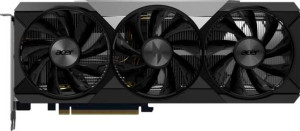
Acer Nitro Radeon RX 9070 OC
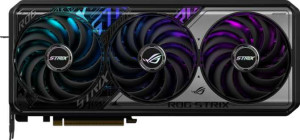
Asus ROG Strix GeForce RTX 5070 Ti

Acer Nitro Radeon RX 9070 OC Asus ROG Strix GeForce RTX 5070 Ti

Overview

Welcome to this in-depth specification face-off between the Acer Nitro Radeon RX 9070 OC and the Asus ROG Strix GeForce RTX 5070 Ti. These two cards share a surprising amount of common ground — including 16GB of VRAM, PCIe 5.0, and ray tracing support — yet diverge sharply when it comes to GPU architecture, memory technology, and feature sets. Read on as we break down every key specification to help you decide which card fits your needs.

Common Features

  • Both cards support Double Precision Floating Point (DPFP).
  • Both cards come with 16GB of VRAM.
  • Both cards use a 256-bit memory bus width.
  • ECC memory is supported on both cards.
  • Both cards are compatible with DirectX 12 Ultimate.
  • Both cards support OpenGL version 4.6.
  • Multi-display technology is supported on both cards.
  • Ray tracing is supported on both cards.
  • 3D support is available on both cards.
  • XeSS (XMX) support is not available on either card.
  • LHR (Lite Hash Rate) is not present on either card.
  • RGB lighting is featured on both cards.
  • Both cards have an HDMI output.
  • Both cards use HDMI version 2.1b.
  • Both cards include 3 DisplayPort outputs.
  • Neither card has USB-C ports.
  • Neither card has DVI outputs.
  • Neither card has mini DisplayPort outputs.
  • Both cards use PCI Express (PCIe) version 5.
  • Both cards are manufactured on a 5 nm semiconductor process.
  • Neither card uses air-water cooling.

Main Differences

  • GPU base clock speed is 1440 MHz on Acer Nitro Radeon RX 9070 OC and 2295 MHz on Asus ROG Strix GeForce RTX 5070 Ti.
  • GPU turbo clock is 2700 MHz on Acer Nitro Radeon RX 9070 OC and 2452 MHz on Asus ROG Strix GeForce RTX 5070 Ti.
  • Pixel rate is 345.6 GPixel/s on Acer Nitro Radeon RX 9070 OC and 235.4 GPixel/s on Asus ROG Strix GeForce RTX 5070 Ti.
  • Floating-point performance is 38.71 TFLOPS on Acer Nitro Radeon RX 9070 OC and 43.94 TFLOPS on Asus ROG Strix GeForce RTX 5070 Ti.
  • Texture rate is 604.8 GTexels/s on Acer Nitro Radeon RX 9070 OC and 686.6 GTexels/s on Asus ROG Strix GeForce RTX 5070 Ti.
  • GPU memory speed is 2518 MHz on Acer Nitro Radeon RX 9070 OC and 1750 MHz on Asus ROG Strix GeForce RTX 5070 Ti.
  • Shading units number 3584 on Acer Nitro Radeon RX 9070 OC and 8960 on Asus ROG Strix GeForce RTX 5070 Ti.
  • Texture mapping units (TMUs) total 224 on Acer Nitro Radeon RX 9070 OC and 280 on Asus ROG Strix GeForce RTX 5070 Ti.
  • Render output units (ROPs) total 128 on Acer Nitro Radeon RX 9070 OC and 96 on Asus ROG Strix GeForce RTX 5070 Ti.
  • Effective memory speed is 20000 MHz on Acer Nitro Radeon RX 9070 OC and 28000 MHz on Asus ROG Strix GeForce RTX 5070 Ti.
  • Maximum memory bandwidth is 644 GB/s on Acer Nitro Radeon RX 9070 OC and 896 GB/s on Asus ROG Strix GeForce RTX 5070 Ti.
  • Memory type is GDDR6 on Acer Nitro Radeon RX 9070 OC and GDDR7 on Asus ROG Strix GeForce RTX 5070 Ti.
  • OpenCL version is 2.2 on Acer Nitro Radeon RX 9070 OC and 3 on Asus ROG Strix GeForce RTX 5070 Ti.
  • DLSS support is present on Asus ROG Strix GeForce RTX 5070 Ti but not available on Acer Nitro Radeon RX 9070 OC.
  • Acer Nitro Radeon RX 9070 OC uses AMD SAM while Asus ROG Strix GeForce RTX 5070 Ti uses Intel Resizable BAR.
  • HDMI port count is 1 on Acer Nitro Radeon RX 9070 OC and 2 on Asus ROG Strix GeForce RTX 5070 Ti.
  • GPU architecture is RDNA 4.0 on Acer Nitro Radeon RX 9070 OC and Blackwell on Asus ROG Strix GeForce RTX 5070 Ti.
  • Thermal Design Power (TDP) is 245W on Acer Nitro Radeon RX 9070 OC and 300W on Asus ROG Strix GeForce RTX 5070 Ti.
  • Transistor count is 53900 million on Acer Nitro Radeon RX 9070 OC and 45600 million on Asus ROG Strix GeForce RTX 5070 Ti.
  • Card width is 295 mm on Acer Nitro Radeon RX 9070 OC and 332 mm on Asus ROG Strix GeForce RTX 5070 Ti.
  • Card height is 120 mm on Acer Nitro Radeon RX 9070 OC and 147.3 mm on Asus ROG Strix GeForce RTX 5070 Ti.
Specs Comparison
Acer Nitro Radeon RX 9070 OC

Acer Nitro Radeon RX 9070 OC

Asus ROG Strix GeForce RTX 5070 Ti

Asus ROG Strix GeForce RTX 5070 Ti

Performance:
GPU clock speed 1440 MHz 2295 MHz
GPU turbo 2700 MHz 2452 MHz
pixel rate 345.6 GPixel/s 235.4 GPixel/s
floating-point performance 38.71 TFLOPS 43.94 TFLOPS
texture rate 604.8 GTexels/s 686.6 GTexels/s
GPU memory speed 2518 MHz 1750 MHz
shading units 3584 8960
texture mapping units (TMUs) 224 280
render output units (ROPs) 128 96
Has Double Precision Floating Point (DPFP)

The most striking contrast here lies in shader count and raw compute throughput. The RTX 5070 Ti fields 8960 shading units versus just 3584 on the RX 9070 OC — a 2.5× advantage that directly fuels its lead in floating-point performance (43.94 TFLOPS vs 38.71 TFLOPS) and texture throughput (686.6 GTexels/s vs 604.8 GTexels/s). In practice, this translates to a meaningful edge in compute-heavy workloads like ray tracing, AI-accelerated rendering, and heavily tessellated scenes where parallelism matters most.

The RX 9070 OC punches back in two areas worth noting. Its 128 ROPs versus the 5070 Ti's 96 ROPs give it a higher pixel fill rate (345.6 GPixel/s vs 235.4 GPixel/s), which can benefit high-resolution rasterization and anti-aliasing workloads. It also runs significantly faster memory at 2518 MHz compared to 1750 MHz, which may help sustain bandwidth in memory-sensitive scenarios. The clock profile is also unusual: the RX 9070 OC has a low base of 1440 MHz but boosts aggressively to 2700 MHz, while the 5070 Ti operates in a tighter, more consistent window up to 2452 MHz — suggesting the AMD card may be more sensitive to sustained thermal headroom.

Overall, the RTX 5070 Ti holds the broader performance edge in this group: its combination of far more shader processors, higher TFLOPS, and superior texture throughput makes it the stronger card for general GPU-intensive workloads. The RX 9070 OC's rasterization fill-rate advantage is real but narrow in scope, and unlikely to offset the 5070 Ti's compute lead in most modern use cases.

Memory:
effective memory speed 20000 MHz 28000 MHz
maximum memory bandwidth 644 GB/s 896 GB/s
VRAM 16GB 16GB
GDDR version GDDR6 GDDR7
memory bus width 256-bit 256-bit
Supports ECC memory

Both the Acer Nitro Radeon RX 9070 OC and the Asus ROG Strix GeForce RTX 5070 Ti feature 16GB of VRAM, but they differ in terms of memory speed, bandwidth, and GDDR version. The Acer Nitro has an effective memory speed of 20000 MHz, whereas the Asus ROG Strix operates at a faster 28000 MHz. This results in a higher memory bandwidth for the Asus, with 896 GB/s compared to the Acer's 644 GB/s.

Both products use a 256-bit memory bus width, ensuring they have a similar data path for memory transactions. In terms of memory type, the Acer uses GDDR6 memory, while the Asus uses the newer GDDR7 memory, which can offer improvements in performance and efficiency.

Neither product has a notable difference in ECC memory support, as both support ECC memory, ensuring error correction capabilities for more reliable performance.

Features:
DirectX version DirectX 12 Ultimate DirectX 12 Ultimate
OpenGL version 4.6 4.6
OpenCL version 2.2 3
Supports multi-display technology
supports ray tracing
Supports 3D
supports DLSS
has XeSS (XMX)
AMD SAM / Intel Resizable BAR AMD SAM Intel Resizable BAR
has LHR
has RGB lighting
supported displays 4 4

The Acer Nitro Radeon RX 9070 OC and the Asus ROG Strix GeForce RTX 5070 Ti both support DirectX 12 Ultimate, OpenGL 4.6, and ray tracing, providing strong compatibility with modern gaming features. They also both support multi-display technology, 3D, and have RGB lighting, offering immersive visuals and customization options. However, there is a difference in their OpenCL versions, with the Acer card supporting version 2.2, while the Asus supports the newer version 3.

Another difference is in their support for DLSS, where the Acer does not support DLSS, while the Asus does. Both cards also lack support for XeSS (XMX), so neither offers Intel's machine learning upscaling. Additionally, the Acer card supports AMD SAM, whereas the Asus supports Intel Resizable BAR, which are technologies from different hardware manufacturers.

Both cards support up to 4 displays, ensuring excellent multi-monitor setups. Neither product has a limiter like LHR, so both are fully capable of handling workloads without restrictions. Overall, while both GPUs are quite similar in their features, the Asus has a slight edge with its DLSS support and newer OpenCL version.

Ports:
has an HDMI output
HDMI ports 1 2
HDMI version HDMI 2.1b HDMI 2.1b
DisplayPort outputs 3 3
USB-C ports 0 0
DVI outputs 0 0
mini DisplayPort outputs 0 0

The Acer Nitro Radeon RX 9070 OC and the Asus ROG Strix GeForce RTX 5070 Ti both feature HDMI 2.1b outputs, but they differ in the number of HDMI ports. The Acer card has one HDMI port, while the Asus card has two HDMI ports, providing more flexibility for connecting multiple HDMI displays. Both cards include three DisplayPort outputs, ensuring compatibility with a variety of monitors.

Neither product includes USB-C ports, DVI outputs, or mini DisplayPort outputs, so both are limited to HDMI and DisplayPort for display connections. Overall, while the Acer offers one HDMI port, the Asus provides an additional HDMI port, offering more options for users who need to connect multiple HDMI displays.

General info:
GPU architecture RDNA 4.0 Blackwell
release date March 2025 January 2025
Thermal Design Power (TDP) 245W 300W
PCI Express (PCIe) version 5 5
semiconductor size 5 nm 5 nm
number of transistors 53900 million 45600 million
Has air-water cooling
width 295 mm 332 mm
height 120 mm 147.3 mm

The Acer Nitro Radeon RX 9070 OC and the Asus ROG Strix GeForce RTX 5070 Ti differ in several general specifications. The Acer Nitro uses the RDNA 4.0 architecture, while the Asus uses Blackwell architecture. Both cards are built with a 5 nm semiconductor size. The Acer has 53900 million transistors, which is a higher count compared to the Asus's 45600 million transistors, indicating a difference in their transistor density.

In terms of Thermal Design Power (TDP), the Acer Nitro has a TDP of 245W, whereas the Asus ROG Strix has a higher TDP of 300W, suggesting that the Asus card may require more power for operation. Both cards use PCI Express version 5, providing high-speed connectivity. Neither card features air-water cooling, which may imply reliance on traditional cooling methods.

Regarding physical dimensions, the Acer card has a width of 295 mm and a height of 120 mm, while the Asus card is slightly larger with a width of 332 mm and a height of 147.3 mm. This size difference could affect case compatibility depending on the system's available space.

Comparison Summary & Verdict

After examining every specification, these two cards serve distinctly different audiences. The Acer Nitro Radeon RX 9070 OC stands out with a higher pixel rate of 345.6 GPixel/s, more render output units (128 ROPs), a lower 245W TDP, and a more compact physical footprint — making it an efficient, value-conscious choice for AMD ecosystem users who do not rely on DLSS. The Asus ROG Strix GeForce RTX 5070 Ti, on the other hand, dominates in raw compute with 8960 shading units, 43.94 TFLOPS of floating-point performance, GDDR7 memory delivering up to 896 GB/s of bandwidth, and full DLSS support — making it the clear pick for content creators and gamers who demand maximum throughput and cutting-edge AI-powered rendering features.

Acer Nitro Radeon RX 9070 OC
Buy Acer Nitro Radeon RX 9070 OC if...

Buy the Acer Nitro Radeon RX 9070 OC if you want a power-efficient AMD card with a higher pixel rate, more ROPs, and a smaller form factor at a lower TDP of 245W.

Asus ROG Strix GeForce RTX 5070 Ti
Buy Asus ROG Strix GeForce RTX 5070 Ti if...

Buy the Asus ROG Strix GeForce RTX 5070 Ti if you need maximum compute performance, faster GDDR7 memory bandwidth, and essential features like DLSS for AI-enhanced gaming or creative workloads.