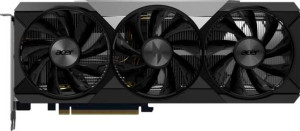
Acer Nitro Radeon RX 9070 OC
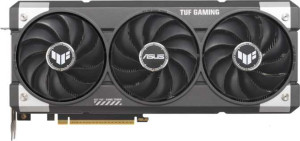
Asus TUF Gaming GeForce RTX 5060 Ti 16GB

Acer Nitro Radeon RX 9070 OC Asus TUF Gaming GeForce RTX 5060 Ti 16GB

Overview

When choosing between the Acer Nitro Radeon RX 9070 OC and the Asus TUF Gaming GeForce RTX 5060 Ti 16GB, the decision is anything but simple. Both cards arrive with identical 16GB VRAM pools and a cutting-edge 5 nm process node, yet they diverge sharply in raw compute throughput, memory architecture, and platform-exclusive features. This detailed comparison dives into their performance metrics, memory subsystems, power profiles, and feature sets to help you identify which GPU best matches your needs.

Common Features

  • Both GPUs have 16GB of VRAM.
  • Both GPUs support ECC memory.
  • Both GPUs feature Double Precision Floating Point (DPFP).
  • Both GPUs support DirectX 12 Ultimate.
  • Both GPUs support OpenGL 4.6.
  • Both GPUs support multi-display technology.
  • Both GPUs support ray tracing.
  • Both GPUs support 3D rendering.
  • XeSS (XMX) support is not available on either GPU.
  • LHR (Lite Hash Rate) is not present on either GPU.
  • Both GPUs feature RGB lighting.
  • Both GPUs have one HDMI output port.
  • Both GPUs use HDMI version 2.1b.
  • Both GPUs have three DisplayPort outputs.
  • Neither GPU has USB-C ports.
  • Neither GPU has DVI outputs.
  • Neither GPU has mini DisplayPort outputs.
  • Both GPUs use PCI Express 5.
  • Both GPUs are manufactured on a 5 nm semiconductor process.
  • Neither GPU uses air-water cooling.

Main Differences

  • GPU base clock speed is 1440 MHz on Acer Nitro Radeon RX 9070 OC and 2407 MHz on Asus TUF Gaming GeForce RTX 5060 Ti 16GB.
  • GPU turbo clock speed is 2700 MHz on Acer Nitro Radeon RX 9070 OC and 2572 MHz on Asus TUF Gaming GeForce RTX 5060 Ti 16GB.
  • Pixel rate is 345.6 GPixel/s on Acer Nitro Radeon RX 9070 OC and 123.5 GPixel/s on Asus TUF Gaming GeForce RTX 5060 Ti 16GB.
  • Floating-point performance is 38.71 TFLOPS on Acer Nitro Radeon RX 9070 OC and 23.7 TFLOPS on Asus TUF Gaming GeForce RTX 5060 Ti 16GB.
  • Texture rate is 604.8 GTexels/s on Acer Nitro Radeon RX 9070 OC and 370.4 GTexels/s on Asus TUF Gaming GeForce RTX 5060 Ti 16GB.
  • GPU memory speed is 2518 MHz on Acer Nitro Radeon RX 9070 OC and 1750 MHz on Asus TUF Gaming GeForce RTX 5060 Ti 16GB.
  • Shading units count is 3584 on Acer Nitro Radeon RX 9070 OC and 4608 on Asus TUF Gaming GeForce RTX 5060 Ti 16GB.
  • Texture mapping units (TMUs) number 224 on Acer Nitro Radeon RX 9070 OC and 144 on Asus TUF Gaming GeForce RTX 5060 Ti 16GB.
  • Render output units (ROPs) number 128 on Acer Nitro Radeon RX 9070 OC and 48 on Asus TUF Gaming GeForce RTX 5060 Ti 16GB.
  • Effective memory speed is 20000 MHz on Acer Nitro Radeon RX 9070 OC and 28000 MHz on Asus TUF Gaming GeForce RTX 5060 Ti 16GB.
  • Maximum memory bandwidth is 644 GB/s on Acer Nitro Radeon RX 9070 OC and 448 GB/s on Asus TUF Gaming GeForce RTX 5060 Ti 16GB.
  • GDDR version is GDDR6 on Acer Nitro Radeon RX 9070 OC and GDDR7 on Asus TUF Gaming GeForce RTX 5060 Ti 16GB.
  • Memory bus width is 256-bit on Acer Nitro Radeon RX 9070 OC and 128-bit on Asus TUF Gaming GeForce RTX 5060 Ti 16GB.
  • OpenCL version is 2.2 on Acer Nitro Radeon RX 9070 OC and 3 on Asus TUF Gaming GeForce RTX 5060 Ti 16GB.
  • DLSS support is present on Asus TUF Gaming GeForce RTX 5060 Ti 16GB but not available on Acer Nitro Radeon RX 9070 OC.
  • Resizable BAR technology is AMD SAM on Acer Nitro Radeon RX 9070 OC and Intel Resizable BAR on Asus TUF Gaming GeForce RTX 5060 Ti 16GB.
  • GPU architecture is RDNA 4.0 on Acer Nitro Radeon RX 9070 OC and Blackwell on Asus TUF Gaming GeForce RTX 5060 Ti 16GB.
  • Thermal Design Power (TDP) is 245W on Acer Nitro Radeon RX 9070 OC and 180W on Asus TUF Gaming GeForce RTX 5060 Ti 16GB.
  • Number of transistors is 53900 million on Acer Nitro Radeon RX 9070 OC and 21900 million on Asus TUF Gaming GeForce RTX 5060 Ti 16GB.
  • Card width is 295 mm on Acer Nitro Radeon RX 9070 OC and 302 mm on Asus TUF Gaming GeForce RTX 5060 Ti 16GB, and card height is 120 mm on Acer Nitro Radeon RX 9070 OC and 133.5 mm on Asus TUF Gaming GeForce RTX 5060 Ti 16GB.
Specs Comparison
Acer Nitro Radeon RX 9070 OC

Acer Nitro Radeon RX 9070 OC

Asus TUF Gaming GeForce RTX 5060 Ti 16GB

Asus TUF Gaming GeForce RTX 5060 Ti 16GB

Performance:
GPU clock speed 1440 MHz 2407 MHz
GPU turbo 2700 MHz 2572 MHz
pixel rate 345.6 GPixel/s 123.5 GPixel/s
floating-point performance 38.71 TFLOPS 23.7 TFLOPS
texture rate 604.8 GTexels/s 370.4 GTexels/s
GPU memory speed 2518 MHz 1750 MHz
shading units 3584 4608
texture mapping units (TMUs) 224 144
render output units (ROPs) 128 48
Has Double Precision Floating Point (DPFP)

Looking at raw throughput, the Acer Nitro RX 9070 OC holds a commanding lead across the most performance-critical metrics. Its 38.71 TFLOPS of floating-point performance outpaces the RTX 5060 Ti's 23.7 TFLOPS by roughly 63%, and this gap is echoed in texture throughput (604.8 GTexels/s vs. 370.4 GTexels/s) and, most strikingly, pixel fill rate (345.6 GPixel/s vs. 123.5 GPixel/s). In practice, a higher pixel fill rate directly enables faster rendering of high-resolution frames, meaning the RX 9070 OC is considerably better equipped for 1440p and 4K workloads where pixel output becomes the bottleneck.

The RTX 5060 Ti counters with a higher base clock of 2407 MHz and a larger shading unit count (4608 vs. 3584), but its turbo ceiling is actually lower at 2572 MHz compared to the RX 9070 OC's 2700 MHz. More importantly, the 5060 Ti's ROPs are sharply limited at just 48 versus the RX 9070 OC's 128 — ROPs are the final stage of the rendering pipeline responsible for writing pixels to the framebuffer, and a deficit this wide directly explains its much lower pixel rate despite having more shading units on paper. Similarly, the RX 9070 OC's GPU memory speed of 2518 MHz outclasses the 5060 Ti's 1750 MHz, reducing potential memory bandwidth bottlenecks under heavy loads.

Both cards support Double Precision Floating Point (DPFP), making them each viable for compute workloads beyond gaming. However, overall the RX 9070 OC has a clear and broad performance advantage in this group: it leads in TFLOPS, fill rate, texture throughput, memory speed, TMU count, and ROP count. The RTX 5060 Ti's higher shading unit count is not enough to offset its architectural constraints, particularly its low ROP count, which creates a meaningful ceiling on rendering output.
Memory:
effective memory speed 20000 MHz 28000 MHz
maximum memory bandwidth 644 GB/s 448 GB/s
VRAM 16GB 16GB
GDDR version GDDR6 GDDR7
memory bus width 256-bit 128-bit
Supports ECC memory

Both cards arrive with 16GB of VRAM, a meaningful equality that ensures neither has an edge in handling large textures, high-resolution assets, or memory-hungry workloads at the capacity level. The more revealing story, however, is in how each card moves data. The RX 9070 OC uses GDDR6 on a wide 256-bit bus, while the RTX 5060 Ti pairs the newer GDDR7 standard with a narrower 128-bit bus. These are fundamentally different architectural bets on how to achieve bandwidth.

The outcome of those bets is decisive: the RX 9070 OC delivers 644 GB/s of maximum memory bandwidth versus the RTX 5060 Ti's 448 GB/s — a 44% advantage. Bandwidth is the lifeblood of GPU performance, governing how quickly the chip can feed data to its compute units. In practice, this gap matters most at higher resolutions and with demanding texture workloads, where a starved memory bus becomes a hard ceiling on frame rates. The RTX 5060 Ti's GDDR7 offers a higher effective clock speed (28000 MHz vs. 20000 MHz), but its halved bus width prevents it from translating that speed advantage into competitive total throughput.

Both cards support ECC memory, which is a useful shared feature for users running compute or professional workloads where data integrity matters. On the whole though, the RX 9070 OC holds a clear memory bandwidth advantage — and given how directly bandwidth feeds into the rendering pipeline performance highlighted in other spec groups, this reinforces its position as the stronger card for bandwidth-sensitive scenarios.

Features:
DirectX version DirectX 12 Ultimate DirectX 12 Ultimate
OpenGL version 4.6 4.6
OpenCL version 2.2 3
Supports multi-display technology
supports ray tracing
Supports 3D
supports DLSS
has XeSS (XMX)
AMD SAM / Intel Resizable BAR AMD SAM Intel Resizable BAR
has LHR
has RGB lighting
supported displays 4 4

At the foundation, these two cards are remarkably well-matched on paper: both support DirectX 12 Ultimate, OpenGL 4.6, ray tracing, 3D, multi-display output up to 4 screens, and RGB lighting. Neither carries LHR restrictions, which is a practical positive for compute users. The RTX 5060 Ti edges ahead with OpenCL 3.0 versus the RX 9070 OC's OpenCL 2.2, a difference that could matter in certain compute and creative workflows that specifically target the newer OpenCL specification.

The sharpest divergence in this group is upscaling support. The RTX 5060 Ti supports DLSS, Nvidia's AI-driven upscaling technology, while the RX 9070 OC does not support DLSS — and neither card supports XeSS. In real-world gaming, DLSS can significantly boost frame rates at higher resolutions with minimal visual quality loss, making it one of the most impactful software features a GPU can offer. The RX 9070 OC's lack of DLSS support is a notable omission in this group, though users should bear in mind that AMD cards typically leverage FSR as an alternative upscaling path — however, FSR data is not present in the provided specs and cannot be considered here.

Based strictly on the data provided, the RTX 5060 Ti holds the edge in features: its DLSS support is a meaningful real-world differentiator for gamers seeking upscaled performance headroom, and its newer OpenCL version adds a modest compute advantage. The RX 9070 OC matches it across all other listed feature categories, making DLSS the single but significant deciding factor in this group.

Ports:
has an HDMI output
HDMI ports 1 1
HDMI version HDMI 2.1b HDMI 2.1b
DisplayPort outputs 3 3
USB-C ports 0 0
DVI outputs 0 0
mini DisplayPort outputs 0 0

This is one of the rare groups where the two cards are in complete lockstep. Both the RX 9070 OC and the RTX 5060 Ti offer an identical port layout: 1 HDMI 2.1b output and 3 DisplayPort outputs, with no USB-C, DVI, or mini DisplayPort connections on either card. For users planning a multi-monitor setup, both cards comfortably support up to 4 simultaneous displays, matching the maximum supported display count noted in their respective feature specs.

The shared HDMI 2.1b standard is worth noting as a positive for both: it supports high refresh rates at 4K and even 8K resolutions, as well as features like Variable Refresh Rate (VRR), making both cards well-suited for modern high-end displays and TVs. The triple DisplayPort output configuration similarly ensures flexibility for users mixing monitor types or building a multi-display workstation.

There is no differentiator to call here — this group is a complete tie. Connectivity will not be a deciding factor between these two cards.

General info:
GPU architecture RDNA 4.0 Blackwell
release date March 2025 April 2025
Thermal Design Power (TDP) 245W 180W
PCI Express (PCIe) version 5 5
semiconductor size 5 nm 5 nm
number of transistors 53900 million 21900 million
Has air-water cooling
width 295 mm 302 mm
height 120 mm 133.5 mm

Despite sharing the same 5nm process node and PCIe 5.0 interface, the architectural philosophies behind these two cards diverge sharply. AMD's RDNA 4.0 architecture powers the RX 9070 OC with a massive 53,900 million transistors, compared to the Nvidia Blackwell-based RTX 5060 Ti's 21,900 million — a gap of more than 2.4x. This transistor count advantage directly underpins the RX 9070 OC's commanding leads in compute throughput and bandwidth seen in other spec groups, as more transistors generally enable more execution resources and wider data paths on the die.

The trade-off is power consumption. The RX 9070 OC carries a 245W TDP versus the RTX 5060 Ti's notably more frugal 180W — a 65W difference that is consequential for system builders. A higher TDP demands a more robust PSU, better case airflow, and typically results in more heat and fan noise under load. For small form factor builds or systems with tight power budgets, the RTX 5060 Ti's efficiency profile is a genuine practical advantage. Both cards rely on air cooling only, so thermal management falls entirely on the cooler design and chassis airflow in either case.

Physically, the two cards are close in size, with the RTX 5060 Ti being marginally larger at 302 × 133.5 mm versus the RX 9070 OC's 295 × 120 mm — an unlikely deciding factor for most builds. Overall, this group presents a meaningful trade-off rather than a clear winner: the RX 9070 OC offers substantially more silicon and raw architectural scale, while the RTX 5060 Ti holds a significant efficiency advantage at 65W less power draw, making it the more attractive option for power-conscious or thermally constrained systems.

Comparison Summary & Verdict

Both GPUs are compelling options, but they cater to distinctly different priorities. The Acer Nitro Radeon RX 9070 OC holds a commanding lead in raw rasterization power, delivering 38.71 TFLOPS of floating-point performance, a broader 256-bit memory bus, and a substantially higher memory bandwidth of 644 GB/s, making it the go-to choice for users who demand maximum throughput in compute-heavy or traditional rendering tasks. On the other side, the Asus TUF Gaming GeForce RTX 5060 Ti 16GB responds with a notably leaner 180W TDP, faster GDDR7 memory at 28000 MHz effective speed, and the significant advantage of DLSS support for AI-driven upscaling, positioning it as the smarter pick for efficiency-focused gamers who want next-generation upscaling technology in their workflow.

Acer Nitro Radeon RX 9070 OC
Buy Acer Nitro Radeon RX 9070 OC if...

Buy the Acer Nitro Radeon RX 9070 OC if you prioritize maximum raw performance, with higher floating-point throughput, greater memory bandwidth, and a wider 256-bit memory bus for demanding workloads.

Asus TUF Gaming GeForce RTX 5060 Ti 16GB
Buy Asus TUF Gaming GeForce RTX 5060 Ti 16GB if...

Buy the Asus TUF Gaming GeForce RTX 5060 Ti 16GB if you value lower power consumption, faster GDDR7 memory, and exclusive DLSS support for AI-enhanced gaming.