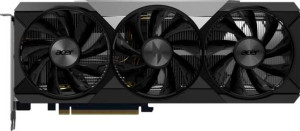
Much of this feature set is shared ground. Both cards support DirectX 12 Ultimate, OpenGL 4.6, ray tracing, 3D output, and up to 4 displays simultaneously — so neither has a meaningful edge on foundational compatibility. The one minor technical footnote is that the RTX 5060 Ti supports OpenCL 3 versus the RX 9070 OC's OpenCL 2.2, though this difference only matters in specific GPU compute workflows and will be irrelevant to the vast majority of users.
The most practically significant differentiator is upscaling support. The RTX 5060 Ti supports DLSS, Nvidia's AI-driven upscaling technology, which is widely implemented across modern games and can deliver substantial frame rate boosts with minimal visual quality loss. The RX 9070 OC, by contrast, does not support DLSS — and crucially, it also lacks XeSS support, leaving it reliant on AMD's own upscaling solution, which is not listed among the provided specs. For users who heavily leverage upscaling to push performance headroom, the RTX 5060 Ti's DLSS support is a tangible in-game advantage. On the flip side, the RX 9070 OC includes RGB lighting, which the RTX 5060 Ti lacks — a purely aesthetic differentiator that matters only to builders focused on system appearance.
On balance, the Nvidia GeForce RTX 5060 Ti holds the meaningful feature advantage in this group, solely due to DLSS. Resizable BAR support is present on both cards in their respective platform implementations (AMD SAM vs Intel Resizable BAR), so that is effectively a wash. RGB aesthetics aside, DLSS is the one feature here with a direct, measurable impact on gaming performance, and its absence on the RX 9070 OC is a notable gap for users who prioritize upscaling-driven frame rate gains.