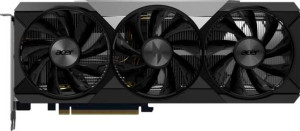
Acer Nitro Radeon RX 9070 OC
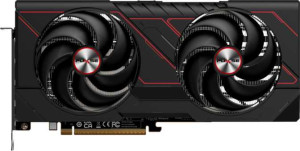
Sapphire Pulse Radeon RX 9070

Acer Nitro Radeon RX 9070 OC Sapphire Pulse Radeon RX 9070

Overview

Choosing between the Acer Nitro Radeon RX 9070 OC and the Sapphire Pulse Radeon RX 9070 means weighing raw clock-speed performance against power efficiency and a more compact footprint. Both cards are built on the same RDNA 4.0 architecture with 16GB GDDR6 memory, ray tracing, and FSR4 support, yet they diverge on boost clocks, thermal design power, port layouts, and aesthetics. Read on to see exactly how these two RDNA 4.0 contenders compare across every key specification.

Common Features

  • GPU memory speed is 2518 MHz on both products.
  • Both products have 3584 shading units.
  • Both products have 224 texture mapping units (TMUs).
  • Both products have 128 render output units (ROPs).
  • Double Precision Floating Point (DPFP) is supported on both products.
  • Effective memory speed is 20000 MHz on both products.
  • Both products feature 16GB of VRAM.
  • Both products use GDDR6 memory.
  • Both products have a 256-bit memory bus width.
  • ECC memory is supported on both products.
  • Both products support DirectX 12 Ultimate.
  • OpenGL version 4.6 is available on both products.
  • OpenCL version 2.2 is available on both products.
  • Multi-display technology is supported on both products.
  • Ray tracing is supported on both products.
  • 3D support is available on both products.
  • DLSS is not supported on either product.
  • FSR4 is available on both products.
  • Both products have an HDMI 2.1b output.
  • Neither product has USB-C ports, DVI outputs, or mini DisplayPort outputs.
  • Both products are built on the RDNA 4.0 GPU architecture.
  • Both products use PCIe version 5.
  • Both products are manufactured on a 5 nm semiconductor process.
  • Both products have 53900 million transistors.
  • Neither product features air-water cooling.

Main Differences

  • GPU base clock speed is 1440 MHz on Acer Nitro Radeon RX 9070 OC and 1330 MHz on Sapphire Pulse Radeon RX 9070.
  • GPU turbo clock speed is 2700 MHz on Acer Nitro Radeon RX 9070 OC and 2520 MHz on Sapphire Pulse Radeon RX 9070.
  • Pixel rate is 345.6 GPixel/s on Acer Nitro Radeon RX 9070 OC and 322.6 GPixel/s on Sapphire Pulse Radeon RX 9070.
  • Floating-point performance is 38.71 TFLOPS on Acer Nitro Radeon RX 9070 OC and 36.13 TFLOPS on Sapphire Pulse Radeon RX 9070.
  • Texture rate is 604.8 GTexels/s on Acer Nitro Radeon RX 9070 OC and 564.5 GTexels/s on Sapphire Pulse Radeon RX 9070.
  • Maximum memory bandwidth is 644 GB/s on Acer Nitro Radeon RX 9070 OC and 644.6 GB/s on Sapphire Pulse Radeon RX 9070.
  • RGB lighting is present on Acer Nitro Radeon RX 9070 OC but not available on Sapphire Pulse Radeon RX 9070.
  • HDMI port count is 1 on Acer Nitro Radeon RX 9070 OC and 2 on Sapphire Pulse Radeon RX 9070.
  • DisplayPort outputs number 3 on Acer Nitro Radeon RX 9070 OC and 2 on Sapphire Pulse Radeon RX 9070.
  • Thermal Design Power (TDP) is 245W on Acer Nitro Radeon RX 9070 OC and 220W on Sapphire Pulse Radeon RX 9070.
  • Card width is 295 mm on Acer Nitro Radeon RX 9070 OC and 280 mm on Sapphire Pulse Radeon RX 9070.
  • Card height is 120 mm on Acer Nitro Radeon RX 9070 OC and 120.3 mm on Sapphire Pulse Radeon RX 9070.
Specs Comparison
Acer Nitro Radeon RX 9070 OC

Acer Nitro Radeon RX 9070 OC

Sapphire Pulse Radeon RX 9070

Sapphire Pulse Radeon RX 9070

Performance:
GPU clock speed 1440 MHz 1330 MHz
GPU turbo 2700 MHz 2520 MHz
pixel rate 345.6 GPixel/s 322.6 GPixel/s
floating-point performance 38.71 TFLOPS 36.13 TFLOPS
texture rate 604.8 GTexels/s 564.5 GTexels/s
GPU memory speed 2518 MHz 2518 MHz
shading units 3584 3584
texture mapping units (TMUs) 224 224
render output units (ROPs) 128 128
Has Double Precision Floating Point (DPFP)

Both cards share the exact same core silicon — identical 3584 shading units, 224 TMUs, and 128 ROPs — meaning any performance difference between them is purely a product of clock speeds. This is the classic factory-overclocked variant versus a reference-tuned card scenario. The Acer Nitro RX 9070 OC ships with a base clock of 1440 MHz and a boost of 2700 MHz, while the Sapphire Pulse runs at 1330 MHz base and 2520 MHz boost — a gap of roughly 7% at the top end.

That clock speed delta flows directly into every throughput metric. The Acer delivers 38.71 TFLOPS of floating-point performance versus 36.13 TFLOPS on the Sapphire, and its texture fill rate of 604.8 GTexels/s outpaces the Pulse's 564.5 GTexels/s by a similar margin. In practice, this translates to a measurable but modest real-world advantage — think a few extra frames per second at high resolutions or slightly more headroom for demanding rasterization workloads. Memory speed is identical at 2518 MHz on both, so bandwidth is not a differentiator here.

The Acer Nitro RX 9070 OC holds a clear, consistent performance edge in this group, driven entirely by its factory overclock. Both cards support Double Precision Floating Point, which matters for compute and professional workloads. If raw GPU throughput is the priority, the Acer wins outright; the Sapphire Pulse trades that performance ceiling for what is typically a quieter or more power-efficient tune at stock settings — though those factors fall outside this group's data.

Memory:
effective memory speed 20000 MHz 20000 MHz
maximum memory bandwidth 644 GB/s 644.6 GB/s
VRAM 16GB 16GB
GDDR version GDDR6 GDDR6
memory bus width 256-bit 256-bit
Supports ECC memory

When it comes to memory, these two cards are essentially mirror images of each other. Both carry 16GB of GDDR6 over a 256-bit bus, running at an effective speed of 20000 MHz — a configuration that delivers just over 644 GB/s of memory bandwidth. That bandwidth figure is practically identical between the two, with the Sapphire Pulse edging ahead by a negligible 0.6 GB/s, a difference so small it would never be measurable in any real workload.

The practical significance of this memory setup is worth contextualizing. At 16GB, both cards are well-equipped for 4K gaming, high-resolution texture packs, and memory-intensive creative tasks, sitting comfortably above the threshold where VRAM capacity becomes a bottleneck in modern titles. The 256-bit bus paired with GDDR6 at this speed is a proven, balanced combination that avoids the high power draw of GDDR7 while still delivering competitive throughput. ECC memory support on both cards is a noteworthy bonus, adding a layer of data integrity that benefits compute and professional use cases beyond pure gaming.

This group is a dead heat. No meaningful differentiator exists between the Acer Nitro RX 9070 OC and the Sapphire Pulse RX 9070 in memory configuration — a buyer choosing between them can treat this category as a complete non-factor in their decision.

Features:
DirectX version DirectX 12 Ultimate DirectX 12 Ultimate
OpenGL version 4.6 4.6
OpenCL version 2.2 2.2
Supports multi-display technology
supports ray tracing
Supports 3D
supports DLSS
has FSR4
has XeSS (XMX)
AMD SAM / Intel Resizable BAR AMD SAM AMD SAM
has LHR
has RGB lighting
supported displays 4 4

Feature-wise, these two cards share the same foundational software and API stack — DirectX 12 Ultimate, OpenGL 4.6, OpenCL 2.2, ray tracing support, and AMD's FSR4 upscaling. That last point deserves emphasis: FSR4 is AMD's latest and most capable upscaling generation, offering meaningful image quality improvements over its predecessors and serving as the direct AMD counterpart to NVIDIA's DLSS — which, expectedly, neither card supports. AMD SAM (Smart Access Memory) is present on both, allowing a compatible AMD CPU to access the full VRAM pool for potential performance gains in supported titles.

The one tangible differentiator in this group is RGB lighting, which the Acer Nitro RX 9070 OC includes and the Sapphire Pulse does not. This is purely an aesthetic consideration with no bearing on gaming or compute performance, but it is a real distinction for builders who care about a cohesive lit system aesthetic. Both cards top out at 4 supported displays, which is ample for virtually any multi-monitor setup.

For anyone evaluating these cards on functional features alone, this group is effectively a tie. The Acer Nitro holds a minor edge only if RGB lighting matters to the buyer — otherwise, every capability that impacts actual usage is identical across both products.

Ports:
has an HDMI output
HDMI ports 1 2
HDMI version HDMI 2.1b HDMI 2.1b
DisplayPort outputs 3 2
USB-C ports 0 0
DVI outputs 0 0
mini DisplayPort outputs 0 0

Both cards offer a total of four display outputs and share the same HDMI 2.1b standard — a capable protocol that supports 4K at high refresh rates and 8K output. Where they diverge is in how those four ports are distributed. The Acer Nitro RX 9070 OC goes with 1 HDMI and 3 DisplayPort, while the Sapphire Pulse flips the balance to 2 HDMI and 2 DisplayPort.

This distinction is more meaningful than it might first appear. DisplayPort is generally preferred for PC monitors, especially high-refresh gaming panels, while HDMI is the dominant standard for TVs, capture cards, and consumer AV equipment. A user running a mixed setup — say, a gaming monitor plus a TV for couch gaming or media — would find the Sapphire Pulse's dual HDMI layout more convenient, eliminating the need for adapters. Conversely, the Acer's three DisplayPort outputs suit a traditional triple-monitor PC setup more naturally.

Neither layout is objectively superior; the edge here is entirely use-case dependent. The Sapphire Pulse has the advantage for HDMI-heavy or TV-integrated setups, while the Acer Nitro serves multi-monitor desktop builds better. Buyers should simply match the port mix to the displays they already own or plan to connect.

General info:
GPU architecture RDNA 4.0 RDNA 4.0
release date March 2025 March 2025
Thermal Design Power (TDP) 245W 220W
PCI Express (PCIe) version 5 5
semiconductor size 5 nm 5 nm
number of transistors 53900 million 53900 million
Has air-water cooling
width 295 mm 280 mm
height 120 mm 120.3 mm

At the silicon level, these two cards are built from the same foundation: identical RDNA 4.0 architecture, the same 5nm process node, and an equal transistor count of 53.9 billion. PCIe 5.0 support on both ensures neither card is bottlenecked by the interface on any modern platform. In short, the underlying chip is the same — what differs is how each partner has chosen to tune and package it.

The most consequential difference in this group is TDP. The Acer Nitro RX 9070 OC is rated at 245W, while the Sapphire Pulse comes in at 220W — a 25W gap that directly reflects the Acer's higher factory clock speeds noted in the performance specs. For the end user, this means the Acer will demand more from the PSU and generate more heat under load, while the Sapphire's lower power envelope makes it a more efficient card at stock settings and a friendlier fit for tighter or thermally constrained cases. The physical footprint tells a similar story: the Acer measures 295mm in length versus the Sapphire's 280mm, a 15mm difference that could matter in smaller mid-tower or compact ITX builds.

For buyers prioritizing efficiency and case compatibility, the Sapphire Pulse holds a genuine edge here — it runs cooler, draws less power, and fits into tighter spaces. The Acer Nitro trades those advantages for the performance gains its higher TDP enables. Neither card uses liquid cooling, so adequate airflow in the chosen case remains important for both.

Comparison Summary & Verdict

After examining every specification, both cards share a rock-solid foundation: identical 16GB GDDR6 memory, near-equal memory bandwidth, and a full modern feature set including ray tracing, FSR4, and DirectX 12 Ultimate. The Acer Nitro Radeon RX 9070 OC pulls ahead in outright performance, posting a higher 2700 MHz boost clock, 38.71 TFLOPS of floating-point performance, and three DisplayPort outputs, making it the stronger pick for enthusiasts chasing maximum frame rates or multi-monitor productivity. The Sapphire Pulse Radeon RX 9070, however, answers with a notably lower 220W TDP, a more compact 280mm length, dual HDMI 2.1b ports, and near-identical real-world memory bandwidth, making it the smarter choice for small-form-factor builds or home-theater setups where power draw and connectivity flexibility matter most. Neither card is a wrong choice; your priorities simply decide the winner.

Acer Nitro Radeon RX 9070 OC
Buy Acer Nitro Radeon RX 9070 OC if...

Buy the Acer Nitro Radeon RX 9070 OC if you want the highest possible boost clocks and floating-point performance, RGB aesthetics, or need three DisplayPort outputs for a multi-monitor setup.

Sapphire Pulse Radeon RX 9070
Buy Sapphire Pulse Radeon RX 9070 if...

Buy the Sapphire Pulse Radeon RX 9070 if you prioritize lower power consumption (220W TDP), a more compact card length, or dual HDMI 2.1b ports for a home-theater or small-form-factor build.