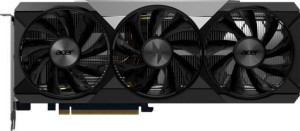
Acer Nitro Radeon RX 9070
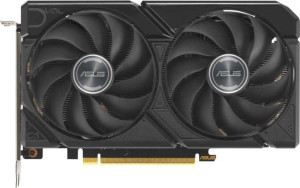
Asus Dual Radeon RX 9060 XT 16GB

Acer Nitro Radeon RX 9070 Asus Dual Radeon RX 9060 XT 16GB

Overview

Welcome to our in-depth specification comparison between the Acer Nitro Radeon RX 9070 and the Asus Dual Radeon RX 9060 XT 16GB, two RDNA 4.0-based graphics cards that share the same 16GB GDDR6 memory pool yet take very different approaches to raw compute power and physical footprint. We examine their shader counts, memory bandwidth, thermal profiles, and connectivity options to help you find the right fit for your build.

Common Features

  • Both cards share the same GPU memory speed of 2518 MHz.
  • Double Precision Floating Point (DPFP) support is available on both products.
  • Both cards have an effective memory speed of 20000 MHz.
  • Both cards come with 16GB of VRAM.
  • Both use GDDR6 memory.
  • ECC memory support is available on both products.
  • Both cards support DirectX 12 Ultimate.
  • Both cards support OpenGL version 4.6.
  • Both cards support OpenCL version 2.2.
  • Multi-display technology support is available on both products.
  • Ray tracing support is available on both products.
  • 3D support is available on both products.
  • DLSS support is not available on either product.
  • FSR4 support is available on both products.
  • Both cards include one HDMI output running HDMI version 2.1b.
  • Neither card includes USB-C ports, DVI outputs, or mini DisplayPort outputs.
  • Both cards are built on the RDNA 4.0 GPU architecture.
  • Both cards use PCIe version 5.
  • Air-water cooling is not available on either product.
  • Both cards share the same height of 120 mm.

Main Differences

  • GPU base clock speed is 1330 MHz on Acer Nitro Radeon RX 9070 and 1700 MHz on Asus Dual Radeon RX 9060 XT 16GB.
  • GPU turbo clock speed is 2520 MHz on Acer Nitro Radeon RX 9070 and 3230 MHz on Asus Dual Radeon RX 9060 XT 16GB.
  • Pixel rate is 322.6 GPixel/s on Acer Nitro Radeon RX 9070 and 206.7 GPixel/s on Asus Dual Radeon RX 9060 XT 16GB.
  • Floating-point performance is 36.13 TFLOPS on Acer Nitro Radeon RX 9070 and 26.46 TFLOPS on Asus Dual Radeon RX 9060 XT 16GB.
  • Texture rate is 564.5 GTexels/s on Acer Nitro Radeon RX 9070 and 413.4 GTexels/s on Asus Dual Radeon RX 9060 XT 16GB.
  • Shading units count is 3584 on Acer Nitro Radeon RX 9070 and 2048 on Asus Dual Radeon RX 9060 XT 16GB.
  • Texture mapping units (TMUs) total 224 on Acer Nitro Radeon RX 9070 and 128 on Asus Dual Radeon RX 9060 XT 16GB.
  • Render output units (ROPs) total 128 on Acer Nitro Radeon RX 9070 and 64 on Asus Dual Radeon RX 9060 XT 16GB.
  • Maximum memory bandwidth is 644 GB/s on Acer Nitro Radeon RX 9070 and 322.3 GB/s on Asus Dual Radeon RX 9060 XT 16GB.
  • Memory bus width is 256-bit on Acer Nitro Radeon RX 9070 and 128-bit on Asus Dual Radeon RX 9060 XT 16GB.
  • Supported display count is 4 on Acer Nitro Radeon RX 9070 and 3 on Asus Dual Radeon RX 9060 XT 16GB.
  • DisplayPort output count is 3 on Acer Nitro Radeon RX 9070 and 2 on Asus Dual Radeon RX 9060 XT 16GB.
  • Thermal Design Power (TDP) is 220W on Acer Nitro Radeon RX 9070 and 160W on Asus Dual Radeon RX 9060 XT 16GB.
  • Semiconductor size is 5 nm on Acer Nitro Radeon RX 9070 and 4 nm on Asus Dual Radeon RX 9060 XT 16GB.
  • Transistor count is 53900 million on Acer Nitro Radeon RX 9070 and 29700 million on Asus Dual Radeon RX 9060 XT 16GB.
  • Card width is 295 mm on Acer Nitro Radeon RX 9070 and 202 mm on Asus Dual Radeon RX 9060 XT 16GB.
Specs Comparison
Acer Nitro Radeon RX 9070

Acer Nitro Radeon RX 9070

Asus Dual Radeon RX 9060 XT 16GB

Asus Dual Radeon RX 9060 XT 16GB

Performance:
GPU clock speed 1330 MHz 1700 MHz
GPU turbo 2520 MHz 3230 MHz
pixel rate 322.6 GPixel/s 206.7 GPixel/s
floating-point performance 36.13 TFLOPS 26.46 TFLOPS
texture rate 564.5 GTexels/s 413.4 GTexels/s
GPU memory speed 2518 MHz 2518 MHz
shading units 3584 2048
texture mapping units (TMUs) 224 128
render output units (ROPs) 128 64
Has Double Precision Floating Point (DPFP)

At first glance, the Asus Dual RX 9060 XT appears faster thanks to its higher base and boost clocks — 1700 MHz / 3230 MHz versus the Acer Nitro RX 9070's 1330 MHz / 2520 MHz. However, clock speed alone is a poor proxy for GPU performance. What truly determines throughput is how many execution units are doing work at those clocks, and here the RX 9070 holds a commanding lead: 3584 shading units versus 2048 on the 9060 XT — a 75% advantage in raw parallel compute capacity.

That silicon gap translates directly into the headline throughput numbers. The RX 9070 delivers 36.13 TFLOPS of floating-point performance versus 26.46 TFLOPS for the 9060 XT, a roughly 37% lead that maps closely to gains in compute-heavy workloads like ray tracing, AI-accelerated features, and high-resolution rendering. Its pixel rate of 322.6 GPixel/s — backed by twice the render output units (128 ROPs vs 64) — means it can push frames to the screen significantly faster, which matters most at higher resolutions like 1440p and 4K. The texture rate advantage (564.5 GTexels/s vs 413.4 GTexels/s) further reinforces its lead in texture-heavy, visually complex scenes. Memory speed is identical on both cards at 2518 MHz, and both support Double Precision Floating Point, so neither card has an edge in those areas.

The Acer Nitro RX 9070 has a clear and decisive performance advantage in this group. Its broader compute architecture — more shading units, TMUs, and ROPs — outweighs the 9060 XT's higher clock frequencies in every major throughput metric. Users prioritizing gaming performance, particularly at higher resolutions, will find the RX 9070 the substantially stronger card based on these specs alone.

Memory:
effective memory speed 20000 MHz 20000 MHz
maximum memory bandwidth 644 GB/s 322.3 GB/s
VRAM 16GB 16GB
GDDR version GDDR6 GDDR6
memory bus width 256-bit 128-bit
Supports ECC memory

Both cards share the same 16GB GDDR6 pool and identical effective memory speeds of 20000 MHz, so on the surface they look evenly matched. But one architectural decision separates them dramatically: bus width. The Acer Nitro RX 9070 uses a 256-bit memory interface, while the Asus Dual RX 9060 XT is fitted with a narrower 128-bit bus — exactly half. Since memory bandwidth is a direct product of speed and bus width, the result is a bandwidth gap that mirrors that ratio precisely: 644 GB/s versus 322.3 GB/s.

Why does this matter? Memory bandwidth is the pipeline through which the GPU feeds its shaders with texture data, frame buffer contents, and render targets. When that pipeline is narrow, the GPU can stall waiting for data — an effect that grows more pronounced at higher resolutions, with demanding texture packs, or in scenarios involving complex post-processing. For a card with 2048 shading units like the 9060 XT, a 128-bit bus is more manageable, but it still represents a meaningful ceiling on sustained throughput in bandwidth-hungry titles. The RX 9070's wider bus pairs more naturally with its larger compute array and keeps it from becoming memory-bottlenecked in those scenarios. Both cards do share ECC memory support, which is a minor but notable parity point for users running GPU compute workloads where data integrity matters.

The Acer Nitro RX 9070 holds a decisive edge in this group. While the equal VRAM capacity means neither card has a practical advantage in texture asset loading limits, the RX 9070's 2× memory bandwidth advantage is a meaningful real-world differentiator — particularly at 1440p and above, where bandwidth constraints tend to surface most visibly.

Features:
DirectX version DirectX 12 Ultimate DirectX 12 Ultimate
OpenGL version 4.6 4.6
OpenCL version 2.2 2.2
Supports multi-display technology
supports ray tracing
Supports 3D
supports DLSS
has FSR4
has XeSS (XMX)
AMD SAM / Intel Resizable BAR AMD SAM AMD SAM
has LHR
has RGB lighting
supported displays 4 3

Rarely in a GPU comparison do two competing cards align this closely on features, but that is precisely the case here. Both the Acer Nitro RX 9070 and the Asus Dual RX 9060 XT share an identical software and API foundation: DirectX 12 Ultimate, OpenGL 4.6, OpenCL 2.2, ray tracing support, FSR4 upscaling, and AMD SAM. Neither card supports DLSS or XeSS, which is expected given both are AMD products. For buyers, this parity means software compatibility and access to AMD's current feature ecosystem — including the latest FSR4 AI-based upscaling — is not a deciding factor between these two cards.

The sole differentiator in this group is the number of simultaneously supported displays: the RX 9070 can drive up to 4 displays, while the RX 9060 XT tops out at 3. For the overwhelming majority of gamers, three displays is more than sufficient. However, users running highly expanded desktop setups — such as a triple-monitor gaming rig with a separate productivity screen — will find the RX 9070's extra output capacity genuinely useful without requiring a secondary GPU or DisplayPort hub.

This group is effectively a near-tie, with a narrow edge to the Acer Nitro RX 9070 strictly on account of its broader multi-display support. Feature-wise, buyers should not let this category sway their decision unless a four-screen setup is a specific, planned use case.

Ports:
has an HDMI output
HDMI ports 1 1
HDMI version HDMI 2.1b HDMI 2.1b
DisplayPort outputs 3 2
USB-C ports 0 0
DVI outputs 0 0
mini DisplayPort outputs 0 0

The port configurations on these two cards are nearly identical, with one practical distinction. Both feature a single HDMI 2.1b output — the latest HDMI standard, capable of driving 4K at 144Hz or 8K at 60Hz without compression — alongside multiple DisplayPort outputs and no USB-C or legacy DVI connectors. Where they diverge is DisplayPort count: the Acer Nitro RX 9070 provides 3 DisplayPort outputs, while the Asus Dual RX 9060 XT offers 2.

Combined with its single HDMI port, this gives the RX 9070 a total of four physical display outputs — consistent with the four-display maximum noted in its feature specs — versus three on the 9060 XT. For single or dual-monitor users, this difference is entirely irrelevant. It becomes meaningful only for those running three or more DisplayPort-connected screens simultaneously, such as a triple ultrawide gaming setup, where the 9060 XT would require the HDMI port to be pressed into service for the third display, potentially limiting refresh rate or resolution options depending on the monitor.

The Acer Nitro RX 9070 holds a slim edge here by virtue of its extra DisplayPort output, offering more cabling flexibility for multi-monitor configurations. For the vast majority of users, however, this group is a functional tie — both cards deliver modern, capable connectivity through the same HDMI standard and an adequate DisplayPort allocation for mainstream setups.

General info:
GPU architecture RDNA 4.0 RDNA 4.0
release date March 2025 June 2025
Thermal Design Power (TDP) 220W 160W
PCI Express (PCIe) version 5 5
semiconductor size 5 nm 4 nm
number of transistors 53900 million 29700 million
Has air-water cooling
width 295 mm 202 mm
height 120 mm 120 mm

Both cards are built on AMD's RDNA 4.0 architecture and share the same PCIe 5.0 interface, establishing a common generational foundation. The differences, however, emerge clearly at the silicon level. The Acer Nitro RX 9070 is fabbed on a 5 nm process and packs 53,900 million transistors, while the Asus Dual RX 9060 XT uses a slightly more refined 4 nm node with 29,700 million transistors. The 9060 XT's process advantage is real but modest — what it primarily delivers is improved power efficiency per transistor, not a signal of overall chip capability. The RX 9070's die is simply much larger, housing nearly twice the transistor count, which directly explains the performance headroom seen in other spec groups.

That larger die comes with a proportionally higher power envelope: 220W TDP for the RX 9070 versus 160W for the 9060 XT. The 60W gap is significant — it means the RX 9070 demands a more capable PSU, produces more heat under load, and requires better case airflow to stay comfortable. For compact or budget builds with modest power supplies, the 9060 XT's lower thermal footprint is a genuine practical advantage. The physical size difference reinforces this: the RX 9070 stretches to 295 mm in length, while the 9060 XT is a notably more compact 202 mm — nearly 10 cm shorter, which can be decisive for smaller mid-tower or mini-ITX cases.

This group doesn't have a single winner — it surfaces a real trade-off. The Acer Nitro RX 9070 is the larger, more power-hungry card by design, reflecting its higher-tier silicon. The Asus Dual RX 9060 XT counters with a smaller footprint, lower TDP, and a slightly newer process node, making it the more system-friendly option for constrained builds. Buyers should weigh case clearance and PSU headroom seriously before choosing between them.
Comparison Summary & Verdict

After reviewing every specification, a clear picture emerges for each card. The Acer Nitro Radeon RX 9070 holds a commanding lead in outright horsepower, delivering 36.13 TFLOPS of floating-point performance, a wider 256-bit memory bus with 644 GB/s of bandwidth, and 3584 shading units — advantages that translate directly into higher-resolution and more demanding workloads. It also supports four displays and offers three DisplayPort outputs. The Asus Dual Radeon RX 9060 XT 16GB, on the other hand, is built on a 4 nm process node, draws only 160W, and measures just 202 mm in length, making it an excellent choice for compact or power-constrained builds. Both cards share FSR4 support, ray tracing, DirectX 12 Ultimate, and 16GB of GDDR6 memory, so neither compromises on modern feature support. Choose the RX 9070 for maximum performance; choose the RX 9060 XT if efficiency and small form factor matter most.

Acer Nitro Radeon RX 9070
Buy Acer Nitro Radeon RX 9070 if...

Buy the Acer Nitro Radeon RX 9070 if you want maximum GPU horsepower, higher memory bandwidth, and support for up to four simultaneous displays in a full-size build.

Asus Dual Radeon RX 9060 XT 16GB
Buy Asus Dual Radeon RX 9060 XT 16GB if...

Buy the Asus Dual Radeon RX 9060 XT 16GB if you need a compact, power-efficient card with a 160W TDP and a shorter 202 mm length for small form factor or energy-conscious systems.