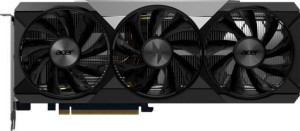
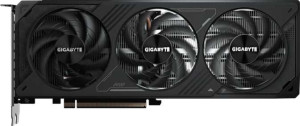
At first glance, the Gigabyte RTX 5070 SFF appears to have a clock speed advantage — its base GPU clock of 2325 MHz is dramatically higher than the Acer RX 9070's 1330 MHz. However, this comparison is misleading: AMD and NVIDIA architectures are designed around fundamentally different clock profiles, and raw clock speed means little without context. Once both cards reach peak boost, they are nearly identical — 2520 MHz vs 2542 MHz — making turbo performance essentially a wash.
Where the RX 9070 pulls ahead is in throughput metrics that directly translate to real-world rendering performance. Its 36.13 TFLOPS of floating-point performance outpaces the RTX 5070 SFF's 31.24 TFLOPS by roughly 16%, and its pixel rate of 322.6 GPixel/s — backed by 128 ROPs versus only 80 — gives it a significant edge in rasterization output, meaning faster frame delivery in traditional rendering workloads. The RX 9070 also holds a clear lead in texture rate (564.5 vs 488.1 GTexels/s) and memory speed (2518 vs 1750 MHz), the latter suggesting snappier texture streaming and reduced memory latency under load. The RTX 5070 SFF counters with a substantially higher shading unit count (6144 vs 3584), which can benefit heavily parallelized compute workloads and certain AI-accelerated rendering paths where NVIDIA's architecture shines.
Overall, based strictly on the provided specs, the Acer RX 9070 holds the performance edge in conventional rendering — higher TFLOPS, pixel rate, texture throughput, and memory speed all point in the same direction. The RTX 5070 SFF's greater shader count is a relevant counterpoint for compute-heavy or AI-driven tasks, but it is not enough to overcome the RX 9070's broader numerical lead across the core rasterization pipeline.