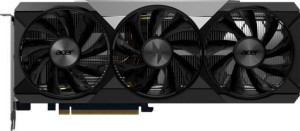
Acer Nitro Radeon RX 9070
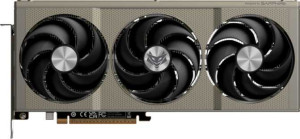
Sapphire Nitro+ Radeon RX 9060 XT 16GB

Acer Nitro Radeon RX 9070 Sapphire Nitro+ Radeon RX 9060 XT 16GB

Overview

Welcome to our in-depth specification comparison between the Acer Nitro Radeon RX 9070 and the Sapphire Nitro+ Radeon RX 9060 XT 16GB, two RDNA 4.0-based graphics cards sharing the same 16GB GDDR6 memory pool and feature set. While they align on paper in several key areas, the two cards diverge significantly when it comes to raw compute performance, memory bandwidth, and physical dimensions — making the choice between them anything but straightforward.

Common Features

  • GPU memory speed is 2518 MHz on both products.
  • Both products support Double Precision Floating Point (DPFP).
  • Effective memory speed is 20000 MHz on both products.
  • Both products come with 16GB of VRAM.
  • Both products use GDDR6 memory.
  • ECC memory support is available on both products.
  • Both products support DirectX 12 Ultimate.
  • OpenGL version is 4.6 on both products.
  • OpenCL version is 2.2 on both products.
  • Multi-display technology is supported on both products.
  • Ray tracing is supported on both products.
  • 3D support is available on both products.
  • DLSS is not supported on either product.
  • FSR4 is available on both products.
  • Both products include one HDMI port.
  • Both products use HDMI version 2.1b.
  • Neither product has USB-C ports.
  • Neither product has DVI outputs.
  • Neither product has mini DisplayPort outputs.
  • Both products are built on the RDNA 4.0 GPU architecture.
  • Both products use PCIe version 5.
  • Neither product features air-water cooling.

Main Differences

  • GPU base clock speed is 1330 MHz on Acer Nitro Radeon RX 9070 and 1900 MHz on Sapphire Nitro+ Radeon RX 9060 XT 16GB.
  • GPU turbo clock is 2520 MHz on Acer Nitro Radeon RX 9070 and 3320 MHz on Sapphire Nitro+ Radeon RX 9060 XT 16GB.
  • Pixel rate is 322.6 GPixel/s on Acer Nitro Radeon RX 9070 and 212.5 GPixel/s on Sapphire Nitro+ Radeon RX 9060 XT 16GB.
  • Floating-point performance is 36.13 TFLOPS on Acer Nitro Radeon RX 9070 and 27.2 TFLOPS on Sapphire Nitro+ Radeon RX 9060 XT 16GB.
  • Texture rate is 564.5 GTexels/s on Acer Nitro Radeon RX 9070 and 425 GTexels/s on Sapphire Nitro+ Radeon RX 9060 XT 16GB.
  • Shading units number 3584 on Acer Nitro Radeon RX 9070 and 2048 on Sapphire Nitro+ Radeon RX 9060 XT 16GB.
  • Texture mapping units (TMUs) total 224 on Acer Nitro Radeon RX 9070 and 128 on Sapphire Nitro+ Radeon RX 9060 XT 16GB.
  • Render output units (ROPs) number 128 on Acer Nitro Radeon RX 9070 and 64 on Sapphire Nitro+ Radeon RX 9060 XT 16GB.
  • Maximum memory bandwidth is 644 GB/s on Acer Nitro Radeon RX 9070 and 322.3 GB/s on Sapphire Nitro+ Radeon RX 9060 XT 16GB.
  • Memory bus width is 256-bit on Acer Nitro Radeon RX 9070 and 128-bit on Sapphire Nitro+ Radeon RX 9060 XT 16GB.
  • Supported displays number 4 on Acer Nitro Radeon RX 9070 and 3 on Sapphire Nitro+ Radeon RX 9060 XT 16GB.
  • DisplayPort outputs number 3 on Acer Nitro Radeon RX 9070 and 2 on Sapphire Nitro+ Radeon RX 9060 XT 16GB.
  • Thermal Design Power (TDP) is 220W on Acer Nitro Radeon RX 9070 and 182W on Sapphire Nitro+ Radeon RX 9060 XT 16GB.
  • Semiconductor size is 5 nm on Acer Nitro Radeon RX 9070 and 4 nm on Sapphire Nitro+ Radeon RX 9060 XT 16GB.
  • Number of transistors is 53900 million on Acer Nitro Radeon RX 9070 and 29700 million on Sapphire Nitro+ Radeon RX 9060 XT 16GB.
  • Width is 295 mm on Acer Nitro Radeon RX 9070 and 300 mm on Sapphire Nitro+ Radeon RX 9060 XT 16GB.
  • Height is 120 mm on Acer Nitro Radeon RX 9070 and 131 mm on Sapphire Nitro+ Radeon RX 9060 XT 16GB.
Specs Comparison
Acer Nitro Radeon RX 9070

Acer Nitro Radeon RX 9070

Sapphire Nitro+ Radeon RX 9060 XT 16GB

Sapphire Nitro+ Radeon RX 9060 XT 16GB

Performance:
GPU clock speed 1330 MHz 1900 MHz
GPU turbo 2520 MHz 3320 MHz
pixel rate 322.6 GPixel/s 212.5 GPixel/s
floating-point performance 36.13 TFLOPS 27.2 TFLOPS
texture rate 564.5 GTexels/s 425 GTexels/s
GPU memory speed 2518 MHz 2518 MHz
shading units 3584 2048
texture mapping units (TMUs) 224 128
render output units (ROPs) 128 64
Has Double Precision Floating Point (DPFP)

On the surface, the Sapphire Nitro+ RX 9060 XT appears to be the faster card thanks to its significantly higher clock speeds — a base of 1900 MHz and a turbo of 3320 MHz versus the Acer Nitro RX 9070's 1330 / 2520 MHz. However, clock speed alone is a misleading metric when two GPUs have fundamentally different silicon sizes. The RX 9070 brings 3584 shading units, 224 TMUs, and 128 ROPs to the table — exactly double the RX 9060 XT's 2048 / 128 / 64 respectively. This means the RX 9070 can process far more work per clock cycle, and the aggregate throughput numbers reflect that decisively.

The real-world implications become clear when looking at compute and rasterization output. The RX 9070 delivers 36.13 TFLOPS of floating-point performance versus 27.2 TFLOPS on the RX 9060 XT — a roughly 33% advantage — while its pixel fill rate of 322.6 GPixel/s versus 212.5 GPixel/s means it can push significantly more pixels per second, which directly benefits high-resolution and high-refresh-rate gaming scenarios. The texture rate gap — 564.5 GTexels/s vs 425 GTexels/s — further reinforces the RX 9070's edge in texture-heavy workloads. One area of parity is GPU memory speed, where both cards share an identical 2518 MHz, and both support Double Precision Floating Point, making neither uniquely suited for compute tasks on that basis alone.

The Acer Nitro RX 9070 holds a clear and meaningful performance advantage in this group. Its doubled execution resources outweigh the RX 9060 XT's clock speed lead at every measurable throughput metric. Users prioritizing raw rendering horsepower — whether for demanding games at 1440p/4K or GPU-accelerated workloads — will find the RX 9070 the stronger choice based strictly on these specs.

Memory:
effective memory speed 20000 MHz 20000 MHz
maximum memory bandwidth 644 GB/s 322.3 GB/s
VRAM 16GB 16GB
GDDR version GDDR6 GDDR6
memory bus width 256-bit 128-bit
Supports ECC memory

Both cards share several headline memory specs that might initially suggest parity: identical 16GB VRAM, the same GDDR6 standard, and a matching effective memory speed of 20000 MHz. However, one number cuts through that apparent equality entirely — the memory bus width. The RX 9070 uses a 256-bit bus, while the RX 9060 XT is limited to a 128-bit bus. This difference is not subtle; it is the single most important structural factor in this group.

The bandwidth figures tell the story directly: the RX 9070 achieves 644 GB/s of maximum memory bandwidth versus just 322.3 GB/s on the RX 9060 XT — an exact 2× advantage that flows mathematically from the doubled bus width. In practice, memory bandwidth is a critical throughput bottleneck in demanding scenarios such as 4K texture streaming, high-resolution ray tracing, and GPU compute workloads. A card starved of bandwidth will stall its shading units even if clock speeds and VRAM capacity appear adequate on paper. This makes the RX 9060 XT's narrower bus a meaningful architectural constraint, particularly at higher resolutions where data movement requirements escalate rapidly.

Both cards do share ECC memory support, which is a useful capability for compute and professional use cases, and neither holds an edge there. But overall, the Acer Nitro RX 9070 has a decisive memory subsystem advantage. Despite carrying the same capacity and speed rating, its wider bus delivers twice the bandwidth — a difference that directly enables the higher throughput figures seen in its performance specs and makes it substantially better equipped for memory-intensive workloads.

Features:
DirectX version DirectX 12 Ultimate DirectX 12 Ultimate
OpenGL version 4.6 4.6
OpenCL version 2.2 2.2
Supports multi-display technology
supports ray tracing
Supports 3D
supports DLSS
has FSR4
has XeSS (XMX)
AMD SAM / Intel Resizable BAR AMD SAM AMD SAM
has LHR
has RGB lighting
supported displays 4 3

For this group, the story is largely one of parity. Both cards share an identical software and API feature set: DirectX 12 Ultimate, OpenGL 4.6, OpenCL 2.2, ray tracing support, AMD SAM, and FSR4 upscaling. The absence of DLSS on both is expected for AMD hardware, and neither supports XeSS with XMX acceleration. For gamers evaluating feature compatibility — whether for ray-traced titles, upscaling, or compute applications — these two cards are functionally interchangeable on paper.

FSR4 is worth noting as a shared strength. As AMD's most current upscaling technology, it provides meaningful image quality and performance benefits in supported titles, and having it on both cards means neither buyer is left behind on that front. Similarly, both support ray tracing, though the real-world quality of that experience is more a function of raw performance — covered in the Performance group — than a feature flag alone.

The sole differentiator here is supported displays: the Acer Nitro RX 9070 can drive up to 4 monitors simultaneously, while the RX 9060 XT tops out at 3. For most single or dual-monitor users this is irrelevant, but for anyone running a three-screen gaming setup or a four-display productivity configuration, the RX 9070 holds a narrow but practical edge. Overall, this group is effectively a tie, with the RX 9070 claiming a minor advantage only for multi-monitor enthusiasts.

Ports:
has an HDMI output
HDMI ports 1 1
HDMI version HDMI 2.1b HDMI 2.1b
DisplayPort outputs 3 2
USB-C ports 0 0
DVI outputs 0 0
mini DisplayPort outputs 0 0

Connectivity between these two cards is nearly identical. Both offer a single HDMI 2.1b port — the current-generation standard capable of supporting 4K at high refresh rates and 8K output — and neither includes USB-C, DVI, or mini DisplayPort outputs. The shared HDMI version means both are equally well-suited for connecting a modern TV or monitor without any generational disadvantage on that front.

The only distinction is in DisplayPort output count. The Acer Nitro RX 9070 provides 3 DisplayPort outputs compared to 2 on the RX 9060 XT. Combined with the single HDMI port, this gives the RX 9070 a total of four possible display connections — consistent with its four-monitor support noted in the Features group — while the RX 9060 XT maxes out at three total outputs, again aligning with its three-display limit.

For the overwhelming majority of users running one or two monitors, this difference is entirely academic. Where it matters is for users who want to drive three DisplayPort monitors simultaneously while keeping the HDMI port free, or who simply prefer the flexibility of more connection options. The RX 9070 holds a modest but real edge here, making it the more versatile card for multi-display configurations strictly based on physical port availability.

General info:
GPU architecture RDNA 4.0 RDNA 4.0
release date March 2025 June 2025
Thermal Design Power (TDP) 220W 182W
PCI Express (PCIe) version 5 5
semiconductor size 5 nm 4 nm
number of transistors 53900 million 29700 million
Has air-water cooling
width 295 mm 300 mm
height 120 mm 131 mm

Architecturally, these cards share the same RDNA 4.0 foundation and PCIe 5.0 interface, placing them on equal footing in terms of generational platform compatibility. The more revealing figures are the transistor counts and process nodes. The RX 9070 is built on a 5nm process and packs 53,900 million transistors, while the RX 9060 XT uses a slightly newer 4nm node but contains only 29,700 million transistors. This tells a clear architectural story: the RX 9070 is a meaningfully larger die with substantially more silicon, which directly explains the doubled execution resources seen in its performance and memory specs. The RX 9060 XT, by contrast, is a leaner, more compact chip — a deliberate design aimed at efficiency rather than maximum throughput.

That efficiency trade-off becomes concrete in the TDP figures. The RX 9070 draws up to 220W, while the RX 9060 XT is rated at 182W — a 38W difference that has real implications for case airflow requirements, PSU headroom, and long-term heat output in smaller or thermally constrained builds. Neither card offers liquid cooling in these configurations, so both rely entirely on their air coolers to manage thermals within those respective envelopes.

Physical dimensions are nearly a wash, with the RX 9060 XT measuring 300 × 131 mm against the RX 9070's 295 × 120 mm — the Sapphire card is fractionally larger despite housing the smaller chip, likely due to its cooler design. Neither card has a decisive advantage in this group overall: the RX 9060 XT edges ahead on power efficiency and process node, while the RX 9070's larger die justifies its higher TDP through proportionally greater compute resources. Users in power-sensitive or thermally limited systems will find the RX 9060 XT the more accommodating option purely on these general specs.

Comparison Summary & Verdict

After examining all the evidence, both cards share a strong foundation: 16GB GDDR6 VRAM, RDNA 4.0 architecture, FSR4 support, and ray tracing capability. However, the Acer Nitro Radeon RX 9070 pulls ahead in pure horsepower, offering 36.13 TFLOPS of floating-point performance, a wider 256-bit memory bus delivering 644 GB/s bandwidth, and 3584 shading units — making it the stronger choice for users who demand maximum throughput in demanding games and creative workloads. The Sapphire Nitro+ Radeon RX 9060 XT 16GB, on the other hand, operates on a more efficient 4nm process with a lower 182W TDP, which may appeal to builders focused on power efficiency and thermal management in compact or thermally constrained systems. Neither card is strictly superior for every user — your workload and system priorities should drive the decision.

Acer Nitro Radeon RX 9070
Buy Acer Nitro Radeon RX 9070 if...

Buy the Acer Nitro Radeon RX 9070 if you prioritize maximum raw performance, with higher floating-point throughput, double the memory bandwidth, and more shading units for demanding gaming or compute workloads.

Sapphire Nitro+ Radeon RX 9060 XT 16GB
Buy Sapphire Nitro+ Radeon RX 9060 XT 16GB if...

Buy the Sapphire Nitro+ Radeon RX 9060 XT 16GB if you value power efficiency and a more compact thermal footprint, thanks to its lower 182W TDP and more advanced 4nm manufacturing process.