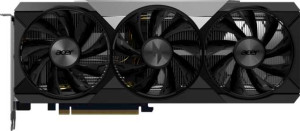
Acer Nitro Radeon RX 9070 XT OC
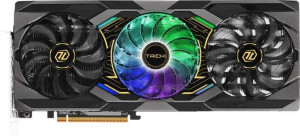
ASRock Radeon RX 9070 XT Taichi OC

Acer Nitro Radeon RX 9070 XT OC ASRock Radeon RX 9070 XT Taichi OC

Overview

Welcome to our in-depth spec comparison between the Acer Nitro Radeon RX 9070 XT OC and the ASRock Radeon RX 9070 XT Taichi OC — two compelling takes on AMD's latest RDNA 4.0 silicon. Both cards share the same powerful GPU core, yet they diverge in meaningful ways around power consumption, physical dimensions, and software feature support. If you are trying to decide which card best suits your build or workflow, this comparison will walk you through every key specification to help you make a confident choice.

Common Features

  • Both cards have a GPU clock speed of 1870 MHz.
  • Both cards have a GPU turbo speed of 3100 MHz.
  • Both cards have a pixel rate of 396.8 GPixel/s.
  • Both cards have a floating-point performance of 50.79 TFLOPS.
  • Both cards have a texture rate of 793.6 GTexels/s.
  • Both cards have a GPU memory speed of 2518 MHz.
  • Both cards have 4096 shading units.
  • Both cards have 256 texture mapping units (TMUs).
  • Both cards have an effective memory speed of 20000 MHz.
  • Both cards feature 16GB of VRAM.
  • Both cards use GDDR6 memory.
  • Both cards have a 256-bit memory bus width.
  • ECC memory is supported on both cards.
  • Both cards support DirectX 12 Ultimate.
  • Both cards support OpenGL version 4.6.
  • Multi-display technology is supported on both cards.
  • Ray tracing is supported on both cards.
  • 3D support is available on both cards.
  • DLSS support is not available on either card.
  • FSR4 is supported on both cards.
  • XeSS (XMX) support is not available on either card.
  • Both cards include one HDMI output using HDMI 2.1b.
  • Both cards feature three DisplayPort outputs.
  • Neither card has USB-C, DVI, or mini DisplayPort outputs.
  • Both cards are built on the RDNA 4.0 GPU architecture.
  • Both cards use PCIe version 5.
  • Both cards are manufactured on a 4 nm semiconductor process.
  • Both cards have 53900 million transistors.
  • Neither card uses air-water cooling.

Main Differences

  • Maximum memory bandwidth is 644 GB/s on the Acer Nitro Radeon RX 9070 XT OC and 644.6 GB/s on the ASRock Radeon RX 9070 XT Taichi OC.
  • OpenCL support is not present on the Acer Nitro Radeon RX 9070 XT OC, while the ASRock Radeon RX 9070 XT Taichi OC supports OpenCL version 2.2.
  • Thermal Design Power (TDP) is 340W on the Acer Nitro Radeon RX 9070 XT OC and 304W on the ASRock Radeon RX 9070 XT Taichi OC.
  • Width is 295 mm on the Acer Nitro Radeon RX 9070 XT OC and 330 mm on the ASRock Radeon RX 9070 XT Taichi OC.
  • Height is 120 mm on the Acer Nitro Radeon RX 9070 XT OC and 140 mm on the ASRock Radeon RX 9070 XT Taichi OC.
Specs Comparison
Acer Nitro Radeon RX 9070 XT OC

Acer Nitro Radeon RX 9070 XT OC

ASRock Radeon RX 9070 XT Taichi OC

ASRock Radeon RX 9070 XT Taichi OC

Performance:
GPU clock speed 1870 MHz 1870 MHz
GPU turbo 3100 MHz 3100 MHz
pixel rate 396.8 GPixel/s 396.8 GPixel/s
floating-point performance 50.79 TFLOPS 50.79 TFLOPS
texture rate 793.6 GTexels/s 793.6 GTexels/s
GPU memory speed 2518 MHz 2518 MHz
shading units 4096 4096
texture mapping units (TMUs) 256 256
render output units (ROPs) 128 128
Has Double Precision Floating Point (DPFP)

When comparing the Performance specs of the Acer Nitro RX 9070 XT OC and the ASRock Taichi RX 9070 XT OC, the two cards are in complete lockstep across every single metric. Both share a base GPU clock of 1870 MHz and an identical boost clock of 3100 MHz, which is the figure that matters most during sustained gaming loads. That turbo figure is notably high for this GPU generation and signals strong out-of-the-box headroom without manual overclocking.

Compute throughput is equally matched: both deliver 50.79 TFLOPS of floating-point performance, backed by the same 4096 shading units, 256 TMUs, and 128 ROPs. In practical terms, the ROP count directly influences how fast the GPU can push pixels to the display at high resolutions, while the TMU count governs texture throughput — here rated at 793.6 GTexels/s on both cards. Memory bandwidth potential is also identical, with both running VRAM at 2518 MHz. Both cards also support Double Precision Floating Point, which is relevant for compute workloads and certain professional applications beyond gaming.

The verdict for this group is a complete tie. There is zero performance differentiation on paper between these two models — they are built on the same GPU configuration, clocked identically, and offer the same theoretical throughput. Any real-world delta between them, if it exists, would come down to thermals, power delivery, or driver behavior — none of which are captured in these specs. Buyers should look to other spec groups, such as cooling design or build quality, to distinguish the two.
Memory:
effective memory speed 20000 MHz 20000 MHz
maximum memory bandwidth 644 GB/s 644.6 GB/s
VRAM 16GB 16GB
GDDR version GDDR6 GDDR6
memory bus width 256-bit 256-bit
Supports ECC memory

Both the Acer Nitro RX 9070 XT OC and the ASRock Taichi RX 9070 XT OC arrive with the same core memory configuration: 16GB of GDDR6 running on a 256-bit bus at an effective speed of 20000 MHz. The 16GB frame buffer is a meaningful advantage for this GPU tier — it provides comfortable headroom for high-resolution texture packs, 4K gaming, and memory-intensive workloads that would strain an 8GB or 12GB card.

The 256-bit bus width is the architectural backbone that makes those speeds count. Combined with the 20 Gbps effective data rate, it yields a peak bandwidth figure that sits at 644 GB/s on the Acer Nitro and a fractionally higher 644.6 GB/s on the ASRock Taichi. In practice, this 0.6 GB/s gap is entirely imperceptible — it falls well below the threshold of any measurable real-world difference and is likely a rounding artifact rather than a deliberate clock bin. Both cards also support ECC memory, which adds error-correction capability useful in compute and workstation scenarios, though it has no bearing on typical gaming use.

This group is effectively a dead heat. The memory subsystem is identical in every specification that matters — capacity, bus width, speed, and GDDR generation. Neither card holds a meaningful advantage here, and prospective buyers should weigh factors in other spec categories when making their decision.

Features:
DirectX version DirectX 12 Ultimate DirectX 12 Ultimate
OpenGL version 4.6 4.6
OpenCL version 0 2.2
Supports multi-display technology
supports ray tracing
Supports 3D
supports DLSS
has FSR4
has XeSS (XMX)
AMD SAM / Intel Resizable BAR AMD SAM AMD SAM
has LHR
has RGB lighting
supported displays 4 4

Feature parity between the Acer Nitro RX 9070 XT OC and the ASRock Taichi RX 9070 XT OC is near-total. Both support DirectX 12 Ultimate and ray tracing, which are the two most consequential checkboxes for modern PC gaming — DX12 Ultimate ensures access to the full suite of advanced rendering features including mesh shaders and variable rate shading, while hardware ray tracing enables physically accurate lighting in supported titles. Both cards also feature FSR4, AMD's latest upscaling technology, which allows games to run at lower internal resolutions and reconstruct a sharper output — a practical framerate booster particularly useful at 4K. Neither card supports DLSS, which is expected given these are AMD GPUs.

The one spec where these two diverge is OpenCL version: the ASRock Taichi lists OpenCL 2.2, while the Acer Nitro shows no supported version in the provided data. OpenCL is a framework used for GPU-accelerated compute tasks — video encoding, scientific simulations, and certain creative applications rely on it. A card with no listed OpenCL support could present compatibility gaps for users running compute workloads outside of gaming. This is the only meaningful differentiator in this group.

For pure gaming use, both cards are functionally equivalent in features. However, for users who intend to use their GPU for compute or creative workloads alongside gaming, the ASRock Taichi holds a clear edge in this group by virtue of its declared OpenCL 2.2 support.

Ports:
has an HDMI output
HDMI ports 1 1
HDMI version HDMI 2.1b HDMI 2.1b
DisplayPort outputs 3 3
USB-C ports 0 0
DVI outputs 0 0
mini DisplayPort outputs 0 0

The port configuration on both the Acer Nitro RX 9070 XT OC and the ASRock Taichi RX 9070 XT OC is identical: one HDMI 2.1b output and three DisplayPort outputs, totaling four display connections — which aligns with both cards' stated support for up to four simultaneous displays. HDMI 2.1b is the most current HDMI specification in this data, capable of handling 4K at high refresh rates and 8K output, making it well-suited for modern TVs and high-end monitors alike. The three DisplayPort outputs meanwhile cater to PC monitor users and multi-display setups.

Notably, neither card offers a USB-C output, which means users looking to drive a USB-C or Thunderbolt-connected display directly from the GPU will need an active adapter. The absence of DVI and mini DisplayPort is expected at this product tier and presents no practical limitation given the prevalence of HDMI and full-size DisplayPort on contemporary monitors.

This group is an unambiguous tie — the two cards share an identical port layout with no distinguishing differences whatsoever. Display connectivity should play no role in choosing between these two models.

General info:
GPU architecture RDNA 4.0 RDNA 4.0
release date March 2025 March 2025
Thermal Design Power (TDP) 340W 304W
PCI Express (PCIe) version 5 5
semiconductor size 4 nm 4 nm
number of transistors 53900 million 53900 million
Has air-water cooling
width 295 mm 330 mm
height 120 mm 140 mm

Underneath their different branding, the Acer Nitro RX 9070 XT OC and the ASRock Taichi RX 9070 XT OC share the same silicon foundation: AMD's RDNA 4.0 architecture built on a 4nm process node with 53.9 billion transistors. The dense 4nm process is what enables the high compute throughput seen in the Performance group while keeping the die physically compact. Both cards also use PCIe 5.0, ensuring they are ready for current and next-generation motherboards with maximum bandwidth headroom.

The most consequential difference in this group is TDP: the Acer Nitro is rated at 340W versus the ASRock Taichi's 304W — a 36W gap on cards with identical GPU specs and clock speeds. This suggests the Taichi achieves the same performance target at a meaningfully lower power ceiling, which translates to less heat output, reduced PSU strain, and potentially quieter operation under load. For users with tighter power supply headroom or thermally constrained cases, the Taichi's lower TDP is a tangible advantage. Physical size also diverges: the Taichi is larger at 330 × 140 mm compared to the Nitro's more compact 295 × 120 mm, likely reflecting a bigger cooler designed to dissipate heat more gradually across a larger surface area — consistent with its lower TDP rating.

On balance, the ASRock Taichi holds the edge in this group. Delivering the same GPU at 36W less power draw is a genuine efficiency advantage, and while its larger footprint demands more case clearance, that size is the likely enabler of its superior thermal and power efficiency. The Acer Nitro's smaller dimensions are a plus for compact builds, but the higher TDP is a real trade-off to weigh.

Comparison Summary & Verdict

After examining every specification, the Acer Nitro Radeon RX 9070 XT OC and the ASRock Radeon RX 9070 XT Taichi OC are remarkably close in raw GPU performance, sharing identical clock speeds, TFLOPS output, VRAM, and port configurations. The deciding factors come down to physical and power considerations. The Acer Nitro is the more compact card at 295 x 120 mm, making it better suited for smaller chassis, but it draws a notably higher 340W TDP. The ASRock Taichi, at 330 x 140 mm, demands more space yet operates at a more efficient 304W TDP, which benefits system thermals and power budgets. Additionally, the ASRock card brings OpenCL 2.2 support, an advantage for users running compute workloads or GPU-accelerated applications that rely on that API.

Acer Nitro Radeon RX 9070 XT OC
Buy Acer Nitro Radeon RX 9070 XT OC if...

Buy the Acer Nitro Radeon RX 9070 XT OC if you have a compact or space-constrained case, as its smaller 295 x 120 mm footprint gives it a clear fit advantage over the larger Taichi.

ASRock Radeon RX 9070 XT Taichi OC
Buy ASRock Radeon RX 9070 XT Taichi OC if...

Buy the ASRock Radeon RX 9070 XT Taichi OC if you want a lower 304W TDP for improved power efficiency or need OpenCL 2.2 support for compute and GPU-accelerated workloads.