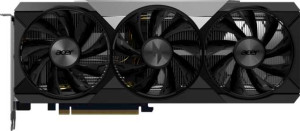
Acer Nitro Radeon RX 9070 XT OC
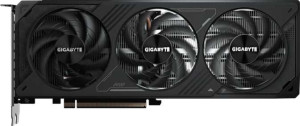
Gigabyte GeForce RTX 5070 WindForce OC SFF

Acer Nitro Radeon RX 9070 XT OC Gigabyte GeForce RTX 5070 WindForce OC SFF

Overview

When choosing between the Acer Nitro Radeon RX 9070 XT OC and the Gigabyte GeForce RTX 5070 WindForce OC SFF, buyers face a fascinating clash of GPU philosophies. Both cards share a strong foundation — PCIe 5.0, ray tracing, DirectX 12 Ultimate, and RGB lighting — yet they diverge sharply across raw throughput, memory configuration, software feature sets, and thermal design. This comparison digs into every measurable dimension to help you decide which card best matches your priorities.

Common Features

  • Both cards support Double Precision Floating Point (DPFP).
  • Both cards support ECC memory.
  • Both cards use DirectX 12 Ultimate.
  • Both cards support OpenGL version 4.6.
  • Both cards support multi-display technology.
  • Both cards support ray tracing.
  • Both cards support 3D.
  • XeSS (XMX) support is not available on either card.
  • LHR is not present on either card.
  • RGB lighting is available on both cards.
  • Both cards have one HDMI output using HDMI version 2.1b.
  • Both cards have three DisplayPort outputs.
  • Neither card has USB-C ports.
  • Neither card has DVI outputs.
  • Neither card has mini DisplayPort outputs.
  • Both cards use PCI Express (PCIe) version 5.
  • Neither card uses air-water cooling.

Main Differences

  • GPU clock speed is 1870 MHz on Acer Nitro Radeon RX 9070 XT OC and 2325 MHz on Gigabyte GeForce RTX 5070 WindForce OC SFF.
  • GPU turbo speed is 3100 MHz on Acer Nitro Radeon RX 9070 XT OC and 2542 MHz on Gigabyte GeForce RTX 5070 WindForce OC SFF.
  • Pixel rate is 396.8 GPixel/s on Acer Nitro Radeon RX 9070 XT OC and 203.4 GPixel/s on Gigabyte GeForce RTX 5070 WindForce OC SFF.
  • Floating-point performance is 50.79 TFLOPS on Acer Nitro Radeon RX 9070 XT OC and 31.24 TFLOPS on Gigabyte GeForce RTX 5070 WindForce OC SFF.
  • Texture rate is 793.6 GTexels/s on Acer Nitro Radeon RX 9070 XT OC and 488.1 GTexels/s on Gigabyte GeForce RTX 5070 WindForce OC SFF.
  • GPU memory speed is 2518 MHz on Acer Nitro Radeon RX 9070 XT OC and 1750 MHz on Gigabyte GeForce RTX 5070 WindForce OC SFF.
  • Shading units number 4096 on Acer Nitro Radeon RX 9070 XT OC and 6144 on Gigabyte GeForce RTX 5070 WindForce OC SFF.
  • Texture mapping units (TMUs) total 256 on Acer Nitro Radeon RX 9070 XT OC and 192 on Gigabyte GeForce RTX 5070 WindForce OC SFF.
  • Render output units (ROPs) number 128 on Acer Nitro Radeon RX 9070 XT OC and 80 on Gigabyte GeForce RTX 5070 WindForce OC SFF.
  • Effective memory speed is 20000 MHz on Acer Nitro Radeon RX 9070 XT OC and 28000 MHz on Gigabyte GeForce RTX 5070 WindForce OC SFF.
  • Maximum memory bandwidth is 644 GB/s on Acer Nitro Radeon RX 9070 XT OC and 672 GB/s on Gigabyte GeForce RTX 5070 WindForce OC SFF.
  • VRAM is 16GB on Acer Nitro Radeon RX 9070 XT OC and 12GB on Gigabyte GeForce RTX 5070 WindForce OC SFF.
  • Acer Nitro Radeon RX 9070 XT OC uses GDDR6 memory while Gigabyte GeForce RTX 5070 WindForce OC SFF uses GDDR7.
  • Memory bus width is 256-bit on Acer Nitro Radeon RX 9070 XT OC and 192-bit on Gigabyte GeForce RTX 5070 WindForce OC SFF.
  • OpenCL version is 0 on Acer Nitro Radeon RX 9070 XT OC and 3 on Gigabyte GeForce RTX 5070 WindForce OC SFF.
  • DLSS support is present on Gigabyte GeForce RTX 5070 WindForce OC SFF but not available on Acer Nitro Radeon RX 9070 XT OC.
  • Acer Nitro Radeon RX 9070 XT OC uses AMD SAM while Gigabyte GeForce RTX 5070 WindForce OC SFF uses Intel Resizable BAR.
  • GPU architecture is RDNA 4.0 on Acer Nitro Radeon RX 9070 XT OC and Blackwell on Gigabyte GeForce RTX 5070 WindForce OC SFF.
  • Thermal Design Power (TDP) is 340W on Acer Nitro Radeon RX 9070 XT OC and 250W on Gigabyte GeForce RTX 5070 WindForce OC SFF.
  • Semiconductor size is 4 nm on Acer Nitro Radeon RX 9070 XT OC and 5 nm on Gigabyte GeForce RTX 5070 WindForce OC SFF.
  • Number of transistors is 53900 million on Acer Nitro Radeon RX 9070 XT OC and 31100 million on Gigabyte GeForce RTX 5070 WindForce OC SFF.
  • Width is 295 mm on Acer Nitro Radeon RX 9070 XT OC and 282 mm on Gigabyte GeForce RTX 5070 WindForce OC SFF.
  • Height is 120 mm on Acer Nitro Radeon RX 9070 XT OC and 110 mm on Gigabyte GeForce RTX 5070 WindForce OC SFF.
Specs Comparison
Acer Nitro Radeon RX 9070 XT OC

Acer Nitro Radeon RX 9070 XT OC

Gigabyte GeForce RTX 5070 WindForce OC SFF

Gigabyte GeForce RTX 5070 WindForce OC SFF

Performance:
GPU clock speed 1870 MHz 2325 MHz
GPU turbo 3100 MHz 2542 MHz
pixel rate 396.8 GPixel/s 203.4 GPixel/s
floating-point performance 50.79 TFLOPS 31.24 TFLOPS
texture rate 793.6 GTexels/s 488.1 GTexels/s
GPU memory speed 2518 MHz 1750 MHz
shading units 4096 6144
texture mapping units (TMUs) 256 192
render output units (ROPs) 128 80
Has Double Precision Floating Point (DPFP)

On raw throughput, the Acer Nitro RX 9070 XT OC holds a commanding lead across every major compute metric. Its 50.79 TFLOPS of floating-point performance outpaces the Gigabyte RTX 5070 WindForce OC SFF's 31.24 TFLOPS by roughly 63%, and that gap is echoed in pixel rate (396.8 vs 203.4 GPixel/s) and texture rate (793.6 vs 488.1 GTexels/s). In practice, higher pixel and texture throughput translates directly to faster fill rates and sharper texture detail at high resolutions — areas where the RX 9070 XT clearly dominates on paper.

Clock speeds tell a more nuanced story. The RTX 5070 SFF runs a higher base clock at 2325 MHz, suggesting tighter, more consistent frequency behaviour, while the RX 9070 XT's base of 1870 MHz rockets to a 3100 MHz turbo — an enormous 1230 MHz swing that explains much of its throughput advantage when the workload demands it. Backing this up, the RX 9070 XT also features substantially faster GPU memory at 2518 MHz versus 1750 MHz on the RTX 5070 SFF, which feeds its larger complement of 256 TMUs and 128 ROPs more efficiently. The RTX 5070 SFF's only structural lead is in raw shading unit count (6144 vs 4096), though that advantage is not enough to offset the deficit elsewhere.

Overall, the RX 9070 XT OC has a clear performance edge based on these specs. Its higher turbo clocks, memory bandwidth potential, and superior pixel and texture throughput give it a decisive advantage in compute-heavy and high-resolution scenarios. The RTX 5070 WindForce OC SFF's more stable base clock and greater shader count are notable, but they do not shift the balance — the RX 9070 XT wins this group.

Memory:
effective memory speed 20000 MHz 28000 MHz
maximum memory bandwidth 644 GB/s 672 GB/s
VRAM 16GB 12GB
GDDR version GDDR6 GDDR7
memory bus width 256-bit 192-bit
Supports ECC memory

The Acer Nitro Radeon RX 9070 XT OC is equipped with 16GB of VRAM, while the Gigabyte GeForce RTX 5070 WindForce OC SFF has 12GB of VRAM. The RX 9070 XT OC also has a wider memory bus width at 256-bit, compared to the RTX 5070 WindForce OC SFF's 192-bit. These differences may contribute to better data throughput and capacity in the RX 9070 XT OC, though the RTX 5070 WindForce OC SFF has a faster effective memory speed of 28000 MHz, which surpasses the RX 9070 XT OC's 20000 MHz.

In terms of memory bandwidth, the RX 9070 XT OC supports a maximum bandwidth of 644 GB/s, while the RTX 5070 WindForce OC SFF offers slightly higher bandwidth at 672 GB/s. Both products feature the latest memory technologies: the RX 9070 XT OC uses GDDR6, and the RTX 5070 WindForce OC SFF uses the newer GDDR7.

Both graphics cards support ECC memory, ensuring error correction for increased stability during memory-intensive tasks. While the RX 9070 XT OC offers larger VRAM and a wider memory bus, the RTX 5070 WindForce OC SFF provides faster memory speeds and slightly higher bandwidth.

Features:
DirectX version DirectX 12 Ultimate DirectX 12 Ultimate
OpenGL version 4.6 4.6
OpenCL version 0 3
Supports multi-display technology
supports ray tracing
Supports 3D
supports DLSS
has XeSS (XMX)
AMD SAM / Intel Resizable BAR AMD SAM Intel Resizable BAR
has LHR
has RGB lighting
supported displays 4 4

Both the Acer Nitro Radeon RX 9070 XT OC and the Gigabyte GeForce RTX 5070 WindForce OC SFF support DirectX 12 Ultimate and OpenGL 4.6, ensuring compatibility with the latest gaming and graphics applications. The RX 9070 XT OC, however, does not provide OpenCL support, while the RTX 5070 WindForce OC SFF supports OpenCL version 3, indicating a slight edge in GPU compute capabilities for OpenCL-based tasks.

Both products support multi-display technology, ray tracing, and 3D graphics, providing a solid foundation for immersive visual experiences. The RTX 5070 WindForce OC SFF has the advantage of supporting DLSS (Deep Learning Super Sampling), while the RX 9070 XT OC does not. Additionally, both products feature RGB lighting for customizable aesthetics and support up to four displays, allowing for a versatile setup for users who require multiple monitors.

In terms of specific technologies, the RX 9070 XT OC supports AMD SAM (Smart Access Memory), while the RTX 5070 WindForce OC SFF supports Intel Resizable BAR, both of which are designed to improve performance when paired with compatible processors. Neither product includes XeSS (XMX) technology. Lastly, both cards do not feature LHR (Lite Hash Rate) restrictions, allowing for unrestricted cryptocurrency mining performance.

Ports:
has an HDMI output
HDMI ports 1 1
HDMI version HDMI 2.1b HDMI 2.1b
DisplayPort outputs 3 3
USB-C ports 0 0
DVI outputs 0 0
mini DisplayPort outputs 0 0

Both the Acer Nitro Radeon RX 9070 XT OC and the Gigabyte GeForce RTX 5070 WindForce OC SFF feature an HDMI output with 1 HDMI port. They both support HDMI 2.1b, ensuring compatibility with high-resolution displays and advanced features like variable refresh rate. In terms of display connectivity, both cards offer 3 DisplayPort outputs, providing ample options for multi-monitor setups.

Neither the RX 9070 XT OC nor the RTX 5070 WindForce OC SFF include USB-C, DVI, or mini DisplayPort outputs, which means both cards have similar connectivity limitations in these areas.

Overall, both cards are equipped with the same set of ports, making their connectivity options virtually identical.

General info:
GPU architecture RDNA 4.0 Blackwell
release date March 2025 January 2025
Thermal Design Power (TDP) 340W 250W
PCI Express (PCIe) version 5 5
semiconductor size 4 nm 5 nm
number of transistors 53900 million 31100 million
Has air-water cooling
width 295 mm 282 mm
height 120 mm 110 mm

The Acer Nitro Radeon RX 9070 XT OC and the Gigabyte GeForce RTX 5070 WindForce OC SFF both use PCI Express 5.0, ensuring compatibility with the latest motherboards and high-speed data transfer. The RX 9070 XT OC features the RDNA 4.0 architecture, while the RTX 5070 WindForce OC SFF uses the Blackwell architecture, highlighting a difference in their underlying technology.

In terms of power consumption, the RX 9070 XT OC has a higher Thermal Design Power (TDP) of 340W, compared to the RTX 5070 WindForce OC SFF’s 250W, indicating that the RX 9070 XT OC may require more power for peak performance. The RX 9070 XT OC also features a smaller semiconductor size of 4 nm, whereas the RTX 5070 WindForce OC SFF uses a 5 nm process.

Both cards do not feature air-water cooling and have similar physical dimensions, with the RX 9070 XT OC being 295 mm in width and 120 mm in height, while the RTX 5070 WindForce OC SFF is slightly smaller at 282 mm in width and 110 mm in height. The RX 9070 XT OC has more transistors at 53.9 billion, compared to the RTX 5070 WindForce OC SFF’s 31.1 billion, which may imply a difference in the complexity and potential capabilities of the two GPUs.

Comparison Summary & Verdict

After examining the full specification picture, both cards earn their place — but for different buyers. The Acer Nitro Radeon RX 9070 XT OC stands out with a dominant 50.79 TFLOPS floating-point performance, a higher GPU turbo of 3100 MHz, a larger 16 GB VRAM pool, and superior pixel and texture rates, making it the stronger choice for workloads that demand raw compute throughput and ample video memory. The Gigabyte GeForce RTX 5070 WindForce OC SFF, on the other hand, brings key advantages in the form of DLSS support, faster GDDR7 memory at 28000 MHz effective speed, a more power-efficient 250W TDP, a higher shading unit count of 6144, and a more compact physical footprint — making it ideal for small-form-factor builds and gamers who rely on AI-accelerated upscaling. Choose the Acer if raw performance and VRAM capacity are your top priorities; choose the Gigabyte if efficiency, DLSS, and a smaller chassis matter most.

Acer Nitro Radeon RX 9070 XT OC
Buy Acer Nitro Radeon RX 9070 XT OC if...

Buy the Acer Nitro Radeon RX 9070 XT OC if you want maximum floating-point performance, a higher GPU turbo clock, and 16 GB of VRAM for compute-heavy or memory-intensive workloads.

Gigabyte GeForce RTX 5070 WindForce OC SFF
Buy Gigabyte GeForce RTX 5070 WindForce OC SFF if...

Buy the Gigabyte GeForce RTX 5070 WindForce OC SFF if you prioritize DLSS support, faster GDDR7 memory, a lower 250W power draw, and a more compact card that fits small-form-factor cases.