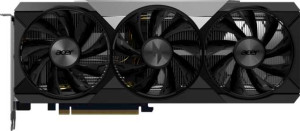
These two cards represent fundamentally different design philosophies in terms of silicon scale and power envelope. The RX 9070 XT is built on a 4nm process with 53,900 million transistors, compared to the RTX 5060's 5nm die with 21,900 million transistors. That is nearly 2.5× more transistors on the AMD card — directly reflecting the larger, more complex GPU that underpins its substantial leads in compute and fill-rate performance seen in other spec groups. The finer node on the RX 9070 XT helps manage the heat and power demands of fitting that transistor count onto a single die, though not without trade-offs.
The power consumption gap is significant and practical. At 340W TDP, the RX 9070 XT demands a robust power supply and adequate case airflow — it is a high-draw component that will also contribute more heat to the system. The RTX 5060's 145W TDP is less than half that figure, making it a notably more system-friendly card that fits comfortably in smaller builds, requires less demanding PSU headroom, and runs cooler under load. This efficiency advantage is a genuine consideration for users with compact cases, budget PSUs, or electricity cost sensitivity. The size difference echoes this: the RX 9070 XT's larger 295mm length versus 241mm for the RTX 5060 also reflects the bigger cooling solution needed to manage that thermal output.
Both cards use PCIe 5.0, ensuring neither will face interface bandwidth bottlenecks on modern platforms. Overall, this group highlights a clear trade-off rather than a simple winner: the RX 9070 XT is the larger, more power-hungry card by a wide margin, while the RTX 5060 holds a meaningful advantage in efficiency, thermals, and physical footprint. Which side of that trade-off matters more depends entirely on the user's build constraints and priorities.