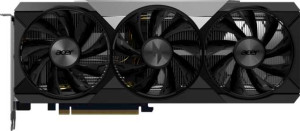
Acer Nitro Radeon RX 9070 XT OC
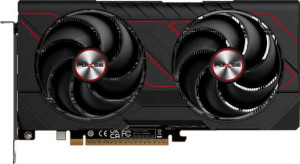
Sapphire Pulse Radeon RX 9060 XT 16GB

Acer Nitro Radeon RX 9070 XT OC Sapphire Pulse Radeon RX 9060 XT 16GB

Overview

Welcome to our in-depth spec comparison between the Acer Nitro Radeon RX 9070 XT OC and the Sapphire Pulse Radeon RX 9060 XT 16GB — two RDNA 4.0 graphics cards that share the same 16GB GDDR6 memory pool yet diverge sharply in raw compute power, memory bandwidth, and power consumption. Whether you care most about peak gaming performance or power efficiency, this comparison breaks down every key specification to help you decide which card fits your build.

Common Features

  • Both cards share a GPU memory speed of 2518 MHz.
  • Double Precision Floating Point (DPFP) is supported on both products.
  • Both cards have an effective memory speed of 20000 MHz.
  • Both cards feature 16GB of VRAM.
  • Both cards use GDDR6 memory.
  • ECC memory support is available on both products.
  • Both cards use the RDNA 4.0 GPU architecture.
  • Both cards are built on a 4 nm semiconductor process.
  • Both cards support PCIe version 5.
  • Air-water cooling is not available on either product.
  • DirectX 12 Ultimate is supported on both products.
  • Both cards have an OpenGL version of 4.6.
  • Multi-display technology is supported on both products.
  • Ray tracing is supported on both products.
  • 3D support is available on both products.
  • DLSS is not supported on either product.
  • FSR4 is available on both products.
  • XeSS (XMX) is not available on either product.
  • Both cards include one HDMI 2.1b output.
  • Neither card includes USB-C ports, DVI outputs, or mini DisplayPort outputs.

Main Differences

  • GPU base clock speed is 1870 MHz on Acer Nitro Radeon RX 9070 XT OC and 1700 MHz on Sapphire Pulse Radeon RX 9060 XT 16GB.
  • GPU turbo clock speed is 3100 MHz on Acer Nitro Radeon RX 9070 XT OC and 3290 MHz on Sapphire Pulse Radeon RX 9060 XT 16GB.
  • Pixel rate is 396.8 GPixel/s on Acer Nitro Radeon RX 9070 XT OC and 210.6 GPixel/s on Sapphire Pulse Radeon RX 9060 XT 16GB.
  • Floating-point performance is 50.79 TFLOPS on Acer Nitro Radeon RX 9070 XT OC and 26.95 TFLOPS on Sapphire Pulse Radeon RX 9060 XT 16GB.
  • Texture rate is 793.6 GTexels/s on Acer Nitro Radeon RX 9070 XT OC and 421.1 GTexels/s on Sapphire Pulse Radeon RX 9060 XT 16GB.
  • Shading units number 4096 on Acer Nitro Radeon RX 9070 XT OC and 2048 on Sapphire Pulse Radeon RX 9060 XT 16GB.
  • Texture mapping units (TMUs) total 256 on Acer Nitro Radeon RX 9070 XT OC and 128 on Sapphire Pulse Radeon RX 9060 XT 16GB.
  • Render output units (ROPs) total 128 on Acer Nitro Radeon RX 9070 XT OC and 64 on Sapphire Pulse Radeon RX 9060 XT 16GB.
  • Maximum memory bandwidth is 644 GB/s on Acer Nitro Radeon RX 9070 XT OC and 322.3 GB/s on Sapphire Pulse Radeon RX 9060 XT 16GB.
  • Memory bus width is 256-bit on Acer Nitro Radeon RX 9070 XT OC and 128-bit on Sapphire Pulse Radeon RX 9060 XT 16GB.
  • OpenCL version is 0 on Acer Nitro Radeon RX 9070 XT OC and 2.2 on Sapphire Pulse Radeon RX 9060 XT 16GB.
  • RGB lighting is present on Acer Nitro Radeon RX 9070 XT OC but not available on Sapphire Pulse Radeon RX 9060 XT 16GB.
  • Supported displays number 4 on Acer Nitro Radeon RX 9070 XT OC and 3 on Sapphire Pulse Radeon RX 9060 XT 16GB.
  • DisplayPort outputs total 3 on Acer Nitro Radeon RX 9070 XT OC and 2 on Sapphire Pulse Radeon RX 9060 XT 16GB.
  • Thermal Design Power (TDP) is 340W on Acer Nitro Radeon RX 9070 XT OC and 170W on Sapphire Pulse Radeon RX 9060 XT 16GB.
  • Transistor count is 53900 million on Acer Nitro Radeon RX 9070 XT OC and 29700 million on Sapphire Pulse Radeon RX 9060 XT 16GB.
  • Card width is 295 mm on Acer Nitro Radeon RX 9070 XT OC and 240 mm on Sapphire Pulse Radeon RX 9060 XT 16GB.
  • Card height is 120 mm on Acer Nitro Radeon RX 9070 XT OC and 124 mm on Sapphire Pulse Radeon RX 9060 XT 16GB.
Specs Comparison
Acer Nitro Radeon RX 9070 XT OC

Acer Nitro Radeon RX 9070 XT OC

Sapphire Pulse Radeon RX 9060 XT 16GB

Sapphire Pulse Radeon RX 9060 XT 16GB

Performance:
GPU clock speed 1870 MHz 1700 MHz
GPU turbo 3100 MHz 3290 MHz
pixel rate 396.8 GPixel/s 210.6 GPixel/s
floating-point performance 50.79 TFLOPS 26.95 TFLOPS
texture rate 793.6 GTexels/s 421.1 GTexels/s
GPU memory speed 2518 MHz 2518 MHz
shading units 4096 2048
texture mapping units (TMUs) 256 128
render output units (ROPs) 128 64
Has Double Precision Floating Point (DPFP)

The most revealing aspect of this comparison is the shader architecture gap. The Acer Nitro RX 9070 XT OC carries exactly twice the hardware of the Sapphire Pulse RX 9060 XT 16GB across every execution unit — 4096 vs 2048 shading units, 256 vs 128 TMUs, and 128 vs 64 ROPs. This isn't a marginal generational step; it's a literal doubling of the rendering pipeline, which directly translates into the 9070 XT's 50.79 TFLOPS of floating-point throughput versus the 9060 XT's 26.95 TFLOPS — nearly a 2× difference in raw compute muscle.

There is one area where the 9060 XT quietly holds an edge: its boost clock reaches 3290 MHz compared to the 9070 XT's 3100 MHz. However, clock speed alone cannot compensate for half the execution units. The downstream metrics tell the real story — the 9070 XT delivers a pixel rate of 396.8 GPixel/s and a texture rate of 793.6 GTexels/s, both roughly double what the 9060 XT produces. In practice, this means the 9070 XT can push significantly higher resolutions and frame rates, handle more complex geometry and shading passes, and sustain performance at 1440p and 4K where the 9060 XT would face bottlenecks. GPU memory speed is identical at 2518 MHz for both, so neither card gains an edge at the memory interface level. Both also support Double Precision Floating Point, though this is primarily relevant for compute workloads rather than gaming.

The Acer Nitro RX 9070 XT OC holds an unambiguous and substantial performance advantage in this group. Unless the workload is extremely light or clock-speed-bound in a very narrow scenario, the 9070 XT's doubled hardware throughput makes it the clear winner across every meaningful performance metric provided.

Memory:
effective memory speed 20000 MHz 20000 MHz
maximum memory bandwidth 644 GB/s 322.3 GB/s
VRAM 16GB 16GB
GDDR version GDDR6 GDDR6
memory bus width 256-bit 128-bit
Supports ECC memory

On the surface, these two cards look nearly identical in memory configuration — both carry 16GB of GDDR6 running at an effective speed of 20000 MHz, and both support ECC memory. For buyers prioritizing VRAM capacity, neither card has an advantage, which is notable given the 9060 XT's lower performance tier; 16GB is a generous allocation that future-proofs both cards against memory-hungry titles and workloads.

The critical divergence lies in the memory bus width: the Acer Nitro RX 9070 XT OC uses a 256-bit interface versus the Sapphire Pulse RX 9060 XT 16GB's 128-bit interface. Bus width determines how much data can flow between the GPU and its memory per clock cycle, and doubling it — with the same memory speed — produces exactly double the bandwidth: 644 GB/s vs 322.3 GB/s. In practical terms, higher bandwidth reduces the chance of the GPU stalling while waiting for texture or geometry data, which becomes increasingly critical at higher resolutions and with complex shading.

For the 9060 XT, the 128-bit bus is a meaningful architectural constraint. While 322 GB/s is respectable, it can become a bottleneck in bandwidth-intensive scenarios like high-resolution texture streaming or ray tracing. The 9070 XT's 644 GB/s bandwidth headroom aligns well with its doubled shader count from the performance group, ensuring the execution units are rarely left waiting on data. The Acer Nitro RX 9070 XT OC holds a decisive memory bandwidth advantage here, even though both cards are evenly matched on capacity and memory type.

Features:
DirectX version DirectX 12 Ultimate DirectX 12 Ultimate
OpenGL version 4.6 4.6
OpenCL version 0 2.2
Supports multi-display technology
supports ray tracing
Supports 3D
supports DLSS
has FSR4
has XeSS (XMX)
AMD SAM / Intel Resizable BAR AMD SAM AMD SAM
has LHR
has RGB lighting
supported displays 4 3

Across the most impactful feature categories, these two cards are strikingly similar. Both support DirectX 12 Ultimate and OpenGL 4.6, meaning they share the same foundation for modern game compatibility and graphics API support. Ray tracing, FSR4, and AMD SAM are present on both — so neither card has an exclusive advantage in the features that matter most to gamers today. The absence of DLSS on both is expected given these are AMD cards, and the lack of XeSS (XMX) is equally consistent.

Two differences are worth flagging. The Sapphire Pulse RX 9060 XT lists OpenCL 2.2 support while the 9070 XT shows a version of 0, which suggests either no OpenCL support or an unlisted value. For users running GPU-accelerated compute tasks — such as video transcoding, scientific simulations, or certain creative applications that rely on OpenCL — this could give the 9060 XT a practical edge in non-gaming workloads. On the other side, the Acer Nitro RX 9070 XT OC supports 4 simultaneous displays versus the 9060 XT's 3, and adds RGB lighting — a minor but real differentiator for multi-monitor setups and aesthetics-conscious builds.

Overall, the feature sets are largely tied for gaming purposes. The 9060 XT's OpenCL advantage is meaningful for compute-oriented users, while the 9070 XT's extra display output and RGB are nice additions but secondary considerations. Neither card pulls decisively ahead in this group — the winner here depends entirely on the user's specific use case.

Ports:
has an HDMI output
HDMI ports 1 1
HDMI version HDMI 2.1b HDMI 2.1b
DisplayPort outputs 3 2
USB-C ports 0 0
DVI outputs 0 0
mini DisplayPort outputs 0 0

Connectivity between these two cards is nearly identical — both offer a single HDMI 2.1b port and identical absence of USB-C, DVI, or mini DisplayPort outputs. HDMI 2.1b is a capable standard, supporting high refresh rates at 4K and beyond, so neither card is at a disadvantage for TV or single-display setups.

The one concrete difference is that the Acer Nitro RX 9070 XT OC provides 3 DisplayPort outputs while the Sapphire Pulse RX 9060 XT 16GB offers 2. Combined with the HDMI port, this gives the 9070 XT a total of 4 possible display connections versus the 9060 XT's 3 — which aligns with the supported display count noted in the Features group. For users running triple-monitor gaming setups or mixed productivity and gaming configurations, the extra DisplayPort on the 9070 XT eliminates the need for adapters or compromises.

The Acer Nitro RX 9070 XT OC holds a narrow but practical edge here, solely due to its additional DisplayPort output. For single or dual-display users, however, the port configurations are functionally equivalent and this distinction is unlikely to influence a purchase decision.

General info:
GPU architecture RDNA 4.0 RDNA 4.0
release date March 2025 June 2025
Thermal Design Power (TDP) 340W 170W
PCI Express (PCIe) version 5 5
semiconductor size 4 nm 4 nm
number of transistors 53900 million 29700 million
Has air-water cooling
width 295 mm 240 mm
height 120 mm 124 mm

Both cards share the same RDNA 4.0 architecture, manufactured on a 4nm process node, and connect via PCIe 5.0 — so there is no generational gap or platform compatibility difference between them. What the shared architecture masks, however, is a significant difference in die complexity: the Acer Nitro RX 9070 XT OC packs 53,900 million transistors against the Sapphire Pulse RX 9060 XT 16GB's 29,700 million. That roughly 80% larger die is the physical foundation behind the doubled shader counts seen in the Performance group — more transistors mean more execution hardware.

The power story is equally striking. The 9070 XT carries a 340W TDP, exactly double the 9060 XT's 170W. In practical terms, this means the 9070 XT demands a more robust power supply, generates significantly more heat, and requires better case airflow to run stably. The 9060 XT's 170W envelope, by contrast, is modest enough to fit comfortably into mid-range builds without stressing the power delivery or thermal management. Neither card uses liquid cooling, so both rely entirely on their air cooler designs.

Physical size also differs meaningfully: the 9070 XT is 295mm long versus the 9060 XT's 240mm, a 55mm difference that could matter in compact or mid-tower cases with limited GPU clearance. The Sapphire Pulse RX 9060 XT 16GB holds a genuine advantage in this group for users with constrained builds or strict power budgets — its lower TDP and smaller footprint make it the more system-friendly option. The 9070 XT's higher demands are the direct cost of its performance lead.
Comparison Summary & Verdict

After examining every specification, a clear picture emerges for each card. The Acer Nitro Radeon RX 9070 XT OC is the stronger performer, offering double the shading units (4096 vs 2048), a 256-bit memory bus delivering 644 GB/s of bandwidth, and nearly double the floating-point throughput at 50.79 TFLOPS — making it the right choice for enthusiasts who demand top-tier frame rates and future-proofing. It also supports up to 4 simultaneous displays and adds RGB lighting for a premium build aesthetic. The Sapphire Pulse Radeon RX 9060 XT 16GB, on the other hand, draws only 170W TDP compared to 340W, making it a compelling option for users building compact or energy-conscious systems who still want 16GB GDDR6, ray tracing, FSR4, and a slightly higher turbo clock of 3290 MHz. Both cards are excellent in their lane; the choice simply comes down to performance headroom versus efficiency.

Acer Nitro Radeon RX 9070 XT OC
Buy Acer Nitro Radeon RX 9070 XT OC if...

Buy the Acer Nitro Radeon RX 9070 XT OC if you want maximum GPU performance, with nearly double the shading units, 644 GB/s memory bandwidth, and support for up to 4 displays for demanding gaming or content workloads.

Sapphire Pulse Radeon RX 9060 XT 16GB
Buy Sapphire Pulse Radeon RX 9060 XT 16GB if...

Buy the Sapphire Pulse Radeon RX 9060 XT 16GB if you are building a power-efficient system and want a capable card with a 170W TDP, 16GB GDDR6, ray tracing, and FSR4 support without the high energy demands of a flagship GPU.