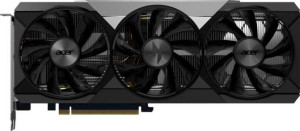
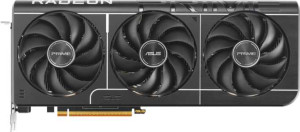
Featurewise, these two cards share the same software and API foundation almost entirely. Both support DirectX 12 Ultimate, which unlocks the full suite of modern rendering features — hardware-accelerated ray tracing, variable rate shading, and mesh shaders — across compatible titles. Ray tracing support is confirmed for both, and critically, both include FSR4 (FidelityFX Super Resolution 4), AMD's latest upscaling technology. FSR4 represents a meaningful generational leap in image quality over its predecessors and can substantially boost frame rates in supported games without requiring dedicated AI hardware. Neither card supports DLSS, which is expected given these are AMD products, and XeSS (XMX) is absent on both as well.
AMD SAM (Smart Access Memory) is present on both cards, allowing a compatible AMD CPU and motherboard to access the full VRAM pool rather than a limited 256MB window. In practice, SAM can provide a modest but measurable performance uplift in certain titles, and its availability on both cards means neither buyer is left without it. The support for up to 4 simultaneous displays is equally shared, making both cards equally capable for multi-monitor productivity or gaming setups.
The sole distinguishing feature in this group is RGB lighting, which the Acer Nitro RX 9070 XT includes and the Asus Prime RX 9070 OC Edition does not. The Prime's omission of RGB is consistent with its more utilitarian, understated aesthetic. For buyers who value a lit, themed build, the Nitro holds a cosmetic edge here; for those indifferent to aesthetics, it is a non-factor. Functionally and feature-for-feature, these cards are otherwise identical in this group, making the Nitro's RGB the only tiebreaker — a minor one at that.