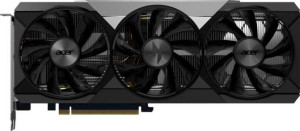
Acer Nitro Radeon RX 9070 XT
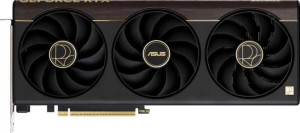
Asus ProArt GeForce RTX 5070 Ti

Acer Nitro Radeon RX 9070 XT Asus ProArt GeForce RTX 5070 Ti

Overview

Welcome to our in-depth specification comparison between the Acer Nitro Radeon RX 9070 XT and the Asus ProArt GeForce RTX 5070 Ti. These two mid-to-high-end graphics cards come from rival GPU architectures — AMD's RDNA 4.0 and Nvidia's Blackwell — and each brings a distinct set of trade-offs to the table. In this comparison, we examine key battlegrounds including raw compute performance, memory technology, feature support, and physical connectivity to help you determine which card best fits your needs.

Common Features

  • Both GPUs support Double Precision Floating Point (DPFP).
  • Both cards come with 16GB of VRAM.
  • Both cards use a 256-bit memory bus width.
  • ECC memory support is available on both products.
  • Both GPUs support DirectX 12 Ultimate.
  • Both cards support OpenGL version 4.6.
  • Multi-display technology is supported on both products.
  • Ray tracing support is available on both products.
  • 3D support is available on both products.
  • XeSS (XMX) support is not available on either product.
  • LHR (Lite Hash Rate) is not present on either product.
  • RGB lighting is featured on both cards.
  • Both cards have one HDMI port.
  • Both cards use HDMI version 2.1b.
  • Neither card has DVI outputs.
  • Neither card has mini DisplayPort outputs.
  • Both cards use PCI Express version 5.
  • Neither card uses air-water cooling.

Main Differences

  • GPU base clock speed is 1660 MHz on Acer Nitro Radeon RX 9070 XT and 2295 MHz on Asus ProArt GeForce RTX 5070 Ti.
  • GPU turbo clock speed is 2970 MHz on Acer Nitro Radeon RX 9070 XT and 2452 MHz on Asus ProArt GeForce RTX 5070 Ti.
  • Pixel rate is 380.2 GPixel/s on Acer Nitro Radeon RX 9070 XT and 235.4 GPixel/s on Asus ProArt GeForce RTX 5070 Ti.
  • Floating-point performance is 48.66 TFLOPS on Acer Nitro Radeon RX 9070 XT and 43.94 TFLOPS on Asus ProArt GeForce RTX 5070 Ti.
  • Texture rate is 760.3 GTexels/s on Acer Nitro Radeon RX 9070 XT and 686.6 GTexels/s on Asus ProArt GeForce RTX 5070 Ti.
  • GPU memory speed is 2518 MHz on Acer Nitro Radeon RX 9070 XT and 1750 MHz on Asus ProArt GeForce RTX 5070 Ti.
  • Shading units number 4096 on Acer Nitro Radeon RX 9070 XT and 8960 on Asus ProArt GeForce RTX 5070 Ti.
  • Texture mapping units (TMUs) total 256 on Acer Nitro Radeon RX 9070 XT and 280 on Asus ProArt GeForce RTX 5070 Ti.
  • Render output units (ROPs) total 128 on Acer Nitro Radeon RX 9070 XT and 96 on Asus ProArt GeForce RTX 5070 Ti.
  • Effective memory speed is 20000 MHz on Acer Nitro Radeon RX 9070 XT and 28000 MHz on Asus ProArt GeForce RTX 5070 Ti.
  • Maximum memory bandwidth is 644 GB/s on Acer Nitro Radeon RX 9070 XT and 896 GB/s on Asus ProArt GeForce RTX 5070 Ti.
  • Memory type is GDDR6 on Acer Nitro Radeon RX 9070 XT and GDDR7 on Asus ProArt GeForce RTX 5070 Ti.
  • OpenCL version is 2.2 on Acer Nitro Radeon RX 9070 XT and 3 on Asus ProArt GeForce RTX 5070 Ti.
  • DLSS support is present on Asus ProArt GeForce RTX 5070 Ti but not available on Acer Nitro Radeon RX 9070 XT.
  • The Acer Nitro Radeon RX 9070 XT uses AMD SAM while the Asus ProArt GeForce RTX 5070 Ti uses Intel Resizable BAR.
  • DisplayPort outputs number 3 on Acer Nitro Radeon RX 9070 XT and 2 on Asus ProArt GeForce RTX 5070 Ti.
  • A USB-C port is present on Asus ProArt GeForce RTX 5070 Ti but not available on Acer Nitro Radeon RX 9070 XT.
  • GPU architecture is RDNA 4.0 on Acer Nitro Radeon RX 9070 XT and Blackwell on Asus ProArt GeForce RTX 5070 Ti.
  • Thermal Design Power (TDP) is 304W on Acer Nitro Radeon RX 9070 XT and 300W on Asus ProArt GeForce RTX 5070 Ti.
  • Semiconductor size is 4 nm on Acer Nitro Radeon RX 9070 XT and 5 nm on Asus ProArt GeForce RTX 5070 Ti.
  • Transistor count is 53900 million on Acer Nitro Radeon RX 9070 XT and 45600 million on Asus ProArt GeForce RTX 5070 Ti.
  • Card width is 295 mm on Acer Nitro Radeon RX 9070 XT and 304 mm on Asus ProArt GeForce RTX 5070 Ti.
  • Card height is 120 mm on Acer Nitro Radeon RX 9070 XT and 126 mm on Asus ProArt GeForce RTX 5070 Ti.
Specs Comparison
Acer Nitro Radeon RX 9070 XT

Acer Nitro Radeon RX 9070 XT

Asus ProArt GeForce RTX 5070 Ti

Asus ProArt GeForce RTX 5070 Ti

Performance:
GPU clock speed 1660 MHz 2295 MHz
GPU turbo 2970 MHz 2452 MHz
pixel rate 380.2 GPixel/s 235.4 GPixel/s
floating-point performance 48.66 TFLOPS 43.94 TFLOPS
texture rate 760.3 GTexels/s 686.6 GTexels/s
GPU memory speed 2518 MHz 1750 MHz
shading units 4096 8960
texture mapping units (TMUs) 256 280
render output units (ROPs) 128 96
Has Double Precision Floating Point (DPFP)

At first glance, the Asus ProArt RTX 5070 Ti appears to have a significant hardware advantage with a massive 8960 shading units versus the Acer Nitro RX 9070 XT's 4096 — more than double. However, raw shader counts are architecture-dependent and rarely translate linearly into real-world throughput, and the rest of the performance metrics tell a very different story. The RX 9070 XT leads in floating-point performance at 48.66 TFLOPS versus 43.94 TFLOPS, in pixel rate at 380.2 GPixel/s versus just 235.4 GPixel/s, and in texture rate at 760.3 GTexels/s versus 686.6 GTexels/s — all of which are more direct indicators of rendering throughput. This means the RX 9070 XT can push more pixels and process more texture data per second, which directly benefits rasterization performance in games.

The clock speed story is also nuanced. The RTX 5070 Ti runs at a higher base clock of 2295 MHz, but its turbo headroom is modest, reaching only 2452 MHz — a spread of just 157 MHz. The RX 9070 XT starts much lower at 1660 MHz but surges to an impressive 2970 MHz turbo, a swing of over 1300 MHz. This aggressive boost behavior is characteristic of AMD's RDNA 4 architecture and is what drives its superior throughput numbers despite fewer compute units. Additionally, the RX 9070 XT's GPU memory speed of 2518 MHz significantly outpaces the RTX 5070 Ti's 1750 MHz, which benefits memory-bandwidth-sensitive workloads like high-resolution textures and large frame buffers. Both cards support Double Precision Floating Point (DPFP), making neither distinctly better for compute or professional workloads on that point alone.

Overall, the Acer Nitro RX 9070 XT holds a clear performance edge within this spec group. Its higher TFLOPS, pixel rate, texture rate, ROP count, and memory speed all point to stronger raw rendering throughput despite the architectural difference in shader count. The RTX 5070 Ti's higher shading unit count suggests potential advantages in workloads specifically designed around its architecture (such as AI-assisted features), but based strictly on the hardware performance metrics provided here, the RX 9070 XT comes out ahead.
Memory:
effective memory speed 20000 MHz 28000 MHz
maximum memory bandwidth 644 GB/s 896 GB/s
VRAM 16GB 16GB
GDDR version GDDR6 GDDR7
memory bus width 256-bit 256-bit
Supports ECC memory

Both cards ship with 16GB of VRAM on a 256-bit memory bus, and both support ECC memory — so capacity and bus width are a wash. The meaningful separation comes from the memory technology each card employs. The RX 9070 XT uses GDDR6, while the RTX 5070 Ti steps up to the newer GDDR7 standard. That generational gap has measurable consequences: the RTX 5070 Ti achieves an effective memory speed of 28000 MHz versus the RX 9070 XT's 20000 MHz, translating into a maximum memory bandwidth of 896 GB/s compared to 644 GB/s — a difference of roughly 39%.

Bandwidth is one of the most consequential specs for GPU memory systems. It determines how quickly the GPU can feed its compute units with texture data, frame buffer reads, and geometry information. When bandwidth is constrained, even a powerful GPU can stall waiting on data — an effect that becomes especially pronounced at higher resolutions (4K and above) and with memory-intensive techniques like ray tracing or large texture assets. The RTX 5070 Ti's substantial bandwidth advantage means it is less likely to hit this ceiling in demanding scenarios, giving its compute units a more consistent supply of data to work with.

On memory, the Asus ProArt RTX 5070 Ti holds a clear and significant advantage. Despite identical VRAM capacity and bus width, its GDDR7 implementation delivers nearly 252 GB/s more bandwidth than the RX 9070 XT's GDDR6 setup. This is not a marginal difference — it is a structural edge that will matter most in high-resolution, texture-heavy, or bandwidth-sensitive workloads. The RX 9070 XT is not deficient by any means, but it is working with an older memory standard that imposes a real throughput ceiling by comparison.

Features:
DirectX version DirectX 12 Ultimate DirectX 12 Ultimate
OpenGL version 4.6 4.6
OpenCL version 2.2 3
Supports multi-display technology
supports ray tracing
Supports 3D
supports DLSS
has XeSS (XMX)
AMD SAM / Intel Resizable BAR AMD SAM Intel Resizable BAR
has LHR
has RGB lighting
supported displays 4 4

The foundation is essentially identical: both cards share DirectX 12 Ultimate, OpenGL 4.6, ray tracing support, 3D support, multi-display capability up to 4 displays, no LHR restrictions, and RGB lighting. The RTX 5070 Ti does carry a slightly newer OpenCL 3 implementation versus the RX 9070 XT's OpenCL 2.2, which can matter for GPU-accelerated compute workloads, but for the vast majority of gaming users this distinction is negligible.

The most consequential differentiator in this group is upscaling support. The RTX 5070 Ti supports DLSS, Nvidia's AI-driven upscaling technology, while the RX 9070 XT does not — and neither card supports XeSS. DLSS allows supported games to render at a lower internal resolution and intelligently reconstruct a higher-resolution image, often delivering substantial frame rate gains with minimal perceived quality loss. For users who prioritize frame rates in DLSS-compatible titles, this is a tangible in-game advantage that cannot be replicated on the RX 9070 XT through any equivalent feature listed here. It is worth noting that AMD's own upscaling solution is not reflected in the provided data for either card, so no comparison can be drawn on that front.

The Asus ProArt RTX 5070 Ti has a clear edge in this group, primarily due to its DLSS support. The shared baseline of DirectX 12 Ultimate, ray tracing, and display connectivity means parity where it counts for broad compatibility, but DLSS is a real-world performance multiplier in a growing library of titles — and its absence on the RX 9070 XT is a meaningful gap when features are the deciding factor.

Ports:
has an HDMI output
HDMI ports 1 1
HDMI version HDMI 2.1b HDMI 2.1b
DisplayPort outputs 3 2
USB-C ports 0 1
DVI outputs 0 0
mini DisplayPort outputs 0 0

Connectivity here is more about layout philosophy than raw capability. Both cards offer one HDMI 2.1b port — the latest revision of the standard, supporting up to 4K at very high refresh rates and 8K output — so neither holds an advantage on that front. The divergence lies in how the remaining three output slots are allocated. The RX 9070 XT fills all of them with 3 DisplayPort outputs, while the RTX 5070 Ti opts for 2 DisplayPort outputs plus a USB-C port, keeping the total display count at 4 for both cards.

For users running a three-monitor DisplayPort setup without an HDMI display, the RX 9070 XT is the more straightforward choice — no adapters needed. The RTX 5070 Ti's USB-C port, however, adds meaningful flexibility: it can drive a USB-C or Thunderbolt-compatible display directly, which is increasingly common among high-end monitors and portable displays, and may also support data or power functions depending on implementation. Users with a mixed or modern display ecosystem may find the USB-C output genuinely useful rather than a mere substitute for a third DisplayPort.

This group is effectively a tie in practical terms, with a use-case-dependent edge for each card. The RX 9070 XT suits users who need three simultaneous DisplayPort connections without any conversion, while the RTX 5070 Ti's USB-C port offers greater versatility for those with compatible displays or peripherals. Neither card is strictly superior here — the better choice depends entirely on the user's specific display configuration.

General info:
GPU architecture RDNA 4.0 Blackwell
release date March 2025 September 2025
Thermal Design Power (TDP) 304W 300W
PCI Express (PCIe) version 5 5
semiconductor size 4 nm 5 nm
number of transistors 53900 million 45600 million
Has air-water cooling
width 295 mm 304 mm
height 120 mm 126 mm

Manufactured on different process nodes, these two cards reveal an interesting silicon story. The RX 9070 XT is built on a 4nm process and packs 53.9 billion transistors, while the RTX 5070 Ti uses a 5nm process with 45.6 billion transistors. The smaller node on the RX 9070 XT generally allows for greater transistor density and improved power efficiency at equivalent transistor counts — and the higher transistor count suggests AMD has invested more silicon area into this chip. Both cards use PCIe 5.0, ensuring neither is bottlenecked by interface bandwidth on compatible motherboards, and neither requires liquid cooling in these configurations.

Power consumption is remarkably close — 304W for the RX 9070 XT versus 300W for the RTX 5070 Ti — a difference so small it is irrelevant in practice. Both cards will place similar demands on a PSU and generate comparable heat loads, meaning neither has a meaningful efficiency edge from a system-building perspective based on TDP alone. Physical dimensions are also nearly identical, with the RTX 5070 Ti being marginally larger at 304mm × 126mm versus the RX 9070 XT's 295mm × 120mm — a difference that will matter only in the most space-constrained cases.

Strictly within this group, the RX 9070 XT holds a modest architectural edge on paper — its newer 4nm node and higher transistor count indicate a more dense and potentially more efficient die design, which aligns with the performance numbers seen in other spec groups. The RTX 5070 Ti's Blackwell architecture on 5nm is by no means outdated, but at virtually identical TDPs, the RX 9070 XT appears to extract more transistors per watt from its manufacturing process.

Comparison Summary & Verdict

After examining the full spec sheet, both cards prove to be highly capable GPUs, but they serve somewhat different audiences. The Acer Nitro Radeon RX 9070 XT stands out with a higher pixel rate, stronger floating-point performance of 48.66 TFLOPS, more ROPs, a faster GPU turbo clock of 2970 MHz, and a more refined 4 nm process node with a higher transistor count — making it appealing for users who prioritize raw rasterization throughput. The Asus ProArt GeForce RTX 5070 Ti, on the other hand, counters with significantly more shading units, faster GDDR7 memory delivering 896 GB/s of bandwidth, DLSS support, and a USB-C output — advantages that will resonate strongly with content creators and gamers who rely on Nvidia's upscaling ecosystem. Both cards share 16GB of VRAM, PCIe 5.0, ray tracing support, and a nearly identical TDP, so your choice ultimately comes down to software ecosystem preference and workload type.

Acer Nitro Radeon RX 9070 XT
Buy Acer Nitro Radeon RX 9070 XT if...

Buy the Acer Nitro Radeon RX 9070 XT if you want superior raw rasterization throughput, a higher turbo clock speed, and a more advanced 4 nm process node at a potentially competitive price point.

Asus ProArt GeForce RTX 5070 Ti
Buy Asus ProArt GeForce RTX 5070 Ti if...

Buy the Asus ProArt GeForce RTX 5070 Ti if you depend on DLSS support, need faster GDDR7 memory bandwidth, or require a USB-C display output for your creative or gaming workflow.