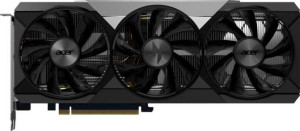
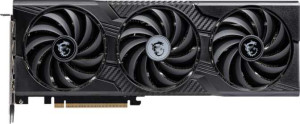
Looking at raw compute throughput, the Acer Nitro RX 9070 XT holds a commanding lead across the board. Its 48.66 TFLOPS of floating-point performance outpaces the MSI RTX 5070's 30.87 TFLOPS by nearly 58% — a gap that directly translates to heavier workloads like ray tracing compute, physics simulations, and general shader-heavy rendering being processed faster. Similarly, the RX 9070 XT's pixel rate of 380.2 GPixel/s versus 201 GPixel/s means it can fill frames with substantially more pixels per second, which is particularly relevant at high resolutions like 4K where rasterization throughput becomes a bottleneck.
It is worth noting that the RTX 5070 features significantly more shading units (6144 vs. 4096), yet still produces lower compute output. This apparent paradox reflects architectural efficiency differences: the RX 9070 XT squeezes more TFLOPS from fewer units, partly enabled by its dramatically higher GPU turbo clock of 2970 MHz compared to the RTX 5070's 2512 MHz. The RTX 5070 does maintain a higher base clock (2325 MHz vs. 1660 MHz), meaning it starts fast but scales less aggressively under boost. For sustained workloads, the RX 9070 XT's higher turbo headroom is the more impactful figure. The RX 9070 XT also holds an edge in texture and render output throughput, with 256 TMUs and 128 ROPs versus 192 TMUs and 80 ROPs — advantages that contribute directly to texture filtering quality at high settings and efficient depth/alpha blending in complex scenes.
Both cards support Double Precision Floating Point (DPFP), making either viable for GPGPU workloads beyond gaming. However, on every core performance metric in this group — compute, pixel fill, texture throughput, and memory speed — the Acer Nitro RX 9070 XT has a clear and consistent advantage. The RTX 5070's higher shading unit count does not translate into competitive numbers here, and users prioritizing raw GPU horsepower based on these specs alone should favor the RX 9070 XT.