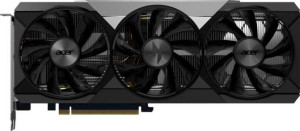
Acer Nitro Radeon RX 9070 XT
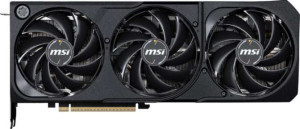
MSI GeForce RTX 5070 Shadow 3X OC

Acer Nitro Radeon RX 9070 XT MSI GeForce RTX 5070 Shadow 3X OC

Overview

Welcome to our in-depth spec comparison between the Acer Nitro Radeon RX 9070 XT and the MSI GeForce RTX 5070 Shadow 3X OC — two compelling mid-to-high-end graphics cards built on entirely different architectures. This head-to-head examines their key battlegrounds, including raw compute performance, memory configurations, feature sets, and thermal profiles, to help you decide which card best fits your build and workflow.

Common Features

  • Double Precision Floating Point (DPFP) is supported on both products.
  • ECC memory support is available on both products.
  • Both products use DirectX 12 Ultimate.
  • Both products support OpenGL version 4.6.
  • Both products support multi-display technology.
  • Both products support ray tracing.
  • Both products support 3D.
  • XeSS (XMX) support is not available on either product.
  • LHR is not present on either product.
  • Both products support up to 4 displays.
  • Both products have an HDMI output.
  • Both products have 1 HDMI port.
  • Both products use HDMI version 2.1b.
  • Both products have 3 DisplayPort outputs.
  • Neither product has USB-C ports.
  • Neither product has DVI outputs.
  • Neither product has mini DisplayPort outputs.
  • Both products use PCI Express (PCIe) version 5.
  • Neither product uses air-water cooling.

Main Differences

  • GPU base clock speed is 1660 MHz on Acer Nitro Radeon RX 9070 XT and 2325 MHz on MSI GeForce RTX 5070 Shadow 3X OC.
  • GPU turbo clock is 2970 MHz on Acer Nitro Radeon RX 9070 XT and 2542 MHz on MSI GeForce RTX 5070 Shadow 3X OC.
  • Pixel rate is 380.2 GPixel/s on Acer Nitro Radeon RX 9070 XT and 203.4 GPixel/s on MSI GeForce RTX 5070 Shadow 3X OC.
  • Floating-point performance is 48.66 TFLOPS on Acer Nitro Radeon RX 9070 XT and 31.24 TFLOPS on MSI GeForce RTX 5070 Shadow 3X OC.
  • Texture rate is 760.3 GTexels/s on Acer Nitro Radeon RX 9070 XT and 488.1 GTexels/s on MSI GeForce RTX 5070 Shadow 3X OC.
  • GPU memory speed is 2518 MHz on Acer Nitro Radeon RX 9070 XT and 1750 MHz on MSI GeForce RTX 5070 Shadow 3X OC.
  • Shading units number 4096 on Acer Nitro Radeon RX 9070 XT and 6144 on MSI GeForce RTX 5070 Shadow 3X OC.
  • Texture mapping units (TMUs) total 256 on Acer Nitro Radeon RX 9070 XT and 192 on MSI GeForce RTX 5070 Shadow 3X OC.
  • Render output units (ROPs) total 128 on Acer Nitro Radeon RX 9070 XT and 80 on MSI GeForce RTX 5070 Shadow 3X OC.
  • Effective memory speed is 20000 MHz on Acer Nitro Radeon RX 9070 XT and 28000 MHz on MSI GeForce RTX 5070 Shadow 3X OC.
  • Maximum memory bandwidth is 644 GB/s on Acer Nitro Radeon RX 9070 XT and 672 GB/s on MSI GeForce RTX 5070 Shadow 3X OC.
  • VRAM is 16GB on Acer Nitro Radeon RX 9070 XT and 12GB on MSI GeForce RTX 5070 Shadow 3X OC.
  • Acer Nitro Radeon RX 9070 XT uses GDDR6 memory while MSI GeForce RTX 5070 Shadow 3X OC uses GDDR7.
  • Memory bus width is 256-bit on Acer Nitro Radeon RX 9070 XT and 192-bit on MSI GeForce RTX 5070 Shadow 3X OC.
  • OpenCL version is 2.2 on Acer Nitro Radeon RX 9070 XT and 3 on MSI GeForce RTX 5070 Shadow 3X OC.
  • DLSS support is present on MSI GeForce RTX 5070 Shadow 3X OC but not available on Acer Nitro Radeon RX 9070 XT.
  • Acer Nitro Radeon RX 9070 XT uses AMD SAM while MSI GeForce RTX 5070 Shadow 3X OC uses Intel Resizable BAR.
  • RGB lighting is present on Acer Nitro Radeon RX 9070 XT but not available on MSI GeForce RTX 5070 Shadow 3X OC.
  • GPU architecture is RDNA 4.0 on Acer Nitro Radeon RX 9070 XT and Blackwell on MSI GeForce RTX 5070 Shadow 3X OC.
  • Thermal Design Power (TDP) is 304W on Acer Nitro Radeon RX 9070 XT and 250W on MSI GeForce RTX 5070 Shadow 3X OC.
  • Semiconductor size is 4 nm on Acer Nitro Radeon RX 9070 XT and 5 nm on MSI GeForce RTX 5070 Shadow 3X OC.
  • Transistor count is 53900 million on Acer Nitro Radeon RX 9070 XT and 31100 million on MSI GeForce RTX 5070 Shadow 3X OC.
  • Card width is 295 mm on Acer Nitro Radeon RX 9070 XT and 303 mm on MSI GeForce RTX 5070 Shadow 3X OC.
  • Card height is 120 mm on Acer Nitro Radeon RX 9070 XT and 121 mm on MSI GeForce RTX 5070 Shadow 3X OC.
Specs Comparison
Acer Nitro Radeon RX 9070 XT

Acer Nitro Radeon RX 9070 XT

MSI GeForce RTX 5070 Shadow 3X OC

MSI GeForce RTX 5070 Shadow 3X OC

Performance:
GPU clock speed 1660 MHz 2325 MHz
GPU turbo 2970 MHz 2542 MHz
pixel rate 380.2 GPixel/s 203.4 GPixel/s
floating-point performance 48.66 TFLOPS 31.24 TFLOPS
texture rate 760.3 GTexels/s 488.1 GTexels/s
GPU memory speed 2518 MHz 1750 MHz
shading units 4096 6144
texture mapping units (TMUs) 256 192
render output units (ROPs) 128 80
Has Double Precision Floating Point (DPFP)

Looking at raw throughput, the Acer Nitro RX 9070 XT posts a commanding lead across the most performance-critical metrics. Its 48.66 TFLOPS of floating-point performance is roughly 56% higher than the 31.24 TFLOPS delivered by the MSI RTX 5070, and this gap is reinforced by a pixel rate of 380.2 GPixel/s versus just 203.4 GPixel/s — nearly double. In practice, pixel rate governs how fast a GPU can fill the screen with rendered output, meaning the RX 9070 XT has a structural throughput advantage at high resolutions. Its texture rate of 760.3 GTexels/s versus 488.1 GTexels/s tells a similar story: richer, more detailed surfaces can be processed faster per frame.

The picture is more nuanced when looking at clock speeds and shader counts. The RTX 5070 runs at a notably higher base clock of 2325 MHz and maintains a tighter turbo window (peaking at 2542 MHz), which translates to very consistent, predictable performance under sustained load. The RX 9070 XT, by contrast, starts much lower at 1660 MHz but swings aggressively up to 2970 MHz at turbo — a much wider boost range that can deliver impressive peak bursts but may behave less uniformly. The RTX 5070 also carries significantly more shading units (6144 vs 4096), which on paper gives it more parallel compute threads — yet this advantage is outweighed in the aggregate throughput figures, likely due to the RX 9070 XT's superior memory speed (2518 MHz vs 1750 MHz), higher ROPs (128 vs 80), and more TMUs (256 vs 192).

On balance, the RX 9070 XT holds a clear performance edge based on these specs. Higher TFLOPS, pixel rate, texture rate, memory bandwidth, and render output units all point to greater raw rendering horsepower. The RTX 5070's higher shader count and steadier clock behavior make it a more consistent performer, but it cannot close the gap in overall throughput as reflected across the majority of these metrics. Both cards support Double Precision Floating Point, so neither has an advantage there. For users prioritizing peak rendering performance, the RX 9070 XT is the stronger choice on paper.
Memory:
effective memory speed 20000 MHz 28000 MHz
maximum memory bandwidth 644 GB/s 672 GB/s
VRAM 16GB 12GB
GDDR version GDDR6 GDDR7
memory bus width 256-bit 192-bit
Supports ECC memory

The memory configurations here reveal a classic architectural trade-off. The RX 9070 XT uses GDDR6 on a wide 256-bit bus with 16GB of VRAM, while the RTX 5070 deploys the newer GDDR7 standard on a narrower 192-bit bus with 12GB. GDDR7 compensates for the thinner bus through significantly higher per-pin bandwidth — its effective memory speed of 28000 MHz versus 20000 MHz — and the end result is that both cards land at surprisingly close peak bandwidth figures: 672 GB/s for the RTX 5070 versus 644 GB/s for the RX 9070 XT. In other words, Nvidia has used a more modern memory technology to match the bandwidth of a physically wider bus.

Where the two diverge more meaningfully is VRAM capacity. The RX 9070 XT's 16GB gives it a 33% larger frame buffer than the RTX 5070's 12GB. This matters in real-world scenarios like high-resolution gaming with demanding texture packs, AI-assisted workloads, or content creation tasks where large assets must reside in VRAM. As games and applications continue to push VRAM requirements upward, the larger buffer on the RX 9070 XT provides more headroom before the GPU is forced to spill data to slower system memory — a situation that causes noticeable performance drops.

Both cards support ECC memory, which is a useful feature for workstation or compute use cases requiring data integrity. Overall, this group does not have a single clear winner — it depends on priorities. The RTX 5070 edges ahead on bandwidth efficiency thanks to GDDR7, but the RX 9070 XT holds a significant advantage in raw capacity. For longevity and content-heavy workloads, 16GB is the more future-proof configuration; for pure bandwidth-sensitive tasks, the gap is negligible.

Features:
DirectX version DirectX 12 Ultimate DirectX 12 Ultimate
OpenGL version 4.6 4.6
OpenCL version 2.2 3
Supports multi-display technology
supports ray tracing
Supports 3D
supports DLSS
has XeSS (XMX)
AMD SAM / Intel Resizable BAR AMD SAM Intel Resizable BAR
has LHR
has RGB lighting
supported displays 4 4

Both cards share a solid common foundation: DirectX 12 Ultimate, OpenGL 4.6, ray tracing support, 3D support, and the ability to drive up to 4 displays simultaneously. Neither carries LHR (Lite Hash Rate) restrictions. Where they begin to diverge is in upscaling and compute API support — and those differences carry real practical weight.

The single most impactful feature gap is DLSS support, which is exclusive to the RTX 5070. Nvidia's DLSS uses dedicated tensor cores to reconstruct high-resolution frames from lower-resolution inputs, delivering meaningful performance gains in supported titles with minimal visual quality loss. The RX 9070 XT has no equivalent listed here — it does not support DLSS, and XeSS is absent on both cards. This is a meaningful real-world differentiator for gamers who play DLSS-enabled titles and want to leverage AI-assisted frame rendering. The RTX 5070 also steps ahead on OpenCL 3 versus OpenCL 2.2, which can matter for GPU compute workloads that target the newer API.

On the other side, the RX 9070 XT supports AMD SAM (Smart Access Memory), which enables the CPU to access the full GPU frame buffer directly when paired with a compatible AMD platform — a feature that can yield tangible performance uplift in supported games. The RTX 5070 lists Intel Resizable BAR instead, which serves the same architectural purpose on Intel and compatible platforms. Neither has an absolute edge here since the benefit depends on the user's system. Overall, the RTX 5070 holds a feature advantage in this group, primarily due to DLSS — a technology with broad game support that the RX 9070 XT simply cannot access based on the provided data.

Ports:
has an HDMI output
HDMI ports 1 1
HDMI version HDMI 2.1b HDMI 2.1b
DisplayPort outputs 3 3
USB-C ports 0 0
DVI outputs 0 0
mini DisplayPort outputs 0 0

This is one of the rare spec groups where there is nothing to separate the two cards — the port configurations are identical in every respect. Both the RX 9070 XT and the RTX 5070 offer 1 HDMI 2.1b output and 3 DisplayPort outputs, with no USB-C, DVI, or mini DisplayPort connections on either card.

The shared HDMI 2.1b standard supports up to 48 Gbps of bandwidth, enabling 4K at high refresh rates and 8K output — a capable ceiling for any current display setup. Three DisplayPort outputs alongside a single HDMI port means both cards can comfortably handle multi-monitor configurations up to the 4-display maximum noted in the features data, with flexibility to mix connection types as needed.

This group is a complete tie. Users choosing between these two cards will find no connectivity advantages or limitations on either side — display setup and cable compatibility will be identical regardless of which card they select.

General info:
GPU architecture RDNA 4.0 Blackwell
release date March 2025 March 2025
Thermal Design Power (TDP) 304W 250W
PCI Express (PCIe) version 5 5
semiconductor size 4 nm 5 nm
number of transistors 53900 million 31100 million
Has air-water cooling
width 295 mm 303 mm
height 120 mm 121 mm

Architecturally, these two cards represent the current flagship designs from their respective camps — AMD's RDNA 4.0 on a 4nm process versus Nvidia's Blackwell on 5nm. The finer node on the RX 9070 XT allows AMD to pack in a striking 53,900 million transistors compared to 31,100 million on the RTX 5070 — a 73% higher transistor count. More transistors generally mean more functional units and logic can be integrated on die, which aligns with the RX 9070 XT's broader compute and rasterization figures seen in the performance group. Both cards use PCIe 5.0, ensuring neither is bottlenecked by the interface on any modern platform.

Power consumption is where the RTX 5070 makes a notable statement. Its 250W TDP is meaningfully lower than the RX 9070 XT's 304W — a 54W difference that has real implications. A lower TDP means less heat generated, quieter fan operation under load, reduced strain on the power supply, and lower electricity costs over time. For users with compact cases, tighter PSU headroom, or a preference for a quieter system, this gap is worth factoring in seriously.

Physical dimensions are nearly identical — the RX 9070 XT at 295 × 120 mm versus the RTX 5070 at 303 × 121 mm — so neither card has a case compatibility advantage. Neither features liquid cooling. On balance, this group splits along clear lines: the RX 9070 XT holds an advantage in transistor density and process node, while the RTX 5070 holds a meaningful edge in power efficiency. Which matters more depends on whether the user prioritizes raw silicon investment or a cooler, more economical running system.

Comparison Summary & Verdict

After reviewing the full spec sheet, both cards serve distinct audiences. The Acer Nitro Radeon RX 9070 XT stands out with superior floating-point performance at 48.66 TFLOPS, a higher turbo clock of 2970 MHz, a larger 16GB GDDR6 frame buffer on a 256-bit bus, and a greater transistor count — making it the stronger choice for users who demand raw rasterization throughput and ample VRAM headroom. The MSI GeForce RTX 5070 Shadow 3X OC, on the other hand, counters with a higher shading unit count of 6144, faster GDDR7 memory at 28000 MHz effective speed, a notably lower TDP of 250W, and exclusive DLSS support — advantages that appeal to gamers prioritizing AI-upscaling, power efficiency, and next-generation memory technology. Neither card is a clear universal winner; the right pick depends entirely on your priorities.

Acer Nitro Radeon RX 9070 XT
Buy Acer Nitro Radeon RX 9070 XT if...

Buy the Acer Nitro Radeon RX 9070 XT if you want higher raw compute performance, a larger 16GB VRAM buffer, and greater rasterization throughput without relying on AI-upscaling technologies.

MSI GeForce RTX 5070 Shadow 3X OC
Buy MSI GeForce RTX 5070 Shadow 3X OC if...

Buy the MSI GeForce RTX 5070 Shadow 3X OC if you prioritize DLSS support, faster GDDR7 memory, a higher shader unit count, and a more power-efficient 250W TDP for your build.