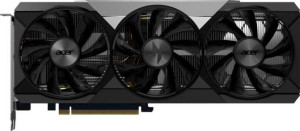
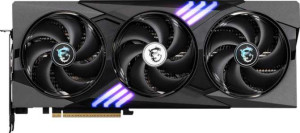
Acer Nitro Radeon RX 9070 XT
MSI GeForce RTX 5070 Ti Gaming Trio OC Plus

Acer Nitro Radeon RX 9070 XT MSI GeForce RTX 5070 Ti Gaming Trio OC Plus

Overview

When it comes to choosing a high-end GPU in 2024, the Acer Nitro Radeon RX 9070 XT and the MSI GeForce RTX 5070 Ti Gaming Trio OC Plus represent two very compelling but philosophically different approaches. This comparison digs into their raw throughput, memory technology, feature sets, and physical footprint to help you decide which card truly fits your needs. Read on for a thorough side-by-side breakdown.

Common Features

  • Both cards support Double Precision Floating Point (DPFP).
  • Both cards come with 16GB of VRAM.
  • Both cards use a 256-bit memory bus width.
  • ECC memory support is available on both cards.
  • Both cards support DirectX 12 Ultimate.
  • Both cards support OpenGL version 4.6.
  • Multi-display technology is supported on both cards.
  • Ray tracing support is available on both cards.
  • 3D support is present on both cards.
  • XeSS (XMX) support is not available on either card.
  • LHR (Lite Hash Rate) is not present on either card.
  • RGB lighting is featured on both cards.
  • Both cards have one HDMI output running HDMI version 2.1b.
  • Both cards feature three DisplayPort outputs.
  • Neither card has USB-C ports, DVI outputs, or mini DisplayPort outputs.
  • Both cards use PCI Express version 5.
  • Air-water cooling is not available on either card.

Main Differences

  • GPU base clock speed is 1660 MHz on the Acer Nitro Radeon RX 9070 XT and 2295 MHz on the MSI GeForce RTX 5070 Ti Gaming Trio OC Plus.
  • GPU turbo clock speed is 2970 MHz on the Acer Nitro Radeon RX 9070 XT and 2572 MHz on the MSI GeForce RTX 5070 Ti Gaming Trio OC Plus.
  • Pixel rate is 380.2 GPixel/s on the Acer Nitro Radeon RX 9070 XT and 246.9 GPixel/s on the MSI GeForce RTX 5070 Ti Gaming Trio OC Plus.
  • Floating-point performance is 48.66 TFLOPS on the Acer Nitro Radeon RX 9070 XT and 46.09 TFLOPS on the MSI GeForce RTX 5070 Ti Gaming Trio OC Plus.
  • Texture rate is 760.3 GTexels/s on the Acer Nitro Radeon RX 9070 XT and 720.2 GTexels/s on the MSI GeForce RTX 5070 Ti Gaming Trio OC Plus.
  • GPU memory speed is 2518 MHz on the Acer Nitro Radeon RX 9070 XT and 1750 MHz on the MSI GeForce RTX 5070 Ti Gaming Trio OC Plus.
  • Shading units number 4096 on the Acer Nitro Radeon RX 9070 XT and 8960 on the MSI GeForce RTX 5070 Ti Gaming Trio OC Plus.
  • Texture mapping units (TMUs) total 256 on the Acer Nitro Radeon RX 9070 XT and 280 on the MSI GeForce RTX 5070 Ti Gaming Trio OC Plus.
  • Render output units (ROPs) number 128 on the Acer Nitro Radeon RX 9070 XT and 96 on the MSI GeForce RTX 5070 Ti Gaming Trio OC Plus.
  • Effective memory speed is 20000 MHz on the Acer Nitro Radeon RX 9070 XT and 28000 MHz on the MSI GeForce RTX 5070 Ti Gaming Trio OC Plus.
  • Maximum memory bandwidth is 644 GB/s on the Acer Nitro Radeon RX 9070 XT and 896 GB/s on the MSI GeForce RTX 5070 Ti Gaming Trio OC Plus.
  • The Acer Nitro Radeon RX 9070 XT uses GDDR6 memory, while the MSI GeForce RTX 5070 Ti Gaming Trio OC Plus uses GDDR7 memory.
  • OpenCL version is 2.2 on the Acer Nitro Radeon RX 9070 XT and 3 on the MSI GeForce RTX 5070 Ti Gaming Trio OC Plus.
  • DLSS support is present on the MSI GeForce RTX 5070 Ti Gaming Trio OC Plus but not available on the Acer Nitro Radeon RX 9070 XT.
  • The Acer Nitro Radeon RX 9070 XT uses AMD SAM, while the MSI GeForce RTX 5070 Ti Gaming Trio OC Plus uses Intel Resizable BAR.
  • GPU architecture is RDNA 4.0 on the Acer Nitro Radeon RX 9070 XT and Blackwell on the MSI GeForce RTX 5070 Ti Gaming Trio OC Plus.
  • Thermal Design Power (TDP) is 304W on the Acer Nitro Radeon RX 9070 XT and 300W on the MSI GeForce RTX 5070 Ti Gaming Trio OC Plus.
  • Semiconductor size is 4 nm on the Acer Nitro Radeon RX 9070 XT and 5 nm on the MSI GeForce RTX 5070 Ti Gaming Trio OC Plus.
  • The number of transistors is 53900 million on the Acer Nitro Radeon RX 9070 XT and 45600 million on the MSI GeForce RTX 5070 Ti Gaming Trio OC Plus.
  • Physical dimensions differ: the Acer Nitro Radeon RX 9070 XT measures 295 mm wide and 120 mm tall, while the MSI GeForce RTX 5070 Ti Gaming Trio OC Plus measures 338 mm wide and 140 mm tall.
Specs Comparison
Acer Nitro Radeon RX 9070 XT

Acer Nitro Radeon RX 9070 XT

MSI GeForce RTX 5070 Ti Gaming Trio OC Plus

MSI GeForce RTX 5070 Ti Gaming Trio OC Plus

Performance:
GPU clock speed 1660 MHz 2295 MHz
GPU turbo 2970 MHz 2572 MHz
pixel rate 380.2 GPixel/s 246.9 GPixel/s
floating-point performance 48.66 TFLOPS 46.09 TFLOPS
texture rate 760.3 GTexels/s 720.2 GTexels/s
GPU memory speed 2518 MHz 1750 MHz
shading units 4096 8960
texture mapping units (TMUs) 256 280
render output units (ROPs) 128 96
Has Double Precision Floating Point (DPFP)

At first glance, the MSI RTX 5070 Ti appears clock-speed dominant with a base GPU clock of 2295 MHz versus the Acer RX 9070 XT's 1660 MHz. However, this comparison flips entirely under sustained load: the RX 9070 XT boosts all the way to 2970 MHz, while the RTX 5070 Ti peaks at just 2572 MHz. Since modern workloads almost always run at or near turbo clocks, the AMD card's real-world throughput ceiling is meaningfully higher — and that gap ripples through every downstream metric.

The throughput numbers confirm this advantage. The RX 9070 XT delivers 380.2 GPixel/s versus the RTX 5070 Ti's 246.9 GPixel/s — a difference of over 50% that directly reflects higher rendering output capacity in rasterized scenes, backed by its larger 128 ROPs (vs. 96). Floating-point performance also slightly favors the RX 9070 XT at 48.66 TFLOPS compared to 46.09 TFLOPS, as does the texture rate (760.3 vs. 720.2 GTexels/s). Notably, the RTX 5070 Ti packs a substantially larger number of shading units (8960 vs. 4096), but its lower turbo clock means this hardware advantage does not translate into higher compute throughput — the RX 9070 XT simply extracts more from fewer units by running them faster. Memory bandwidth also favors AMD, with a GPU memory speed of 2518 MHz versus 1750 MHz, which matters for feeding those faster pipelines. Both cards support Double Precision Floating Point, so neither has an edge there.

On raw performance metrics alone, the Acer RX 9070 XT holds a clear advantage in this group. Its superior boost clock, pixel fill rate, TFLOPS, and memory speed all point to higher throughput in typical rendering workloads. The RTX 5070 Ti's higher shader count is an architectural characteristic that does not overcome the clock speed deficit within the scope of these specs.

Memory:
effective memory speed 20000 MHz 28000 MHz
maximum memory bandwidth 644 GB/s 896 GB/s
VRAM 16GB 16GB
GDDR version GDDR6 GDDR7
memory bus width 256-bit 256-bit
Supports ECC memory

The Acer Nitro Radeon RX 9070 XT and MSI GeForce RTX 5070 Ti Gaming Trio OC Plus share the same VRAM size of 16GB, but differ significantly in other memory-related specifications. The RX 9070 XT uses GDDR6 memory with an effective memory speed of 20000 MHz, while the RTX 5070 Ti is equipped with faster GDDR7 memory running at an effective memory speed of 28000 MHz. This gives the RTX 5070 Ti a clear advantage in terms of memory speed.

In terms of memory bandwidth, the RX 9070 XT has a maximum bandwidth of 644 GB/s, which is lower than the RTX 5070 Ti's 896 GB/s. This means the RTX 5070 Ti can potentially handle more data at once, benefiting applications requiring higher memory throughput.

Both cards feature a 256-bit memory bus width and support ECC memory (Error-Correcting Code), which helps ensure data integrity. The memory bus width and ECC support are identical, meaning both cards are well-equipped for stability in memory-intensive tasks.

Features:
DirectX version DirectX 12 Ultimate DirectX 12 Ultimate
OpenGL version 4.6 4.6
OpenCL version 2.2 3
Supports multi-display technology
supports ray tracing
Supports 3D
supports DLSS
has XeSS (XMX)
AMD SAM / Intel Resizable BAR AMD SAM Intel Resizable BAR
has LHR
has RGB lighting
supported displays 4 4

The Acer Nitro Radeon RX 9070 XT and MSI GeForce RTX 5070 Ti Gaming Trio OC Plus both support DirectX 12 Ultimate, OpenGL 4.6, and ray tracing, ensuring strong compatibility for modern gaming and applications. However, there is a difference in their OpenCL versions, with the RX 9070 XT supporting version 2.2, while the RTX 5070 Ti supports the more recent version 3. This could provide the RTX 5070 Ti with slightly improved performance in OpenCL-based tasks.

Both cards support multi-display technology, 3D, and RGB lighting, so users can enjoy vibrant visual setups with multiple monitors and immersive 3D experiences. The RX 9070 XT uses AMD SAM (Smart Access Memory) for its Resizable BAR support, while the RTX 5070 Ti uses Intel Resizable BAR, making the memory management approach different between the two. Additionally, the RX 9070 XT does not support DLSS (Deep Learning Super Sampling), while the RTX 5070 Ti does, offering a potential advantage in games that support DLSS technology for enhanced performance.

Neither card supports XeSS (XMX), and both are free from the limitations of LHR (Low Hash Rate), meaning they are equally suitable for gaming and tasks unrelated to cryptocurrency mining. Both cards also support a maximum of four displays, giving users the ability to set up expansive multi-monitor configurations.

Ports:
has an HDMI output
HDMI ports 1 1
HDMI version HDMI 2.1b HDMI 2.1b
DisplayPort outputs 3 3
USB-C ports 0 0
DVI outputs 0 0
mini DisplayPort outputs 0 0

The Acer Nitro Radeon RX 9070 XT and MSI GeForce RTX 5070 Ti Gaming Trio OC Plus have identical port configurations. Both cards feature one HDMI output, with HDMI version 2.1b support, allowing for high-quality video output to compatible displays. Each card also supports three DisplayPort outputs, offering ample options for connecting multiple monitors or other compatible devices. Neither card includes USB-C ports, DVI outputs, or mini DisplayPort outputs, meaning they both lack the versatility some users may seek for legacy or specialized connections.

In summary, both products offer the same ports and connection capabilities, making them comparable in terms of video output options.

General info:
GPU architecture RDNA 4.0 Blackwell
release date March 2025 January 2025
Thermal Design Power (TDP) 304W 300W
PCI Express (PCIe) version 5 5
semiconductor size 4 nm 5 nm
number of transistors 53900 million 45600 million
Has air-water cooling
width 295 mm 338 mm
height 120 mm 140 mm

The Acer Nitro Radeon RX 9070 XT and MSI GeForce RTX 5070 Ti Gaming Trio OC Plus differ in several aspects of their general specifications. The RX 9070 XT uses the RDNA 4.0 GPU architecture, while the RTX 5070 Ti utilizes the Blackwell architecture. Both cards support PCIe version 5, ensuring compatibility with the latest motherboard standards.

In terms of power consumption, the RX 9070 XT has a Thermal Design Power (TDP) of 304W, slightly higher than the RTX 5070 Ti’s 300W. This suggests the RX 9070 XT might consume a little more power under load. The RX 9070 XT also has a smaller semiconductor size at 4 nm, compared to the RTX 5070 Ti’s 5 nm, which could have implications for performance and efficiency, although that is not directly stated here.

Both cards have no air-water cooling system and share similar dimensions for width and height, but the RX 9070 XT is slightly smaller, measuring 295 mm in width and 120 mm in height, compared to the RTX 5070 Ti’s 338 mm width and 140 mm height. The RX 9070 XT also has more transistors, with 53.9 billion, compared to the RTX 5070 Ti’s 45.6 billion, which may suggest differences in their internal processing capabilities.

Comparison Summary & Verdict

After examining every specification, these two cards emerge as strong but distinct options. The Acer Nitro Radeon RX 9070 XT stands out with a higher GPU turbo clock of 2970 MHz, a superior pixel rate of 380.2 GPixel/s, more render output units (128 vs 96), a cutting-edge 4 nm fabrication process, and a more compact form factor — making it an excellent pick for gamers who prioritize raw rasterization throughput and a smaller build. On the other side, the MSI GeForce RTX 5070 Ti Gaming Trio OC Plus pulls ahead with a massive 8960 shading units, faster GDDR7 memory delivering 896 GB/s of bandwidth, and exclusive DLSS support — making it the stronger choice for creators and gamers who rely on AI-accelerated upscaling and memory-intensive workloads. Neither card is an outright loser; your ideal pick depends entirely on your workflow and software ecosystem.

Acer Nitro Radeon RX 9070 XT
Buy Acer Nitro Radeon RX 9070 XT if...

Buy the Acer Nitro Radeon RX 9070 XT if you want a higher turbo clock speed, superior pixel rate, more render output units, and a more compact card built on a cutting-edge 4 nm process.

MSI GeForce RTX 5070 Ti Gaming Trio OC Plus
Buy MSI GeForce RTX 5070 Ti Gaming Trio OC Plus if...

Buy the MSI GeForce RTX 5070 Ti Gaming Trio OC Plus if you need DLSS support, significantly more shading units, and faster GDDR7 memory with greater bandwidth for demanding, memory-intensive workloads.