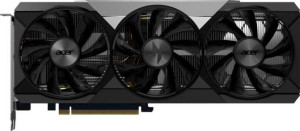
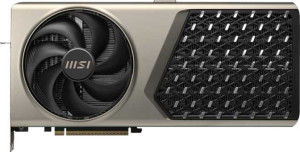
These two GPUs tell very different architectural stories. The MSI RTX 5080 brings a massive shader array — 10,752 shading units and 336 TMUs — which translates directly into its lead in raw compute throughput at 56.28 TFLOPS and texture fillrate at 879.3 GTexels/s. More shaders mean more parallel work completed per clock, which benefits heavily threaded workloads like ray tracing, AI-accelerated rendering, and compute tasks. The Acer RX 9070 XT, by contrast, runs a leaner 4,096-unit shader configuration, putting it notably behind on these raw throughput metrics.
Where the RX 9070 XT punches back is in clock speed and pixel output. Its boost clock reaches 2,970 MHz — dramatically higher than the RTX 5080's 2,617 MHz turbo — and this aggressive frequency advantage directly drives its superior pixel fillrate of 380.2 GPixel/s versus the RTX 5080's 293.1 GPixel/s. More ROPs (128 vs. 112) compound this advantage, meaning the RX 9070 XT can write more finished pixels to the framebuffer per second, which matters most at high resolutions and high framerates in traditional rasterization. Additionally, its GPU memory speed of 2,518 MHz outpaces the RTX 5080's 1,875 MHz, suggesting faster data throughput to and from VRAM.
In summary, the RTX 5080 holds a clear edge in raw floating-point compute and texture throughput — the specs that dominate in shader-heavy, AI-assisted, or professionally oriented workloads. The RX 9070 XT counters with a higher pixel fillrate and faster memory clock, making it relatively stronger in traditional high-refresh rasterization scenarios. Both support Double Precision Floating Point. If raw computational horsepower and texture performance are the priority, the RTX 5080 leads this group; if pixel output efficiency and memory bandwidth per clock matter more, the RX 9070 XT is the more competitive option.