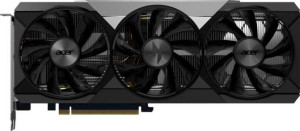
Both cards arrive with identical 16GB VRAM and a 256-bit memory bus, so neither holds a capacity or bandwidth-width advantage on paper. The real differentiator lies in the memory technology underneath. The RTX 5080 uses GDDR7, a newer generation standard, while the RX 9070 XT runs on GDDR6. That generational gap translates directly into the effective speed figures: 30,000 MHz vs 20,000 MHz — a 50% clock speed advantage for the 5080.
The downstream impact of that speed gap is substantial. Maximum memory bandwidth comes in at 960 GB/s for the RTX 5080 versus 644 GB/s for the RX 9070 XT — a difference of roughly 316 GB/s. In practice, higher memory bandwidth reduces the frequency at which the GPU stalls waiting for data, and its benefits are most felt at higher resolutions (4K and above), in texture-heavy scenes, and during workloads that continuously stream large assets. For gaming, the real-world gap may be partially masked by other bottlenecks, but in GPU-compute, AI inference, and creative workloads, the 5080's bandwidth advantage is more consistently realized.
Both cards support ECC memory, putting them on equal footing for error-sensitive professional and compute use cases. Overall though, the RTX 5080 holds a clear memory subsystem advantage — not from having more VRAM, but from moving it dramatically faster. The RX 9070 XT's GDDR6 setup is competitive at mainstream workloads, but the 5080's GDDR7 bandwidth headroom gives it a meaningful edge whenever memory throughput becomes the limiting factor.