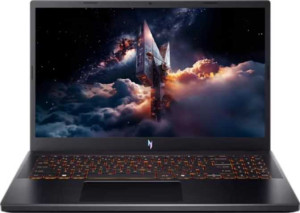
Acer Nitro V 15 (2025) 15.6"
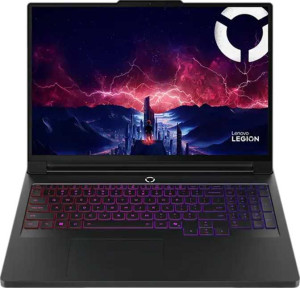
Lenovo Legion Pro 7 Gen 10 (2025) 16"

Acer Nitro V 15 (2025) 15.6" Lenovo Legion Pro 7 Gen 10 (2025) 16"

Common Features

  • Both products are gaming laptops.
  • Neither product uses a fanless design.
  • Both products have a backlit keyboard.
  • Neither product is weather-sealed.
  • Neither product has a rugged build.
  • Both products have 4 supported displays.
  • Neither product has a touchscreen.
  • Neither product has an anti-reflection coating.
  • Both products have an HDMI output.
  • Both products have USB Type-C ports.
  • Both products support Wi-Fi.
  • Both products have a front camera.
  • Both products support ray tracing.
  • Both products support DLSS.
  • Neither product has Dolby Atmos.
  • Both products use Intel Resizable BAR.
  • Both products support multi-display technology.
  • Both products support OpenCL version 3.
  • Both products support ECC memory.

Main Differences

  • The weight of Acer Nitro V 15 (2025) 15.6″ is 2110 g and the weight of Lenovo Legion Pro 7 Gen 10 (2025) 16″ is 2560 g.
  • The volume of Acer Nitro V 15 (2025) 15.6″ is 1989.914 cm³ and the volume of Lenovo Legion Pro 7 Gen 10 (2025) 16″ is 2102.1 cm³.
  • The width of Acer Nitro V 15 (2025) 15.6″ is 362 mm and the width of Lenovo Legion Pro 7 Gen 10 (2025) 16″ is 364 mm.
  • The height of Acer Nitro V 15 (2025) 15.6″ is 239 mm and the height of Lenovo Legion Pro 7 Gen 10 (2025) 16″ is 275 mm.
  • The thickness of Acer Nitro V 15 (2025) 15.6″ is 23 mm and the thickness of Lenovo Legion Pro 7 Gen 10 (2025) 16″ is 21 mm.
  • The screen size of Acer Nitro V 15 (2025) 15.6″ is 15.6″ and the screen size of Lenovo Legion Pro 7 Gen 10 (2025) 16″ is 16″.
  • The resolution of Acer Nitro V 15 (2025) 15.6″ is 1920 x 1080 px and the resolution of Lenovo Legion Pro 7 Gen 10 (2025) 16″ is 2560 x 1600 px.
  • The pixel density of Acer Nitro V 15 (2025) 15.6″ is 141 ppi and the pixel density of Lenovo Legion Pro 7 Gen 10 (2025) 16″ is 188 ppi.
  • The display type of Acer Nitro V 15 (2025) 15.6″ is LCD, LED-backlit, IPS and the display type of Lenovo Legion Pro 7 Gen 10 (2025) 16″ is OLED/AMOLED.
  • The refresh rate of Acer Nitro V 15 (2025) 15.6″ is 165Hz and the refresh rate of Lenovo Legion Pro 7 Gen 10 (2025) 16″ is 240Hz.
  • The RAM of Acer Nitro V 15 (2025) 15.6″ is 16GB and the RAM of Lenovo Legion Pro 7 Gen 10 (2025) 16″ is 64GB.
  • The internal storage of Acer Nitro V 15 (2025) 15.6″ is 1024GB and the internal storage of Lenovo Legion Pro 7 Gen 10 (2025) 16″ is 2048GB.
  • The CPU speed of Acer Nitro V 15 (2025) 15.6″ is 6 x 2.6 & 8 x 1.9 GHz and the CPU speed of Lenovo Legion Pro 7 Gen 10 (2025) 16″ is 16 x 2.5 GHz.
  • The CPU threads of Acer Nitro V 15 (2025) 15.6″ is 20 threads and the CPU threads of Lenovo Legion Pro 7 Gen 10 (2025) 16″ is 32 threads.
  • The VRAM of Acer Nitro V 15 (2025) 15.6″ is 8GB and the VRAM of Lenovo Legion Pro 7 Gen 10 (2025) 16″ is 16GB.
  • The floating-point performance of Acer Nitro V 15 (2025) 15.6″ is 9.684 TFLOPS and the floating-point performance of Lenovo Legion Pro 7 Gen 10 (2025) 16″ is 23.04 TFLOPS.
  • The texture rate of Acer Nitro V 15 (2025) 15.6″ is 151.3 GTexels/s and the texture rate of Lenovo Legion Pro 7 Gen 10 (2025) 16″ is 384 GTexels/s.
  • The pixel rate of Acer Nitro V 15 (2025) 15.6″ is 46.56 GPixel/s and the pixel rate of Lenovo Legion Pro 7 Gen 10 (2025) 16″ is 144 GPixel/s.
  • The DirectX version of Acer Nitro V 15 (2025) 15.6″ is DirectX 12 and the DirectX version of Lenovo Legion Pro 7 Gen 10 (2025) 16″ is DirectX 12 Ultimate.
  • The GPU clock speed of Acer Nitro V 15 (2025) 15.6″ is 952 MHz and the GPU clock speed of Lenovo Legion Pro 7 Gen 10 (2025) 16″ is 975 MHz.
  • The DDR memory version of Acer Nitro V 15 (2025) 15.6″ is 4 and the DDR memory version of Lenovo Legion Pro 7 Gen 10 (2025) 16″ is 5.
Specs Comparison
Acer Nitro V 15 (2025) 15.6"

Acer Nitro V 15 (2025) 15.6"

Lenovo Legion Pro 7 Gen 10 (2025) 16"

Lenovo Legion Pro 7 Gen 10 (2025) 16"

Design:
Type Gaming Gaming
weight 2110 g 2560 g
Uses a fanless design
Has a backlit keyboard
volume 1989.914 cm³ 2102.1 cm³
width 362 mm 364 mm
height 239 mm 275 mm
thickness 23 mm 21 mm
is weather-sealed (splashproof)
has a rugged build

Both the Acer Nitro V 15 (2025) 15.6″ and Lenovo Legion Pro 7 Gen 10 (2025) 16″ are gaming laptops that feature backlit keyboards and do not use a fanless design. The Acer Nitro V 15 weighs 2110 g, while the Lenovo Legion Pro 7 is heavier at 2560 g. The volume of the Acer Nitro V 15 is 1989.914 cm³, which is slightly smaller than the Lenovo Legion Pro 7's volume of 2102.1 cm³.

In terms of dimensions, the Acer Nitro V 15 measures 362 mm in width, 239 mm in height, and 23 mm in thickness. The Lenovo Legion Pro 7 is slightly wider at 364 mm and taller at 275 mm, but thinner at 21 mm. Neither laptop is weather-sealed or has a rugged build, as both lack these features.

While both laptops share similarities in design, the Lenovo Legion Pro 7 is larger and heavier, which may be a factor for users prioritizing portability, while the Acer Nitro V 15 offers a more compact form.

Display:
screen size 15.6" 16"
resolution 1920 x 1080 px 2560 x 1600 px
pixel density 141 ppi 188 ppi
Display type LCD, LED-backlit, IPS OLED/AMOLED
has a touch screen
refresh rate 165Hz 240Hz
has anti-reflection coating
supported displays 4 4

The Acer Nitro V 15 (2025) 15.6″ and Lenovo Legion Pro 7 Gen 10 (2025) 16″ both feature non-touch screens, but their displays differ in several key aspects. The Acer Nitro V 15 has a 15.6″ LCD, LED-backlit, IPS display with a resolution of 1920 x 1080 px and a pixel density of 141 ppi. In contrast, the Lenovo Legion Pro 7 offers a larger 16″ OLED/AMOLED screen with a higher resolution of 2560 x 1600 px and a pixel density of 188 ppi.

When it comes to refresh rate, the Acer Nitro V 15 supports 165Hz, while the Lenovo Legion Pro 7 offers a smoother 240Hz refresh rate. Both displays lack anti-reflection coatings and support up to four external displays.

These differences highlight the Lenovo Legion Pro 7’s superior resolution, pixel density, and refresh rate, while the Acer Nitro V 15 provides a slightly smaller but solid IPS display for gaming.

Performance:
RAM 16GB 64GB
Uses flash storage
internal storage 1024GB 2048GB
CPU speed 6 x 2.6 & 8 x 1.9 GHz 16 x 2.5 GHz
CPU threads 20 threads 32 threads
VRAM 8GB 16GB
floating-point performance 9.684 TFLOPS 23.04 TFLOPS
GDDR version GDDR7 GDDR7
texture rate 151.3 GTexels/s 384 GTexels/s
pixel rate 46.56 GPixel/s 144 GPixel/s
Is an NVMe SSD
DirectX version DirectX 12 DirectX 12 Ultimate
GPU clock speed 952 MHz 975 MHz
uses multithreading
maximum memory amount 64GB 64GB
DDR memory version 4 5
turbo clock speed 5.4GHz 5.4GHz
GPU turbo 1455 MHz 1500 MHz
PCI Express (PCIe) version 4 5
semiconductor size 5 nm 4 nm
has XeSS (XMX)
Supports 64-bit

The Acer Nitro V 15 (2025) 15.6″ and Lenovo Legion Pro 7 Gen 10 (2025) 16″ offer powerful performance features, but differ in several key aspects. The Acer Nitro V 15 has 16GB of RAM, while the Lenovo Legion Pro 7 is equipped with a much larger 64GB of RAM. Both laptops use flash storage, with the Acer offering 1024GB and the Lenovo providing 2048GB of internal storage. The Acer Nitro V 15 also supports up to 64GB of maximum memory, the same as the Lenovo Legion Pro 7's maximum.

In terms of CPU, the Acer Nitro V 15 features a 6-core processor running at 2.6 GHz and 8 cores at 1.9 GHz, with a total of 20 threads. The Lenovo Legion Pro 7 has a more powerful 16-core processor running at 2.5 GHz, with a total of 32 threads. Both laptops support multithreading. The Acer's floating-point performance is 9.684 TFLOPS, while the Lenovo reaches 23.04 TFLOPS.

The graphics capabilities are similarly impressive. Both laptops use GDDR7 VRAM, but the Acer has 8GB of VRAM, compared to the Lenovo's 16GB. The Acer's GPU clock speed is 952 MHz, while the Lenovo's is slightly higher at 975 MHz. The Acer supports a GPU turbo of 1455 MHz, while the Lenovo reaches 1500 MHz. The Acer supports PCI Express 4, while the Lenovo uses PCI Express 5. Both devices have a turbo clock speed of 5.4GHz, and neither laptop supports XeSS (XMX) technology.

Benchmarks:
PassMark result 27599 61356
PassMark result (single) 3746 4491

The Acer Nitro V 15 (2025) 15.6″ and Lenovo Legion Pro 7 Gen 10 (2025) 16″ both show strong performance in benchmark tests, with the Acer achieving a PassMark result of 27599 and a single-thread result of 3746. The Lenovo Legion Pro 7 surpasses the Acer in both areas, with a PassMark result of 61356 and a single-thread result of 4491.

These results highlight a significant difference in overall performance, with the Lenovo delivering a much higher benchmark score compared to the Acer Nitro V 15. While both laptops perform well, the Lenovo seems to excel in both multi-thread and single-thread workloads.

As such, the Lenovo Legion Pro 7 outperforms the Acer Nitro V 15 in PassMark results, particularly in single-thread performance, making it a stronger contender for users who prioritize raw processing power.

Connectivity:
USB 3.2 Gen 2 ports (USB-C) 1 2
USB 3.2 Gen 2 ports (USB-A) 0 1
USB 4 20Gbps ports 0 0
USB 4 40Gbps ports 0 0
Thunderbolt 4 ports 0 0
USB 3.2 Gen 1 ports (USB-C) 0 0
USB 3.2 Gen 1 ports (USB-A) 3 2
Thunderbolt 3 ports 0 0
has an HDMI output
Has USB Type-C
supports Wi-Fi
Wi-Fi version Wi-Fi 6 (802.11ax), Wi-Fi 5 (802.11ac), Wi-Fi 4 (802.11n) Wi-Fi 7 (802.11be), Wi-Fi 6E (802.11ax), Wi-Fi 6 (802.11ax), Wi-Fi 5 (802.11ac), Wi-Fi 4 (802.11n)
has an external memory slot
Bluetooth version 5.1 5.4
RJ45 ports 1 1
HDMI ports 1 1
DisplayPort outputs 0 0
USB 2.0 ports 0 0
has AirPlay
mini DisplayPort outputs 0 0
has a VGA connector

The Acer Nitro V 15 (2025) 15.6″ and Lenovo Legion Pro 7 Gen 10 (2025) 16″ offer a range of connectivity options, with a few key differences. The Acer Nitro V 15 has 1 USB 3.2 Gen 2 USB-C port and 3 USB 3.2 Gen 1 USB-A ports, while the Lenovo Legion Pro 7 provides 2 USB 3.2 Gen 2 USB-C ports and 2 USB 3.2 Gen 1 USB-A ports. Both laptops lack USB 4 ports and Thunderbolt support, with no Thunderbolt 4 or Thunderbolt 3 ports on either device.

In terms of wireless connectivity, the Acer supports Wi-Fi 6 (802.11ax), Wi-Fi 5 (802.11ac), and Wi-Fi 4 (802.11n), while the Lenovo supports a wider range, including Wi-Fi 7 (802.11be), Wi-Fi 6E (802.11ax), and the previous versions. The Acer features Bluetooth 5.1, while the Lenovo has Bluetooth 5.4, offering a slight upgrade in Bluetooth technology.

Both laptops are equipped with HDMI outputs, 1 RJ45 port, and support AirPlay, with no external memory slots, DisplayPort outputs, or VGA connectors on either device. These laptops provide solid connectivity, with the Lenovo offering more modern wireless options and slightly more versatile USB-C support.

Battery:
battery size 76 Wh 99.9 Wh
Has sleep-and-charge USB ports
Has a MagSafe power adapter

The Acer Nitro V 15 (2025) 15.6″ and Lenovo Legion Pro 7 Gen 10 (2025) 16″ differ in their battery specifications. The Acer Nitro V 15 has a 76 Wh battery, while the Lenovo Legion Pro 7 features a larger 99.9 Wh battery. In terms of additional charging features, the Acer does not have sleep-and-charge USB ports, while the Lenovo includes this functionality. Neither laptop includes a MagSafe power adapter.

These differences show that the Lenovo Legion Pro 7 offers a larger battery and extra convenience with sleep-and-charge USB ports, which can be useful for charging devices while the laptop is in sleep mode. However, both laptops lack the MagSafe power adapter feature.

While both devices provide solid battery options, the Lenovo provides a larger capacity and enhanced charging capabilities compared to the Acer Nitro V 15.

Features:
release date May 2025 October 2025
has stereo speakers
has a socket for a 3.5 mm audio jack
supports ray tracing
supports DLSS
has Dolby Atmos
Has a fingerprint scanner
number of microphones 1 2
Uses 3D facial recognition
has voice commands
has a front camera
Has S/PDIF Out port
has a gyroscope
has GPS
has an accelerometer
has a compass
Has an optical disc drive

The Acer Nitro V 15 (2025) 15.6″ and Lenovo Legion Pro 7 Gen 10 (2025) 16″ offer similar features, with both having stereo speakers and a 3.5 mm audio jack. They also both support ray tracing and DLSS, which are key features for gaming. Neither laptop supports Dolby Atmos, but the Acer Nitro V 15 includes a fingerprint scanner, while the Lenovo Legion Pro 7 does not.

In terms of microphones, the Acer has 1 microphone, while the Lenovo is equipped with 2 microphones. Both laptops have a front camera, but neither uses 3D facial recognition or has voice command capabilities. Additionally, both laptops lack S/PDIF Out ports, gyroscopes, GPS, accelerometers, compasses, and optical disc drives.

Overall, while both laptops offer essential features for gaming and everyday use, the Acer Nitro V 15 includes a fingerprint scanner, while the Lenovo Legion Pro 7 has a slight edge with an extra microphone.

Miscellaneous:
clock multiplier 26 25
AMD SAM / Intel Resizable BAR Intel Resizable BAR Intel Resizable BAR
GPU architecture Blackwell Blackwell
has LHR
Thermal Design Power (TDP) 45W 80W
Supports 3D
Supports multi-display technology
OpenCL version 3 3
OpenGL version 4.6 4.6
Supports ECC memory
memory bus width 128-bit 256-bit
effective memory speed 28000 MHz 25400 MHz
maximum memory bandwidth 448 GB/s 811.5 GB/s
render output units (ROPs) 32 96
texture mapping units (TMUs) 104 256
shading units 3328 7680
Has Double Precision Floating Point (DPFP)
GPU memory speed 1750 MHz 2000 MHz
number of transistors 21900 million 16630 million
GPU name Iris Xe Graphics 96EU Radeon 610M
Type Laptop Desktop, Laptop
Has an unlocked multiplier
L2 cache 11.5 MB 16 MB
L3 cache 24 MB 128 MB
Has NX bit
CPU temperature 100 °C 100 °C
Has integrated graphics
memory channels 2 2
Uses big.LITTLE technology
instruction sets SSE 4.2, SSE 4.1, AVX, AES, FMA3, F16C, MMX MMX, F16C, FMA3, AES, AVX, AVX2, SSE 4.1, SSE 4.2
RAM speed (max) 5200 MHz 5600 MHz

The Acer Nitro V 15 (2025) 15.6″ and Lenovo Legion Pro 7 Gen 10 (2025) 16″ share several similarities in terms of technical features. Both laptops support 3D and multi-display technology, and both have Intel Resizable BAR. They also use Blackwell GPU architecture, support ECC memory, and have integrated graphics. However, the thermal design power (TDP) differs, with the Acer at 45W and the Lenovo at 80W.

In terms of memory and GPU performance, the Acer Nitro V 15 features a 128-bit memory bus width, effective memory speed of 28000 MHz, and a maximum memory bandwidth of 448 GB/s, while the Lenovo has a 256-bit memory bus width, effective memory speed of 25400 MHz, and a higher maximum memory bandwidth of 811.5 GB/s. The Acer’s GPU is the Iris Xe Graphics 96EU, with a memory speed of 1750 MHz and 21900 million transistors. The Lenovo, with its Radeon 610M GPU, has a memory speed of 2000 MHz and 16630 million transistors.

Other differences include cache size, with the Acer having 11.5 MB of L2 cache and 24 MB of L3 cache, compared to the Lenovo’s 16 MB of L2 cache and 128 MB of L3 cache. Both laptops have a CPU temperature of 100 °C, but the Lenovo does not use big.LITTLE technology, unlike the Acer. RAM speed is also slightly faster in the Lenovo at 5600 MHz, compared to 5200 MHz in the Acer.

Comparison Summary

This is a specification comparison between Acer Nitro V 15 (2025) 15.6″ and Lenovo Legion Pro 7 Gen 10 (2025) 16″. Both models are gaming laptops with backlit keyboards, no touchscreen, and 4 supported displays. The Acer Nitro V 15 (2025) 15.6″ features a 15.6″ LCD, LED-backlit, IPS display, while the Lenovo Legion Pro 7 Gen 10 (2025) 16″ offers a larger 16″ OLED/AMOLED display with higher resolution. The Acer Nitro V 15 (2025) 15.6″ has 16GB of RAM and 1024GB of storage, whereas the Lenovo Legion Pro 7 Gen 10 (2025) 16″ comes with 64GB of RAM and 2048GB of storage. In terms of performance, the Acer Nitro V 15 (2025) 15.6″ delivers 9.684 TFLOPS, compared to the Lenovo Legion Pro 7 Gen 10 (2025) 16″ with 23.04 TFLOPS. Additionally, the Acer Nitro V 15 (2025) 15.6″ has a lower GPU clock speed at 952 MHz compared to the Lenovo Legion Pro 7 Gen 10 (2025) 16″ at 975 MHz.