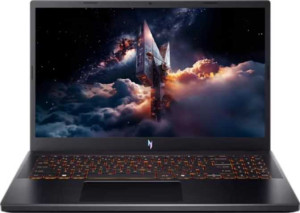
Acer Nitro V 15 (2025) 15.6"
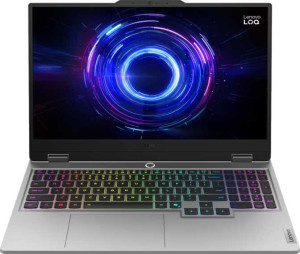
Lenovo LOQ 15i Gen 10 15"

Acer Nitro V 15 (2025) 15.6" Lenovo LOQ 15i Gen 10 15"

Overview

Welcome to our in-depth spec comparison between the Acer Nitro V 15 (2025) 15.6″ and the Lenovo LOQ 15i Gen 10 15″ — two 15.6″ laptops that share a gaming-grade GPU foundation yet take noticeably different paths. From display resolution and RAM capacity to battery size and CPU configuration, these machines cater to overlapping but distinct audiences. Read on to see how every key specification stacks up before you decide.

Common Features

  • Both products do not use a fanless design.
  • Both products have a backlit keyboard.
  • Neither product is weather-sealed or splashproof.
  • Neither product has a rugged build.
  • Both products have a 15.6″ screen size.
  • Both products use an LCD, LED-backlit, IPS display type.
  • Neither product has a touch screen.
  • Both products have a 165Hz refresh rate.
  • Both products support up to 4 displays.
  • Both products use flash storage.
  • Both products have 1024GB of internal storage.
  • Both products have 8GB of VRAM.
  • Both products deliver 9.684 TFLOPS of floating-point performance.
  • Both products use GDDR7 memory.
  • Both products have a texture rate of 151.3 GTexels/s.
  • Both products have a pixel rate of 46.56 GPixel/s.
  • Both products use an NVMe SSD.
  • Both products have 1 USB 3.2 Gen 2 port (USB-C) and 3 USB 3.2 Gen 1 ports (USB-A).
  • Neither product has a MagSafe power adapter.
  • Both products have stereo speakers and a 3.5mm audio jack.
  • Both products support ray tracing and DLSS.
  • Dolby Atmos is not available on either product.
  • Neither product includes a stylus or uses 3D facial recognition.
  • Both products support Intel Resizable BAR.
  • Both products use the Blackwell GPU architecture.
  • Neither product has LHR.
  • Both products have a Thermal Design Power of 45W.
  • Both products support 3D and multi-display technology.
  • Both products support OpenCL version 3 and OpenGL version 4.6.

Main Differences

  • The Acer Nitro V 15 (2025) 15.6″ is categorized as a Gaming type, while the Lenovo LOQ 15i Gen 10 15″ is categorized as a Productivity type.
  • Weight is 2110g on the Acer Nitro V 15 (2025) 15.6″ and 2400g on the Lenovo LOQ 15i Gen 10 15″.
  • Volume is 1989.914 cm³ on the Acer Nitro V 15 (2025) 15.6″ and 1945.062 cm³ on the Lenovo LOQ 15i Gen 10 15″.
  • Width is 362mm on the Acer Nitro V 15 (2025) 15.6″ and 359mm on the Lenovo LOQ 15i Gen 10 15″.
  • Height is 239mm on the Acer Nitro V 15 (2025) 15.6″ and 258mm on the Lenovo LOQ 15i Gen 10 15″.
  • Thickness is 23mm on the Acer Nitro V 15 (2025) 15.6″ and 21mm on the Lenovo LOQ 15i Gen 10 15″.
  • Resolution is 1920x1080px on the Acer Nitro V 15 (2025) 15.6″ and 2560x1440px on the Lenovo LOQ 15i Gen 10 15″.
  • Pixel density is 141 ppi on the Acer Nitro V 15 (2025) 15.6″ and 188 ppi on the Lenovo LOQ 15i Gen 10 15″.
  • An anti-reflection coating is present on the Lenovo LOQ 15i Gen 10 15″ but not available on the Acer Nitro V 15 (2025) 15.6″.
  • RAM is 16GB on the Acer Nitro V 15 (2025) 15.6″ and 32GB on the Lenovo LOQ 15i Gen 10 15″.
  • CPU speed is 6x2.6 & 8x1.9 GHz on the Acer Nitro V 15 (2025) 15.6″ and 8x2.1 & 12x1.5 GHz on the Lenovo LOQ 15i Gen 10 15″.
  • CPU threads count is 20 on the Acer Nitro V 15 (2025) 15.6″ and 28 on the Lenovo LOQ 15i Gen 10 15″.
  • Maximum memory capacity is 64GB on the Acer Nitro V 15 (2025) 15.6″ and 32GB on the Lenovo LOQ 15i Gen 10 15″.
  • DDR memory version is DDR4 on the Acer Nitro V 15 (2025) 15.6″ and DDR5 on the Lenovo LOQ 15i Gen 10 15″.
  • Turbo clock speed is 5.4GHz on the Acer Nitro V 15 (2025) 15.6″ and 5.5GHz on the Lenovo LOQ 15i Gen 10 15″.
  • PassMark result is 27599 on the Acer Nitro V 15 (2025) 15.6″ and 37155 on the Lenovo LOQ 15i Gen 10 15″.
  • PassMark single-core result is 3746 on the Acer Nitro V 15 (2025) 15.6″ and 3987 on the Lenovo LOQ 15i Gen 10 15″.
  • Bluetooth version is 5.1 on the Acer Nitro V 15 (2025) 15.6″ and 5.2 on the Lenovo LOQ 15i Gen 10 15″.
  • Battery size is 76Wh on the Acer Nitro V 15 (2025) 15.6″ and 60Wh on the Lenovo LOQ 15i Gen 10 15″.
  • Sleep-and-charge USB ports are present on the Lenovo LOQ 15i Gen 10 15″ but not available on the Acer Nitro V 15 (2025) 15.6″.
  • A fingerprint scanner is present on the Acer Nitro V 15 (2025) 15.6″ but not available on the Lenovo LOQ 15i Gen 10 15″.
  • Number of microphones is 1 on the Acer Nitro V 15 (2025) 15.6″ and 2 on the Lenovo LOQ 15i Gen 10 15″.
  • The GPU is Iris Xe Graphics 96EU on the Acer Nitro V 15 (2025) 15.6″ and UHD Graphics 770 on the Lenovo LOQ 15i Gen 10 15″.
  • L3 cache is 24MB on the Acer Nitro V 15 (2025) 15.6″ and 33MB on the Lenovo LOQ 15i Gen 10 15″.
  • GPU execution units are 96 on the Acer Nitro V 15 (2025) 15.6″ and 32 on the Lenovo LOQ 15i Gen 10 15″.
  • The Lenovo LOQ 15i Gen 10 15″ supports AVX2 as an additional instruction set, which is not listed for the Acer Nitro V 15 (2025) 15.6″.
  • Maximum RAM speed is 5200MHz on the Acer Nitro V 15 (2025) 15.6″ and 5600MHz on the Lenovo LOQ 15i Gen 10 15″.
  • Overclocked PassMark result is 30099 on the Acer Nitro V 15 (2025) 15.6″ and 39466 on the Lenovo LOQ 15i Gen 10 15″.
Specs Comparison
Acer Nitro V 15 (2025) 15.6"

Acer Nitro V 15 (2025) 15.6"

Lenovo LOQ 15i Gen 10 15"

Lenovo LOQ 15i Gen 10 15"

Design:
Type Gaming Productivity
weight 2110 g 2400 g
Uses a fanless design
Has a backlit keyboard
volume 1989.914 cm³ 1945.062 cm³
width 362 mm 359 mm
height 239 mm 258 mm
thickness 23 mm 21 mm
is weather-sealed (splashproof)
has a rugged build

Both laptops share a similar footprint, but there are meaningful differences in how that space is distributed. The Acer Nitro V 15 is slightly wider (362 mm vs 359 mm) but notably shallower (239 mm vs 258 mm), giving it a more compact front-to-back profile. The Lenovo LOQ 15i, by contrast, is thinner (21 mm vs 23 mm), which can make it feel sleeker when closed and easier to slide into a bag. Despite these trade-offs, total volume is comparable — 1990 cm³ for the Acer versus 1945 cm³ for the Lenovo — so neither machine is dramatically more compact overall.

Where the two diverge more noticeably is weight. The Acer Nitro V 15 weighs 2110 g, while the Lenovo LOQ 15i comes in at 2400 g — a difference of roughly 290 g. For a laptop carried daily, that gap is tangible; the Acer will feel meaningfully lighter in a backpack or when moving between rooms. Both feature a backlit keyboard and neither is fanless, weather-sealed, or ruggedized, so those shared characteristics create no differentiation.

The two machines are also positioned differently by design intent: the Acer is classified as a Gaming laptop, while the Lenovo is typed as Productivity. This doesn't change the physical specs, but it signals differences in aesthetic language and target use context. Overall, the Acer Nitro V 15 holds a clear edge in portability thanks to its lower weight, even if the Lenovo edges it out in raw thinness.

Display:
screen size 15.6" 15.6"
resolution 1920 x 1080 px 2560 x 1440 px
pixel density 141 ppi 188 ppi
Display type LCD, LED-backlit, IPS LCD, LED-backlit, IPS
has a touch screen
refresh rate 165Hz 165Hz
has anti-reflection coating
supported displays 4 4

Screen size and panel technology are identical here — both are 15.6″ IPS LCD displays with a 165Hz refresh rate, meaning gaming smoothness and viewing angles are on equal footing. The real story is resolution: the Acer Nitro V 15 ships with a 1080p panel (141 ppi), while the Lenovo LOQ 15i steps up to 1440p (188 ppi). On a 15.6″ screen, that difference is genuinely visible — text is sharper, fine details in games and productivity work render more crisply, and the overall image feels more refined on the Lenovo.

There is a trade-off to consider, however. Driving a 2560 x 1440 panel demands more from the GPU than 1920 x 1080 to maintain the same frame rates at that 165Hz ceiling. Users prioritizing maximum competitive gaming performance may actually prefer the Acer's 1080p display for the headroom it gives the graphics hardware. For those who balance gaming with content creation, media consumption, or general productivity, the Lenovo's higher pixel density will be the more rewarding daily experience.

One additional differentiator: the Lenovo includes an anti-reflection coating, which the Acer lacks. In real-world use — near windows, under office lighting, or in any environment with ambient light sources — this meaningfully reduces glare and eye strain. Combined with its resolution advantage, the Lenovo LOQ 15i holds a clear display edge for users who value image quality and versatility, while the Acer remains the pragmatic pick for pure frame-rate-focused gaming.

Performance:
RAM 16GB 32GB
Uses flash storage
internal storage 1024GB 1024GB
CPU speed 6 x 2.6 & 8 x 1.9 GHz 8 x 2.1 & 12 x 1.5 GHz
CPU threads 20 threads 28 threads
VRAM 8GB 8GB
floating-point performance 9.684 TFLOPS 9.684 TFLOPS
GDDR version GDDR7 GDDR7
texture rate 151.3 GTexels/s 151.3 GTexels/s
pixel rate 46.56 GPixel/s 46.56 GPixel/s
Is an NVMe SSD
DirectX version DirectX 12 DirectX 12
GPU clock speed 952 MHz 952 MHz
uses multithreading
maximum memory amount 64GB 32GB
DDR memory version 4 5
turbo clock speed 5.4GHz 5.5GHz
GPU turbo 1455 MHz 1455 MHz
PCI Express (PCIe) version 4 4
semiconductor size 5 nm 5 nm
has XeSS (XMX)
Supports 64-bit

Graphics performance is a dead heat: both laptops share an identical GPU configuration — 9.684 TFLOPS of floating-point performance, the same base and boost clocks, and 8GB of GDDR7 VRAM. For gaming workloads, neither machine has an inherent GPU advantage. The more meaningful differentiation sits in the CPU and system memory. The Lenovo LOQ 15i fields a higher core count — 28 threads across 20 cores versus the Acer's 20 threads across 14 — which translates to better sustained performance in heavily threaded workloads like video encoding, 3D rendering, or running multiple demanding applications simultaneously.

Memory tells an interesting story. The Lenovo ships with 32GB of DDR5 RAM, double the Acer's 16GB of DDR4. DDR5 offers higher bandwidth than DDR4, which can benefit both the CPU and integrated graphics tasks, while the larger capacity gives the Lenovo considerably more headroom for memory-intensive workflows and future-proofing. Ironically, the Acer supports a higher maximum memory ceiling of 64GB versus the Lenovo's cap of 32GB, meaning the Acer has more upgrade potential long-term if a user opts to expand — though it starts from a lower baseline.

Storage is equal on both sides: 1TB NVMe PCIe 4.0 SSDs that deliver fast load times and responsive system feel. On balance, the Lenovo LOQ 15i holds the performance edge for users who push CPU-heavy or multitasking workloads, thanks to its core count advantage and faster, higher-capacity RAM out of the box. The Acer remains competitive for pure gaming given the identical GPU, and its higher memory ceiling gives it an upgrade path edge for power users willing to invest later.

Benchmarks:
PassMark result 27599 37155
PassMark result (single) 3746 3987

PassMark scores put measurable distance between these two machines. The Lenovo LOQ 15i scores 37,155 in the multi-core benchmark versus 27,599 for the Acer Nitro V 15 — a gap of roughly 35%. In practical terms, multi-core PassMark reflects how a CPU handles parallelized workloads: compiling code, exporting video, running simulations, or managing many background tasks at once. A gap of this magnitude is not marginal; users who regularly push CPU-intensive applications will notice the Lenovo pulling ahead in throughput and completion times.

Single-core performance tells a more nuanced story. The Lenovo leads here too — 3,987 versus 3,746 — but the margin narrows to roughly 6%. Single-core speed governs how snappy everyday tasks feel: launching apps, browsing, gaming frame pacing, and most general-purpose responsiveness. At this gap, the real-world difference is unlikely to be perceptible during typical use, meaning both machines should feel similarly responsive day-to-day.

Taken together, the benchmark data reinforces what the raw specs suggested: the Lenovo LOQ 15i holds a clear and meaningful CPU performance advantage, primarily in multi-threaded scenarios. The Acer remains in competitive territory for lightly-threaded tasks, but for users whose workloads scale across cores, the Lenovo is the stronger performer by a significant margin.

Connectivity:
USB 3.2 Gen 2 ports (USB-C) 1 1
USB 3.2 Gen 2 ports (USB-A) 0 0
USB 4 20Gbps ports 0 0
USB 4 40Gbps ports 0 0
Thunderbolt 4 ports 0 0
USB 3.2 Gen 1 ports (USB-C) 0 0
USB 3.2 Gen 1 ports (USB-A) 3 3
Thunderbolt 3 ports 0 0
has an HDMI output
Has USB Type-C
supports Wi-Fi
Wi-Fi version Wi-Fi 6 (802.11ax), Wi-Fi 5 (802.11ac), Wi-Fi 4 (802.11n) Wi-Fi 6 (802.11ax), Wi-Fi 5 (802.11ac), Wi-Fi 4 (802.11n)
has an external memory slot
Bluetooth version 5.1 5.2
RJ45 ports 1 1
HDMI ports 1 1
DisplayPort outputs 0 0
USB 2.0 ports 0 0
has AirPlay
mini DisplayPort outputs 0 0
has a VGA connector

Connectivity is remarkably uniform across these two laptops. Both offer the same port layout — 3 USB-A 3.2 Gen 1 ports, 1 USB-C 3.2 Gen 2 port, an HDMI output, and a dedicated RJ45 ethernet jack — which is a welcome inclusion for gaming, where a wired connection consistently beats wireless for latency and stability. Neither machine offers Thunderbolt, DisplayPort, or an external memory card slot, so users with those specific needs will require adapters regardless of which they choose.

Wireless connectivity is equally matched, with both supporting Wi-Fi 6 (802.11ax) — the current mainstream standard that delivers improved throughput and better performance in congested network environments compared to Wi-Fi 5. The only differentiator in this entire group is Bluetooth: the Lenovo LOQ 15i ships with Bluetooth 5.2 versus the Acer's Bluetooth 5.1. Version 5.2 introduced the LE Audio standard, which enables more efficient audio streaming and improved multi-device handling. In everyday use, however, this difference is minor and unlikely to be noticeable for most users.

Ultimately, connectivity is essentially a tie between these two machines. The port selection, wireless standard, and wired networking capability are identical, and the single Bluetooth version gap carries negligible real-world weight. Neither laptop offers a meaningful connectivity advantage over the other.

Battery:
battery size 76 Wh 60 Wh
Has sleep-and-charge USB ports
Has a MagSafe power adapter

Battery capacity is where these two machines diverge clearly. The Acer Nitro V 15 packs a 76 Wh cell, compared to the Lenovo LOQ 15i's 60 Wh — a difference of 27%. In the context of gaming laptops, where power draw can be substantial, a larger battery doesn't always translate to dramatically longer gaming sessions since the GPU and CPU are drawing heavily. However, for lighter workloads — browsing, productivity tasks, media consumption away from the desk — the Acer's larger reserve should provide a meaningful runtime advantage.

The Lenovo counters with one practical feature the Acer lacks: sleep-and-charge USB ports, which allow connected devices like phones or peripherals to continue charging even when the laptop itself is powered off or in sleep mode. For users who rely on their laptop as a charging hub, this is a genuinely useful convenience that reduces the need to carry separate chargers. Neither laptop includes a MagSafe-style connector, so both rely on standard charging methods.

On balance, the Acer Nitro V 15 holds the battery edge due to its substantially larger capacity, which offers more unplugged flexibility across a range of use cases. The Lenovo's sleep-and-charge feature is a thoughtful addition but doesn't offset the raw capacity gap for users prioritizing time away from the wall.

Features:
release date May 2025 October 2025
has stereo speakers
has a socket for a 3.5 mm audio jack
supports ray tracing
supports DLSS
has Dolby Atmos
Stylus included
Has a fingerprint scanner
number of microphones 1 2
Uses 3D facial recognition
has voice commands
has a front camera
Has S/PDIF Out port
has a gyroscope
has GPS
has an accelerometer
has a compass
Has an optical disc drive

Gaming-relevant features are identical across both laptops: each supports ray tracing and DLSS, which are the two most impactful GPU rendering technologies for modern titles — ray tracing for visual fidelity and DLSS for recovering frame rates at higher resolutions. Neither includes Dolby Atmos, but both carry stereo speakers and a 3.5 mm audio jack, keeping headset options open without dongles.

The two meaningful differentiators in this group pull in opposite directions. The Acer Nitro V 15 includes a fingerprint scanner, which the Lenovo lacks — a small but daily-use convenience for faster, passwordless login via Windows Hello. The Lenovo LOQ 15i counters with a dual-microphone array versus the Acer's single microphone. Two microphones enable better noise isolation and voice pickup directionality, which matters for video calls, voice chat during gaming sessions, or any use case involving the built-in mic. A single microphone captures audio but with less ability to filter background noise.

This group is effectively a tie with complementary trade-offs: the Acer edges ahead for biometric convenience, while the Lenovo is the stronger pick for built-in audio input quality. Neither advantage is weighty enough to tip the overall balance — the right choice here comes down to which of those two features aligns more closely with a user's daily habits.

Miscellaneous:
clock multiplier 26 21
AMD SAM / Intel Resizable BAR Intel Resizable BAR Intel Resizable BAR
GPU architecture Blackwell Blackwell
has LHR
Thermal Design Power (TDP) 45W 45W
Supports 3D
Supports multi-display technology
OpenCL version 3 3
OpenGL version 4.6 4.6
Supports ECC memory
memory bus width 128-bit 128-bit
effective memory speed 28000 MHz 28000 MHz
maximum memory bandwidth 448 GB/s 448 GB/s
render output units (ROPs) 32 32
texture mapping units (TMUs) 104 104
shading units 3328 3328
Has Double Precision Floating Point (DPFP)
GPU memory speed 1750 MHz 1750 MHz
number of transistors 21900 million 21900 million
PassMark result (overclocked) 30099 39466
GPU name Iris Xe Graphics 96EU UHD Graphics 770
Type Laptop Laptop
Has an unlocked multiplier
L3 cache 24 MB 33 MB
Has NX bit
CPU temperature 100 °C 100 °C
GPU execution units 96 32
Has integrated graphics
memory channels 2 2
Uses big.LITTLE technology
instruction sets SSE 4.2, SSE 4.1, AVX, AES, FMA3, F16C, MMX MMX, F16C, FMA3, AES, AVX, AVX2, SSE 4.1, SSE 4.2
RAM speed (max) 5200 MHz 5600 MHz

At the dedicated GPU level, these two machines are mirrors of each other — identical Blackwell architecture, the same shading units, memory bandwidth, and a shared 45W TDP. The more revealing differences emerge in CPU-side architecture details. The Lenovo LOQ 15i carries a larger 33 MB L3 cache versus the Acer's 24 MB, and supports faster maximum RAM speeds (5600 MHz vs 5200 MHz). A larger L3 cache reduces how often the CPU must reach out to slower main memory, which benefits latency-sensitive workloads and sustained throughput — consistent with the performance gap already seen in benchmarks.

The Lenovo also gains an edge in instruction set support, including AVX2 — absent on the Acer. AVX2 enables 256-bit wide SIMD operations, which accelerates specific workloads such as scientific computing, certain AI inference tasks, and optimized media processing. For general gaming or productivity use this rarely surfaces, but for technical or compute-heavy users it represents a meaningful architectural capability gap. The overclocked PassMark score reinforces this: 39,466 for the Lenovo versus 30,099 for the Acer — a 31% difference that underscores the CPU headroom the Lenovo carries.

One counter-point favors the Acer: its integrated GPU features 96 execution units compared to the Lenovo's 32, making the Acer's iGPU substantially more capable for light graphics tasks when the dedicated GPU is idle or powered down. Still, in a dedicated gaming laptop context where the discrete GPU handles the heavy lifting, this advantage is situational. Overall, the Lenovo LOQ 15i maintains the edge in this group through superior cache, memory speed ceiling, and raw overclocked CPU throughput.
Comparison Summary & Verdict

After examining every specification, both laptops share a strong common base: identical 165Hz IPS displays, the same Blackwell GPU with 8GB GDDR7 VRAM, 1TB NVMe storage, and full support for ray tracing and DLSS. However, the differences are meaningful. The Lenovo LOQ 15i Gen 10 15″ pulls ahead in raw performance with a higher PassMark score, 32GB of DDR5 RAM, a sharper 1440p display with anti-reflection coating, a larger L3 cache, and more CPU threads — making it the stronger choice for demanding workloads and content creation. The Acer Nitro V 15 (2025) 15.6″, meanwhile, offers a larger 76Wh battery, a higher maximum RAM ceiling of 64GB, a fingerprint scanner, and a lighter chassis — appealing to users who value portability and upgradeability. Choose accordingly based on whether sustained performance or everyday practicality matters most to you.

Acer Nitro V 15 (2025) 15.6
Buy Acer Nitro V 15 (2025) 15.6" if...

Buy the Acer Nitro V 15 (2025) 15.6" if you want a lighter laptop with a larger battery, a fingerprint scanner, and the flexibility of upgrading RAM up to 64GB.

Lenovo LOQ 15i Gen 10 15
Buy Lenovo LOQ 15i Gen 10 15" if...

Buy the Lenovo LOQ 15i Gen 10 15" if you need stronger CPU performance, a sharper 1440p display with anti-reflection coating, and 32GB of faster DDR5 RAM out of the box.