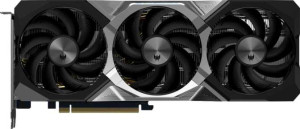
Acer Predator BiFrost Radeon RX 9070 OC
PowerColor Hellhound Radeon RX 9070

Acer Predator BiFrost Radeon RX 9070 OC PowerColor Hellhound Radeon RX 9070

Overview

Welcome to our in-depth specification comparison between the Acer Predator BiFrost Radeon RX 9070 OC and the PowerColor Hellhound Radeon RX 9070. Both cards share the same RDNA 4.0 architecture and 16GB of GDDR6 memory, yet they diverge in meaningful ways across clock speeds, power consumption, and physical dimensions. Read on to discover which card best suits your build and performance needs.

Common Features

  • Both cards share the same GPU memory speed of 2518 MHz.
  • Both cards have 3584 shading units.
  • Both cards have 224 texture mapping units (TMUs).
  • Both cards have 128 render output units (ROPs).
  • Double Precision Floating Point (DPFP) is supported on both cards.
  • Both cards have an effective memory speed of 20000 MHz.
  • Both cards come with 16GB of VRAM.
  • Both cards use GDDR6 memory.
  • Both cards feature a 256-bit memory bus width.
  • ECC memory is supported on both cards.
  • Both cards support OpenGL version 4.6.
  • Both cards support OpenCL version 2.2.
  • Multi-display technology is supported on both cards.
  • Ray tracing is supported on both cards.
  • 3D support is available on both cards.
  • DLSS is not supported on either card.
  • FSR4 is available on both cards.
  • XeSS (XMX) is not supported on either card.
  • Both cards include one HDMI 2.1b output.
  • Both cards feature three DisplayPort outputs.
  • Neither card has USB-C, DVI, or mini DisplayPort outputs.
  • Both cards are built on the RDNA 4.0 GPU architecture.
  • Both cards use PCIe version 5.
  • Both cards are manufactured on a 5 nm process.
  • Both cards contain 53,900 million transistors.
  • Neither card uses air-water cooling.

Main Differences

  • GPU base clock speed is 1440 MHz on Acer Predator BiFrost Radeon RX 9070 OC and 1330 MHz on PowerColor Hellhound Radeon RX 9070.
  • GPU turbo clock speed is 2700 MHz on Acer Predator BiFrost Radeon RX 9070 OC and 2590 MHz on PowerColor Hellhound Radeon RX 9070.
  • Pixel rate is 345.6 GPixel/s on Acer Predator BiFrost Radeon RX 9070 OC and 331.5 GPixel/s on PowerColor Hellhound Radeon RX 9070.
  • Floating-point performance is 38.71 TFLOPS on Acer Predator BiFrost Radeon RX 9070 OC and 37.13 TFLOPS on PowerColor Hellhound Radeon RX 9070.
  • Texture rate is 604.8 GTexels/s on Acer Predator BiFrost Radeon RX 9070 OC and 580.2 GTexels/s on PowerColor Hellhound Radeon RX 9070.
  • Maximum memory bandwidth is 644 GB/s on Acer Predator BiFrost Radeon RX 9070 OC and 644.6 GB/s on PowerColor Hellhound Radeon RX 9070.
  • DirectX support is DirectX 12 Ultimate on Acer Predator BiFrost Radeon RX 9070 OC and DirectX 12 on PowerColor Hellhound Radeon RX 9070.
  • Thermal Design Power (TDP) is 245W on Acer Predator BiFrost Radeon RX 9070 OC and 220W on PowerColor Hellhound Radeon RX 9070.
  • Card width is 295 mm on Acer Predator BiFrost Radeon RX 9070 OC and 340 mm on PowerColor Hellhound Radeon RX 9070.
  • Card height is 120 mm on Acer Predator BiFrost Radeon RX 9070 OC and 142 mm on PowerColor Hellhound Radeon RX 9070.
Specs Comparison
Acer Predator BiFrost Radeon RX 9070 OC

Acer Predator BiFrost Radeon RX 9070 OC

PowerColor Hellhound Radeon RX 9070

PowerColor Hellhound Radeon RX 9070

Performance:
GPU clock speed 1440 MHz 1330 MHz
GPU turbo 2700 MHz 2590 MHz
pixel rate 345.6 GPixel/s 331.5 GPixel/s
floating-point performance 38.71 TFLOPS 37.13 TFLOPS
texture rate 604.8 GTexels/s 580.2 GTexels/s
GPU memory speed 2518 MHz 2518 MHz
shading units 3584 3584
texture mapping units (TMUs) 224 224
render output units (ROPs) 128 128
Has Double Precision Floating Point (DPFP)

Both the Acer Predator BiFrost RX 9070 OC and the PowerColor Hellhound RX 9070 are built on identical silicon: the same 3584 shading units, 224 TMUs, and 128 ROPs. This means any performance gap between them is purely a function of clock speeds, not architectural differences.

That gap, while not dramatic, is consistent. The BiFrost OC runs a higher base clock of 1440 MHz versus 1330 MHz, and its boost tops out at 2700 MHz compared to the Hellhound's 2590 MHz — a roughly 4% advantage. This translates directly into the derived metrics: the BiFrost edges ahead with 38.71 TFLOPS of floating-point throughput against 37.13 TFLOPS, and a texture fill rate of 604.8 GTexels/s versus 580.2 GTexels/s. In practice, this kind of margin rarely produces a visible framerate difference in GPU-bound scenarios, but it does represent a real, measurable lead under sustained workloads or in compute tasks. Memory bandwidth is a non-factor here — both cards run identical 2518 MHz memory speeds.

The Acer Predator BiFrost RX 9070 OC holds a clear, if modest, performance edge in this group, owing entirely to its factory overclock. For users who prioritize peak clock headroom out of the box, the BiFrost is the stronger choice; the Hellhound, however, is working with the exact same underlying hardware and leaves room for manual overclocking to close the gap.

Memory:
effective memory speed 20000 MHz 20000 MHz
maximum memory bandwidth 644 GB/s 644.6 GB/s
VRAM 16GB 16GB
GDDR version GDDR6 GDDR6
memory bus width 256-bit 256-bit
Supports ECC memory

On the memory front, these two cards are functionally identical. Both carry 16GB of GDDR6 across a 256-bit bus, running at an effective speed of 20000 MHz — yielding a maximum bandwidth of 644 GB/s (with a negligible 0.6 GB/s rounding difference on the Hellhound that has no practical meaning). This is a strong memory configuration for the RX 9070 tier, comfortably supporting high-resolution textures and large asset pools in modern games and creative workloads.

The 16GB frame buffer is particularly relevant for users pushing 4K or working with AI-accelerated features, where VRAM headroom matters more than raw bandwidth alone. The 256-bit bus width strikes a sensible balance — wider than the 192-bit configs found on some competing mid-range designs, without the cost premium of a 320-bit or higher layout. Both cards also support ECC memory, which reduces the risk of data corruption in compute and professional workloads, a feature not always present at this price tier.

This group is a clear tie. There is no memory-related reason to choose one card over the other — every meaningful specification is shared exactly, and the 0.6 GB/s bandwidth figure is a rounding artifact, not a real-world differentiator.

Features:
DirectX version DirectX 12 Ultimate DirectX 12
OpenGL version 4.6 4.6
OpenCL version 2.2 2.2
Supports multi-display technology
supports ray tracing
Supports 3D
supports DLSS
has FSR4
has XeSS (XMX)
AMD SAM / Intel Resizable BAR AMD SAM AMD SAM
has LHR
has RGB lighting
supported displays 4 4

The feature sets of these two cards are nearly identical, but one distinction stands out: the Acer Predator BiFrost RX 9070 OC lists support for DirectX 12 Ultimate, while the PowerColor Hellhound RX 9070 lists only DirectX 12. DirectX 12 Ultimate is a superset of DirectX 12 that formally certifies support for hardware ray tracing, mesh shaders, sampler feedback, and variable rate shading — features that increasingly appear in modern game engines. Whether this reflects a genuine hardware or driver-level difference, or simply a difference in how each vendor has reported the spec, it is the only API-level distinction present in the data and gives the BiFrost a formal advantage on paper.

Elsewhere, the cards are in lockstep. Both support FSR4 — AMD's latest upscaling generation — which is the most practically impactful feature for gaming at elevated resolutions, offering meaningful performance headroom without VRAM trade-offs. Neither card supports DLSS, as expected for AMD hardware. AMD SAM (Smart Access Memory) is present on both, enabling the CPU to access the full VRAM pool directly when paired with a compatible AMD platform, which can yield tangible framerate improvements in supported titles.

The BiFrost holds a narrow edge here solely due to its DirectX 12 Ultimate designation. For users invested in titles that leverage DX12 Ultimate features — particularly hardware ray tracing pipelines and mesh shader workflows — this distinction is worth noting. For everyone else, the two cards are feature-equivalent in every way that matters day-to-day.

Ports:
has an HDMI output
HDMI ports 1 1
HDMI version HDMI 2.1b HDMI 2.1b
DisplayPort outputs 3 3
USB-C ports 0 0
DVI outputs 0 0
mini DisplayPort outputs 0 0

Port configurations are a complete match between these two cards. Both offer 3 DisplayPort outputs and 1 HDMI 2.1b port, totaling four simultaneous display connections — consistent with the supported displays figure noted in their feature specs. The absence of USB-C, DVI, or mini DisplayPort outputs is the same across both.

HDMI 2.1b is the relevant highlight here for display users. It supports up to 10K resolution and high refresh rates at 4K, making it well-suited for modern gaming monitors and televisions without requiring adapters. The three DisplayPort outputs comfortably serve multi-monitor productivity setups or high-refresh competitive gaming rigs where DisplayPort's bandwidth advantages matter.

This group is an unambiguous tie — every port type, count, and version is identical. Display compatibility and multi-monitor flexibility will be exactly the same whichever card you choose.

General info:
GPU architecture RDNA 4.0 RDNA 4.0
release date March 2025 March 2025
Thermal Design Power (TDP) 245W 220W
PCI Express (PCIe) version 5 5
semiconductor size 5 nm 5 nm
number of transistors 53900 million 53900 million
Has air-water cooling
width 295 mm 340 mm
height 120 mm 142 mm

Sharing the same RDNA 4.0 architecture, 5nm process node, and transistor count of 53,900 million, these two cards are cut from identical silicon. The practical divergence in this group comes down to two factors: power draw and physical size — and they point in opposite directions depending on what you value.

The BiFrost OC draws 245W versus the Hellhound's 220W — a 25W premium that directly reflects its factory overclock. Over extended gaming sessions this translates to meaningfully higher heat output and electricity consumption, and it may push users toward a higher-tier PSU. The Hellhound's lower TDP makes it the more power-efficient choice for the same underlying silicon. On the physical side, however, the Hellhound is notably larger at 340mm × 142mm compared to the BiFrost's more compact 295mm × 120mm. That 45mm length difference is significant — compact or mid-tower builds with tight GPU clearances may not accommodate the Hellhound at all, while the BiFrost's shorter footprint gives it broader case compatibility.

Neither card has a clean overall advantage here — the two key differentiators cut against each other. The BiFrost OC is the better fit for space-constrained builds, while the Hellhound is preferable for users prioritizing lower power consumption and heat output, assuming the case has the clearance for it.

Comparison Summary & Verdict

Both the Acer Predator BiFrost Radeon RX 9070 OC and the PowerColor Hellhound Radeon RX 9070 are compelling RDNA 4.0 cards with identical memory configurations and port layouts, but they cater to slightly different priorities. The Acer Predator BiFrost Radeon RX 9070 OC pulls ahead with higher GPU clock speeds (up to 2700 MHz boost), greater floating-point performance at 38.71 TFLOPS, and a DirectX 12 Ultimate feature set, making it the stronger pick for enthusiasts who want every last frame. However, it draws more power at 245W and has a taller card footprint. The PowerColor Hellhound Radeon RX 9070 counters with a lower TDP of 220W, a wider but shorter card profile, and a marginally higher memory bandwidth of 644.6 GB/s, appealing to builders focused on efficiency and case compatibility.

Acer Predator BiFrost Radeon RX 9070 OC
Buy Acer Predator BiFrost Radeon RX 9070 OC if...

Buy the Acer Predator BiFrost Radeon RX 9070 OC if you want higher clock speeds, greater floating-point performance, and the expanded feature set of DirectX 12 Ultimate for maximum gaming capability.

PowerColor Hellhound Radeon RX 9070
Buy PowerColor Hellhound Radeon RX 9070 if...

Buy the PowerColor Hellhound Radeon RX 9070 if you prioritize lower power consumption at 220W and need a card with a shorter physical height to fit your case.