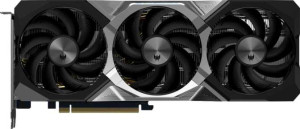
Acer Predator BiFrost Radeon RX 9070 OC
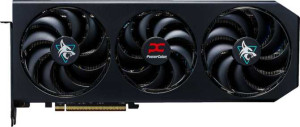
PowerColor Hellhound Radeon RX 9070 XT

Acer Predator BiFrost Radeon RX 9070 OC PowerColor Hellhound Radeon RX 9070 XT

Overview

Welcome to our in-depth specification comparison between the Acer Predator BiFrost Radeon RX 9070 OC and the PowerColor Hellhound Radeon RX 9070 XT. Both cards are built on the RDNA 4.0 architecture and share a strong foundation of features, yet they diverge meaningfully when it comes to raw compute performance, power consumption, and physical dimensions. Read on to see how these two contenders stack up across every key metric.

Common Features

  • Both cards share a GPU memory speed of 2518 MHz.
  • Both cards have 128 render output units (ROPs).
  • Double Precision Floating Point (DPFP) is supported on both cards.
  • Both cards have an effective memory speed of 20000 MHz.
  • Both cards feature 16GB of VRAM.
  • Both cards use GDDR6 memory.
  • Both cards have a 256-bit memory bus width.
  • ECC memory support is available on both cards.
  • Both cards support OpenGL version 4.6.
  • Both cards support OpenCL version 2.2.
  • Multi-display technology is supported on both cards.
  • Ray tracing is supported on both cards.
  • 3D support is available on both cards.
  • DLSS is not supported on either card.
  • FSR4 is available on both cards.
  • XeSS (XMX) is not available on either card.
  • Both cards have one HDMI port with HDMI 2.1b.
  • Both cards have three DisplayPort outputs.
  • Neither card has USB-C, DVI, or mini DisplayPort outputs.
  • Both cards use the RDNA 4.0 GPU architecture.
  • Both cards use PCIe version 5.
  • Both cards feature 53,900 million transistors.
  • Neither card offers air-water cooling.

Main Differences

  • GPU base clock speed is 1440 MHz on Acer Predator BiFrost Radeon RX 9070 OC and 1660 MHz on PowerColor Hellhound Radeon RX 9070 XT.
  • GPU turbo clock is 2700 MHz on Acer Predator BiFrost Radeon RX 9070 OC and 3010 MHz on PowerColor Hellhound Radeon RX 9070 XT.
  • Pixel rate is 345.6 GPixel/s on Acer Predator BiFrost Radeon RX 9070 OC and 385.3 GPixel/s on PowerColor Hellhound Radeon RX 9070 XT.
  • Floating-point performance is 38.71 TFLOPS on Acer Predator BiFrost Radeon RX 9070 OC and 49.32 TFLOPS on PowerColor Hellhound Radeon RX 9070 XT.
  • Texture rate is 604.8 GTexels/s on Acer Predator BiFrost Radeon RX 9070 OC and 770.6 GTexels/s on PowerColor Hellhound Radeon RX 9070 XT.
  • Shading units number 3584 on Acer Predator BiFrost Radeon RX 9070 OC and 4096 on PowerColor Hellhound Radeon RX 9070 XT.
  • Texture mapping units (TMUs) total 224 on Acer Predator BiFrost Radeon RX 9070 OC and 256 on PowerColor Hellhound Radeon RX 9070 XT.
  • Maximum memory bandwidth is 644 GB/s on Acer Predator BiFrost Radeon RX 9070 OC and 644.6 GB/s on PowerColor Hellhound Radeon RX 9070 XT.
  • DirectX 12 Ultimate is supported on Acer Predator BiFrost Radeon RX 9070 OC, while PowerColor Hellhound Radeon RX 9070 XT supports DirectX 12.
  • Thermal Design Power (TDP) is 245W on Acer Predator BiFrost Radeon RX 9070 OC and 304W on PowerColor Hellhound Radeon RX 9070 XT.
  • Semiconductor size is 5 nm on Acer Predator BiFrost Radeon RX 9070 OC and 4 nm on PowerColor Hellhound Radeon RX 9070 XT.
  • Card width is 295 mm on Acer Predator BiFrost Radeon RX 9070 OC and 340 mm on PowerColor Hellhound Radeon RX 9070 XT.
  • Card height is 120 mm on Acer Predator BiFrost Radeon RX 9070 OC and 142 mm on PowerColor Hellhound Radeon RX 9070 XT.
Specs Comparison
Acer Predator BiFrost Radeon RX 9070 OC

Acer Predator BiFrost Radeon RX 9070 OC

PowerColor Hellhound Radeon RX 9070 XT

PowerColor Hellhound Radeon RX 9070 XT

Performance:
GPU clock speed 1440 MHz 1660 MHz
GPU turbo 2700 MHz 3010 MHz
pixel rate 345.6 GPixel/s 385.3 GPixel/s
floating-point performance 38.71 TFLOPS 49.32 TFLOPS
texture rate 604.8 GTexels/s 770.6 GTexels/s
GPU memory speed 2518 MHz 2518 MHz
shading units 3584 4096
texture mapping units (TMUs) 224 256
render output units (ROPs) 128 128
Has Double Precision Floating Point (DPFP)

These two cards share the same AMD RDNA 4 architecture and identical 2518 MHz memory speed and 128 ROPs, but the similarities largely end there. The PowerColor Hellhound RX 9070 XT ships with a meaningfully larger GPU die: 4096 shading units and 256 TMUs versus the Acer Predator BiFrost RX 9070 OC's 3584 shading units and 224 TMUs. That 14% increase in compute resources is not a paper difference — it directly feeds into a 49.32 TFLOPS floating-point throughput for the XT compared to 38.71 TFLOPS for the 9070 OC, a gap of roughly 27%. In practical terms, this translates to more headroom in compute-heavy workloads such as ray tracing, AI-accelerated features, and high-resolution rendering pipelines.

Clock speeds reinforce the same story. The Hellhound boosts to 3010 MHz at turbo versus the BiFrost's 2700 MHz, and that ~11% clock advantage compounds on top of the larger shader count to produce a texture rate of 770.6 GTexels/s versus 604.8 GTexels/s — a meaningful advantage in texture-heavy scenes typical of modern open-world and AAA titles. The pixel fill rate follows suit: 385.3 GPixel/s vs 345.6 GPixel/s, which benefits output at high resolutions like 4K where fill rate can become a bottleneck.

Both cards support Double Precision Floating Point, which is relevant for prosumer compute tasks beyond gaming. However, taken as a whole, the PowerColor Hellhound RX 9070 XT holds a clear performance advantage in every throughput metric that matters — compute, texturing, and pixel output — making it the stronger choice for users prioritizing raw GPU performance. The Acer Predator BiFrost RX 9070 OC remains competitive in its own class but cannot match the XT's headroom at higher resolutions or in more demanding workloads.

Memory:
effective memory speed 20000 MHz 20000 MHz
maximum memory bandwidth 644 GB/s 644.6 GB/s
VRAM 16GB 16GB
GDDR version GDDR6 GDDR6
memory bus width 256-bit 256-bit
Supports ECC memory

When it comes to memory, these two cards are essentially identical across every meaningful specification. Both carry 16GB of GDDR6 over a 256-bit bus, running at an effective speed of 20000 MHz, which delivers a maximum bandwidth of roughly 644 GB/s — the negligible 0.6 GB/s difference between the two is a rounding artifact with zero practical significance.

The shared 256-bit bus width is worth contextualizing: at this tier, it provides enough throughput to keep the GPU fed in demanding scenarios including 4K gaming and high-resolution texture workloads. The 16GB VRAM pool is also well-suited for modern titles that increasingly push beyond the 8–12GB range, and offers breathing room for content creators running GPU-accelerated applications. Both cards also support ECC memory, which adds error-correction capability relevant to professional compute tasks where data integrity matters.

From a memory standpoint, this comparison is a dead heat. Neither card offers any advantage over the other in bandwidth, capacity, speed, or feature support. A buyer choosing between the two can treat memory as a non-factor and focus their decision entirely on other specification groups.

Features:
DirectX version DirectX 12 Ultimate DirectX 12
OpenGL version 4.6 4.6
OpenCL version 2.2 2.2
Supports multi-display technology
supports ray tracing
Supports 3D
supports DLSS
has FSR4
has XeSS (XMX)
AMD SAM / Intel Resizable BAR AMD SAM AMD SAM
has LHR
has RGB lighting
supported displays 4 4

Across most of this feature set, the two cards are in lockstep — both support ray tracing, FSR4, AMD SAM, OpenGL 4.6, OpenCL 2.2, multi-display output up to 4 screens, and RGB lighting. The one specification that separates them is the DirectX version: the Acer Predator BiFrost RX 9070 OC lists DirectX 12 Ultimate, while the PowerColor Hellhound RX 9070 XT is listed as DirectX 12. DirectX 12 Ultimate is a superset of DirectX 12 that formally certifies support for features such as hardware-accelerated ray tracing, mesh shaders, variable rate shading, and sampler feedback — capabilities that game developers can target with greater confidence when the full DX12 Ultimate feature tier is guaranteed.

The shared support for FSR4 is worth highlighting as a meaningful parity point. AMD's latest upscaling generation brings machine-learning-based reconstruction to both cards, narrowing the gap with competing upscaling technologies and delivering a tangible quality uplift over prior FSR versions — especially at lower render resolutions. Neither card supports DLSS or XeSS with XMX acceleration, which is expected given their AMD origins and is not a disadvantage within that ecosystem.

On balance, the Acer Predator BiFrost RX 9070 OC holds a narrow edge in this group solely due to its DirectX 12 Ultimate certification. In practice, the real-world gap may be limited depending on which DX12U features a given title actually leverages, but the formal certification does represent broader future-facing compatibility. For users who prioritize the fullest DirectX feature tier, the BiFrost has the advantage here.
Ports:
has an HDMI output
HDMI ports 1 1
HDMI version HDMI 2.1b HDMI 2.1b
DisplayPort outputs 3 3
USB-C ports 0 0
DVI outputs 0 0
mini DisplayPort outputs 0 0

Port configuration is identical on both cards: each offers 1 HDMI 2.1b output and 3 DisplayPort outputs, for a total of four display connections — matching the maximum supported display count noted in the features group. The absence of USB-C, DVI, and mini DisplayPort outputs is consistent across both, and typical for modern discrete GPUs at this tier.

The HDMI 2.1b standard is worth noting for its practical implications: it supports up to 10K resolution, high frame rate output at 4K and beyond, and includes features like Variable Refresh Rate and Auto Low Latency Mode — relevant for users connecting to high-end TVs or next-generation monitors. The triple DisplayPort configuration meanwhile caters well to multi-monitor desktop setups or daisy-chaining compatible displays.

This is a complete tie. Every port type, count, and version is identical between the BiFrost RX 9070 OC and the Hellhound RX 9070 XT, meaning connectivity plays no role in differentiating these two cards.

General info:
GPU architecture RDNA 4.0 RDNA 4.0
release date March 2025 March 2025
Thermal Design Power (TDP) 245W 304W
PCI Express (PCIe) version 5 5
semiconductor size 5 nm 4 nm
number of transistors 53900 million 53900 million
Has air-water cooling
width 295 mm 340 mm
height 120 mm 142 mm

Both cards are built on the same RDNA 4.0 architecture and share an identical transistor count of 53,900 million, confirming they draw from the same GPU family. The key divergence at the silicon level is the process node: the Acer Predator BiFrost RX 9070 OC is fabricated on a 5nm process, while the PowerColor Hellhound RX 9070 XT uses a 4nm node. A smaller process node generally enables higher transistor density and improved power efficiency at equivalent clock speeds — which helps contextualize how the XT can push higher clocks and compute throughput despite the same transistor count.

Power consumption tells a clear story about the trade-offs involved. The BiFrost carries a 245W TDP against the Hellhound's 304W — a difference of nearly 60W, or roughly 24% more draw. For system builders, this gap matters: it influences PSU headroom requirements, case airflow demands, and long-term electricity costs. Users with thermally constrained or smaller form-factor builds will find the BiFrost meaningfully easier to accommodate. Both cards rely on air cooling exclusively, so neither has a hybrid solution to offset its thermal load.

Physical dimensions compound the power story. The Hellhound is notably larger at 340 × 142 mm versus the BiFrost's 295 × 120 mm, a difference that can matter in mid-tower cases with tight GPU clearance. For users prioritizing a compact, power-efficient build, the BiFrost RX 9070 OC holds a real advantage in this group. The Hellhound's higher TDP and larger footprint are the direct cost of its greater raw performance — a trade-off buyers should weigh against their specific chassis and power supply configuration.

Comparison Summary & Verdict

After examining every specification, a clear picture emerges for each card. The PowerColor Hellhound Radeon RX 9070 XT holds a decisive edge in outright performance, delivering higher clock speeds, more shading units, a greater floating-point throughput of 49.32 TFLOPS, and a superior texture rate — making it the stronger choice for users who demand maximum frame rates and workload headroom. However, that performance comes at the cost of a 304W TDP and a larger physical footprint. The Acer Predator BiFrost Radeon RX 9070 OC, by contrast, operates at a more modest 245W, uses a compact 295 x 120 mm form factor, and notably carries DirectX 12 Ultimate support, which may appeal to users interested in advanced API features. Both cards share identical VRAM, memory bus, port configurations, FSR4 support, and ray tracing capabilities, so the decision ultimately comes down to performance headroom versus efficiency and fit.

Acer Predator BiFrost Radeon RX 9070 OC
Buy Acer Predator BiFrost Radeon RX 9070 OC if...

Buy the Acer Predator BiFrost Radeon RX 9070 OC if you want a more power-efficient card with a compact form factor and DirectX 12 Ultimate support for a smaller or tighter build.

PowerColor Hellhound Radeon RX 9070 XT
Buy PowerColor Hellhound Radeon RX 9070 XT if...

Buy the PowerColor Hellhound Radeon RX 9070 XT if you want the highest possible performance, with faster clocks, more shading units, and significantly greater floating-point throughput for demanding workloads.