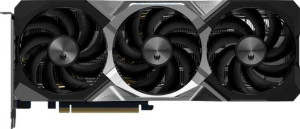
Acer Predator BiFrost Radeon RX 9070 XT OC
AMD Radeon RX 9070 XT

Acer Predator BiFrost Radeon RX 9070 XT OC AMD Radeon RX 9070 XT

Overview

Welcome to our in-depth specification comparison between the Acer Predator BiFrost Radeon RX 9070 XT OC and the AMD Radeon RX 9070 XT. Both cards share the same RDNA 4.0 foundation, 16GB of GDDR6 memory, and a rich feature set including ray tracing and FSR4 support, yet they diverge in meaningful ways across clock speeds, thermal design, and physical dimensions. Read on to discover which card best aligns with your needs.

Common Features

  • Both cards have a GPU memory speed of 2518 MHz.
  • Both cards feature 4096 shading units.
  • Both cards include 256 texture mapping units (TMUs).
  • Both cards include 128 render output units (ROPs).
  • Double Precision Floating Point (DPFP) is supported on both cards.
  • Both cards have an effective memory speed of 20000 MHz.
  • Both cards come with 16GB of VRAM.
  • Both cards use GDDR6 memory.
  • Both cards feature a 256-bit memory bus width.
  • ECC memory is supported on both cards.
  • Both cards support DirectX 12 Ultimate.
  • Both cards support OpenGL version 4.6.
  • Both cards support OpenCL version 2.2.
  • Multi-display technology is supported on both cards.
  • Ray tracing is supported on both cards.
  • 3D support is available on both cards.
  • FSR4 is supported on both cards.
  • XeSS (XMX) is not available on either card.
  • Both cards include one HDMI output and three DisplayPort outputs.
  • Neither card has USB-C ports, DVI outputs, or mini DisplayPort outputs.
  • Both cards are built on the RDNA 4.0 GPU architecture.
  • Both cards use PCIe version 5.
  • Both cards are manufactured on a 4 nm semiconductor process.
  • Both cards contain 53900 million transistors.
  • Neither card features air-water cooling.

Main Differences

  • GPU base clock speed is 1870 MHz on Acer Predator BiFrost Radeon RX 9070 XT OC and 1660 MHz on AMD Radeon RX 9070 XT.
  • GPU turbo clock speed is 3100 MHz on Acer Predator BiFrost Radeon RX 9070 XT OC and 2970 MHz on AMD Radeon RX 9070 XT.
  • Pixel rate is 396.8 GPixel/s on Acer Predator BiFrost Radeon RX 9070 XT OC and 380.2 GPixel/s on AMD Radeon RX 9070 XT.
  • Floating-point performance is 50.79 TFLOPS on Acer Predator BiFrost Radeon RX 9070 XT OC and 48.7 TFLOPS on AMD Radeon RX 9070 XT.
  • Texture rate is 793.6 GTexels/s on Acer Predator BiFrost Radeon RX 9070 XT OC and 760.3 GTexels/s on AMD Radeon RX 9070 XT.
  • Maximum memory bandwidth is 644 GB/s on Acer Predator BiFrost Radeon RX 9070 XT OC and 640 GB/s on AMD Radeon RX 9070 XT.
  • RGB lighting is present on Acer Predator BiFrost Radeon RX 9070 XT OC but not available on AMD Radeon RX 9070 XT.
  • HDMI version is 2.1b on Acer Predator BiFrost Radeon RX 9070 XT OC and 2.1a on AMD Radeon RX 9070 XT.
  • Thermal Design Power (TDP) is 340W on Acer Predator BiFrost Radeon RX 9070 XT OC and 304W on AMD Radeon RX 9070 XT.
  • Card width is 295 mm on Acer Predator BiFrost Radeon RX 9070 XT OC and 267 mm on AMD Radeon RX 9070 XT.
  • Card height is 120 mm on Acer Predator BiFrost Radeon RX 9070 XT OC and 111 mm on AMD Radeon RX 9070 XT.
Specs Comparison
Acer Predator BiFrost Radeon RX 9070 XT OC

Acer Predator BiFrost Radeon RX 9070 XT OC

AMD Radeon RX 9070 XT

AMD Radeon RX 9070 XT

Performance:
GPU clock speed 1870 MHz 1660 MHz
GPU turbo 3100 MHz 2970 MHz
pixel rate 396.8 GPixel/s 380.2 GPixel/s
floating-point performance 50.79 TFLOPS 48.7 TFLOPS
texture rate 793.6 GTexels/s 760.3 GTexels/s
GPU memory speed 2518 MHz 2518 MHz
shading units 4096 4096
texture mapping units (TMUs) 256 256
render output units (ROPs) 128 128
Has Double Precision Floating Point (DPFP)

Both cards share the same fundamental silicon: identical 4096 shading units, 256 TMUs, 128 ROPs, and 2518 MHz memory speed. This means their architectural ceiling is the same — the differences observed here are entirely a product of clock speed tuning, not hardware configuration.

That tuning, however, does produce measurable gains. The Acer Predator BiFrost ships with a higher base clock of 1870 MHz versus 1660 MHz on the reference AMD card, and its boost ceiling reaches 3100 MHz compared to 2970 MHz — a roughly 4% advantage at the top end. This translates directly into the computed throughput metrics: the Acer leads in floating-point performance (50.79 vs 48.7 TFLOPS), texture rate (793.6 vs 760.3 GTexels/s), and pixel rate (396.8 vs 380.2 GPixel/s). In practice, these margins are modest — expect roughly 3–5% higher average frame rates under GPU-bound workloads, all else being equal.

The Acer Predator BiFrost holds a clear, if narrow, performance edge in this group purely due to its factory overclock. For users who would otherwise manually overclock the reference card, the gap may close further depending on individual chip headroom. Those prioritizing out-of-the-box performance without manual tuning will find the Acer the stronger choice here.

Memory:
effective memory speed 20000 MHz 20000 MHz
maximum memory bandwidth 644 GB/s 640 GB/s
VRAM 16GB 16GB
GDDR version GDDR6 GDDR6
memory bus width 256-bit 256-bit
Supports ECC memory

The Acer Predator BiFrost Radeon RX 9070 XT OC and the AMD Radeon RX 9070 XT share several key memory specifications. Both cards feature the same effective memory speed of 20000 MHz, VRAM capacity of 16GB, and use the GDDR6 memory type. Additionally, both models have a 256-bit memory bus width and support ECC memory.

However, there is a slight difference in maximum memory bandwidth. The Acer Predator BiFrost offers a maximum memory bandwidth of 644 GB/s, while the AMD Radeon RX 9070 XT is slightly lower at 640 GB/s.

Overall, the two products are closely matched in terms of memory specifications, with the only difference being the small variation in memory bandwidth.

Features:
DirectX version DirectX 12 Ultimate DirectX 12 Ultimate
OpenGL version 4.6 4.6
OpenCL version 2.2 2.2
Supports multi-display technology
supports ray tracing
Supports 3D
has FSR4
has XeSS (XMX)
AMD SAM / Intel Resizable BAR AMD SAM AMD SAM
has LHR
has RGB lighting
supported displays 4 4

The Acer Predator BiFrost Radeon RX 9070 XT OC and the AMD Radeon RX 9070 XT are quite similar in terms of features, with both cards supporting DirectX 12 Ultimate, OpenGL 4.6, and OpenCL 2.2. They also both support multi-display technology, ray tracing, 3D, and FSR4. Neither of them supports XeSS (XMX), and both are equipped with AMD SAM (Resizable BAR) technology. Additionally, neither product has LHR (Lite Hash Rate) functionality.

One difference between the two cards is that the Acer Predator BiFrost comes with RGB lighting, while the AMD Radeon RX 9070 XT does not. Both cards support up to 4 displays.

Overall, these two products are very closely aligned in terms of features, with the key difference being the inclusion of RGB lighting on the Acer Predator BiFrost.

Ports:
has an HDMI output
HDMI ports 1 1
HDMI version HDMI 2.1b HDMI 2.1a
DisplayPort outputs 3 3
USB-C ports 0 0
DVI outputs 0 0
mini DisplayPort outputs 0 0

Both the Acer Predator BiFrost Radeon RX 9070 XT OC and the AMD Radeon RX 9070 XT feature similar port configurations. Both cards offer one HDMI output, but they differ slightly in the HDMI version. The Acer Predator BiFrost supports HDMI 2.1b, while the AMD Radeon RX 9070 XT supports HDMI 2.1a.

Both products are equipped with three DisplayPort outputs, and neither product includes USB-C ports, DVI outputs, or mini DisplayPort outputs.

In summary, the key difference between the two products in terms of ports is the HDMI version, with the Acer Predator BiFrost supporting the slightly newer HDMI 2.1b compared to the AMD Radeon RX 9070 XT’s HDMI 2.1a.

General info:
GPU architecture RDNA 4.0 RDNA 4.0
release date March 2025 January 2025
Thermal Design Power (TDP) 340W 304W
PCI Express (PCIe) version 5 5
semiconductor size 4 nm 4 nm
number of transistors 53900 million 53900 million
Has air-water cooling
width 295 mm 267 mm
height 120 mm 111 mm

The Acer Predator BiFrost Radeon RX 9070 XT OC and the AMD Radeon RX 9070 XT share several similarities in their general specifications. Both products use the RDNA 4.0 GPU architecture and have the same semiconductor size of 4 nm. They are both built with 53.9 billion transistors and support PCI Express (PCIe) version 5.0.

In terms of thermal design power (TDP), the Acer Predator BiFrost has a slightly higher TDP of 340W, compared to 304W for the AMD Radeon RX 9070 XT. Both cards do not include air-water cooling.

The physical dimensions also differ between the two models: the Acer Predator BiFrost is 295 mm wide and 120 mm tall, while the AMD Radeon RX 9070 XT is smaller at 267 mm wide and 111 mm tall.

Comparison Summary & Verdict

After examining every specification, a clear picture emerges for each card. The Acer Predator BiFrost Radeon RX 9070 XT OC delivers higher base and boost clock speeds (1870 MHz and 3100 MHz respectively), translating into a measurably higher floating-point performance of 50.79 TFLOPS and a superior texture rate, all complemented by RGB lighting and HDMI 2.1b. The trade-off is a larger footprint and a 340W TDP versus the reference card's 304W. The AMD Radeon RX 9070 XT, on the other hand, is more compact, draws less power, and still delivers 48.7 TFLOPS of performance, making it ideal for tighter builds. Both cards are equally matched on memory, features, and software support, so the decision ultimately comes down to whether you value factory overclocked performance and aesthetics or a cooler, smaller, and more power-efficient solution.

Acer Predator BiFrost Radeon RX 9070 XT OC
Buy Acer Predator BiFrost Radeon RX 9070 XT OC if...

Buy the Acer Predator BiFrost Radeon RX 9070 XT OC if you want factory overclocked performance with higher clock speeds and RGB lighting, and your build can accommodate its larger size and 340W power draw.

AMD Radeon RX 9070 XT
Buy AMD Radeon RX 9070 XT if...

Buy the AMD Radeon RX 9070 XT if you prefer a more compact, power-efficient card with a lower 304W TDP that still delivers strong performance in space-constrained or power-limited builds.