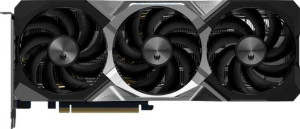
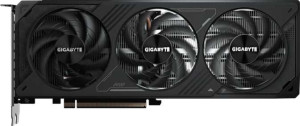
At first glance, the Gigabyte RTX 5070 WindForce OC SFF appears to have an edge in raw shader count with 6,144 shading units versus 4,096 on the Acer Predator RX 9070 XT OC, and its base clock of 2,325 MHz is notably higher. However, clock speed and shader count alone do not tell the full story — throughput metrics reveal a very different picture. The RX 9070 XT boosts all the way to 3,100 MHz, a dramatically higher turbo ceiling than the RTX 5070's 2,542 MHz, and that headroom translates directly into superior computed throughput across every major pipeline metric.
The real-world gap becomes stark when examining output rates: the RX 9070 XT delivers a pixel fill rate of 396.8 GPixel/s and a texture rate of 793.6 GTexels/s, roughly double the RTX 5070's 203.4 GPixel/s and 488.1 GTexels/s respectively. More ROPs (128 vs. 80) and TMUs (256 vs. 192) on the AMD card reinforce this advantage — higher ROPs mean faster rendering of final pixel output, which directly benefits frame rates at high resolutions, while more TMUs accelerate texture-heavy scenes. The RX 9070 XT also holds a commanding lead in floating-point performance at 50.79 TFLOPS versus 31.24 TFLOPS, a ~63% advantage that reflects its greater general compute throughput. Memory bandwidth also favors the AMD card with a GPU memory speed of 2,518 MHz against the RTX 5070's 1,750 MHz.
Based strictly on the provided performance specifications, the Acer Predator RX 9070 XT OC holds a clear and consistent advantage in nearly every throughput and compute metric. The RTX 5070's higher shader count is not enough to compensate — efficiency per shader is simply much higher on the RX 9070 XT at its peak turbo frequency. Both cards support Double Precision Floating Point, so that feature is a wash. For users prioritizing raw rasterization performance, the RX 9070 XT is the stronger option according to these specs.