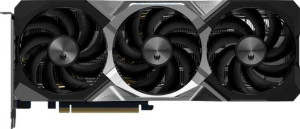
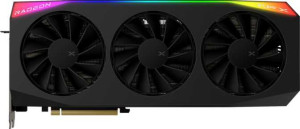
In the Performance category, the Acer Predator BiFrost RX 9070 XT OC and the XFX Mercury RX 9070 XT OC Gaming Edition are in complete lockstep across every measurable metric. Both cards share an identical base clock of 1870 MHz and a turbo clock of 3100 MHz, meaning neither card has a factory frequency advantage out of the box. The same applies to the GPU memory speed at 2518 MHz, the shader count of 4096 units, and the 256 TMUs and 128 ROPs — all perfectly mirrored.
The downstream throughput figures tell the same story: both deliver 50.79 TFLOPS of floating-point performance, a 396.8 GPixel/s pixel fill rate, and a 793.6 GTexels/s texture rate. In practical terms, these numbers translate to very strong rasterization performance at 1440p and competitive 4K capability — but since the figures are identical, neither card will outrun the other in any GPU-bound workload under default settings. Both also support Double Precision Floating Point (DPFP), which is relevant for compute and professional workloads beyond gaming.
The conclusion here is straightforward: on paper, this is a dead tie. Both cards are built on the same GPU silicon with the same factory overclock profile, so real-world gaming and compute performance will be effectively indistinguishable. Any difference a buyer might see in benchmarks would fall within run-to-run variance rather than a meaningful architectural or tuning gap. The decision between these two should therefore rest entirely on other factors — cooling design, noise levels, build quality, warranty, or price.