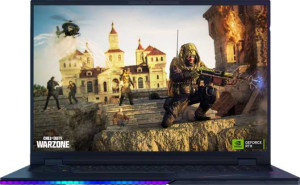
Acer Predator Helios 18 AI (2025) 18"
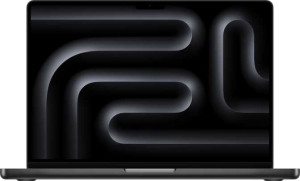
Apple MacBook Pro (2025) 14" (Apple M5 / 32GB RAM / 2TB)

Acer Predator Helios 18 AI (2025) 18" Apple MacBook Pro (2025) 14" (Apple M5 / 32GB RAM / 2TB)

Common Features

  • Both products have a backlit keyboard.
  • Neither product has a weather-sealed design.
  • Both products use flash storage.
  • Both products support Wi-Fi.
  • Both products have stereo speakers.
  • Both products have a 3.5 mm audio jack.
  • Both products include a front camera.
  • Both products support an external memory slot.
  • Both products use DDR5 memory.
  • Both products have a USB Type-C port.
  • Both products have HDMI output.
  • Both products have a sleep-and-charge USB port.
  • Both products use NVMe SSDs.
  • Both products are laptops.
  • Both products support 64-bit systems.
  • Both products have integrated graphics.
  • Both products support big.LITTLE technology.
  • Both products use multithreading.
  • Both products have stereo speakers.
Specs Comparison
Acer Predator Helios 18 AI (2025) 18"

Acer Predator Helios 18 AI (2025) 18"

Apple MacBook Pro (2025) 14" (Apple M5 / 32GB RAM / 2TB)

Apple MacBook Pro (2025) 14" (Apple M5 / 32GB RAM / 2TB)

Design:
Type Gaming Productivity
weight 3500 g 1550 g
Uses a fanless design
Has a backlit keyboard
volume 3570.103 cm³ 1034.28 cm³
width 401 mm 312 mm
height 307 mm 221 mm
thickness 29 mm 15 mm
is weather-sealed (splashproof)
has a rugged build

The design philosophies of these two machines could not be more different. The Acer Predator Helios 18 AI is a gaming laptop built for performance at a desk, while the MacBook Pro 14″ is a productivity machine engineered for portability and discretion. This fundamental difference in purpose shapes every physical attribute in this comparison.

The weight gap is the most telling differentiator: the Helios 18 tips the scales at 3500 g versus the MacBook Pro's 1550 g — more than double. Paired with a volume of 3570 cm³ against just 1034 cm³, and dimensions of 401 × 307 × 29 mm versus 312 × 221 × 15 mm, the Helios is a substantially larger and heavier slab. In practice, this means the Helios is a machine you set up and leave on a desk; carrying it daily in a bag is a genuine physical commitment. The MacBook Pro, by contrast, slips easily into most bags and remains comfortable to carry all day.

Both laptops share a backlit keyboard, are not fanless, are not weather-sealed, and lack a rugged build — so neither has an edge on those shared traits. The clear advantage goes to the MacBook Pro 14″ on design portability and form factor, making it the far more mobile-friendly option. The Helios 18 AI accepts its bulk as the price of its gaming-oriented chassis, and is best suited for users who prioritize a large screen and desktop-replacement use over any notion of everyday portability.

Display:
screen size 18" 14.2"
resolution 3840 x 2400 px 3024 x 1964 px
pixel density 251 ppi 253 ppi
Display type IPS, LCD, LED-backlit Mini-LED
has a touch screen
refresh rate 120Hz 120Hz
has anti-reflection coating
supported displays 4 2

Screen size is the most obvious divide here: the Helios 18 AI offers a large 18″ IPS LCD panel at 3840 × 2400 resolution, while the MacBook Pro works with a more compact 14.2″ Mini-LED at 3024 × 1964. Interestingly, pixel density comes out nearly identical — 251 ppi versus 253 ppi — meaning sharpness per inch is a wash. Where the panel technology diverges meaningfully is in display quality potential: Mini-LED enables far superior local dimming, deeper blacks, and higher peak brightness compared to a conventional IPS LCD, giving the MacBook Pro a qualitative edge despite its smaller canvas.

Both displays share a 120Hz refresh rate and neither supports touch input, so those traits cancel out. One notable hardware difference is the Helios 18 AI's anti-reflection coating, which the MacBook Pro lacks — a practical advantage in bright or variable lighting environments. On the other hand, the Helios supports up to 4 external displays compared to the MacBook Pro's 2, making it considerably more capable as a multi-monitor workstation hub.

Ultimately, which display setup wins depends on use case. For raw screen real estate, multi-monitor productivity, and glare management, the Helios 18 AI holds the edge. For outright panel quality — richer contrast and more vibrant imagery from its Mini-LED technology — the MacBook Pro 14″ has the advantage despite its smaller size. Users who prioritize image fidelity will favor the MacBook Pro; those who need a large primary screen with maximum external display flexibility will lean toward the Helios.

Performance:
RAM 64GB 32GB
Uses flash storage
internal storage 2048GB 2048GB
CPU speed 8 x 2.7 & 16 x 2.1 GHz 4 x 4.6 & 6 x 3.2 GHz
CPU threads 24 threads 10 threads
Is an NVMe SSD
uses multithreading
maximum memory amount 192GB 64GB
DDR memory version 5 5
semiconductor size 4 nm 3 nm
has XeSS (XMX)
Supports 64-bit

Raw thread count and clock speed tell an interesting story here. The Helios 18 AI brings 24 CPU threads clocked at up to 2.7 GHz on its performance cores, while the MacBook Pro fields just 10 threads but runs its top cores at a significantly higher 4.6 GHz. This reflects two fundamentally different CPU philosophies: the Helios leans on parallelism — more threads handling more simultaneous workloads — whereas the MacBook Pro prioritizes single-core speed, which benefits tasks that are not easily parallelized, such as compiling code sequentially or running latency-sensitive applications.

Memory capacity is another clear divergence. The Helios ships with 64GB of RAM and supports a ceiling of 192GB, versus the MacBook Pro's 32GB installed and a maximum of 64GB. For power users running memory-intensive workloads — large virtual machines, complex simulations, or massive datasets — the Helios has a substantial headroom advantage. Both machines use DDR5 memory and match on storage with 2TB NVMe SSDs, so speed and capacity on that front are equal. The MacBook Pro's chip is built on a 3nm process versus the Helios's 4nm, which generally implies better energy efficiency per operation on Apple's side.

Declaring a single winner is nuanced. The Helios 18 AI edges ahead for heavily multi-threaded and memory-hungry workloads, with more threads and far greater RAM expandability. The MacBook Pro 14″ holds an advantage in raw per-core speed and process efficiency, making it a strong performer in tasks that demand fast individual cores rather than sheer parallelism. The right choice depends entirely on the nature of the workload.

Connectivity:
USB 3.2 Gen 2 ports (USB-C) 2 0
USB 3.2 Gen 2 ports (USB-A) 2 0
USB 4 20Gbps ports 0 0
USB 4 40Gbps ports 0 4
Thunderbolt 4 ports 0 4
USB 3.2 Gen 1 ports (USB-C) 0 0
USB 3.2 Gen 1 ports (USB-A) 1 0
Thunderbolt 3 ports 0 0
has an HDMI output
Has USB Type-C
supports Wi-Fi
Wi-Fi version Wi-Fi 7 (802.11be), Wi-Fi 6E (802.11ax), Wi-Fi 6 (802.11ax), Wi-Fi 5 (802.11ac), Wi-Fi 4 (802.11n) Wi-Fi 6E (802.11ax), Wi-Fi 6 (802.11ax), Wi-Fi 5 (802.11ac), Wi-Fi 4 (802.11n)
has an external memory slot
Bluetooth version 5.4 5.3
RJ45 ports 1 0
HDMI ports 1 1
DisplayPort outputs 0 0
USB 2.0 ports 0 0
has AirPlay
mini DisplayPort outputs 0 0
has a VGA connector

Port selection reveals two very different connectivity strategies. The Helios 18 AI prioritizes breadth: it offers a mix of USB-A and USB-C ports, a dedicated RJ45 ethernet jack, an external memory card slot, and HDMI — meaning most peripherals and accessories plug in directly with no adapters needed. The MacBook Pro 14″ takes a depth-over-variety approach, concentrating its connectivity into four Thunderbolt 4 / USB4 40Gbps ports. Each of those ports is extraordinarily capable — supporting high-speed data transfer, display output, and power delivery simultaneously — but the complete absence of USB-A and a wired ethernet port means dongle dependency is a real-world consideration for many users.

Wireless connectivity also splits in a meaningful way. The Helios ships with Wi-Fi 7 (802.11be), the latest generation, which delivers higher throughput and lower latency than the MacBook Pro's Wi-Fi 6E ceiling — a tangible advantage in congested network environments or for users with Wi-Fi 7 routers. Bluetooth is similarly newer on the Helios at version 5.4 versus 5.3 on the MacBook Pro, though the practical difference between these two revisions is minimal for most users.

Neither machine has a clear sweep here — the advantage shifts depending on workflow. The Helios 18 AI wins on everyday plug-and-play versatility, with its wired ethernet, USB-A ports, and Wi-Fi 7 support. The MacBook Pro 14″ wins on high-bandwidth potential per port, with four Thunderbolt 4 connections that can each handle demanding peripherals, docks, or displays simultaneously. Users who live cable-free or invest in a Thunderbolt dock will be well served by the MacBook Pro; those who want direct, no-fuss wired connectivity will prefer the Helios.

Battery:
Battery life 5.5 hours 16 hours
battery size 99 Wh 72.4 Wh
Has sleep-and-charge USB ports
Has a MagSafe power adapter

Battery life is where the gap between these two machines becomes stark. The MacBook Pro 14″ is rated for 16 hours of use on a 72.4 Wh battery, while the Helios 18 AI manages just 5.5 hours despite packing a significantly larger 99 Wh cell. That counterintuitive result — more battery capacity, far less runtime — speaks directly to the power demands of a high-performance gaming platform versus an efficiency-optimized productivity chip. In practical terms, the MacBook Pro can comfortably last a full workday unplugged; the Helios will need its charger nearby for any serious session.

The MacBook Pro also carries the exclusive advantage of a MagSafe charging connector, which provides a dedicated magnetic power port that snaps on and off safely — preserving the Thunderbolt ports for peripherals and protecting the laptop if someone trips over the cable. The Helios lacks this feature, though both laptops share sleep-and-charge USB ports, allowing connected devices to charge even when the system is off or asleep.

The clear winner here is the MacBook Pro 14″, and it is not particularly close. Nearly three times the battery life from a smaller cell is a decisive advantage for anyone who works away from a power outlet. The Helios 18 AI's battery is best understood as a short-term buffer rather than a genuine mobile power source — a reflection of its identity as a desktop-replacement gaming machine rather than a portable workhorse.

Features:
release date January 2025 October 2025
has stereo speakers
has a socket for a 3.5 mm audio jack
supports ray tracing
supports DLSS
has Dolby Atmos
Stylus included
Has a fingerprint scanner
number of microphones 1 3
Uses 3D facial recognition
has voice commands
has a front camera
Has S/PDIF Out port
has a gyroscope
has GPS
has an accelerometer
has a compass
Has an optical disc drive

Gaming-specific features are where the Helios 18 AI carves out its exclusive territory: it supports both ray tracing and DLSS, GPU-accelerated techniques that enhance visual realism and boost in-game frame rates respectively. The MacBook Pro supports neither, which is consistent with its productivity focus. For anyone buying a laptop primarily to game, these capabilities are meaningful differentiators that the MacBook Pro simply cannot match.

Security and smart interaction features, however, tilt decisively toward the MacBook Pro 14″. It includes a fingerprint scanner, 3D facial recognition, and voice commands — a full suite of biometric and hands-free authentication options that the Helios entirely lacks, offering only a standard login experience with no biometric hardware at all. The MacBook Pro also pulls ahead on audio input quality, with 3 microphones versus the Helios's single microphone — a notable advantage for video calls, voice recordings, or any workflow that relies on clean audio capture. Rounding out the audio picture, the MacBook Pro adds Dolby Atmos support for a more immersive speaker and headphone experience, while the Helios does not.

Both machines share stereo speakers, a 3.5mm audio jack, and a front camera, so those bases are equally covered. Overall, the MacBook Pro 14″ holds a broader feature advantage in everyday usability — richer security options, superior microphone array, and Dolby Atmos audio. The Helios 18 AI counters with gaming-exclusive rendering technologies that are irrelevant to productivity users but essential for gamers. Each machine's feature set is purpose-built, and the winner depends entirely on which use case matters more.
Miscellaneous:
clock multiplier 27 46
Supports ECC memory
maximum memory bandwidth 811.5 GB/s 153 GB/s
Type Laptop Laptop
Has an unlocked multiplier
L2 cache 40 MB 16 MB
Has NX bit
Has integrated graphics
RAM speed (max) 6400 MHz 6400 MHz
Uses big.LITTLE technology

The most striking figure in this group is maximum memory bandwidth: the Helios 18 AI delivers an extraordinary 811.5 GB/s compared to just 153 GB/s on the MacBook Pro 14″ — more than five times the throughput. Memory bandwidth directly determines how fast the CPU and GPU can feed data to and from RAM, and at this scale the difference is transformative for bandwidth-hungry workloads like large matrix operations, video processing, and game asset streaming. This is arguably the Helios's most significant under-the-hood advantage in this spec group.

Two other specs favor the Helios in meaningful ways. It supports ECC memory — error-correcting code memory that detects and fixes data corruption in real time — a feature typically reserved for workstation-class hardware and valuable for anyone running mission-critical computations. It also carries an unlocked multiplier, enabling overclocking for users who want to push clock speeds beyond factory settings. The MacBook Pro supports neither. The Helios also leads on L2 cache at 40 MB versus 16 MB, giving its CPU more fast-access buffer to reduce latency on complex workloads. The MacBook Pro's higher clock multiplier of 46 versus 27 is consistent with its faster individual core speeds noted in the performance group, but it cannot be leveraged for overclocking since the multiplier is locked.

Both laptops share the same maximum RAM speed of 6400 MHz, integrated graphics, NX bit support, and big.LITTLE hybrid core architecture, so those traits are evenly matched. On balance, the Helios 18 AI holds a clear technical edge in this group — its massive memory bandwidth lead, ECC support, larger L2 cache, and overclocking flexibility collectively paint a picture of a platform built with headroom for demanding and professional workloads well beyond typical consumer use.

Comparison Summary & Verdict

This is a specification comparison between Acer Predator Helios 18 AI (2025) 18″ and Apple MacBook Pro (2025) 14″ (Apple M5 / 32GB RAM / 2TB). Both models have a backlit keyboard, stereo speakers, and support Wi-Fi and an external memory slot. However, the Acer Predator Helios 18 AI (2025) 18″ is designed for gaming with a larger screen size of 18″ and heavier weight of 3500 g, while the Apple MacBook Pro (2025) 14″ (Apple M5 / 32GB RAM / 2TB) is geared towards productivity with a 14.2″ display and a more portable 1550 g weight. Additionally, the Acer model offers 64GB RAM compared to the 32GB RAM of the MacBook Pro, while the Apple device supports Thunderbolt 4 ports, which the Acer lacks.