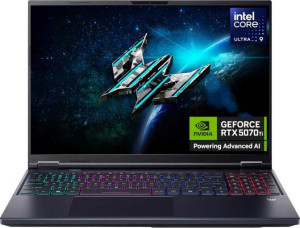
Acer Predator Helios Neo 16 AI (2025) 16" (Ultra 9 275HX / RTX 5070 Ti Laptop / 32GB RAM / 1TB)
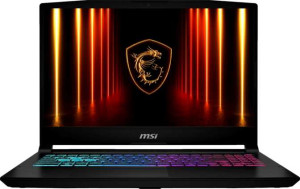
MSI Katana 15 HX B14W (2025) 15.6"

Acer Predator Helios Neo 16 AI (2025) 16" (Ultra 9 275HX / RTX 5070 Ti Laptop / 32GB RAM / 1TB) MSI Katana 15 HX B14W (2025) 15.6"

Overview

Welcome to our in-depth spec comparison between the Acer Predator Helios Neo 16 AI (2025) 16″ (Ultra 9 275HX / RTX 5070 Ti Laptop / 32GB RAM / 1TB) and the MSI Katana 15 HX B14W (2025) 15.6″ — two 2025 gaming laptops built on the Blackwell GPU architecture with DDR5 memory and NVMe SSD storage. We examine key battlegrounds including display quality and refresh rate, GPU muscle, CPU throughput, connectivity options, and battery capacity to help you find the right fit.

Common Features

  • Both products are gaming laptops.
  • Neither product uses a fanless design.
  • Both products have a backlit keyboard.
  • Neither product is weather-sealed or splashproof.
  • Neither product has a rugged build.
  • Both products share a 2560 x 1600 px display resolution.
  • Both products use an LCD, LED-backlit, IPS display type.
  • Neither product has a touch screen.
  • Neither product has an anti-reflection coating.
  • Both products support up to 4 external displays.
  • Both products come with 32GB of RAM.
  • Both products use flash storage.
  • Both products include 1024GB of internal storage.
  • Both products use GDDR7 video memory.
  • Both products use NVMe SSD storage.
  • Both products support DirectX 12 Ultimate.
  • Both products support multithreading.
  • Both products use DDR5 memory.
  • Both products have an HDMI output.
  • Both products have at least one USB Type-C port.
  • Both products support Wi-Fi.
  • Both products have sleep-and-charge USB ports.
  • Neither product has a MagSafe power adapter.
  • Both products have stereo speakers.
  • Both products support ray tracing.
  • Both products support DLSS.
  • Dolby Atmos is not available on either product.
  • No stylus is included with either product.
  • Neither product has a fingerprint scanner.
  • Both products have 1 microphone.
  • Neither product uses 3D facial recognition.
  • Both products support Intel Resizable BAR.
  • Both products use the Blackwell GPU architecture.
  • Neither product has LHR.
  • Both products support 3D.
  • Both products support multi-display technology.
  • Both products support OpenCL version 3.
  • Both products support OpenGL version 4.6.
  • Both products support ECC memory.
  • Neither product has Thunderbolt 3 ports.
  • Neither product has Thunderbolt 4 ports.
  • Neither product has USB 4 20Gbps ports.
  • Neither product has USB 4 40Gbps ports.
  • Neither product has USB 3.2 Gen 1 USB-C ports.

Main Differences

  • Screen size is 16″ on Acer Predator Helios Neo 16 AI (2025) 16″ (Ultra 9 275HX / RTX 5070 Ti Laptop / 32GB RAM / 1TB) and 15.6″ on MSI Katana 15 HX B14W (2025) 15.6″.
  • Pixel density is 188 ppi on Acer Predator Helios Neo 16 AI (2025) 16″ (Ultra 9 275HX / RTX 5070 Ti Laptop / 32GB RAM / 1TB) and 193 ppi on MSI Katana 15 HX B14W (2025) 15.6″.
  • Refresh rate is 240Hz on Acer Predator Helios Neo 16 AI (2025) 16″ (Ultra 9 275HX / RTX 5070 Ti Laptop / 32GB RAM / 1TB) and 165Hz on MSI Katana 15 HX B14W (2025) 15.6″.
  • Weight is 2700 g on Acer Predator Helios Neo 16 AI (2025) 16″ (Ultra 9 275HX / RTX 5070 Ti Laptop / 32GB RAM / 1TB) and 2400 g on MSI Katana 15 HX B14W (2025) 15.6″.
  • Volume is 2545.4 cm³ on Acer Predator Helios Neo 16 AI (2025) 16″ (Ultra 9 275HX / RTX 5070 Ti Laptop / 32GB RAM / 1TB) and 2351.45 cm³ on MSI Katana 15 HX B14W (2025) 15.6″.
  • Width is 356 mm on Acer Predator Helios Neo 16 AI (2025) 16″ (Ultra 9 275HX / RTX 5070 Ti Laptop / 32GB RAM / 1TB) and 359 mm on MSI Katana 15 HX B14W (2025) 15.6″.
  • Height is 275 mm on Acer Predator Helios Neo 16 AI (2025) 16″ (Ultra 9 275HX / RTX 5070 Ti Laptop / 32GB RAM / 1TB) and 262 mm on MSI Katana 15 HX B14W (2025) 15.6″.
  • Thickness is 26 mm on Acer Predator Helios Neo 16 AI (2025) 16″ (Ultra 9 275HX / RTX 5070 Ti Laptop / 32GB RAM / 1TB) and 25 mm on MSI Katana 15 HX B14W (2025) 15.6″.
  • CPU speed is 8 x 2.7 & 16 x 2.1 GHz on Acer Predator Helios Neo 16 AI (2025) 16″ (Ultra 9 275HX / RTX 5070 Ti Laptop / 32GB RAM / 1TB) and 8 x 2.2 & 16 x 1.6 GHz on MSI Katana 15 HX B14W (2025) 15.6″.
  • CPU thread count is 24 on Acer Predator Helios Neo 16 AI (2025) 16″ (Ultra 9 275HX / RTX 5070 Ti Laptop / 32GB RAM / 1TB) and 32 on MSI Katana 15 HX B14W (2025) 15.6″.
  • VRAM is 12GB on Acer Predator Helios Neo 16 AI (2025) 16″ (Ultra 9 275HX / RTX 5070 Ti Laptop / 32GB RAM / 1TB) and 8GB on MSI Katana 15 HX B14W (2025) 15.6″.
  • Floating-point performance is 17.04 TFLOPS on Acer Predator Helios Neo 16 AI (2025) 16″ (Ultra 9 275HX / RTX 5070 Ti Laptop / 32GB RAM / 1TB) and 23.22 TFLOPS on MSI Katana 15 HX B14W (2025) 15.6″.
  • Texture rate is 266.2 GTexels/s on Acer Predator Helios Neo 16 AI (2025) 16″ (Ultra 9 275HX / RTX 5070 Ti Laptop / 32GB RAM / 1TB) and 362.9 GTexels/s on MSI Katana 15 HX B14W (2025) 15.6″.
  • Pixel rate is 115.8 GPixel/s on Acer Predator Helios Neo 16 AI (2025) 16″ (Ultra 9 275HX / RTX 5070 Ti Laptop / 32GB RAM / 1TB) and 121 GPixel/s on MSI Katana 15 HX B14W (2025) 15.6″.
  • GPU clock speed is 847 MHz on Acer Predator Helios Neo 16 AI (2025) 16″ (Ultra 9 275HX / RTX 5070 Ti Laptop / 32GB RAM / 1TB) and 2235 MHz on MSI Katana 15 HX B14W (2025) 15.6″.
  • Maximum memory amount is 64GB on Acer Predator Helios Neo 16 AI (2025) 16″ (Ultra 9 275HX / RTX 5070 Ti Laptop / 32GB RAM / 1TB) and 96GB on MSI Katana 15 HX B14W (2025) 15.6″.
  • Turbo clock speed is 5.4GHz on Acer Predator Helios Neo 16 AI (2025) 16″ (Ultra 9 275HX / RTX 5070 Ti Laptop / 32GB RAM / 1TB) and 5.8GHz on MSI Katana 15 HX B14W (2025) 15.6″.
  • GPU turbo speed is 1447 MHz on Acer Predator Helios Neo 16 AI (2025) 16″ (Ultra 9 275HX / RTX 5070 Ti Laptop / 32GB RAM / 1TB) and 2520 MHz on MSI Katana 15 HX B14W (2025) 15.6″.
  • PassMark G3D result is 23749 on Acer Predator Helios Neo 16 AI (2025) 16″ (Ultra 9 275HX / RTX 5070 Ti Laptop / 32GB RAM / 1TB) and 19987 on MSI Katana 15 HX B14W (2025) 15.6″.
  • PassMark overall result is 56426 on Acer Predator Helios Neo 16 AI (2025) 16″ (Ultra 9 275HX / RTX 5070 Ti Laptop / 32GB RAM / 1TB) and 45332 on MSI Katana 15 HX B14W (2025) 15.6″.
  • PassMark single-core result is 4723 on Acer Predator Helios Neo 16 AI (2025) 16″ (Ultra 9 275HX / RTX 5070 Ti Laptop / 32GB RAM / 1TB) and 4245 on MSI Katana 15 HX B14W (2025) 15.6″.
  • USB 3.2 Gen 2 USB-C port count is 2 on Acer Predator Helios Neo 16 AI (2025) 16″ (Ultra 9 275HX / RTX 5070 Ti Laptop / 32GB RAM / 1TB) and 1 on MSI Katana 15 HX B14W (2025) 15.6″.
  • USB 3.2 Gen 2 USB-A port count is 2 on Acer Predator Helios Neo 16 AI (2025) 16″ (Ultra 9 275HX / RTX 5070 Ti Laptop / 32GB RAM / 1TB) and 3 on MSI Katana 15 HX B14W (2025) 15.6″.
  • USB 3.2 Gen 1 USB-A port count is 1 on Acer Predator Helios Neo 16 AI (2025) 16″ (Ultra 9 275HX / RTX 5070 Ti Laptop / 32GB RAM / 1TB) while MSI Katana 15 HX B14W (2025) 15.6″ has none.
  • Wi-Fi 6E support is present on MSI Katana 15 HX B14W (2025) 15.6″ but not available on Acer Predator Helios Neo 16 AI (2025) 16″ (Ultra 9 275HX / RTX 5070 Ti Laptop / 32GB RAM / 1TB).
  • An external memory slot is available on Acer Predator Helios Neo 16 AI (2025) 16″ (Ultra 9 275HX / RTX 5070 Ti Laptop / 32GB RAM / 1TB) but not on MSI Katana 15 HX B14W (2025) 15.6″.
  • Bluetooth version is 5.4 on Acer Predator Helios Neo 16 AI (2025) 16″ (Ultra 9 275HX / RTX 5070 Ti Laptop / 32GB RAM / 1TB) and 5.3 on MSI Katana 15 HX B14W (2025) 15.6″.
  • An RJ45 port is present on Acer Predator Helios Neo 16 AI (2025) 16″ (Ultra 9 275HX / RTX 5070 Ti Laptop / 32GB RAM / 1TB) but not on MSI Katana 15 HX B14W (2025) 15.6″.
  • Battery size is 90 Wh on Acer Predator Helios Neo 16 AI (2025) 16″ (Ultra 9 275HX / RTX 5070 Ti Laptop / 32GB RAM / 1TB) and 75 Wh on MSI Katana 15 HX B14W (2025) 15.6″.
  • Thermal Design Power is 60W on Acer Predator Helios Neo 16 AI (2025) 16″ (Ultra 9 275HX / RTX 5070 Ti Laptop / 32GB RAM / 1TB) and 50W on MSI Katana 15 HX B14W (2025) 15.6″.
  • Memory bus width is 192-bit on Acer Predator Helios Neo 16 AI (2025) 16″ (Ultra 9 275HX / RTX 5070 Ti Laptop / 32GB RAM / 1TB) and 128-bit on MSI Katana 15 HX B14W (2025) 15.6″.
  • Maximum memory bandwidth is 608.6 GB/s on Acer Predator Helios Neo 16 AI (2025) 16″ (Ultra 9 275HX / RTX 5070 Ti Laptop / 32GB RAM / 1TB) and 405.8 GB/s on MSI Katana 15 HX B14W (2025) 15.6″.
  • Render output units (ROPs) count is 80 on Acer Predator Helios Neo 16 AI (2025) 16″ (Ultra 9 275HX / RTX 5070 Ti Laptop / 32GB RAM / 1TB) and 48 on MSI Katana 15 HX B14W (2025) 15.6″.
  • Texture mapping units (TMUs) count is 184 on Acer Predator Helios Neo 16 AI (2025) 16″ (Ultra 9 275HX / RTX 5070 Ti Laptop / 32GB RAM / 1TB) and 144 on MSI Katana 15 HX B14W (2025) 15.6″.
  • Shading units count is 5888 on Acer Predator Helios Neo 16 AI (2025) 16″ (Ultra 9 275HX / RTX 5070 Ti Laptop / 32GB RAM / 1TB) and 4608 on MSI Katana 15 HX B14W (2025) 15.6″.
  • GPU memory speed is 1750 MHz on Acer Predator Helios Neo 16 AI (2025) 16″ (Ultra 9 275HX / RTX 5070 Ti Laptop / 32GB RAM / 1TB) and 2000 MHz on MSI Katana 15 HX B14W (2025) 15.6″.
  • An unlocked multiplier is available on Acer Predator Helios Neo 16 AI (2025) 16″ (Ultra 9 275HX / RTX 5070 Ti Laptop / 32GB RAM / 1TB) but not on MSI Katana 15 HX B14W (2025) 15.6″.
  • Maximum CPU temperature is 105 °C on Acer Predator Helios Neo 16 AI (2025) 16″ (Ultra 9 275HX / RTX 5070 Ti Laptop / 32GB RAM / 1TB) and 100 °C on MSI Katana 15 HX B14W (2025) 15.6″.
  • Maximum RAM speed is 6400 MHz on Acer Predator Helios Neo 16 AI (2025) 16″ (Ultra 9 275HX / RTX 5070 Ti Laptop / 32GB RAM / 1TB) and 5600 MHz on MSI Katana 15 HX B14W (2025) 15.6″.
  • Clock multiplier is 27 on Acer Predator Helios Neo 16 AI (2025) 16″ (Ultra 9 275HX / RTX 5070 Ti Laptop / 32GB RAM / 1TB) and 22 on MSI Katana 15 HX B14W (2025) 15.6″.
Specs Comparison
Acer Predator Helios Neo 16 AI (2025) 16" (Ultra 9 275HX / RTX 5070 Ti Laptop / 32GB RAM / 1TB)

Acer Predator Helios Neo 16 AI (2025) 16" (Ultra 9 275HX / RTX 5070 Ti Laptop / 32GB RAM / 1TB)

MSI Katana 15 HX B14W (2025) 15.6"

MSI Katana 15 HX B14W (2025) 15.6"

Design:
Type Gaming Gaming
weight 2700 g 2400 g
Uses a fanless design
Has a backlit keyboard
volume 2545.4 cm³ 2351.45 cm³
width 356 mm 359 mm
height 275 mm 262 mm
thickness 26 mm 25 mm
is weather-sealed (splashproof)
has a rugged build

Both the Acer Predator Helios Neo 16 AI (2025) and the MSI Katana 15 HX B14W (2025) belong to the gaming category and share the same foundational design philosophy: active cooling (no fanless design), a backlit keyboard for low-light gaming sessions, and no weather-sealing or rugged reinforcement — all typical trade-offs in performance-first gaming laptops.

Where the two diverge meaningfully is in their physical footprint and mass. The Katana is notably lighter at 2400 g versus the Helios Neo's 2700 g — a 300 g difference that, while seemingly modest on paper, translates to a tangible reduction in shoulder and bag fatigue over a full day of commuting. This is compounded by the Katana's smaller overall volume of 2351.45 cm³ compared to 2545.4 cm³ for the Helios Neo, meaning it will pack into a bag more efficiently. The Katana is also slightly thinner at 25 mm vs 26 mm and shorter in depth at 262 mm vs 275 mm, though the Helios Neo is marginally narrower at 356 mm versus 359 mm.

In terms of design portability, the MSI Katana 15 holds a clear edge: it is lighter, more compact by volume, and thinner — all of which matter when carrying a gaming laptop daily. The Helios Neo's larger chassis is likely a consequence of its bigger 16-inch screen and more powerful internals, so users prioritizing raw performance over portability may accept that trade-off willingly, but purely on design metrics, the Katana is the more travel-friendly machine.

Display:
screen size 16" 15.6"
resolution 2560 x 1600 px 2560 x 1600 px
pixel density 188 ppi 193 ppi
Display type LCD, LED-backlit, IPS LCD, LED-backlit, IPS
has a touch screen
refresh rate 240Hz 165Hz
has anti-reflection coating
supported displays 4 4

On paper, these two displays share a surprising amount of common ground: identical 2560 x 1600 resolution, the same IPS LCD panel technology with LED backlighting, no touchscreen, no anti-reflection coating, and equal support for up to 4 external displays. The shared resolution is notable — the 16:10 aspect ratio it implies gives both laptops extra vertical screen real estate compared to the more common 16:9 format, which is a genuine productivity and immersion advantage for gaming and content work alike.

The meaningful split comes down to two numbers: refresh rate and pixel density. The Helios Neo 16 drives its panel at 240Hz, while the Katana 15 tops out at 165Hz. For competitive gaming, this gap is significant — 240Hz delivers noticeably smoother motion and lower perceived input lag, especially in fast-paced titles where frame-to-frame clarity matters. The Katana's 165Hz is still well above the 144Hz threshold most gamers consider the minimum for fluid gameplay, but it concedes real ground to the Helios Neo in this area. Conversely, fitting the same resolution into a smaller 15.6″ screen gives the Katana a marginally higher pixel density of 193 ppi versus 188 ppi — a difference too small to be perceptible in everyday use.

The Helios Neo 16 AI holds a clear display advantage here, driven entirely by its superior 240Hz refresh rate. For gamers who prioritize smoothness and competitive responsiveness, that 75Hz gap over the Katana is the single most impactful differentiator in this category, and it is not easily dismissed.

Performance:
RAM 32GB 32GB
Uses flash storage
internal storage 1024GB 1024GB
CPU speed 8 x 2.7 & 16 x 2.1 GHz 8 x 2.2 & 16 x 1.6 GHz
CPU threads 24 threads 32 threads
VRAM 12GB 8GB
floating-point performance 17.04 TFLOPS 23.22 TFLOPS
GDDR version GDDR7 GDDR7
texture rate 266.2 GTexels/s 362.9 GTexels/s
pixel rate 115.8 GPixel/s 121 GPixel/s
Is an NVMe SSD
DirectX version DirectX 12 Ultimate DirectX 12 Ultimate
GPU clock speed 847 MHz 2235 MHz
uses multithreading
maximum memory amount 64GB 96GB
DDR memory version 5 5
turbo clock speed 5.4GHz 5.8GHz
GPU turbo 1447 MHz 2520 MHz
PCI Express (PCIe) version 4 4
semiconductor size 4 nm 4 nm
has XeSS (XMX)
Supports 64-bit

The shared foundation is substantial: both laptops start with 32GB DDR5 RAM, a 1TB NVMe SSD, PCIe 4.0, DirectX 12 Ultimate, a 4nm GPU die, and GDDR7 video memory — a strong baseline that ensures neither machine feels underpowered for modern gaming or creative workloads. The divergences, however, are striking and run in competing directions depending on which metric you prioritize.

On the GPU side, the Katana 15 posts dramatically higher raw numbers: 23.22 TFLOPS of floating-point performance against the Helios Neo's 17.04 TFLOPS, a higher texture rate of 362.9 GTexels/s versus 266.2 GTexels/s, and GPU clock speeds that are nearly triple — 2235 MHz base / 2520 MHz boost compared to 847 MHz / 1447 MHz. These figures indicate the Katana carries a meaningfully faster GPU for raw rendering throughput. The Helios Neo counters with a larger 12GB VRAM buffer versus the Katana's 8GB, which matters for high-resolution textures and memory-intensive workloads like 3D rendering or running large AI models locally. On the CPU front, the Katana also edges ahead with a higher turbo of 5.8GHz vs 5.4GHz and more threads (32 vs 24), though the Helios Neo's cores run at higher base frequencies. The Katana additionally supports a higher maximum RAM ceiling of 96GB versus 64GB, a meaningful long-term upgrade advantage.

Raw GPU performance clearly favors the MSI Katana 15 — its TFLOPS advantage is too large to ignore for gaming frame rates and compute tasks. The Helios Neo 16 AI makes a case for workloads that saturate VRAM, where its extra 4GB buffer provides headroom the Katana lacks. For most users prioritizing gaming performance by the numbers, the Katana holds the stronger overall performance profile in this group.

Benchmarks:
PassMark (G3D) result 23749 19987
PassMark result 56426 45332
PassMark result (single) 4723 4245

Benchmark results tell a decisive and somewhat surprising story. Across all three PassMark metrics, the Helios Neo 16 AI outscores the Katana 15 — and the margins are not trivial. The overall PassMark score of 56,426 versus 45,332 represents roughly a 24% system-wide advantage, reflecting superior combined CPU, memory, and storage throughput in standardized testing conditions.

The GPU-specific PassMark G3D score is particularly worth examining: the Helios Neo registers 23,749 against the Katana's 19,987 — an approximately 19% lead. This is notable because the raw Performance specs from the Katana suggested higher TFLOPS and faster GPU clocks. Benchmark scores, however, capture real-world rendering behavior under controlled loads, and the Helios Neo's larger 12GB VRAM buffer and overall system tuning appear to translate into stronger measured GPU output. The single-core PassMark result follows the same pattern: 4,723 versus 4,245, meaning the Helios Neo also holds an edge in single-threaded workloads — the kind that govern game engine logic, UI responsiveness, and many productivity applications.

The Helios Neo 16 AI holds a clear and consistent advantage across every benchmark in this group. For users who weight standardized, holistic system performance over individual spec figures, these results make a compelling case — the Helios Neo delivers more measured real-world output despite the Katana's higher theoretical GPU numbers on paper.
Connectivity:
USB 3.2 Gen 2 ports (USB-C) 2 1
USB 3.2 Gen 2 ports (USB-A) 2 3
USB 4 20Gbps ports 0 0
USB 4 40Gbps ports 0 0
Thunderbolt 4 ports 0 0
USB 3.2 Gen 1 ports (USB-C) 0 0
USB 3.2 Gen 1 ports (USB-A) 1 0
Thunderbolt 3 ports 0 0
has an HDMI output
Has USB Type-C
supports Wi-Fi
Wi-Fi version Wi-Fi 6 (802.11ax), Wi-Fi 5 (802.11ac), Wi-Fi 4 (802.11n) Wi-Fi 6E (802.11ax), Wi-Fi 6 (802.11ax), Wi-Fi 5 (802.11ac), Wi-Fi 4 (802.11n)
has an external memory slot
Bluetooth version 5.4 5.3
RJ45 ports 1 0
HDMI ports 1 1
DisplayPort outputs 0 0
USB 2.0 ports 0 0
has AirPlay
mini DisplayPort outputs 0 0
has a VGA connector

Wired networking is one of the sharpest dividing lines here: the Helios Neo 16 AI includes a RJ45 Ethernet port while the Katana 15 does not. For a gaming laptop, this omission is significant — a wired connection delivers lower latency and more stable throughput than any wireless alternative, making it the preferred choice for competitive online gaming or large file transfers. The Helios Neo also adds an external memory card slot absent on the Katana, a convenience for photographers, videographers, or anyone offloading data from cameras or drones.

The wireless picture, however, tilts toward the Katana. It supports Wi-Fi 6E, which adds access to the less congested 6GHz band — useful in dense environments like apartments or offices where the 2.4GHz and 5GHz bands are crowded. The Helios Neo tops out at Wi-Fi 6. The Bluetooth gap is negligible in practice: 5.4 on the Helios Neo versus 5.3 on the Katana — both are current-generation and will perform near-identically with modern peripherals. On USB, the Katana offers three USB-A Gen 2 ports to the Helios Neo's two, though the Helios Neo compensates with two USB-C Gen 2 ports versus the Katana's one, giving it more flexibility for modern accessories and display output via USB-C.

Neither machine dominates outright, but the Helios Neo 16 AI holds the more meaningful connectivity edge for gamers specifically, thanks to its RJ45 port and memory card slot — tangible, real-world advantages. The Katana's Wi-Fi 6E support is a worthwhile counterpoint for users in wireless-heavy environments, but for a gaming laptop audience, wired Ethernet access is the harder feature to live without.

Battery:
battery size 90 Wh 75 Wh
Has sleep-and-charge USB ports
Has a MagSafe power adapter

Battery capacity is straightforward to compare here: the Helios Neo 16 AI packs a 90 Wh cell versus the Katana 15's 75 Wh — a 20% larger reserve that, all else being equal, translates directly into more time away from a wall outlet. For high-performance gaming laptops where the GPU and CPU draw aggressively under load, every additional watt-hour matters, and that 15 Wh gap is meaningful enough to produce a noticeable difference in real-world unplugged endurance during lighter tasks like browsing or productivity work.

Both machines share sleep-and-charge USB ports — a practical feature that lets users top up a phone or peripheral even with the laptop lid closed and powered down. Neither includes a MagSafe-style magnetic power connector, so both rely on standard physical plugs. These shared features effectively cancel out as differentiators, leaving battery size as the sole deciding factor in this category.

The Helios Neo 16 AI holds a clear edge in battery capacity. Its 90 Wh pack is as large as most airline carry-on regulations allow, and the advantage over the Katana's 75 Wh is substantial enough to matter in day-to-day use — particularly for users who frequently work without access to power.

Features:
release date February 2025 January 2025
has stereo speakers
supports ray tracing
supports DLSS
has Dolby Atmos
Stylus included
Has a fingerprint scanner
number of microphones 1 1
Uses 3D facial recognition
has voice commands
has a front camera
Has S/PDIF Out port
has a gyroscope
has GPS
has an accelerometer
has a compass
Has an optical disc drive

Rarely does a feature comparison resolve this cleanly: every single spec in this group is identical between the Helios Neo 16 AI and the Katana 15. Both offer stereo speakers, a front camera, and a single microphone — a workable but minimal audio-visual setup suited for occasional video calls rather than content creation. Neither includes Dolby Atmos, a fingerprint scanner, or 3D facial recognition, meaning biometric login is absent on both.

On the gaming technology front, both support ray tracing and DLSS — expected features at this tier that enable more realistic lighting in supported titles and AI-driven upscaling for better frame rates without proportional visual quality loss. The absence of sensors like GPS, gyroscope, or accelerometer is equally unsurprising for desktop-replacement gaming laptops, where such components would add cost and weight with little practical benefit.

This group is a complete tie. There is not a single feature differentiator between the two machines — every capability and every omission is shared. Users should weight this category accordingly and look to other spec groups to inform their decision.

Miscellaneous:
clock multiplier 27 22
AMD SAM / Intel Resizable BAR Intel Resizable BAR Intel Resizable BAR
GPU architecture Blackwell Blackwell
has LHR
Thermal Design Power (TDP) 60W 50W
Supports 3D
Supports multi-display technology
OpenCL version 3 3
OpenGL version 4.6 4.6
Supports ECC memory
memory bus width 192-bit 128-bit
effective memory speed 25400 MHz 25400 MHz
maximum memory bandwidth 608.6 GB/s 405.8 GB/s
render output units (ROPs) 80 48
texture mapping units (TMUs) 184 144
shading units 5888 4608
Has Double Precision Floating Point (DPFP)
GPU memory speed 1750 MHz 2000 MHz
Type Laptop Laptop
instruction sets MMX, F16C, FMA3, AES, AVX, AVX2, SSE 4.1, SSE 4.2 MMX, F16C, FMA3, AES, AVX2, AVX, SSE 4.1, SSE 4.2
Has an unlocked multiplier
L3 cache 36 MB 36 MB
Has NX bit
CPU temperature 105 °C 100 °C
Has integrated graphics
memory channels 2 2
RAM speed (max) 6400 MHz 5600 MHz
Uses big.LITTLE technology

The Acer Predator Helios Neo 16 AI (2025) and MSI Katana 15 HX B14W (2025) feature similar technical capabilities but differ in several key aspects. Both laptops support 3D, multi-display technology, and ECC memory, and both feature Blackwell GPU architecture. The Acer Predator has a higher clock multiplier of 27, compared to the MSI Katana’s 22. The Acer also has a higher Thermal Design Power (TDP) of 60W, while the MSI Katana has a lower TDP of 50W.

In terms of memory, the Acer Predator boasts a 192-bit memory bus width and a maximum memory bandwidth of 608.6 GB/s, while the MSI Katana has a 128-bit memory bus width with a maximum bandwidth of 405.8 GB/s. The Acer also has more render output units (ROPs) at 80 and texture mapping units (TMUs) at 184, compared to the MSI’s 48 ROPs and 144 TMUs. The Acer's shading units are also higher at 5888, while the MSI Katana offers 4608 shading units.

The Acer Predator has an unlocked multiplier, which allows for potential overclocking, while the MSI Katana does not. Both laptops feature the same L3 cache size of 36 MB, have integrated graphics, and support big.LITTLE technology. The Acer’s CPU temperature reaches 105 °C, while the MSI Katana’s CPU temperature is slightly lower at 100 °C. Finally, the Acer supports a maximum RAM speed of 6400 MHz, while the MSI Katana supports a maximum of 5600 MHz.

Comparison Summary & Verdict

Both laptops share a strong gaming foundation, but their strengths point to different buyers. The Acer Predator Helios Neo 16 AI (2025) 16″ stands out with a higher 240Hz refresh rate, a larger 12GB VRAM buffer, a wider 192-bit memory bus delivering up to 608.6 GB/s bandwidth, a bigger 90Wh battery, an RJ45 port, an external memory slot, and superior PassMark benchmark scores across the board. The MSI Katana 15 HX B14W (2025) 15.6″ counters with a lighter 2400g chassis, a higher GPU clock speed of 2235 MHz, more CPU threads (32 vs 24), Wi-Fi 6E support, and a higher turbo clock of 5.8GHz. Gamers who prioritize raw GPU bandwidth, display smoothness, and connectivity will prefer the Acer, while those seeking a lighter, more portable build with a faster base GPU clock and Wi-Fi 6E will find the MSI a compelling choice.

Acer Predator Helios Neo 16 AI (2025) 16
Buy Acer Predator Helios Neo 16 AI (2025) 16" (Ultra 9 275HX / RTX 5070 Ti Laptop / 32GB RAM / 1TB) if...

Buy the Acer Predator Helios Neo 16 AI (2025) 16″ (Ultra 9 275HX / RTX 5070 Ti Laptop / 32GB RAM / 1TB) if you want a smoother 240Hz display, more VRAM, greater memory bandwidth, a larger battery, and a full suite of connectivity options including RJ45 and an external memory slot.

MSI Katana 15 HX B14W (2025) 15.6
Buy MSI Katana 15 HX B14W (2025) 15.6" if...

Buy the MSI Katana 15 HX B14W (2025) 15.6″ if you prioritize a lighter and more compact chassis, a higher GPU clock speed, more CPU threads, and Wi-Fi 6E support at a potentially lower price point.