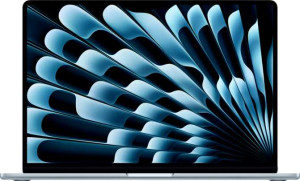
Both laptops ship with identical 32 GB of DDR5 RAM and 2 TB of NVMe flash storage, so day-to-day multitasking and file throughput start on equal footing. The CPU architectures, however, tell quite different stories. The MacBook Air's chip runs performance cores at 4.05 GHz — more than double the Acer's 2 GHz across all cores — which translates directly into snappier single-threaded tasks like compiling code, running scripts, or any workload that cannot be easily parallelized. The Acer counters with 16 CPU threads versus the MacBook's 10, meaning it can theoretically juggle more parallel workstreams simultaneously, which matters for heavily multi-threaded applications.
At the silicon level, the MacBook Air's 3 nm fabrication process is a generation ahead of the Acer's 5 nm. A smaller node generally means better performance-per-watt — the chip does more work while consuming less energy and generating less heat, which is especially relevant given the MacBook's fanless design. The Acer's 5 nm chip is still modern and capable, but it operates at a thermodynamic disadvantage in a passive cooling envelope.
One area where the Acer stands out is its 256 GB maximum memory ceiling versus the MacBook's hard cap of 24 GB. For the vast majority of users the 32 GB both ship with is sufficient, but for memory-intensive professional workflows — large virtual machines, massive datasets, or high-resolution video editing — the Acer's upgrade headroom is a meaningful long-term consideration. On balance, the MacBook Air edges ahead for most users thanks to its significantly faster clock speeds and more advanced process node, but the Acer's higher thread count and expandable memory ceiling keep it competitive for parallelized, memory-heavy workloads.