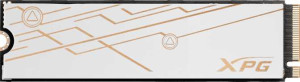
Adata XPG Mars 980 Blade 1TB
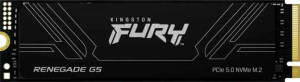
Kingston Fury Renegade G5 1TB

Adata XPG Mars 980 Blade 1TB Kingston Fury Renegade G5 1TB

Overview

Welcome to our in-depth specification comparison between the Adata XPG Mars 980 Blade 1TB and the Kingston Fury Renegade G5 1TB — two high-performance PCIe 5.0 NVMe SSDs built around the same Silicon Motion SM2508 controller. While both drives share a strong common foundation, key battlegrounds in this matchup include sequential and random read/write speeds as well as long-term endurance ratings, which could make a real difference depending on your workload demands.

Common Features

  • Both use the M.2 form factor.
  • Both feature a DRAM cache.
  • Both are NVMe SSDs.
  • Both support NVMe version 2.
  • Both offer 1000GB of internal storage.
  • Both use the Silicon Motion SM2508 controller.
  • Both use TLC NAND flash storage.
  • Both support PCIe version 5.

Main Differences

  • Sequential read speed is 14000 MB/s on Adata XPG Mars 980 Blade 1TB and 14200 MB/s on Kingston Fury Renegade G5 1TB.
  • Random read speed is 1600000 IOPS on Adata XPG Mars 980 Blade 1TB and 2200000 IOPS on Kingston Fury Renegade G5 1TB.
  • Sequential write speed is 10000 MB/s on Adata XPG Mars 980 Blade 1TB and 11000 MB/s on Kingston Fury Renegade G5 1TB.
  • Random write speed is 1650000 IOPS on Adata XPG Mars 980 Blade 1TB and 2150000 IOPS on Kingston Fury Renegade G5 1TB.
  • Terabytes Written (TBW) endurance rating is 740 TBW on Adata XPG Mars 980 Blade 1TB and 1000 TBW on Kingston Fury Renegade G5 1TB.
Specs Comparison
Adata XPG Mars 980 Blade 1TB

Adata XPG Mars 980 Blade 1TB

Kingston Fury Renegade G5 1TB

Kingston Fury Renegade G5 1TB

Read speed:
sequential read speed 14000 MB/s 14200 MB/s
random read speed 1600000 IOPS 2200000 IOPS

Both drives operate at the bleeding edge of current NVMe performance, with sequential read speeds that are essentially identical — 14000 MB/s for the Adata XPG Mars 980 Blade versus 14200 MB/s for the Kingston Fury Renegade G5. That 200 MB/s gap is negligible in practice; no real-world workload will expose a meaningful difference in large sequential transfers like file copies or media streaming.

The more telling differentiator is random read performance. The Fury Renegade G5 pulls ahead with 2,200,000 IOPS compared to the Mars 980 Blade's 1,600,000 IOPS — a 37.5% advantage. Random IOPS governs how a drive handles the small, scattered read requests typical of OS boot, application launches, database queries, and multitasking under load. A higher IOPS ceiling translates directly to snappier system responsiveness in these everyday, latency-sensitive scenarios.

The Kingston Fury Renegade G5 holds a clear edge in this group. While sequential speeds are a practical tie, the substantially higher random read IOPS gives it a meaningful advantage for workloads that stress the drive with concurrent, unpredictable access patterns — which describes most real computing environments.

Write speed:
sequential write speed 10000 MB/s 11000 MB/s
random write speed 1650000 IOPS 2150000 IOPS

Write performance tells a different story than reads for these two drives. The Kingston Fury Renegade G5 posts a sequential write speed of 11,000 MB/s against the Adata XPG Mars 980 Blade's 10,000 MB/s — a 10% gap that becomes relevant when pushing large volumes of data to the drive, such as writing game installations, video project assets, or large backup archives.

On the random write side, the Fury Renegade G5 again leads with 2,150,000 IOPS versus 1,650,000 IOPS for the Mars 980 Blade — roughly a 30% advantage. Random write IOPS directly impacts how well a drive handles sustained mixed workloads: think virtual machine storage, active scratch disks for video editing, or any environment where data is being written in small, non-sequential bursts simultaneously. A higher ceiling here reduces write-induced latency spikes under pressure.

Across both write metrics, the Kingston Fury Renegade G5 holds a consistent and meaningful lead. The gap is more pronounced in random writes than sequential, making the Fury Renegade G5 the stronger choice for write-intensive, latency-sensitive workloads — while the Mars 980 Blade remains competitive for lighter, more sequential use cases.

General info:
type M2 M2
SSD cache DRAM cache DRAM cache
Is an NVMe SSD
NVMe version 2 2
internal storage 1000GB 1000GB
release date June 2025 April 2025
controller Silicon Motion SM2508 Silicon Motion SM2508
SSD storage type TLC TLC
PCI Express (PCIe) version 5 5
Controller channels 8 8
Terabytes Written (TBW) 740 1000
MTBF 2million hours 2million hours
warranty period 5 years 5 years
Has an integrated heatsink
has RGB lighting

At the architectural level, these two drives are remarkably alike. Both are M.2 NVMe SSDs built on PCIe 5.0, powered by the identical Silicon Motion SM2508 controller with 8 channels, backed by DRAM cache, and using TLC NAND flash. Shared MTBF of 2 million hours and a 5-year warranty round out a foundation that is, for all practical purposes, a mirror image between the two.

The single meaningful differentiator in this group is endurance: the Kingston Fury Renegade G5 is rated for 1,000 TBW versus 740 TBW for the Adata XPG Mars 980 Blade — a 35% advantage. TBW (Terabytes Written) is the manufacturer's guaranteed write endurance over the drive's lifetime. For a typical consumer writing 20–30GB per day, both figures represent well over a decade of use, so neither drive is short on longevity for general workloads. However, for content creators, database users, or anyone running write-heavy workflows, the higher TBW ceiling on the Fury Renegade G5 provides a more comfortable long-term margin.

Given how thoroughly matched these drives are on architecture, the Kingston Fury Renegade G5 takes a narrow but clear edge in this group on endurance alone. For most users it won't be a deciding factor, but for those who stress their storage regularly, it is the more durable long-term investment based strictly on the provided data.

Comparison Summary & Verdict

Both the Adata XPG Mars 980 Blade 1TB and the Kingston Fury Renegade G5 1TB are formidable PCIe 5.0 NVMe SSDs sharing identical foundations — the same M.2 form factor, Silicon Motion SM2508 controller, TLC NAND, and DRAM cache. However, the differences become clear when scrutinizing the finer specs. The Kingston Fury Renegade G5 1TB pulls ahead with a higher sequential write speed of 11000 MB/s, significantly stronger random read and write IOPS (2200000 and 2150000 respectively), and a notably superior endurance rating of 1000 TBW. The Adata XPG Mars 980 Blade 1TB remains a compelling choice for users seeking excellent PCIe 5.0 performance, while the Kingston is better suited for those who push drives hard and demand greater long-term durability and peak throughput.

Adata XPG Mars 980 Blade 1TB
Buy Adata XPG Mars 980 Blade 1TB if...

Buy the Adata XPG Mars 980 Blade 1TB if you want a capable PCIe 5.0 NVMe SSD with strong sequential and random performance at what may be a more accessible price point.

Kingston Fury Renegade G5 1TB
Buy Kingston Fury Renegade G5 1TB if...

Buy the Kingston Fury Renegade G5 1TB if you need the highest possible random read and write speeds, faster sequential writes, and a significantly higher endurance rating of 1000 TBW for demanding workloads.