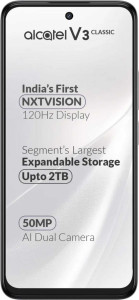
At the silicon level, the gap is tangible. The Alcatel runs on the MediaTek Dimensity 6300, a 6 nm chip, while the Oukitel steps up to the Dimensity 7300 built on a 4 nm process. A smaller node generally translates to better power efficiency and more headroom for sustained performance. The Geekbench 6 scores reflect this: the Oukitel leads in both single-core (1026 vs 782) and multi-core (2932 vs 2012) results, indicating faster app launches, snappier UI responsiveness, and better handling of parallel workloads like background sync or multitasking.
Memory tells an equally telling story. The Alcatel ships with 6GB of LPDDR4 RAM at 2133 MHz, whereas the Oukitel provides 16GB of LPDDR5 RAM at 6400 MHz. The bandwidth jump from DDR4 to DDR5 at nearly triple the clock speed means the Oukitel's CPU and GPU can feed on data far faster, reducing bottlenecks in demanding tasks. Practically, this means more apps stay resident in memory, heavy games load faster, and the device is less likely to stutter under load. Storage follows the same pattern — 512GB versus 128GB — giving the Oukitel substantially more room for media, apps, and files without requiring cloud offloading.
Across every measurable performance dimension — processing speed, memory bandwidth, storage capacity, and fabrication efficiency — the Oukitel WP100 Titan holds a decisive and consistent advantage. The Alcatel is competent for everyday tasks, but users who multitask heavily, play games, or work with large files will notice the Oukitel's superiority in real-world use.