Alcatel V3 Ultra 5G
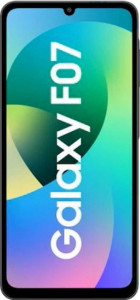
Samsung Galaxy F07

Alcatel V3 Ultra 5G Samsung Galaxy F07

Overview

Welcome to our in-depth spec comparison between the Alcatel V3 Ultra 5G and the Samsung Galaxy F07. Both phones share a solid foundation — IP54 water resistance, a multi-lens camera, and fast charging — but they diverge significantly when it comes to display sharpness, connectivity options, and everyday performance. Read on as we break down every key spec to help you decide which device truly fits your needs.

Common Features

  • Both phones are water resistant with an IP54 ingress protection rating.
  • Neither phone has a rugged build.
  • Neither phone can be folded.
  • Both phones feature an LCD IPS display type.
  • Neither phone has branded damage-resistant glass.
  • Neither phone supports HDR10, HDR10+, or Dolby Vision.
  • Neither phone has an Always-On Display or a secondary screen.
  • Both phones have a touchscreen.
  • Both phones use a 6 nm semiconductor and support 64-bit processing.
  • Both phones have an integrated LTE modem and integrated graphics.
  • Both phones use big.LITTLE technology with HMP and 8 CPU threads.
  • Both phones have a GPU clock speed of 950 MHz.
  • Both phones feature a multi-lens main camera and record video at 1080p 30fps.
  • Neither phone has built-in optical image stabilization or a BSI sensor.
  • Both phones have a CMOS sensor and support continuous autofocus when recording.
  • Both phones include clipboard warnings and location privacy options.
  • Both phones offer camera and microphone privacy options, theme customization, and the ability to block app tracking.
  • Neither phone supports wireless charging, but both support fast charging.
  • Both phones have a non-removable rechargeable battery with a battery level indicator.
  • Both phones include a 3.5mm audio jack and an FM radio.
  • Neither phone supports aptX, LDAC, aptX HD, aptX Adaptive, aptX Lossless.
  • Both phones have Bluetooth 5.3, NFC, a fingerprint scanner, USB Type-C with USB 2.0, and an external memory slot.
  • Neither phone supports emergency SOS via satellite or crash detection.
  • Both phones have a video light but lack a sapphire glass or curved display.

Main Differences

  • Weight is 196 g on Alcatel V3 Ultra 5G and 184 g on Samsung Galaxy F07.
  • Thickness is 8 mm on Alcatel V3 Ultra 5G and 7.6 mm on Samsung Galaxy F07.
  • Width is 75.5 mm on Alcatel V3 Ultra 5G and 77.4 mm on Samsung Galaxy F07.
  • Screen size is 6.8″ on Alcatel V3 Ultra 5G and 6.7″ on Samsung Galaxy F07.
  • Pixel density is 395 ppi on Alcatel V3 Ultra 5G and 262 ppi on Samsung Galaxy F07.
  • Resolution is 1080 x 2460 px on Alcatel V3 Ultra 5G and 720 x 1600 px on Samsung Galaxy F07.
  • Refresh rate is 120Hz on Alcatel V3 Ultra 5G and 90Hz on Samsung Galaxy F07.
  • Internal storage is 128GB on Alcatel V3 Ultra 5G and 64GB on Samsung Galaxy F07.
  • RAM is 8GB on Alcatel V3 Ultra 5G and 4GB on Samsung Galaxy F07.
  • The chipset is MediaTek Dimensity 6300 on Alcatel V3 Ultra 5G and Mediatek Helio G99 on Samsung Galaxy F07.
  • CPU speed is 2 x 2.4 & 6 x 2 GHz on Alcatel V3 Ultra 5G and 2 x 2.2 & 6 x 2 GHz on Samsung Galaxy F07.
  • Geekbench 6 multi-core score is 2012 on Alcatel V3 Ultra 5G and 1979 on Samsung Galaxy F07.
  • Geekbench 6 single-core score is 782 on Alcatel V3 Ultra 5G and 729 on Samsung Galaxy F07.
  • RAM speed is 2133 MHz on Alcatel V3 Ultra 5G and 4266 MHz on Samsung Galaxy F07.
  • DirectX version is DirectX 12 on Alcatel V3 Ultra 5G and DirectX 11 on Samsung Galaxy F07.
  • Main camera megapixels are 108 & 8 & 2 MP on Alcatel V3 Ultra 5G and 50 & 2 MP on Samsung Galaxy F07.
  • Front camera is 32MP on Alcatel V3 Ultra 5G and 8MP on Samsung Galaxy F07.
  • Android version is Android 14 on Alcatel V3 Ultra 5G and Android 15 on Samsung Galaxy F07.
  • App offloading is available on Samsung Galaxy F07 but not on Alcatel V3 Ultra 5G.
  • Battery capacity is 5010 mAh on Alcatel V3 Ultra 5G and 5000 mAh on Samsung Galaxy F07.
  • Charging speed is 33W on Alcatel V3 Ultra 5G and 25W on Samsung Galaxy F07.
  • Stereo speakers are present on Alcatel V3 Ultra 5G but not available on Samsung Galaxy F07.
  • 5G support is available on Alcatel V3 Ultra 5G but not on Samsung Galaxy F07.
  • Download speed is 3300 MBits/s on Alcatel V3 Ultra 5G and 650 MBits/s on Samsung Galaxy F07.
  • SIM configuration is 1 SIM plus 1 eSIM on Alcatel V3 Ultra 5G and 2 physical SIM cards on Samsung Galaxy F07.
  • A gyroscope is present on Alcatel V3 Ultra 5G but not available on Samsung Galaxy F07.
  • A compass is present on Alcatel V3 Ultra 5G but not available on Samsung Galaxy F07.
  • A barometer is present on Alcatel V3 Ultra 5G but not available on Samsung Galaxy F07.
  • A stylus is included with Alcatel V3 Ultra 5G but not with Samsung Galaxy F07.
  • An e-paper display is present on Alcatel V3 Ultra 5G but not available on Samsung Galaxy F07.
Specs Comparison
Alcatel V3 Ultra 5G

Alcatel V3 Ultra 5G

Samsung Galaxy F07

Samsung Galaxy F07

Design:
water resistance Water resistant Water resistant
weight 196 g 184 g
thickness 8 mm 7.6 mm
width 75.5 mm 77.4 mm
height 167.6 mm 167.4 mm
volume 101.2304 cm³ 98.471376 cm³
Ingress Protection (IP) rating IP54 IP54
has a rugged build
can be folded

In terms of overall dimensions, these two phones are nearly identical in height — 167.6 mm vs 167.4 mm — making them essentially the same size to hold vertically. The real differences emerge in thickness and weight. The Samsung Galaxy F07 is measurably slimmer at 7.6 mm versus 8 mm for the Alcatel V3 Ultra 5G, and it also comes in lighter at 184 g compared to 196 g. That 12-gram difference may sound trivial, but over a full day of use — scrolling, calling, gaming — a lighter phone causes noticeably less fatigue, especially for one-handed use.

Both devices share an IP54 rating, which means they offer the same level of protection: resistance to dust ingress and splashes from any direction. This is a practical, real-world feature that protects against rain and accidental spills, though it does not qualify either phone for submersion. Neither device has a rugged build or a foldable form factor, so they sit squarely in the standard slab category.

Overall, the Galaxy F07 holds a modest but genuine edge in design ergonomics — it is lighter, thinner, and fractionally more compact by volume. For users who prioritize a more comfortable, pocketable device, this advantage is meaningful. The Alcatel V3 Ultra 5G is not far behind, but the F07 is the more refined form factor of the two based strictly on these specs.

Display:
Display type LCD, IPS LCD, IPS
screen size 6.8" 6.7"
pixel density 395 ppi 262 ppi
resolution 1080 x 2460 px 720 x 1600 px
refresh rate 120Hz 90Hz
has branded damage-resistant glass
supports HDR10
supports HDR10+
Always-On Display
supports Dolby Vision
Has a secondary screen
has a touch screen

Both phones use an LCD IPS panel, so neither offers the deeper blacks or punchier contrast of an AMOLED display. Within that shared constraint, however, the gap between them is significant. The Alcatel V3 Ultra 5G delivers a 1080 x 2460 px resolution at 395 ppi, while the Galaxy F07 tops out at 720 x 1600 px and just 262 ppi. That is a substantial difference in sharpness — at 262 ppi, individual pixels become faintly visible to the naked eye during everyday tasks like reading text or browsing, whereas 395 ppi is firmly in the ″retina-class″ range where the image appears crisp at normal viewing distances.

The motion smoothness story follows the same pattern. The V3 Ultra 5G's 120Hz refresh rate makes scrolling, animations, and casual gaming noticeably more fluid compared to the F07's 90Hz panel. While 90Hz is still a meaningful step above a standard 60Hz display, the 120Hz experience feels tangibly more responsive — a difference most users will notice daily rather than only in benchmarks.

The Alcatel V3 Ultra 5G holds a clear and decisive advantage in this category. Its higher resolution and faster refresh rate combine to produce a materially sharper and smoother visual experience on a screen that is only marginally larger. For any user who spends significant time reading, streaming, or gaming on their phone, the V3 Ultra 5G's display is the stronger choice by a wide margin.

Performance:
internal storage 128GB 64GB
RAM 8GB 4GB
Chipset (SoC) name MediaTek Dimensity 6300 Mediatek Helio G99
GPU name Arm Mali-G57 MC2 Mali G57
CPU speed 2 x 2.4 & 6 x 2 GHz 2 x 2.2 & 6 x 2 GHz
Geekbench 6 result (multi) 2012 1979
Geekbench 6 result (single) 782 729
GPU clock speed 950 MHz 950 MHz
Has integrated LTE
RAM speed 2133 MHz 4266 MHz
semiconductor size 6 nm 6 nm
Supports 64-bit
DirectX version DirectX 12 DirectX 11
Has integrated graphics
Uses big.LITTLE technology
CPU threads 8 threads 8 threads
Uses HMP
maximum memory bandwidth 17.07 GB/s 17.1 GB/s
maximum memory amount 12GB 12GB
DDR memory version 4 4

On raw CPU performance, these two phones are remarkably close. The Alcatel V3 Ultra 5G scores 2012 in Geekbench 6 multi-core and 782 single-core, while the Samsung Galaxy F07 posts 1979 multi-core and 729 single-core. The margin is narrow enough that neither phone will feel meaningfully faster in everyday tasks like launching apps, browsing, or streaming. Both chips are built on a 6 nm process and use the same big.LITTLE 8-thread architecture, which explains the comparable efficiency and thermal behavior.

Where the V3 Ultra 5G pulls ahead is in memory and storage. Its 8 GB of RAM versus the F07's 4 GB is a practical difference that matters for multitasking — more RAM means more apps stay loaded in the background without needing to reload, and the phone handles heavier workloads without slowdowns. Similarly, 128 GB of internal storage doubles the F07's 64 GB, which is a significant advantage for users who store media, games, or offline content locally. The V3 Ultra 5G also supports DirectX 12 compared to the F07's DirectX 11, offering a broader base of compatibility for graphically demanding applications.

Despite the F07's notably higher RAM speed of 4266 MHz versus 2133 MHz, this advantage does not translate into a measurable real-world edge given the near-identical benchmark scores. The Alcatel V3 Ultra 5G is the stronger performer in this category — not because of its processor, but because of its substantially more generous RAM and storage configuration, which will have a more tangible day-to-day impact over the life of the device.

Cameras:
megapixels (main camera) 108 & 8 & 2 MP 50 & 2 MP
wide aperture (main camera) 1.8 & 2.2 & 2.4f 2.4 & 1.8f
Has a dual-lens (or multi-lens) main camera
megapixels (front camera) 32MP 8MP
has built-in optical image stabilization
video recording (main camera) 1080 x 30 fps 1080 x 30 fps
Has a dual-tone LED flash
number of flash LEDs 1 1
has a BSI sensor
has a CMOS sensor
has continuous autofocus when recording movies
Has phase-detection autofocus for photos
supports slow-motion video recording
has a built-in HDR mode
has manual exposure
has a flash
optical zoom 0x 0x
has manual ISO
has a serial shot mode
has manual focus
has a front camera
Has laser autofocus
Shoots 360° panorama
has manual white balance
shoots raw
has touch autofocus
has manual shutter speed
can create panoramas in-camera
wide aperture (front camera) 2f 2f
Has timelapse function
Has a front-facing LED flash
has a dual-lens (or multi-lens) front camera
supports HDR10 recording
supports Dolby Vision recording
has a front-facing camera under the display
Has a RGB LED flash
has 3D photo/video recording capabilities

The most striking gap between these two phones is in camera resolution. The Alcatel V3 Ultra 5G leads with a triple rear system headlined by a 108 MP main sensor, complemented by an 8 MP and a 2 MP lens, while the Galaxy F07 offers a dual setup with a 50 MP primary and a 2 MP auxiliary. Higher megapixel counts enable more detail to be captured and give users greater flexibility to crop into shots without losing clarity — a meaningful advantage for anyone who frequently shoots and edits photos on the phone itself. The V3 Ultra 5G's additional 8 MP lens also extends compositional versatility beyond what the F07's two-camera array can offer.

The selfie camera gap is equally pronounced. The V3 Ultra 5G's 32 MP front camera is a significant step up from the Galaxy F07's 8 MP shooter, and for users who prioritize video calls, social media, or self-portraits, this difference will be immediately visible in the level of detail and crispness of the resulting images. Both phones share an identical front aperture of f/2.0, so light intake is equal — the resolution advantage of the V3 Ultra 5G stands on its own.

Beyond resolution, the two phones are functionally identical in this category: both top out at 1080p at 30 fps for video, lack optical image stabilization, and share the same set of manual controls and shooting modes. Neither shoots RAW or offers optical zoom. Given that the shared feature set is so uniform, the Alcatel V3 Ultra 5G holds a clear advantage in cameras, driven entirely by its substantially higher resolution on both the front and rear systems.

Operating system:
Android version Android 14 Android 15
has clipboard warnings
has location privacy options
has camera/microphone privacy options
has Mail Privacy Protection
has theme customization
can block app tracking
blocks cross-site tracking
has on-device machine learning
has notification permissions
has media picker
Can play games while they download
has dark mode
has Wi-Fi password sharing
has battery health check
has an extra dim mode
has focus modes
has dynamic theming
can offload apps
Has customizable notifications
has Live Text
has full-page screenshots
supports split screen
gets direct OS updates
has PiP
Can be used as a PC
Has sharing intents
has a child lock
Supports widgets
Is free and open source
Has offline voice recognition
has voice commands
Tracks the current position of a mobile device
is a multi-user system
has Quick Start

The software story between these two phones is nearly identical — with one meaningful distinction at the top. The Samsung Galaxy F07 ships with Android 15, one full version ahead of the Alcatel V3 Ultra 5G's Android 14. A newer Android version brings incremental improvements in privacy controls, performance optimizations, and system-level refinements. More practically, starting on a newer OS version means the F07 will remain current for longer before reaching the end of its supported software lifecycle — relevant for users who plan to keep their device for several years.

Across the rest of the feature set, the two phones are virtually indistinguishable. Both offer the same privacy toolkit, the same productivity features like split-screen and picture-in-picture, dynamic theming, customizable notifications, and offline voice recognition. One minor additional capability on the F07 side is app offloading — the ability to free up storage by removing an app's data while retaining its icon and settings for reinstallation. It is a niche feature, but useful on lower-storage devices.

The Samsung Galaxy F07 takes a narrow but clear edge here. The newer Android version is the primary driver of that conclusion, and the app offloading support is a small bonus on top. Neither phone receives direct OS updates, so the version you start with matters more than it otherwise would — and starting one generation ahead is a tangible advantage for long-term software relevance.

Battery:
battery power 5010 mAh 5000 mAh
has wireless charging
Supports fast charging
charging speed 33W 25W
has a removable battery
has a battery level indicator
has a rechargeable battery

Battery capacity is essentially a wash here — 5010 mAh for the Alcatel V3 Ultra 5G versus 5000 mAh for the Samsung Galaxy F07. A 10 mAh difference is negligible in practice and will have zero perceptible impact on how long either phone lasts between charges. Both sit comfortably in the large-battery tier, well-suited to all-day or even two-day use for moderate users.

The more meaningful differentiator is charging speed. The V3 Ultra 5G supports 33W fast charging compared to the F07's 25W. While neither is at the cutting edge of fast-charging technology, the gap is real: a 33W charger will meaningfully reduce the time needed to go from low battery to a usable charge level, which matters for users with busy schedules who can only plug in for short windows. Rough estimates suggest the V3 Ultra 5G could reach a full charge noticeably faster in daily use scenarios. Neither phone offers wireless charging, so the cable-based speed advantage of the V3 Ultra 5G is the only differentiator in replenishment.

The Alcatel V3 Ultra 5G takes a modest but practical edge in this category. The battery capacities are functionally identical, but the faster 33W charging gives it a real-world convenience advantage over the F07's 25W — particularly for users who rely on quick top-ups throughout the day.

Audio:
has a socket for a 3.5 mm audio jack
has stereo speakers
has aptX
has LDAC
has aptX HD
has aptX Adaptive
has aptX Lossless
Has a radio

Audio is where these two phones diverge most cleanly. The Alcatel V3 Ultra 5G features stereo speakers, while the Samsung Galaxy F07 is limited to a single mono speaker. For media consumption — streaming video, gaming, or listening to music without headphones — stereo output creates a noticeably wider and more immersive soundstage. A mono speaker, by contrast, produces sound from one direction only, which flattens the audio experience considerably during landscape viewing or hands-free listening.

Where they converge is on the remaining audio credentials, and both are equally modest. Neither phone supports any premium Bluetooth audio codec — no aptX, no LDAC, no aptX HD. This means that wireless listening quality is capped at standard Bluetooth audio for both devices. The shared inclusion of a 3.5 mm headphone jack is a welcome practical feature on both, allowing users to plug in wired headphones without an adapter — something increasingly uncommon in this segment. Both phones also include a built-in FM radio, a useful offline utility that many competitors drop.

The Alcatel V3 Ultra 5G has a clear advantage in this category, and it comes down entirely to the presence of stereo speakers. For a device used heavily for content consumption, that single hardware difference has a disproportionately large impact on the daily listening experience compared to any of the specs the two phones share.

Connectivity & Features:
release date May 2025 October 2025
has 5G support
Wi-Fi version Wi-Fi 5 (802.11ac), Wi-Fi 4 (802.11n) Wi-Fi 4 (802.11n), Wi-Fi 5 (802.11ac)
SIM cards 1 SIM, 1 eSIM 2 SIM
Bluetooth version 5.3 5.3
has an external memory slot
Has USB Type-C
USB version 2 2
has NFC
download speed 3300 MBits/s 650 MBits/s
Has a fingerprint scanner
has emergency SOS via satellite
has crash detection
is DLNA-certified
has a gyroscope
supports ANT+
Has a heart rate monitor
has GPS
has a compass
supports Wi-Fi
Has an infrared sensor
has an accelerometer
has a cellular module
Has a barometer
has an HDMI output
Uses 3D facial recognition
Has an iris scanner
Stylus included
supports Galileo
Has motion tracking
Has optical tracking
Has a built-in projector

The single biggest connectivity gap in this category is cellular generation. The Alcatel V3 Ultra 5G supports 5G, enabling download speeds up to 3300 Mbits/s, while the Samsung Galaxy F07 is a 4G-only device capped at 650 Mbits/s. In areas with 5G coverage, this translates to dramatically faster mobile data — for streaming, downloading large files, or future-proofing the device as 5G networks continue to expand. For users in markets where 5G is already well deployed, this is a consequential difference that will compound in relevance over the life of the phone.

The V3 Ultra 5G also edges ahead on SIM flexibility and bundled extras. It offers a hybrid 1 SIM + 1 eSIM configuration, which suits frequent travelers or users who prefer a digital secondary line without sacrificing the physical card slot. The Galaxy F07 counters with dual physical SIM slots — a practical choice for users who rely on two active SIM cards simultaneously and have no interest in eSIM. Beyond SIM setup, the V3 Ultra 5G includes a gyroscope, compass, and barometer — sensors absent on the F07 — which broaden its utility for navigation apps, fitness tracking, and augmented reality use cases. It also ships with a stylus, an uncommon inclusion at this price tier that adds a note-taking and precision input option the F07 simply does not have.

The Alcatel V3 Ultra 5G holds a comprehensive and convincing advantage in this category. The 5G capability alone would tip the scales, but the additional sensors and included stylus make the gap wider still. The only meaningful trade-off is the lack of dual physical SIM slots, which matters for a specific subset of users — but for most, the V3 Ultra 5G's connectivity and features package is substantially richer.

Miscellaneous:
has a video light
Has sapphire glass display
Has a curved display
Has an e-paper display

This category is lean on specs, but it contains one genuinely distinctive feature. The Alcatel V3 Ultra 5G includes an e-paper display, which the Samsung Galaxy F07 does not. E-paper panels — typically found on the rear of a device in dual-screen configurations — use near-zero power to hold a static image, making them ideal for displaying notifications, time, widgets, or custom artwork without meaningfully draining the battery. It is a niche but practical feature that adds a layer of utility and personalization not found on conventional slab phones.

Both phones share a video light and neither features sapphire glass or a curved display, so outside of the e-paper panel, there is nothing to separate them in this group.

The Alcatel V3 Ultra 5G takes the edge here by virtue of its e-paper display — a unique hardware addition that the Galaxy F07 simply lacks. For users who appreciate glanceable information or low-power ambient display functionality, this is a meaningful differentiator, even if it falls outside the core decision criteria for most buyers.

Comparison Summary & Verdict

After examining every specification, a clear picture emerges for each device. The Alcatel V3 Ultra 5G is the stronger all-around performer for users who demand more: its 1080p 120Hz display, 8GB RAM, 128GB storage, 5G connectivity, stereo speakers, and included stylus make it a feature-packed choice for power users and multimedia enthusiasts. The Samsung Galaxy F07, on the other hand, runs Android 15 out of the box, offers dual physical SIM support, and comes in a slightly lighter and thinner body — making it a sensible pick for users who value a clean, up-to-date software experience and straightforward dual-SIM usability. Neither phone supports wireless charging or OIS, so both share some compromises. Ultimately, your choice comes down to raw features versus simplicity.

Alcatel V3 Ultra 5G
Buy Alcatel V3 Ultra 5G if...

Buy the Alcatel V3 Ultra 5G if you want a sharper 1080p 120Hz display, 5G support, more RAM and storage, stereo speakers, and an included stylus for a richer all-round experience.

Samsung Galaxy F07
Buy Samsung Galaxy F07 if...

Buy the Samsung Galaxy F07 if you prefer a lighter phone running the latest Android 15, dual physical SIM support, and a simpler no-frills experience at a likely lower price point.