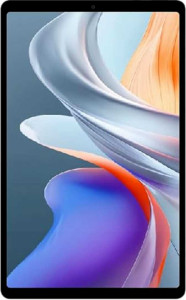
Alldocube iPlay 70 Mini Ultra
Alldocube iPlay 70S

Alldocube iPlay 70 Mini Ultra Alldocube iPlay 70S

Overview

Welcome to our in-depth spec comparison between the Alldocube iPlay 70 Mini Ultra and the Alldocube iPlay 70S. These two Android tablets from the same manufacturer take notably different approaches to size, performance, and connectivity. Key battlegrounds include display quality and screen size, raw processing power, camera capabilities, and the breadth of connectivity options on offer. Read on to see how every specification stacks up side by side.

Common Features

  • Both tablets weigh 335 g.
  • Neither tablet includes a stylus.
  • Neither tablet has a detachable keyboard.
  • Neither tablet has a backlit keyboard.
  • Neither tablet offers water resistance.
  • Neither tablet has tilt sensitivity.
  • Both tablets use an IPS LCD display type.
  • Neither tablet has branded damage-resistant glass.
  • Neither tablet supports HDR10.
  • Both tablets have a touch screen.
  • Neither tablet has a sapphire glass display.
  • Neither tablet has an e-paper display.
  • Both tablets support expandable storage via an external memory slot.
  • Both tablets support 64-bit processing.
  • Both tablets use big.LITTLE CPU technology.
  • Both tablets have integrated graphics.
  • Both tablets have an 8-thread CPU.
  • Both tablets have a front camera.
  • Neither tablet can create panoramas in-camera.
  • Neither tablet supports slow-motion video recording.
  • Both tablets have touch autofocus.
  • Neither tablet has optical zoom.
  • Neither tablet has a BSI sensor.
  • Both tablets have manual white balance.
  • Both tablets have a CMOS sensor.
  • Neither tablet supports aptX, aptX HD, LDAC, aptX Low Latency, aptX Adaptive, or aptX Lossless audio codecs.
  • Both tablets have stereo speakers.
  • Neither tablet supports wireless charging.
  • Both tablets have a battery level indicator.
  • Both tablets have a rechargeable, non-removable battery.
  • Both tablets support Wi-Fi 4 (802.11n), Wi-Fi 5 (802.11ac), and Wi-Fi 6 (802.11ax).
  • Both tablets use DDR5 memory.
  • Both tablets support multithreading.
  • Both tablets have on-device machine learning.
  • Both tablets have clipboard warnings.
  • Both tablets have location privacy options.
  • Both tablets have camera and microphone privacy options.
  • Both tablets can block app tracking.
  • Neither tablet blocks cross-site tracking.
  • Both tablets support split screen.

Main Differences

  • Thickness is 7.9 mm on Alldocube iPlay 70 Mini Ultra and 8.7 mm on Alldocube iPlay 70S.
  • Width is 208.2 mm on Alldocube iPlay 70 Mini Ultra and 246.15 mm on Alldocube iPlay 70S.
  • Height is 129.6 mm on Alldocube iPlay 70 Mini Ultra and 172.08 mm on Alldocube iPlay 70S.
  • Volume is 213.163488 cm³ on Alldocube iPlay 70 Mini Ultra and 368.5101804 cm³ on Alldocube iPlay 70S.
  • Screen size is 8.8″ on Alldocube iPlay 70 Mini Ultra and 10.5″ on Alldocube iPlay 70S.
  • Resolution is 2560 x 1600 px on Alldocube iPlay 70 Mini Ultra and 1920 x 1280 px on Alldocube iPlay 70S.
  • Pixel density is 343 ppi on Alldocube iPlay 70 Mini Ultra and 220 ppi on Alldocube iPlay 70S.
  • Internal storage is 256 GB on Alldocube iPlay 70 Mini Ultra and 128 GB on Alldocube iPlay 70S.
  • RAM is 12 GB on Alldocube iPlay 70 Mini Ultra and 4 GB on Alldocube iPlay 70S.
  • The chipset is Qualcomm Snapdragon 7 Plus Gen 3 on Alldocube iPlay 70 Mini Ultra and Allwinner A733 on Alldocube iPlay 70S.
  • CPU speed is 1 x 2.8 & 3 x 2.6 & 4 x 1.9 GHz on Alldocube iPlay 70 Mini Ultra and 2 x 2 & 6 x 1.79 GHz on Alldocube iPlay 70S.
  • Semiconductor size is 4 nm on Alldocube iPlay 70 Mini Ultra and 12 nm on Alldocube iPlay 70S.
  • Integrated LTE is present on Alldocube iPlay 70 Mini Ultra but not available on Alldocube iPlay 70S.
  • Maximum memory amount is 24 GB on Alldocube iPlay 70 Mini Ultra and 16 GB on Alldocube iPlay 70S.
  • Android version is Android 14 on Alldocube iPlay 70 Mini Ultra and Android 15 on Alldocube iPlay 70S.
  • Main camera resolution is 13 MP on Alldocube iPlay 70 Mini Ultra and 5 MP on Alldocube iPlay 70S.
  • Front camera resolution is 5 MP on Alldocube iPlay 70 Mini Ultra and 2 MP on Alldocube iPlay 70S.
  • A camera flash is present on Alldocube iPlay 70 Mini Ultra but not available on Alldocube iPlay 70S.
  • Built-in HDR mode is available on Alldocube iPlay 70 Mini Ultra but not on Alldocube iPlay 70S.
  • Manual ISO is supported on Alldocube iPlay 70 Mini Ultra but not on Alldocube iPlay 70S.
  • A video light is present on Alldocube iPlay 70 Mini Ultra but not available on Alldocube iPlay 70S.
  • A 3.5 mm audio jack is present on Alldocube iPlay 70S but not available on Alldocube iPlay 70 Mini Ultra.
  • A radio is present on Alldocube iPlay 70 Mini Ultra but not available on Alldocube iPlay 70S.
  • Battery capacity is 7300 mAh on Alldocube iPlay 70 Mini Ultra and 6000 mAh on Alldocube iPlay 70S.
  • Fast charging is supported on Alldocube iPlay 70 Mini Ultra but not on Alldocube iPlay 70S.
  • App offloading is available on Alldocube iPlay 70S but not on Alldocube iPlay 70 Mini Ultra.
  • Battery health check is available on Alldocube iPlay 70S but not on Alldocube iPlay 70 Mini Ultra.
  • A cellular module is present on Alldocube iPlay 70 Mini Ultra but not on Alldocube iPlay 70S.
  • GPS is present on Alldocube iPlay 70 Mini Ultra but not available on Alldocube iPlay 70S.
  • USB version is 3.2 on Alldocube iPlay 70 Mini Ultra and 2.0 on Alldocube iPlay 70S.
  • Bluetooth version is 5.4 on Alldocube iPlay 70 Mini Ultra and 5.0 on Alldocube iPlay 70S.
  • A gyroscope is present on Alldocube iPlay 70 Mini Ultra but not available on Alldocube iPlay 70S.
  • A compass is present on Alldocube iPlay 70 Mini Ultra but not available on Alldocube iPlay 70S.
  • Galileo navigation support is present on Alldocube iPlay 70 Mini Ultra but not on Alldocube iPlay 70S.
  • Voice commands are supported on Alldocube iPlay 70 Mini Ultra but not on Alldocube iPlay 70S.
Specs Comparison
Alldocube iPlay 70 Mini Ultra

Alldocube iPlay 70 Mini Ultra

Alldocube iPlay 70S

Alldocube iPlay 70S

Design:
weight 335 g 335 g
thickness 7.9 mm 8.7 mm
width 208.2 mm 246.15 mm
height 129.6 mm 172.08 mm
volume 213.163488 cm³ 368.5101804 cm³
Stylus included
Has a detachable keyboard
Has a backlit keyboard
water resistance None None
Has tilt sensitivity

The most defining design difference between these two tablets is their physical footprint. The iPlay 70 Mini Ultra measures 208.2 × 129.6 mm with a volume of roughly 213 cm³, placing it firmly in the compact, one-hand-friendly mini tablet category. The iPlay 70S, at 246.15 × 172.08 mm and a volume of approximately 368.5 cm³, is a substantially larger slate — nearly 73% greater in volume — better suited for media consumption or productivity tasks where screen real estate matters more than portability.

What makes the weight figure striking is that both devices come in at exactly 335 g. For the iPlay 70 Mini Ultra, that mass is distributed across a much smaller chassis, which will likely make it feel denser and more solid in hand. For the iPlay 70S, the same weight spread over a larger body means it will feel noticeably lighter per unit of surface area — reducing fatigue during extended two-handed use. The Mini Ultra also edges ahead on slimness at 7.9 mm versus 8.7 mm, a modest but tactile difference when sliding the device into a bag or pocket.

Neither tablet offers water resistance, a stylus, or any keyboard accessory, so those axes do not differentiate them. The clear design edge goes to the iPlay 70 Mini Ultra for users who prioritize portability and one-handed grip, while the iPlay 70S is the better fit for those who want a larger canvas and do not mind the bigger form factor.

Display:
screen size 8.8" 10.5"
resolution 2560 x 1600 px 1920 x 1280 px
pixel density 343 ppi 220 ppi
Display type IPS, LCD IPS, LCD
has branded damage-resistant glass
supports HDR10
has a touch screen
Has sapphire glass display
supports HDR10+
Has an e-paper display

Screen size and pixel density tell very different stories here. The iPlay 70S offers a larger 10.5″ panel, which translates to more comfortable reading, easier multitasking, and a more immersive media experience. However, size alone does not tell the full picture — the iPlay 70S resolves at only 220 ppi, which is functional but falls short of what most users would consider a sharp, crisp display at typical tablet viewing distances.

The iPlay 70 Mini Ultra flips the advantage on sharpness: its 8.8″ screen drives a 2560 × 1600 resolution, yielding a notably dense 343 ppi. That is a difference of over 120 pixels per inch, which is immediately perceptible — text renders more cleanly, fine UI elements look crisper, and images appear more detailed. For reading, note-taking, or any use case where visual fidelity matters on a smaller canvas, this is a meaningful edge.

Both panels are IPS LCD technology with no HDR support and no damage-resistant glass, so neither holds an advantage in color science, contrast ceiling, or durability coating. The conclusion depends on the user's priority: the iPlay 70S wins on raw screen real estate, but the iPlay 70 Mini Ultra holds a clear display quality edge thanks to its significantly higher pixel density.

Performance:
internal storage 256GB 128GB
RAM 12GB 4GB
Chipset (SoC) name Qualcomm Snapdragon 7 Plus Gen 3 Allwinner A733
CPU speed 1 x 2.8 & 3 x 2.6 & 4 x 1.9 GHz 2 x 2 & 6 x 1.79 GHz
has an external memory slot
semiconductor size 4 nm 12 nm
Supports 64-bit
Has integrated LTE
Uses big.LITTLE technology
Has integrated graphics
CPU threads 8 threads 8 threads
maximum memory amount 24GB 16GB
Android version Android 14 Android 15

The silicon gap between these two tablets is enormous. The iPlay 70 Mini Ultra runs on the Qualcomm Snapdragon 7 Plus Gen 3, a modern 4 nm chip with a peak core clocked at 2.8 GHz. The iPlay 70S relies on the Allwinner A733, built on a much older 12 nm process. The smaller the node, the more efficient and performant the chip — a 4 nm design delivers substantially higher throughput per watt, meaning the Mini Ultra handles demanding apps, multitasking, and gaming with far greater headroom while generating less heat.

Memory reinforces this gap just as starkly. The Mini Ultra ships with 12 GB of RAM and supports up to 24 GB, paired with 256 GB of internal storage. The iPlay 70S starts at just 4 GB RAM with a 128 GB ceiling on storage and a maximum expandable memory of 16 GB. In practice, 4 GB is tight even for Android 15 — background apps will be frequently terminated, and anything beyond light browsing or media playback will feel constrained. Both tablets have expandable storage via a memory card slot, which softens the storage disparity somewhat.

One notable edge the iPlay 70S holds is Android 15 out of the box versus Android 14 on the Mini Ultra, though this is a minor software gap that could close with updates. The Mini Ultra also includes integrated LTE, adding cellular connectivity that the iPlay 70S entirely lacks. Overall, the iPlay 70 Mini Ultra has a decisive performance advantage across chipset architecture, RAM, and storage — it is in a different league from the iPlay 70S on raw capability.

Cameras:
megapixels (main camera) 13 MP 5 MP
megapixels (front camera) 5MP 2MP
has a flash
has a front camera
has a built-in HDR mode
can create panoramas in-camera
supports slow-motion video recording
has touch autofocus
optical zoom 0x 0x
has a BSI sensor
has manual white balance
has a CMOS sensor
supports HDR10 recording
has continuous autofocus when recording movies
supports Dolby Vision recording
Has a front-facing LED flash
has manual ISO
has a video light
Has timelapse function
Shoots 360° panorama
has a serial shot mode
has built-in optical image stabilization
has 3D photo/video recording capabilities
Has a dual-tone LED flash
has manual focus
Has a RGB LED flash
has manual exposure
has manual shutter speed

Tablet cameras are rarely a primary purchase driver, but the gap here is still worth noting. The iPlay 70 Mini Ultra sports a 13 MP main camera and a 5 MP front camera, while the iPlay 70S manages just 5 MP rear and 2 MP front. Higher megapixel counts alone do not guarantee better image quality, but they do allow for more detail in good lighting and more flexibility when cropping. For video calls — arguably the most common camera use case on a tablet — the Mini Ultra's front camera holds a clear resolution advantage.

Beyond resolution, the Mini Ultra also offers a meaningfully richer feature set. It includes a rear flash and video light, enabling usable shots in low-light environments where the iPlay 70S would struggle entirely given its complete absence of any flash. The Mini Ultra further adds manual ISO and built-in HDR mode, giving users more control over exposure in challenging conditions. The iPlay 70S lacks all three of these features, limiting it to auto-only shooting in well-lit scenarios.

Both tablets share the same baseline — touch autofocus, continuous autofocus during video, manual white balance, manual focus, and manual exposure — so the fundamentals of camera control are present on each. But the differences in resolution, flash capability, and HDR support stack up decisively in one direction: the iPlay 70 Mini Ultra has a clear camera advantage across every meaningful axis in this comparison.

Audio:
has aptX
has aptX HD
has LDAC
has aptX Low Latency
has aptX Adaptive
has aptX Lossless
has stereo speakers
has a socket for a 3.5 mm audio jack
Has a radio

Both tablets deliver stereo speakers and neither supports any high-resolution Bluetooth audio codec — no aptX, LDAC, or any of their variants — so wireless audio quality is on equal footing for both. The meaningful differences come down to two features that sit on opposite sides of the connectivity spectrum.

The iPlay 70S includes a 3.5 mm headphone jack, which the Mini Ultra omits entirely. For users who rely on wired headphones or earbuds — whether for privacy, latency-free audio, or simply avoiding the need to charge yet another accessory — this is a practical daily advantage. The iPlay 70 Mini Ultra counters with a built-in FM radio, a niche but genuinely useful feature for users in regions with strong broadcast coverage or those who want passive background listening without consuming data.

Neither trade-off is objectively superior — it comes down entirely to personal use habits. Users who prefer wired audio will find the iPlay 70S more accommodating, while those who value radio access or are comfortable going fully wireless will not miss what the Mini Ultra lacks. On balance, the headphone jack addresses a broader everyday need, giving the iPlay 70S a slight practical audio edge for most users.

Battery:
battery power 7300 mAh 6000 mAh
Supports fast charging
has wireless charging
has a battery level indicator
has a rechargeable battery
has a removable battery

Capacity-wise, the iPlay 70 Mini Ultra pulls ahead with a 7300 mAh battery versus the 6000 mAh cell in the iPlay 70S — a difference of over 21%. In raw terms, that gap translates to meaningfully longer usage sessions before needing to reach for a charger, which matters especially for a device used on the go or away from a power source for extended periods.

The more impactful differentiator, however, may be charging speed. The Mini Ultra supports fast charging, while the iPlay 70S does not. A larger battery that charges quickly is a practical double advantage: not only does the Mini Ultra last longer between charges, but when it does need topping up, it gets back to full capacity in significantly less time. The iPlay 70S, with its smaller battery and standard charging only, will require more time plugged in to recover the same level of charge.

Neither device offers wireless charging or a removable battery, so those axes are neutral. The iPlay 70 Mini Ultra holds a clear battery advantage on both capacity and charging convenience — a notable win given that it also packs a more powerful chipset, which typically draws more power under load.

Connectivity & Features:
release date April 2025 January 2025
Wi-Fi version Wi-Fi 4 (802.11n), Wi-Fi 6 (802.11ax), Wi-Fi 5 (802.11ac) Wi-Fi 4 (802.11n), Wi-Fi 5 (802.11ac), Wi-Fi 6 (802.11ax)
has Mail Privacy Protection
has on-device machine learning
has clipboard warnings
has location privacy options
has camera/microphone privacy options
can block app tracking
blocks cross-site tracking
supports split screen
has Live Text
has notification permissions
has full-page screenshots
has Quick Start
has theme customization
has Wi-Fi password sharing
has PiP
Can play games while they download
has an extra dim mode
can offload apps
has focus modes
has media picker
has dynamic theming
has dark mode
has battery health check
Has USB Type-C
has a cellular module
has 5G support
is a multi-user system
gets direct OS updates
has GPS
has a child lock
has an HDMI output
has NFC
Has a fingerprint scanner
USB version 3.2 2
Supports widgets
Bluetooth version 5.4 5
has a gyroscope
Is free and open source
Has offline voice recognition
has a compass
supports Wi-Fi
Has sharing intents
Has customizable notifications
Uses 3D facial recognition
supports Galileo
Has a barometer
has an accelerometer
has voice commands
Has an iris scanner
Has a built-in projector
supports Ethernet
Has an infrared sensor
Tracks the current position of a mobile device

Wireless connectivity starts on equal footing — both tablets support the same Wi-Fi 4/5/6 standards — but the iPlay 70 Mini Ultra pulls ahead on Bluetooth with version 5.4 versus 5.0 on the iPlay 70S. More significantly, the Mini Ultra's USB 3.2 port enables substantially faster data transfers compared to the iPlay 70S's USB 2.0, which matters when moving large files or connecting external storage. Neither device has NFC or a fingerprint scanner, keeping those specs level.

Where the divide becomes substantial is in location and sensor hardware. The Mini Ultra includes a cellular module, GPS, a gyroscope, a compass, and Galileo satellite support — making it a genuinely capable navigation and location-aware device. The iPlay 70S lacks all five of these, meaning it cannot connect to mobile networks independently, cannot determine precise location, and has no orientation sensing beyond a basic accelerometer. For users who want their tablet to function away from Wi-Fi or use it for navigation, this is a critical gap. The Mini Ultra also supports voice commands, which the iPlay 70S does not.

The iPlay 70S does offer two small software conveniences the Mini Ultra lacks — battery health check and the ability to offload apps — but these are minor quality-of-life features that do not offset the hardware deficit. The iPlay 70 Mini Ultra holds a commanding connectivity advantage, particularly for any use case that extends beyond a fixed Wi-Fi environment.

Miscellaneous:
DDR memory version 5 5
uses multithreading

This group offers no differentiating data. Both the iPlay 70 Mini Ultra and the iPlay 70S use DDR5 memory and both support multithreading — meaning neither holds an advantage here. DDR5 is the more modern and efficient memory standard compared to DDR4, offering higher bandwidth and lower power consumption, which benefits both devices equally in terms of memory architecture.

This is a complete tie across all specs in this group. Any performance differences between the two tablets stem from factors covered in other specification groups — such as the chipset, RAM capacity, or storage — rather than anything reflected here.

Comparison Summary & Verdict

After reviewing every specification, the two tablets serve clearly different audiences. The Alldocube iPlay 70 Mini Ultra is the stronger performer overall, offering a sharper 343 ppi display, a powerful Qualcomm Snapdragon 7 Plus Gen 3 chipset, 12 GB of RAM, integrated LTE with GPS, fast charging, and a richer camera system — all in a more compact and portable body. It is the obvious pick for users who demand performance and connectivity. The Alldocube iPlay 70S, on the other hand, brings a larger 10.5-inch screen, a 3.5 mm headphone jack, Android 15, and useful software extras like app offloading and battery health monitoring, making it a practical choice for media consumption and casual everyday use on a tighter budget.

Alldocube iPlay 70 Mini Ultra
Buy Alldocube iPlay 70 Mini Ultra if...

Buy the Alldocube iPlay 70 Mini Ultra if you want a compact, high-performance tablet with a sharper display, significantly more RAM and storage, integrated LTE with GPS, and fast charging support.

Alldocube iPlay 70S
Buy Alldocube iPlay 70S if...

Buy the Alldocube iPlay 70S if you prefer a larger screen for media consumption, need a 3.5 mm headphone jack, and value a more affordable, straightforward tablet running Android 15.