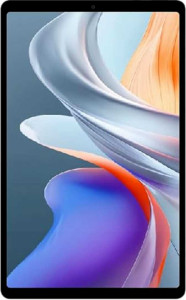
Alldocube iPlay 70 Mini Ultra
Lenovo Idea Tab Pro 128GB

Alldocube iPlay 70 Mini Ultra Lenovo Idea Tab Pro 128GB

Overview

When comparing the Alldocube iPlay 70 Mini Ultra and the Lenovo Idea Tab Pro 128GB, two very different tablet philosophies come into focus. One leans into compact portability and cellular connectivity, while the other bets on a larger canvas and a richer multimedia experience. Key battlegrounds in this head-to-head include display size and pixel density, raw CPU and GPU performance, battery capacity, and everyday usability features like stylus support and storage configuration.

Common Features

  • Neither product has a detachable keyboard.
  • Neither product has a backlit keyboard.
  • Neither product offers water resistance.
  • Neither product has tilt sensitivity.
  • Both products have a 144Hz refresh rate.
  • Neither product has branded damage-resistant glass.
  • Both products have a touch screen.
  • Neither product has a sapphire glass display.
  • Neither product supports HDR10+.
  • Neither product has an e-paper display.
  • Both products have an external memory slot.
  • Both products use a 4 nm semiconductor size.
  • Both products support 64-bit processing.
  • Both products use big.LITTLE technology.
  • Both products support DirectX 12.
  • Both products have integrated graphics.
  • Both products have 8 CPU threads.
  • Both products have TrustZone support.
  • Both products have a 13 MP main camera.
  • Both products have a flash.
  • Both products have a front camera.
  • Both products have a built-in HDR mode.
  • Neither product can create panoramas in-camera.
  • Both products have touch autofocus.
  • Neither product has optical zoom.
  • Neither product has a BSI sensor.
  • Neither product supports aptX, aptX HD, LDAC, aptX Low Latency, aptX Adaptive, or aptX Lossless.
  • Both products have stereo speakers.
  • Neither product has a 3.5 mm audio jack.
  • Both products support fast charging.
  • Neither product has wireless charging.
  • Both products have a battery level indicator.
  • Both products have a rechargeable battery.
  • Neither product has a removable battery.
  • Neither product has Mail Privacy Protection.
  • Both products have on-device machine learning.
  • Both products have clipboard warnings.
  • Both products have location privacy options.
  • Both products have camera and microphone privacy options.
  • Both products can block app tracking.
  • Neither product blocks cross-site tracking.
  • Both products support split screen.
  • Both products use DDR5 memory.

Main Differences

  • Weight is 335 g on Alldocube iPlay 70 Mini Ultra and 620 g on Lenovo Idea Tab Pro 128GB.
  • Thickness is 7.9 mm on Alldocube iPlay 70 Mini Ultra and 6.9 mm on Lenovo Idea Tab Pro 128GB.
  • Width is 208.2 mm on Alldocube iPlay 70 Mini Ultra and 291.18 mm on Lenovo Idea Tab Pro 128GB.
  • Height is 129.6 mm on Alldocube iPlay 70 Mini Ultra and 189.1 mm on Lenovo Idea Tab Pro 128GB.
  • Volume is 213.16 cm³ on Alldocube iPlay 70 Mini Ultra and 379.93 cm³ on Lenovo Idea Tab Pro 128GB.
  • A stylus is included with Lenovo Idea Tab Pro 128GB but not with Alldocube iPlay 70 Mini Ultra.
  • Screen size is 8.8″ on Alldocube iPlay 70 Mini Ultra and 12.7″ on Lenovo Idea Tab Pro 128GB.
  • Resolution is 2560 x 1600 px on Alldocube iPlay 70 Mini Ultra and 2944 x 1840 px on Lenovo Idea Tab Pro 128GB.
  • Pixel density is 343 ppi on Alldocube iPlay 70 Mini Ultra and 273 ppi on Lenovo Idea Tab Pro 128GB.
  • HDR10 support is present on Lenovo Idea Tab Pro 128GB but not available on Alldocube iPlay 70 Mini Ultra.
  • Internal storage is 256GB on Alldocube iPlay 70 Mini Ultra and 128GB on Lenovo Idea Tab Pro 128GB.
  • RAM is 12GB on Alldocube iPlay 70 Mini Ultra and 8GB on Lenovo Idea Tab Pro 128GB.
  • The chipset is Qualcomm Snapdragon 7 Plus Gen 3 on Alldocube iPlay 70 Mini Ultra and MediaTek Dimensity 8300 on Lenovo Idea Tab Pro 128GB.
  • The GPU is Adreno 732 on Alldocube iPlay 70 Mini Ultra and Mali G615 MP6 on Lenovo Idea Tab Pro 128GB.
  • CPU speed is 1 x 2.8 & 3 x 2.6 & 4 x 1.9 GHz on Alldocube iPlay 70 Mini Ultra and 1 x 3.35 & 3 x 3 & 4 x 2.2 GHz on Lenovo Idea Tab Pro 128GB.
  • Geekbench 6 multi-core score is 5098 on Alldocube iPlay 70 Mini Ultra and 4610 on Lenovo Idea Tab Pro 128GB.
  • Geekbench 6 single-core score is 1913 on Alldocube iPlay 70 Mini Ultra and 1485 on Lenovo Idea Tab Pro 128GB.
  • GPU clock speed is 950 MHz on Alldocube iPlay 70 Mini Ultra and 1400 MHz on Lenovo Idea Tab Pro 128GB.
  • RAM speed is 4200 MHz on Alldocube iPlay 70 Mini Ultra and 8533 MHz on Lenovo Idea Tab Pro 128GB.
  • Maximum memory bandwidth is 64 GB/s on Alldocube iPlay 70 Mini Ultra and 68.2 GB/s on Lenovo Idea Tab Pro 128GB.
  • Front camera resolution is 5 MP on Alldocube iPlay 70 Mini Ultra and 8 MP on Lenovo Idea Tab Pro 128GB.
  • Slow-motion video recording is supported on Lenovo Idea Tab Pro 128GB but not on Alldocube iPlay 70 Mini Ultra.
  • A radio is present on Alldocube iPlay 70 Mini Ultra but not on Lenovo Idea Tab Pro 128GB.
  • Battery capacity is 7300 mAh on Alldocube iPlay 70 Mini Ultra and 10200 mAh on Lenovo Idea Tab Pro 128GB.
  • Wi-Fi 6E (802.11ax) support is available on Lenovo Idea Tab Pro 128GB but not on Alldocube iPlay 70 Mini Ultra.
  • Battery health check is available on Lenovo Idea Tab Pro 128GB but not on Alldocube iPlay 70 Mini Ultra.
  • A cellular module is present on Alldocube iPlay 70 Mini Ultra but not on Lenovo Idea Tab Pro 128GB.
  • Bluetooth version is 5.4 on Alldocube iPlay 70 Mini Ultra and 5.3 on Lenovo Idea Tab Pro 128GB.
  • Download speed is 5000 Mbits/s on Alldocube iPlay 70 Mini Ultra and 7900 Mbits/s on Lenovo Idea Tab Pro 128GB.
  • Upload speed is 3500 Mbits/s on Alldocube iPlay 70 Mini Ultra and 4200 Mbits/s on Lenovo Idea Tab Pro 128GB.
  • Galileo navigation support is present on Alldocube iPlay 70 Mini Ultra but not on Lenovo Idea Tab Pro 128GB.
Specs Comparison
Alldocube iPlay 70 Mini Ultra

Alldocube iPlay 70 Mini Ultra

Lenovo Idea Tab Pro 128GB

Lenovo Idea Tab Pro 128GB

Design:
weight 335 g 620 g
thickness 7.9 mm 6.9 mm
width 208.2 mm 291.18 mm
height 129.6 mm 189.1 mm
volume 213.163488 cm³ 379.9287522 cm³
Stylus included
Has a detachable keyboard
Has a backlit keyboard
water resistance None None
Has tilt sensitivity

The most immediate distinction in this category is size and weight. The Alldocube iPlay 70 Mini Ultra is a compact slate weighing just 335 g with a footprint of 208.2 × 129.6 mm, while the Lenovo Idea Tab Pro is a significantly larger device at 291.18 × 189.1 mm and nearly double the weight at 620 g. In practice, this gap is substantial: the iPlay can be comfortably held one-handed for extended reading or media consumption, whereas the Lenovo will feel noticeably heavier and demands more surface area — be it a desk, lap, or bag pocket.

Flipping the advantage, the Lenovo is measurably slimmer at 6.9 mm versus the iPlay's 7.9 mm, though a 1 mm difference is unlikely to be felt in daily use. More meaningful is that the Lenovo ships with a stylus included at no extra cost, adding a layer of creative and note-taking versatility right out of the box. The iPlay offers no such accessory. Neither tablet includes a detachable or backlit keyboard, and both lack any form of water resistance, so those dimensions are a wash.

Overall, the design edge depends entirely on use case. For portability, one-handed use, and travel, the iPlay 70 Mini Ultra wins decisively with its far lighter and more pocketable form. For users who want a larger canvas and value the bundled stylus for productivity or creativity, the Lenovo Idea Tab Pro holds the advantage — at the cost of considerably more bulk.

Display:
screen size 8.8" 12.7"
resolution 2560 x 1600 px 2944 x 1840 px
pixel density 343 ppi 273 ppi
Display type IPS, LCD LCD, IPS
refresh rate 144Hz 144Hz
has branded damage-resistant glass
supports HDR10
has a touch screen
Has sapphire glass display
supports HDR10+
Has an e-paper display

Screen size is the defining split here: the Lenovo Idea Tab Pro offers a generous 12.7″ panel suited to multitasking, media, and document work, while the iPlay 70 Mini Ultra operates in compact territory at 8.8″. That extra real estate on the Lenovo translates to more comfortable split-screen use and a more cinematic viewing experience — but as noted in the design comparison, it comes with a larger, heavier chassis.

Where the iPlay punches back is sharpness. Despite its smaller screen, it resolves at 2560 x 1600 px for a pixel density of 343 ppi, compared to the Lenovo's 273 ppi from its 2944 x 1840 resolution spread across a much bigger panel. That ~70 ppi gap is perceptible — text and fine details will look crisper and more defined on the iPlay at normal viewing distances. Both panels are IPS LCD and share an identical 144Hz refresh rate, meaning smooth scrolling and responsive touch input are equally available on either device.

The Lenovo's notable exclusive is HDR10 support, which enables richer contrast and a wider color volume when streaming HDR-encoded content from compatible services. The iPlay lacks this capability entirely. On balance, neither display is strictly superior: the iPlay wins on pixel density and portability, while the Lenovo leads on screen size and HDR playback. Users who prioritize sharp text and handheld use will favor the iPlay; those who want an immersive large-screen experience with HDR content should lean toward the Lenovo.

Performance:
internal storage 256GB 128GB
RAM 12GB 8GB
Chipset (SoC) name Qualcomm Snapdragon 7 Plus Gen 3 MediaTek Dimensity 8300
GPU name Adreno 732 Mali G615 MP6
CPU speed 1 x 2.8 & 3 x 2.6 & 4 x 1.9 GHz 1 x 3.35 & 3 x 3 & 4 x 2.2 GHz
Geekbench 6 result (multi) 5098 4610
Geekbench 6 result (single) 1913 1485
has an external memory slot
semiconductor size 4 nm 4 nm
Supports 64-bit
Uses big.LITTLE technology
DirectX version DirectX 12 DirectX 12
Has integrated graphics
GPU clock speed 950 MHz 1400 MHz
CPU threads 8 threads 8 threads
RAM speed 4200 MHz 8533 MHz
Has TrustZone
maximum memory amount 24GB 24GB
Android version Android 14 Android 14
Thermal Design Power (TDP) 6W 6W
maximum memory bandwidth 64 GB/s 68.2 GB/s
OpenCL version 2 2

Benchmarks tell a clear story on the CPU front. The Alldocube iPlay 70 Mini Ultra, powered by the Snapdragon 7 Plus Gen 3, posts a Geekbench 6 single-core score of 1913 and a multi-core score of 5098 — beating the Lenovo Idea Tab Pro's MediaTek Dimensity 8300 by a meaningful margin in both categories (1485 single / 4610 multi). Single-core performance in particular drives day-to-day snappiness — app launches, UI responsiveness, and general fluidity — so the iPlay's lead here is practically significant, not just a numbers game.

The RAM and storage picture also favors the iPlay. It ships with 12 GB of RAM versus the Lenovo's 8 GB, which means more apps can stay resident in memory before the system starts force-closing background processes — a real advantage for heavy multitaskers. On storage, the iPlay doubles down with 256 GB built-in compared to the Lenovo's 128 GB, though both support external memory expansion. The Lenovo counters with notably faster RAM at 8533 MHz versus the iPlay's 4200 MHz, and a slightly higher memory bandwidth of 68.2 GB/s versus 64 GB/s — advantages that can benefit GPU-intensive workloads and sustained data throughput, though they do not offset the CPU and capacity gaps in everyday use.

Both chips are fabricated on a 4 nm process, share the same 6W TDP, and run Android 14 out of the box, so efficiency and software parity are a tie. Overall, the iPlay 70 Mini Ultra holds a clear performance edge in this group, driven by stronger CPU benchmarks, more RAM, and double the base storage — making it the more capable device for demanding tasks and longer-term usability.

Cameras:
megapixels (main camera) 13 MP 13 MP
megapixels (front camera) 5MP 8MP
has a flash
has a front camera
has a built-in HDR mode
can create panoramas in-camera
supports slow-motion video recording
has touch autofocus
optical zoom 0x 0x
has a BSI sensor
has manual white balance
has a CMOS sensor
supports HDR10 recording
has continuous autofocus when recording movies
supports Dolby Vision recording
Has a front-facing LED flash
number of flash LEDs 1 1
has manual ISO
has a video light
Shoots 360° panorama
has a serial shot mode
has built-in optical image stabilization
has 3D photo/video recording capabilities
Has a dual-tone LED flash
has manual focus
Has a RGB LED flash
has manual exposure
has manual shutter speed

Tablet cameras are rarely a primary purchase driver, and this comparison reinforces why: both devices are nearly identical on the rear. Each sports a 13 MP main camera with a CMOS sensor, touch and continuous autofocus, flash, HDR mode, and a solid set of manual controls including ISO, white balance, exposure, and focus. Neither offers optical zoom or optical image stabilization, so the rear camera experience is functionally equivalent between the two.

The differentiators emerge at the front. The Lenovo Idea Tab Pro edges ahead with an 8 MP front camera versus the iPlay's 5 MP — a gap that matters most for video calls and selfies, where the Lenovo will produce noticeably sharper, more detailed image output. The Lenovo also uniquely supports slow-motion video recording, a capability the iPlay lacks entirely, which adds modest but real versatility for video-focused users.

Neither device supports HDR10 recording, Dolby Vision, or OIS, so the broader video feature set is limited on both. Still, the Lenovo Idea Tab Pro takes a narrow but clear edge in this group, courtesy of its higher-resolution front camera and slow-motion support — two advantages that are most relevant to users who rely on their tablet for frequent video conferencing or casual video content creation.

Audio:
has aptX
has aptX HD
has LDAC
has aptX Low Latency
has aptX Adaptive
has aptX Lossless
has stereo speakers
has a socket for a 3.5 mm audio jack
Has a radio

Audio is largely a tie between these two tablets. Both feature stereo speakers and omit a 3.5 mm headphone jack, meaning wired audio requires an adapter on either device. Neither supports any advanced Bluetooth audio codec — aptX, LDAC, aptX Adaptive, and aptX Lossless are all absent — so wireless listening is limited to standard Bluetooth quality on both.

The only differentiator in this group is that the Alldocube iPlay 70 Mini Ultra includes a built-in radio, while the Lenovo does not. For users in areas with strong FM reception who want a zero-data-cost audio option, this is a genuine bonus. It is a niche feature, but a unique one that the Lenovo simply cannot match.

On balance, the audio specs are nearly identical, and neither device stands out as an audio powerhouse. The iPlay 70 Mini Ultra claims a slim edge here solely due to its FM radio inclusion — a minor but exclusive capability that nudges it ahead in an otherwise dead-even category.

Battery:
battery power 7300 mAh 10200 mAh
Supports fast charging
has wireless charging
has a battery level indicator
has a rechargeable battery
has a removable battery

Battery capacity is one of the more clear-cut differences in this comparison. The Lenovo Idea Tab Pro packs a 10200 mAh cell, versus the 7300 mAh in the Alldocube iPlay 70 Mini Ultra — a nearly 40% larger reserve. All else being equal, that translates directly into more hours of use between charges, whether for video playback, browsing, or productivity work.

That said, raw capacity does not tell the whole story. The Lenovo's larger screen and bigger panel area naturally consume more power, which will offset some of that capacity advantage in practice. The iPlay's smaller, lower-power display draws less energy per hour, meaning the real-world endurance gap between the two is likely narrower than the mAh difference suggests. Both support fast charging and share the same non-removable, rechargeable battery design, so neither has a structural advantage in charging flexibility.

On paper, the Lenovo Idea Tab Pro holds the edge in this category by virtue of its substantially larger battery. For users who prioritize all-day or multi-day longevity — particularly in travel or light-power-access scenarios — the Lenovo's bigger cell is a meaningful advantage, even accounting for its larger display's higher energy demands.

Connectivity & Features:
release date April 2025 March 2025
Wi-Fi version Wi-Fi 4 (802.11n), Wi-Fi 6 (802.11ax), Wi-Fi 5 (802.11ac) Wi-Fi 4 (802.11n), Wi-Fi 5 (802.11ac), Wi-Fi 6 (802.11ax), Wi-Fi 6E (802.11ax)
has Mail Privacy Protection
has on-device machine learning
has clipboard warnings
has location privacy options
has camera/microphone privacy options
can block app tracking
blocks cross-site tracking
supports split screen
has Live Text
has notification permissions
has full-page screenshots
has Quick Start
has theme customization
has Wi-Fi password sharing
has PiP
Can play games while they download
has an extra dim mode
can offload apps
has focus modes
has media picker
has dynamic theming
has dark mode
has battery health check
Has USB Type-C
has a cellular module
has 5G support
is a multi-user system
gets direct OS updates
has GPS
has a child lock
has an HDMI output
has NFC
Has a fingerprint scanner
USB version 3.2 3.2
Supports widgets
Bluetooth version 5.4 5.3
download speed 5000 MBits/s 7900 MBits/s
has a gyroscope
Is free and open source
Has offline voice recognition
has a compass
upload speed 3500 MBits/s 4200 MBits/s
supports Wi-Fi
Has sharing intents
Has customizable notifications
Uses 3D facial recognition
supports Galileo
Has a barometer
has an accelerometer
has voice commands
Has an iris scanner
Has a built-in projector
supports Ethernet
Has an infrared sensor
Tracks the current position of a mobile device

Two connectivity decisions define this category more than anything else. The Alldocube iPlay 70 Mini Ultra includes a cellular module, meaning it can connect to mobile data networks without relying on a nearby Wi-Fi hotspot — a fundamental flexibility the Lenovo Idea Tab Pro simply does not offer, as it is Wi-Fi only. For users who need reliable connectivity on the move, this is a decisive advantage. The Lenovo counters on the Wi-Fi front, however, supporting Wi-Fi 6E in addition to the standard Wi-Fi 6 found on both devices. Wi-Fi 6E opens access to the less congested 6 GHz band, enabling higher throughput and lower latency in environments with many competing devices — reflected in its significantly higher rated download speed of 7900 Mbits/s versus the iPlay's 5000 Mbits/s.

Beyond radio connectivity, the differences are modest. The iPlay holds a marginally newer Bluetooth 5.4 versus the Lenovo's 5.3 — a negligible gap in practice. The iPlay also supports Galileo satellite navigation, broadening its positioning accuracy beyond GPS alone, while the Lenovo does not. The Lenovo uniquely offers a battery health check feature, which lets users monitor cell degradation over time — a small but useful long-term ownership tool the iPlay lacks.

Software and privacy features are essentially identical across both devices, covering split-screen, widgets, dark mode, dynamic theming, and a comprehensive set of privacy controls. Ultimately, this group comes down to a genuine use-case trade-off: the iPlay 70 Mini Ultra wins for users who need standalone mobile connectivity, while the Lenovo Idea Tab Pro is the stronger choice for home or office environments where fast, congestion-resistant Wi-Fi 6E is the priority.

Miscellaneous:
DDR memory version 5 5

This group contains a single data point, and it is identical on both devices: each uses DDR5 memory. As the current-generation LPDDR standard for mobile and tablet hardware, DDR5 brings higher bandwidth and improved power efficiency compared to its DDR4 predecessor — benefits that both the Alldocube iPlay 70 Mini Ultra and the Lenovo Idea Tab Pro share equally.

With no differentiating data available in this group, the result is a complete tie. Neither product holds any advantage here.

Comparison Summary & Verdict

After examining every specification, it is clear that these two tablets serve meaningfully different audiences. The Alldocube iPlay 70 Mini Ultra stands out for users who value a lightweight, pocket-friendly form factor at just 335 g, higher pixel density at 343 ppi, more RAM (12 GB) and internal storage (256 GB), a built-in cellular module for on-the-go connectivity, and stronger Geekbench single and multi-core scores. On the other hand, the Lenovo Idea Tab Pro 128GB is the better choice for those who prioritize a large 12.7-inch display, HDR10 support, an included stylus, a much larger 10200 mAh battery, Wi-Fi 6E connectivity, and a higher-clocked GPU. In short, choose the Alldocube for portability and raw performance, and choose the Lenovo for an immersive big-screen productivity experience.

Alldocube iPlay 70 Mini Ultra
Buy Alldocube iPlay 70 Mini Ultra if...

Buy the Alldocube iPlay 70 Mini Ultra if you want a compact, lightweight tablet with more RAM and storage, cellular connectivity, and stronger benchmark performance in a portable package.

Lenovo Idea Tab Pro 128GB
Buy Lenovo Idea Tab Pro 128GB if...

Buy the Lenovo Idea Tab Pro 128GB if you prioritize a large 12.7-inch HDR10 display, an included stylus for productivity, Wi-Fi 6E support, and a significantly larger battery for extended use.