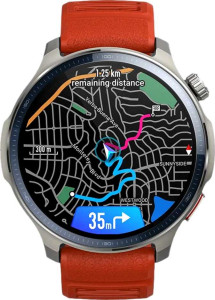
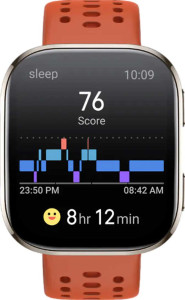
Across the core feature set, these two watches are remarkably aligned — both offer HRV tracking, VO2 max measurement, readiness scores, call answering and control, notifications, voice commands, camera remote, silent and vibrating alerts, and a stopwatch. Users prioritizing everyday smartwatch utility and health monitoring will find both devices well-equipped at this level, with neither holding a structural advantage in the shared features.
Storage is where the gap becomes hard to ignore. The Balance 2 ships with 32 GB of internal storage against the Bip 6's 0.5 GB — a 64x difference that enables the Balance 2 to store music locally for phone-free listening during workouts, while the Bip 6's storage is functionally limited to system use. The Balance 2 also acquires GPS faster, a practical benefit for users who want to start outdoor sessions quickly without waiting for a signal lock. The Bip 6, on the other hand, includes irregular heart rate warnings — a passive safety feature that alerts users to potentially abnormal rhythms, absent on the Balance 2.
Taking this category as a whole, the Balance 2 has the broader feature advantage, driven primarily by its vastly superior storage capacity and faster GPS acquisition. The Bip 6's irregular heart rate warning is a meaningful health-safety differentiator, but it does not offset the Balance 2's practical advantages for users who want a more capable, self-sufficient device.