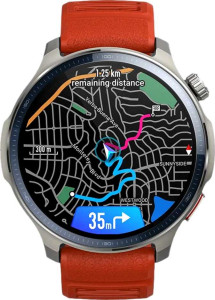
Amazfit Balance 2
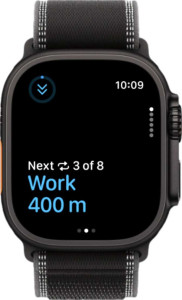
Apple Watch Ultra 3

Amazfit Balance 2 Apple Watch Ultra 3

Overview

When comparing the Amazfit Balance 2 and the Apple Watch Ultra 3, two capable smartwatches emerge with very different priorities. Both share a strong sensor suite, AMOLED displays, and comprehensive activity tracking, yet they diverge sharply when it comes to battery life, health safety features, and platform compatibility. Whether you value endurance or ecosystem integration, this head-to-head breakdown will help you find the right fit for your wrist.

Common Features

  • Both products feature an OLED/AMOLED display type.
  • Both products are waterproof with a 10 ATM rating.
  • Always-On Display is available on both products.
  • Watch band is replaceable on both products.
  • Branded damage-resistant glass is not available on either product.
  • A touchscreen display is present on both products.
  • Both products monitor blood oxygenation levels.
  • A heart rate monitor is present on both products.
  • GPS is available on both products.
  • An accelerometer is present on both products.
  • A temperature sensor is available on both products.
  • A compass is present on both products.
  • A barometer is available on both products.
  • A gyroscope is present on both products.
  • Both products track sleep and provide sleep reports.
  • Both products track distance, steps taken, pace, elevation, and include a route tracker.
  • Automatic activity detection is available on both products.
  • Both products are compatible with iOS and support Wi-Fi 4 (802.11n).
  • ANT+ support is not available on either product.
  • NFC is available on both products.
  • Neither product has a solar power battery or a removable battery, but both have a rechargeable battery.
  • HRV tracking, VO2 max measurement, and resting heart rate measurement are available on both products.
  • Fast and slow heart rate notifications are available on both products.
  • Both products can be used to answer calls, control calls, locate a phone, and display notifications.
  • Both products provide activity reports, inactivity alerts, calorie burn tracking, goal setting, achievements, an exercise diary, and a free ad-free app.
  • Both products have a battery level indicator, auto pause, passcode protection, and compatibility with smart scales and external heart rate monitors.
  • Neither product is compatible with Windows or Mac OS X, and neither has an external memory slot.

Main Differences

  • Screen size is 1.5″ on Amazfit Balance 2 and 1.98″ on Apple Watch Ultra 3.
  • IP rating is IP68 on Amazfit Balance 2 and IPX6 on Apple Watch Ultra 3.
  • Waterproof depth rating is 45 m on Amazfit Balance 2 and 100 m on Apple Watch Ultra 3.
  • Pixel density is 323 ppi on Amazfit Balance 2 and 326 ppi on Apple Watch Ultra 3.
  • Resolution is 480 x 480 px on Amazfit Balance 2 and 422 x 514 px on Apple Watch Ultra 3.
  • Thickness is 12.3 mm on Amazfit Balance 2 and 12 mm on Apple Watch Ultra 3.
  • Weight is 43 g on Amazfit Balance 2 and 61.8 g on Apple Watch Ultra 3.
  • Height is 47.4 mm on Amazfit Balance 2 and 49 mm on Apple Watch Ultra 3.
  • Width is 47.4 mm on Amazfit Balance 2 and 44 mm on Apple Watch Ultra 3.
  • Volume is 27.635148 cm³ on Amazfit Balance 2 and 25.872 cm³ on Apple Watch Ultra 3.
  • Calorie intake tracking is available on Amazfit Balance 2 but not on Apple Watch Ultra 3.
  • Golf mode is available on Amazfit Balance 2 but not on Apple Watch Ultra 3.
  • A cellular module is present on Apple Watch Ultra 3 but not on Amazfit Balance 2.
  • Android compatibility is available on Amazfit Balance 2 but not on Apple Watch Ultra 3.
  • Bluetooth version is 5.2 on Amazfit Balance 2 and 5.3 on Apple Watch Ultra 3.
  • Battery life is 21 days on Amazfit Balance 2 and 1.75 days on Apple Watch Ultra 3.
  • Battery life in power save mode is 67 hours on Amazfit Balance 2 and 72 hours on Apple Watch Ultra 3.
  • Wireless charging is available on Apple Watch Ultra 3 but not on Amazfit Balance 2.
  • Irregular heart rate warnings are available on Apple Watch Ultra 3 but not on Amazfit Balance 2.
  • ECG technology is present on Apple Watch Ultra 3 but not on Amazfit Balance 2.
  • Fall detection is available on Apple Watch Ultra 3 but not on Amazfit Balance 2.
  • Internal storage is 32GB on Amazfit Balance 2 and 64GB on Apple Watch Ultra 3.
  • Coaching features are available on Amazfit Balance 2 but not on Apple Watch Ultra 3.
Specs Comparison
Amazfit Balance 2

Amazfit Balance 2

Apple Watch Ultra 3

Apple Watch Ultra 3

Design:
screen size 1.5" 1.98"
Display type OLED/AMOLED OLED/AMOLED
water resistance Waterproof Waterproof
ATM rating 10 ATM 10 ATM
Ingress Protection (IP) rating IP68 IPX6
waterproof depth rating 45 m 100 m
Always-On Display
pixel density 323 ppi 326 ppi
resolution 480 x 480 px 422 x 514 px
Watch band is replaceable
has branded damage-resistant glass
thickness 12.3 mm 12 mm
weight 43 g 61.8 g
height 47.4 mm 49 mm
width 47.4 mm 44 mm
Has a display
has a touch screen
Has sapphire glass display
volume 27.635148 cm³ 25.872 cm³
is designed for kids

The most immediately striking design difference is screen size: the Apple Watch Ultra 3 features a significantly larger 1.98″ display compared to the Amazfit Balance 2's 1.5″ panel. Despite this size gap, both watches achieve nearly identical pixel densities — 326 ppi vs 323 ppi — meaning sharpness per inch is essentially the same. The real-world implication is that the Ultra 3 simply gives you more screen real estate for maps, metrics, and text, while the Balance 2 presents a more compact, traditional watch face. Their physical footprints also differ in shape: the Balance 2 is a perfect square at 47.4 × 47.4 mm, while the Ultra 3 is a slightly taller but narrower rectangle at 49 × 44 mm, making it feel less wide on the wrist despite its bigger display.

Weight is a meaningful differentiator in daily wear comfort. At 43 g, the Balance 2 is notably lighter than the Ultra 3's 61.8 g — nearly 44% heavier. For all-day or sleep tracking, that difference is tangible. Thickness is a near-tie at 12.3 mm vs 12 mm. On water resistance, both carry a 10 ATM rating, but the Ultra 3 is rated to 100 m depth versus the Balance 2's 45 m, making the Ultra 3 significantly more capable for serious diving or water sports. However, the Balance 2 holds an IP68 rating (dust-tight), while the Ultra 3 is rated only IPX6, meaning it offers no certified dust protection — a subtle but real trade-off for dusty or sandy environments.

Both watches share sapphire glass displays, OLED/AMOLED panels with Always-On Display support, and replaceable bands — so those are non-differentiating. Overall, the Ultra 3 holds an edge in screen size and water depth rating, making it the stronger pick for outdoor and aquatic use cases. The Balance 2 counters with a significantly lighter build and better dust resistance, which benefits everyday comfort and durability in dry, rugged conditions.

Sensors:
Monitors blood oxygenation levels
Has a heart rate monitor
has GPS
has an accelerometer
Has a temperature sensor
has a compass
Has a barometer
has a gyroscope
Has a cadence sensor
Monitors perspiration

Across every sensor category provided, the Amazfit Balance 2 and Apple Watch Ultra 3 are in complete lockstep. Both pack the core suite expected of a premium fitness watch: heart rate monitor, GPS, blood oxygen (SpO2), accelerometer, gyroscope, barometer, compass, and a temperature sensor. This combination covers the vast majority of health and outdoor tracking use cases — from altitude-aware hiking and navigation to sleep and recovery monitoring.

Neither watch includes a cadence sensor or perspiration monitor, so users who specifically need sweat-based hydration or electrolyte tracking will find both equally limited on that front. The absence of cadence sensing is worth noting for dedicated cyclists, though many users derive cadence indirectly through GPS and accelerometer data in supported apps.

With zero differentiation across all ten sensor specs, this category is a clear tie. Sensor hardware alone gives neither watch an advantage — any meaningful differences in health and tracking performance between these two would come down to software algorithms and data processing, which fall outside the scope of the provided specs.

Activity tracking:
Tracks your sleep
Tracks distance
Tracks steps taken
Measures pace
Provides sleep reports
Detects activities automatically
Has a route tracker
Tracks elevation
Has multi-sport mode
Has exercise tagging
Has a stroke counter for swimming
Tracks calorie intake
Designed for diving
Designed for golf

For the overwhelming majority of tracking features, these two watches are identical — both handle sleep, steps, distance, pace, elevation, route tracking, automatic activity detection, multi-sport mode, exercise tagging, swim stroke counting, and diving. That is a broad and capable foundation that covers casual fitness users and serious athletes alike.

Where the Amazfit Balance 2 pulls ahead is in two specific areas. First, it supports calorie intake tracking, allowing users to log nutrition directly on or through the watch ecosystem — a feature absent on the Ultra 3. For anyone actively managing diet alongside exercise, this closes a meaningful gap without needing a separate app. Second, the Balance 2 is designed for golf, which typically implies dedicated course mapping, shot tracking, and scoring features. The Ultra 3 does not carry this designation, making the Balance 2 the clear pick for golfers who want an all-in-one device.

Based strictly on the provided specs, the Amazfit Balance 2 holds a clear edge in this category. It matches the Ultra 3 across every shared tracking capability while adding calorie intake monitoring and golf-specific functionality — two additions that meaningfully expand its appeal to a wider range of lifestyle and sport use cases.

Connectivity:
has a cellular module
Is compatible with iOS
Is compatible with Android
Bluetooth version 5.2 5.3
supports Wi-Fi
Wi-Fi version Wi-Fi 4 (802.11n) Wi-Fi 4 (802.11n)
supports ANT+
has NFC

The single biggest connectivity divide here is cellular: the Apple Watch Ultra 3 has a built-in cellular module, while the Amazfit Balance 2 does not. In practice, this means the Ultra 3 can make calls, stream music, receive notifications, and use apps entirely independently of a paired phone — a critical advantage for runners, cyclists, or anyone who regularly leaves their phone behind. The Balance 2, without cellular, must stay within Bluetooth or Wi-Fi range of a connected device to access those functions.

Platform compatibility cuts the other way. The Balance 2 works with both iOS and Android, while the Ultra 3 is iOS-only. This makes the Balance 2 a viable option for a much broader user base, whereas the Ultra 3 is a non-starter for Android users entirely. On Bluetooth, the Ultra 3 has a marginal edge with version 5.3 versus the Balance 2's 5.2 — the newer version offers incremental improvements in connection stability and efficiency, though the real-world difference in daily use is minimal. Both watches share identical Wi-Fi 4 support and NFC, making those non-differentiating.

This category does not have a single clear winner — it depends entirely on the user's ecosystem. The Ultra 3 has a decisive edge for iPhone users who value phone-free independence thanks to its cellular capability. The Balance 2 has a decisive edge for Android users, as it is the only option of the two that is even compatible. For iPhone users who do not need cellular, the gap narrows considerably.

Battery:
battery life 21 days 1.75 days
battery life in power save mode 67 hours 72 hours
has wireless charging
has a rechargeable battery
Has a solar power battery
has a removable battery

Battery life is where these two watches diverge most dramatically. The Amazfit Balance 2 is rated at 21 days of standard use, while the Apple Watch Ultra 3 comes in at just 1.75 days — roughly 42 hours. That is not a marginal gap; it is a fundamentally different philosophy. The Balance 2 can go three weeks between charges, meaning users can wear it through multi-day trips, sleep tracking streaks, and workouts without ever thinking about a cable. The Ultra 3 demands a nightly or near-nightly charging routine, which directly competes with its utility as a sleep tracker and can be a genuine inconvenience for travelers.

In power-save mode, the story shifts considerably. The Ultra 3 extends to 72 hours while the Balance 2 reaches 67 hours — a near-tie, and notably the only scenario where the two watches are in the same ballpark. This suggests power-save mode on the Ultra 3 aggressively cuts features to stretch the battery, narrowing the gap only under constrained conditions. On charging convenience, the Ultra 3 supports wireless charging, which the Balance 2 lacks, requiring a proprietary cable. For users who already have wireless charging pads on their nightstand, that is a small but real quality-of-life advantage — though it does little to offset how frequently the Ultra 3 needs to be charged in the first place.

The Amazfit Balance 2 holds a commanding edge in this category. Its 21-day battery life represents a fundamentally lower-maintenance ownership experience, and for users who prioritize continuous health tracking, outdoor endurance use, or simply not worrying about daily charging, it is the clear choice. The Ultra 3's wireless charging is a convenience perk, but it addresses a problem largely of its own making.

Features:
release date June 2025 September 2025
has HRV tracking
measures VO2 max
measures resting heart rate
has fast/slow heart rate notifications
Can be used to answer calls
Locates your phone
Has call control
Has notifications
has irregular heart rate warnings
Has ECG technology
Has silent alarm
Has vibrating alerts
has fall detection
Has a stopwatch
Has smart alarm
has voice commands
internal storage 32GB 64GB
Has a built-in camera remote control function
Acquires GPS faster
warranty period 1 years 1 years
number of microphones 1 1
has a front camera

Both watches share a remarkably similar feature set at the core — HRV tracking, VO2 max, resting heart rate, call handling, notifications, voice commands, camera remote, fast GPS acquisition, a stopwatch, and vibrating alerts are all present on both. Where the Apple Watch Ultra 3 pulls decisively ahead is in health safety features. It adds ECG technology, irregular heart rate warnings, and fall detection — none of which appear on the Amazfit Balance 2. ECG capability allows the Ultra 3 to generate a single-lead electrocardiogram on demand, which can help flag conditions like atrial fibrillation. Irregular heart rate warnings provide passive, continuous screening even when the user is not actively monitoring. Fall detection can automatically alert emergency contacts if a hard fall is detected and the user is unresponsive — a potentially life-critical function for older users or solo outdoor athletes.

On storage, the Ultra 3 offers 64 GB of internal space versus the Balance 2's 32 GB. For a smartwatch, this gap matters primarily for offline music and app data storage — users who load playlists directly onto the watch for phone-free workouts will appreciate the headroom. Both watches are otherwise matched on warranty period, microphone count, and the absence of a front camera or smart alarm.

The Apple Watch Ultra 3 holds a clear edge in this category. The combination of ECG, irregular heart rate detection, and fall detection represents a meaningfully deeper health and safety capability set that the Balance 2 simply does not offer. For users who prioritize cardiac monitoring or personal safety features, those three absences on the Balance 2 are significant gaps that storage parity cannot compensate for.

App & Software:
Provides activity reports
Has inactivity alerts
Counts how many calories you've burned
Has goal setting
Has achievements
Free app
Has exercise diary
Ad-free
Has coaching
Has temperature tracking
Has period notifications
Supports routes
Has voice feedback
Has music playback
Displays fertile window notifications
Includes maps
Predicts ovulation
Predicts start date
Can be personalised
Has barcode scanner on app
Tracks water intake
Has weight tracking

The app and software ecosystems of these two watches are strikingly aligned. Both deliver a comprehensive, ad-free, free-to-use companion app covering activity reports, calorie burn, goal setting, achievements, exercise diary, route support, maps, voice feedback, music playback, water intake, weight tracking, temperature tracking, and a full reproductive health suite including period notifications, fertile window display, ovulation prediction, and cycle start date forecasting. For the vast majority of users, this shared foundation means neither watch is at a software disadvantage in day-to-day health and fitness management.

The only differentiator in this entire category is coaching: the Amazfit Balance 2 supports it, the Apple Watch Ultra 3 does not. In-app coaching typically means guided workout plans, real-time form cues, or structured training programs delivered through the companion app. For users who want a more instructional experience rather than passive data logging, this is a tangible addition that the Ultra 3's software does not provide based on the available specs.

This category is nearly a tie, but the Amazfit Balance 2 holds a narrow edge solely due to its coaching feature. Every other software capability is identical across both products, so unless guided training is a priority, users will find the two apps functionally equivalent.

Miscellaneous:
has a battery level indicator
Has auto pause
Has passcode
Compatible with smart scales
Compatible with external heart rate monitors
Is compatible with Windows
has an external memory slot
Is compatible with Mac OS X
has a socket for a 3.5 mm audio jack

The miscellaneous spec sheet for these two watches reads as a carbon copy. Both offer a battery level indicator, auto pause, and passcode security, and both are compatible with smart scales and external heart rate monitors — the latter being particularly useful for athletes who prefer chest strap accuracy over wrist-based optical readings during intense training.

Neither watch supports Windows or Mac OS X desktop compatibility, lacks an external memory slot, and has no 3.5 mm audio jack — all consistent with the broader smartwatch category norm where wireless is the default and desktop sync, if available, happens through companion apps rather than direct OS integration.

This is an unambiguous tie. Every single data point in this group is identical across the Amazfit Balance 2 and Apple Watch Ultra 3, and none of the shared limitations represent a meaningful real-world disadvantage for either product given how the category is defined. Users can treat this spec group as a non-factor in their decision.

Comparison Summary & Verdict

After examining every specification, it is clear that these two watches serve distinct audiences. The Amazfit Balance 2 stands out for its remarkable 21-day battery life, lighter 43 g build, Android compatibility, calorie intake tracking, and built-in coaching, making it an excellent companion for endurance-focused users and Android owners who want more from their smartwatch without constant charging. The Apple Watch Ultra 3, on the other hand, justifies its premium positioning with a larger 1.98″ display, ECG technology, irregular heart rate warnings, fall detection, a cellular module, 64 GB of internal storage, and a deeper 100 m waterproof rating, catering to iOS users who prioritize advanced health monitoring and rugged versatility over battery longevity.

Amazfit Balance 2
Buy Amazfit Balance 2 if...

Buy the Amazfit Balance 2 if you use an Android phone and need a lightweight smartwatch with an exceptional 21-day battery life, calorie intake tracking, and built-in coaching.

Apple Watch Ultra 3
Buy Apple Watch Ultra 3 if...

Buy the Apple Watch Ultra 3 if you are an iOS user who needs advanced health monitoring with ECG, fall detection, irregular heart rate warnings, cellular connectivity, and a deeper 100 m waterproof rating.