Amazfit Balance 2
Garmin Instinct 3 Solar Tactical Edition 45mm

Amazfit Balance 2 Garmin Instinct 3 Solar Tactical Edition 45mm

Overview

When choosing between the Amazfit Balance 2 and the Garmin Instinct 3 Solar Tactical Edition 45mm, you are weighing two very different philosophies in smartwatch design. Both watches share strong health-tracking foundations and rugged waterproofing, yet they diverge sharply when it comes to display quality, battery strategy, and connectivity features. Which one truly fits your lifestyle? Read on to find out.

Common Features

  • Both watches are waterproof with a 10 ATM rating.
  • Both watches feature an Always-On Display.
  • The watch band is replaceable on both watches.
  • Neither watch has branded damage-resistant glass as a shared standard feature.
  • Both watches have a display.
  • Both watches use a 22 mm wide band.
  • Both watches monitor blood oxygenation levels.
  • Both watches have a heart rate monitor.
  • Both watches have built-in GPS.
  • Both watches include an accelerometer.
  • Both watches have a temperature sensor.
  • Both watches include a compass.
  • Both watches have a barometer.
  • Both watches include a gyroscope.
  • Both watches track sleep and provide sleep reports.
  • Both watches track distance, steps taken, pace, elevation, and include a route tracker.
  • Automatic activity detection is available on both watches.
  • Neither watch has a cellular module.
  • Both watches are compatible with iOS and Android.
  • Both watches support NFC.
  • Neither watch supports wireless charging.
  • Both watches have a rechargeable, non-removable battery.
  • Both watches include HRV tracking, VO2 max measurement, and resting heart rate measurement.
  • Fast and slow heart rate notifications are available on both watches.
  • Both watches show a readiness level and can locate your phone.
  • Both watches support notifications.
  • Irregular heart rate warnings are not available on either watch.
  • Both watches provide activity reports, inactivity alerts, calorie tracking, goal setting, achievements, an exercise diary, and a free ad-free app.
  • Both watches have a battery level indicator and auto pause feature.
  • Both watches are compatible with smart scales and external heart rate monitors.
  • Neither watch has an external memory slot or a 3.5 mm audio jack socket.

Main Differences

  • Screen size is 1.5″ on Amazfit Balance 2 and 0.9″ on Garmin Instinct 3 Solar Tactical Edition 45mm.
  • Display type is OLED/AMOLED on Amazfit Balance 2 and LCD on Garmin Instinct 3 Solar Tactical Edition 45mm.
  • Pixel density is 323 ppi on Amazfit Balance 2 and 276 ppi on Garmin Instinct 3 Solar Tactical Edition 45mm.
  • Resolution is 480 x 480 px on Amazfit Balance 2 and 176 x 176 px on Garmin Instinct 3 Solar Tactical Edition 45mm.
  • Thickness is 12.3 mm on Amazfit Balance 2 and 14.9 mm on Garmin Instinct 3 Solar Tactical Edition 45mm.
  • Weight is 43 g on Amazfit Balance 2 and 52 g on Garmin Instinct 3 Solar Tactical Edition 45mm.
  • Height is 47.4 mm on Amazfit Balance 2 and 45 mm on Garmin Instinct 3 Solar Tactical Edition 45mm.
  • Width is 47.4 mm on Amazfit Balance 2 and 45 mm on Garmin Instinct 3 Solar Tactical Edition 45mm.
  • A touchscreen is present on Amazfit Balance 2 but not available on Garmin Instinct 3 Solar Tactical Edition 45mm.
  • Sapphire glass display is present on Amazfit Balance 2 but not available on Garmin Instinct 3 Solar Tactical Edition 45mm.
  • Volume is 27.635148 cm³ on Amazfit Balance 2 and 30.1725 cm³ on Garmin Instinct 3 Solar Tactical Edition 45mm.
  • A cadence sensor is present on Garmin Instinct 3 Solar Tactical Edition 45mm but not available on Amazfit Balance 2.
  • Diving design support is present on Amazfit Balance 2 but not available on Garmin Instinct 3 Solar Tactical Edition 45mm.
  • Wi-Fi support is present on Amazfit Balance 2 but not available on Garmin Instinct 3 Solar Tactical Edition 45mm.
  • ANT+ support is present on Garmin Instinct 3 Solar Tactical Edition 45mm but not available on Amazfit Balance 2.
  • Battery life is 21 days on Amazfit Balance 2 and unlimited on Garmin Instinct 3 Solar Tactical Edition 45mm due to solar charging.
  • Battery life in training mode is 240 hours on Amazfit Balance 2 and 40 hours on Garmin Instinct 3 Solar Tactical Edition 45mm.
  • Battery life with GPS on is 33 hours on Amazfit Balance 2 and 130 hours on Garmin Instinct 3 Solar Tactical Edition 45mm.
  • Solar power battery charging is present on Garmin Instinct 3 Solar Tactical Edition 45mm but not available on Amazfit Balance 2.
  • The ability to answer calls is present on Amazfit Balance 2 but not available on Garmin Instinct 3 Solar Tactical Edition 45mm.
  • Call control is present on Amazfit Balance 2 but not available on Garmin Instinct 3 Solar Tactical Edition 45mm.
  • Fall detection is present on Garmin Instinct 3 Solar Tactical Edition 45mm but not available on Amazfit Balance 2.
  • Voice commands are supported on Amazfit Balance 2 but not available on Garmin Instinct 3 Solar Tactical Edition 45mm.
  • Internal storage is 32 GB on Amazfit Balance 2 and 0.128 GB on Garmin Instinct 3 Solar Tactical Edition 45mm.
  • A built-in camera remote control function is present on Amazfit Balance 2 but not available on Garmin Instinct 3 Solar Tactical Edition 45mm.
  • Windows compatibility is present on Garmin Instinct 3 Solar Tactical Edition 45mm but not available on Amazfit Balance 2.
  • Mac OS X compatibility is present on Garmin Instinct 3 Solar Tactical Edition 45mm but not available on Amazfit Balance 2.
Specs Comparison
Amazfit Balance 2

Amazfit Balance 2

Garmin Instinct 3 Solar Tactical Edition 45mm

Garmin Instinct 3 Solar Tactical Edition 45mm

Design:
screen size 1.5" 0.9"
Display type OLED/AMOLED LCD
water resistance Waterproof Waterproof
ATM rating 10 ATM 10 ATM
Always-On Display
pixel density 323 ppi 276 ppi
resolution 480 x 480 px 176 x 176 px
Watch band is replaceable
has branded damage-resistant glass
thickness 12.3 mm 14.9 mm
weight 43 g 52 g
height 47.4 mm 45 mm
width 47.4 mm 45 mm
Has a display
has a touch screen
Has sapphire glass display
volume 27.635148 cm³ 30.1725 cm³
width of band 22 mm 22 mm

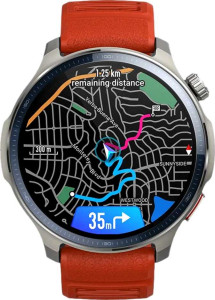
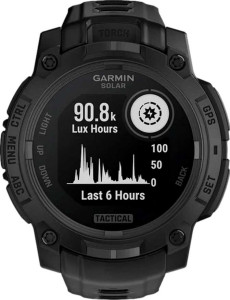
The most striking divide between these two watches is the display. The Amazfit Balance 2 features a 1.5″ OLED/AMOLED panel at 480 × 480 px and 323 ppi, while the Garmin Instinct 3 Solar Tactical 45mm uses a much smaller 0.9″ LCD at 176 × 176 px and 276 ppi. In practice, this is not a minor gap: OLED technology delivers true blacks, vivid contrast, and significantly better legibility in varied lighting conditions, while the LCD on the Garmin is a transflective type typical of rugged outdoor watches — readable in direct sunlight but far less visually rich. The Balance 2 also supports touch input and includes a sapphire glass display, adding scratch resistance that the Garmin does not match. For users who prioritize a modern smartwatch-style experience and rich visual feedback, the Balance 2 has a commanding advantage here.

On physical form factor, the results are more nuanced. The Garmin is slightly more compact in footprint (45 × 45 mm vs. 47.4 × 47.4 mm), but it is noticeably thicker (14.9 mm vs. 12.3 mm) and heavier (52 g vs. 43 g). The Balance 2 is slimmer and nearly 10 grams lighter, which translates to a more comfortable all-day and sleep-tracking experience on the wrist. Both watches share a 22 mm replaceable band and a 10 ATM water resistance rating, so they are equally capable in aquatic environments and equally flexible in terms of strap customization.

Overall, the Amazfit Balance 2 holds a clear design edge for users who value display quality, touchscreen interaction, and wearing comfort. The Garmin Instinct 3 Solar Tactical trades visual fidelity for a chunkier, more ruggedized silhouette — a deliberate design philosophy aimed at tactical and outdoor users who prioritize durability cues over screen richness. Choose the Balance 2 for a premium everyday look and feel; choose the Garmin if the tactical aesthetic and transflective readability in harsh sunlight matter more to you.

Sensors:
Monitors blood oxygenation levels
Has a heart rate monitor
has GPS
has an accelerometer
Has a temperature sensor
has a compass
Has a barometer
has a gyroscope
Has a cadence sensor
Monitors perspiration

Across the core sensor suite, these two watches are remarkably well-matched. Both pack GPS, heart rate monitoring, SpO2 tracking, a barometer, compass, accelerometer, gyroscope, and a temperature sensor — a comprehensive stack that covers the vast majority of health, fitness, and outdoor navigation use cases. For most users, this shared foundation means neither watch is leaving meaningful tracking capability on the table compared to the other.

The single differentiator in this category is the cadence sensor, present on the Garmin Instinct 3 Solar Tactical but absent on the Amazfit Balance 2. A dedicated cadence sensor measures steps or pedal strokes per minute with greater precision, which is particularly valuable for runners optimizing their stride efficiency or cyclists tracking pedaling rhythm without a separate accessory. It is a niche but meaningful advantage for performance-focused athletes who train around cadence-based metrics.

In summary, the sensor gap between these watches is narrow. The Garmin Instinct 3 Solar Tactical earns a slim edge here solely due to its cadence sensor — relevant if cycling or run cadence training is part of your routine, but inconsequential for the general fitness or outdoor user. Everyone else will find the two watches effectively tied on sensor capability.

Activity tracking:
Tracks your sleep
Tracks distance
Tracks steps taken
Measures pace
Provides sleep reports
Detects activities automatically
Has a route tracker
Tracks elevation
Has multi-sport mode
Has exercise tagging
Has a stroke counter for swimming
Tracks calorie intake
Designed for diving
Designed for golf

Activity tracking is another area where these two watches converge heavily. Both cover the full spectrum of everyday fitness monitoring — sleep tracking with reports, step counting, distance, pace, elevation, and automatic activity detection — alongside more specialized features like multi-sport mode, route tracking, swim stroke counting, calorie intake logging, and golf support. For the overwhelming majority of athletes and active users, this shared breadth means the choice between them will not hinge on tracking capability alone.

The sole differentiator here is that the Amazfit Balance 2 is designed for diving, while the Garmin Instinct 3 Solar Tactical is not. This is a functionally significant distinction for underwater enthusiasts: dive-specific design typically implies depth tracking, dive logging, and an interface optimized for use below the surface — capabilities a standard waterproof rating alone does not provide. For the niche user who dives regularly and wants a single device to cover both daily fitness and underwater activity, this gives the Balance 2 a meaningful and exclusive advantage.

Outside of that specific use case, these watches are effectively tied on activity tracking breadth. The Amazfit Balance 2 takes the edge in this group, but only for users for whom diving support is relevant. Everyone else will find the two watches indistinguishable in what they can track.

Connectivity:
has a cellular module
Is compatible with iOS
Is compatible with Android
supports Wi-Fi
supports ANT+
has NFC

Connectivity is where these two watches reveal distinctly different philosophies. Both support iOS and Android, lack cellular, and include NFC — so contactless payments and basic smartphone pairing are covered on either wrist. But beyond that shared baseline, each watch prioritizes a different wireless ecosystem. The Amazfit Balance 2 adds Wi-Fi support, enabling faster firmware updates and data syncing without needing a phone nearby. The Garmin Instinct 3 Solar Tactical forgoes Wi-Fi entirely but includes ANT+, a low-power protocol widely adopted in the fitness accessory world.

The practical weight of the ANT+ advantage should not be underestimated for performance athletes. ANT+ allows the Garmin to communicate simultaneously with external devices like chest-strap heart rate monitors, cycling power meters, foot pods, and other sensors — delivering more accurate and specialized data than wrist-based measurements alone. This is a significant draw for cyclists, triathletes, and anyone already invested in an ANT+ accessory ecosystem. Wi-Fi, by contrast, is a convenience feature — useful for cord-free syncing but not a capability that directly enhances workout data or sport-specific performance.

The connectivity edge depends entirely on the user's profile. The Garmin Instinct 3 Solar Tactical wins for serious athletes who rely on external fitness accessories via ANT+. The Amazfit Balance 2 is the better fit for everyday users who value seamless Wi-Fi syncing and have no need for a dedicated sensor network. Neither watch holds an absolute advantage here — it is a trade-off between training-grade accessory integration and day-to-day connectivity convenience.

Battery:
battery life 21 days Infinity days
battery life in training mode 240 hours 40 hours
battery life with GPS on 33 hours 130 hours
has wireless charging
has a rechargeable battery
Has a solar power battery
has a removable battery

Battery life is where these two watches diverge most dramatically, and the story is shaped largely by the Garmin's defining hardware advantage: a solar power battery. The Garmin Instinct 3 Solar Tactical lists its standard battery life as ∞ days — meaning that under sufficient sunlight exposure, the solar charging can indefinitely offset daily consumption, eliminating the charge cycle entirely for users in sun-rich environments. The Amazfit Balance 2, without solar support, delivers a solid but conventional 21 days of battery life. For expedition users, military personnel, or outdoor adventurers operating far from power sources, the Garmin's solar capability is a category-defining advantage.

GPS endurance tells a similarly one-sided story: the Garmin lasts 130 hours with GPS active versus the Balance 2's 33 hours. That is nearly four times the runtime during continuous navigation — a critical margin for multi-day ultramarathons, long-distance hikes, or any activity where the watch must track location continuously for days at a stretch. Where the Balance 2 partially reclaims ground is in general training mode endurance: it offers 240 hours compared to the Garmin's 40 hours, suggesting it can sustain lower-intensity workout tracking over a far longer cumulative period before needing a charge. Neither watch supports wireless charging, so both require a physical connection when they do need power.

The Garmin Instinct 3 Solar Tactical holds a commanding overall edge in battery performance for the use cases its design targets — extended outdoor missions and GPS-heavy activities. The Balance 2's superior training mode stamina is a genuine counter-point for users logging frequent but shorter sessions, but the Garmin's solar charging and GPS longevity represent advantages that are difficult to overstate for anyone prioritizing true off-grid independence.

Features:
release date June 2025 April 2025
has HRV tracking
measures VO2 max
measures resting heart rate
has fast/slow heart rate notifications
shows readiness level
Can be used to answer calls
Locates your phone
Has call control
Has notifications
has irregular heart rate warnings
Has silent alarm
Has vibrating alerts
has fall detection
Has a stopwatch
Has smart alarm
has voice commands
internal storage 32GB 0.128GB
Has a built-in camera remote control function
Acquires GPS faster
warranty period 1 years 1 years

Feature parity is strong at the health-monitoring layer — both watches offer HRV tracking, VO2 max estimation, resting heart rate, readiness scores, and heart rate alerts. But step outside that shared core and the two devices diverge sharply in what kind of user they are built for. The Amazfit Balance 2 leans decisively into smartwatch territory: it supports call answering and call control, voice commands, a camera remote, and packs a substantial 32 GB of internal storage. These are features designed to reduce how often you reach for your phone, making the Balance 2 a genuinely capable wrist-based companion for daily life. The Garmin Instinct 3 Solar Tactical, by contrast, supports none of those — it is built around mission-critical utility rather than smartphone extension.

Where the Garmin counters is with fall detection, an absent feature on the Balance 2. For solo hikers, tactical operators, or older users in physically demanding environments, automatic fall detection can be a meaningful safety net. The Balance 2's storage advantage is equally stark: 32 GB versus just 0.128 GB on the Garmin. In practical terms, the Garmin's storage is sufficient only for essential data like maps or minimal music, while the Balance 2 can hold a substantial local music library or offline content — a lifestyle-oriented capability the Garmin simply does not target.

Taken together, the Amazfit Balance 2 holds a clear advantage in this group for users who want a feature-rich smartwatch experience alongside fitness tracking. The gap in call handling, voice commands, storage, and camera control is wide enough to matter in daily use. The Garmin Instinct 3 Solar Tactical's addition of fall detection is its sole functional differentiator here — meaningful for specific safety-conscious users, but not enough to offset the Balance 2's broader smart feature set.
App & Software:
Provides activity reports
Has inactivity alerts
Counts how many calories you've burned
Has goal setting
Has achievements
Free app
Has exercise diary
Ad-free
Has coaching
Has temperature tracking
Has period notifications
Supports routes
Syncs with existing calendars
Has voice feedback
Has music playback
Displays fertile window notifications
Includes maps
Predicts ovulation
Predicts start date
Has video tutorials
Supports widgets
Can be personalised
Has barcode scanner on app
Tracks water intake
Has weight tracking
Has live tracking
Tracks BMI

App and software is the rare category where these two watches reach an absolute dead heat. Every single feature in this specification group — from activity reports, coaching, and goal setting to maps, live tracking, calendar sync, women's health features, BMI tracking, and music playback — is present on both the Amazfit Balance 2 and the Garmin Instinct 3 Solar Tactical. Both apps are free and ad-free, and neither includes a barcode scanner. There is not a single differentiating data point across the entire group.

The breadth of shared capability is worth noting in its own right. Ovulation prediction, fertile window notifications, and period tracking signal that both manufacturers have invested in comprehensive women's health tooling rather than treating it as an afterthought. Similarly, the inclusion of maps, route support, live tracking, and voice feedback alongside lifestyle features like water intake and weight tracking reflects a software philosophy on both sides that aims to cover the full spectrum of user needs — athletic, health-oriented, and everyday.

This group is a complete tie. Software alone will not guide a decision between these two watches — buyers should weight the differences identified in design, battery, sensors, and features categories instead, as those are where meaningful distinctions actually lie.

Miscellaneous:
has a battery level indicator
Has auto pause
Compatible with smart scales
Compatible with external heart rate monitors
Is compatible with Windows
has an external memory slot
Is compatible with Mac OS X
has a socket for a 3.5 mm audio jack

Most of this category is shared ground. Both watches include a battery level indicator, auto pause, compatibility with smart scales, and support for external heart rate monitors — and neither offers an external memory slot or a 3.5mm audio jack. For the vast majority of users, none of these shared specs will factor into a purchase decision.

The only differentiator here is desktop OS compatibility. The Garmin Instinct 3 Solar Tactical supports both Windows and Mac OS X, while the Amazfit Balance 2 is compatible with neither. In practice, this matters most to users who prefer to sync, configure, or manage their device directly from a computer rather than relying solely on a smartphone app. Researchers, data-focused athletes, or professionals who want to export workout data to a desktop environment will find the Garmin's broader OS compatibility a meaningful convenience advantage.

The Garmin Instinct 3 Solar Tactical takes a narrow edge in this group purely on the strength of its desktop OS compatibility. It is a situational advantage rather than a universal one, but for users who live and work across multiple devices, the ability to interact with their watch from a Windows or Mac machine without routing everything through a phone adds a layer of flexibility the Amazfit Balance 2 does not offer.

Comparison Summary & Verdict

After a thorough comparison, it is clear that each watch serves a distinct type of user. The Amazfit Balance 2 shines for those who want a premium everyday smartwatch experience: its large, vivid OLED touchscreen with sapphire glass, 32 GB of internal storage, call-answering capability, Wi-Fi support, and diving design make it a feature-rich companion for urban and active lifestyles. The Garmin Instinct 3 Solar Tactical Edition 45mm, on the other hand, is purpose-built for endurance and the outdoors: its solar-powered unlimited battery life, 130-hour GPS endurance, ANT+ support, cadence sensor, and fall detection make it the definitive choice for serious athletes, adventurers, and tactical users who cannot afford to run out of power in the field.

Amazfit Balance 2
Buy Amazfit Balance 2 if...

Buy the Amazfit Balance 2 if you want a feature-rich smartwatch with a large OLED touchscreen, sapphire glass, 32 GB storage, Wi-Fi, call-answering, and diving support for an active yet connected daily lifestyle.

Garmin Instinct 3 Solar Tactical Edition 45mm
Buy Garmin Instinct 3 Solar Tactical Edition 45mm if...

Buy the Garmin Instinct 3 Solar Tactical Edition 45mm if you need virtually unlimited battery life through solar charging, superior GPS endurance, ANT+ connectivity, and fall detection for demanding outdoor or tactical use.