Amazfit Balance 2
Garmin Vivoactive 6

Amazfit Balance 2 Garmin Vivoactive 6

Overview

When choosing between the Amazfit Balance 2 and the Garmin Vivoactive 6, you are weighing two capable smartwatches that share a strong common foundation yet diverge sharply in several key areas. Both sport AMOLED displays, built-in GPS, comprehensive health tracking, and NFC support — but their differences in battery life, display size, sensor suite, and overall form factor could make one a far better fit for your lifestyle than the other. Read on to explore the full specification breakdown.

Common Features

  • Both watches feature an OLED/AMOLED display type.
  • Both watches are waterproof.
  • Always-On Display is available on both watches.
  • The watch band is replaceable on both watches.
  • Both watches have a touchscreen display.
  • Neither watch is designed for kids.
  • Blood oxygenation level monitoring is available on both watches.
  • A heart rate monitor is present on both watches.
  • GPS is available on both watches.
  • Both watches include an accelerometer, compass, and gyroscope.
  • Neither watch has a cadence sensor or perspiration monitor.
  • Both watches track sleep and provide sleep reports.
  • Both watches track distance, steps taken, and pace.
  • Automatic activity detection is available on both watches.
  • Exercise tagging and a stroke counter for swimming are present on both watches.
  • Neither watch has a cellular module, but both are compatible with iOS and Android.
  • Wi-Fi and NFC are supported on both watches.
  • Neither watch supports wireless or solar charging, and neither has a removable battery.
  • HRV tracking, VO2 max measurement, and resting heart rate measurement are available on both watches.
  • Both watches offer fast/slow heart rate notifications, phone locating, call control, and notifications.
  • Irregular heart rate warnings are not available on either watch.
  • Both watches provide activity reports, inactivity alerts, calorie tracking, goal setting, achievements, an exercise diary, and are ad-free with a free app.
  • Both watches have a battery level indicator, auto pause, and are compatible with smart scales and external heart rate monitors.
  • Neither watch has an external memory slot or a 3.5 mm audio jack socket.

Main Differences

  • Screen size is 1.5″ on Amazfit Balance 2 and 1.2″ on Garmin Vivoactive 6.
  • ATM rating is 10 ATM on Amazfit Balance 2 and 5 ATM on Garmin Vivoactive 6.
  • Waterproof depth rating is 45 m on Amazfit Balance 2 and 50 m on Garmin Vivoactive 6.
  • Pixel density is 323 ppi on Amazfit Balance 2 and 459 ppi on Garmin Vivoactive 6.
  • Resolution is 480 x 480 px on Amazfit Balance 2 and 390 x 390 px on Garmin Vivoactive 6.
  • Branded damage-resistant glass is present on Garmin Vivoactive 6 but not available on Amazfit Balance 2.
  • Thickness is 12.3 mm on Amazfit Balance 2 and 10.9 mm on Garmin Vivoactive 6.
  • Weight is 43 g on Amazfit Balance 2 and 36 g on Garmin Vivoactive 6.
  • Dimensions are 47.4 x 47.4 mm on Amazfit Balance 2 and 42.2 x 42.2 mm on Garmin Vivoactive 6.
  • Sapphire glass display is present on Amazfit Balance 2 but not available on Garmin Vivoactive 6.
  • A temperature sensor is present on Amazfit Balance 2 but not available on Garmin Vivoactive 6.
  • A barometer is present on Amazfit Balance 2 but not available on Garmin Vivoactive 6.
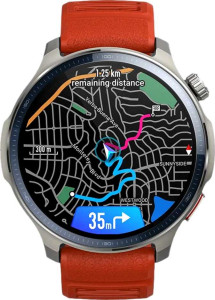
  • Route tracking, elevation tracking, multi-sport mode, and diving design are available on Amazfit Balance 2 but not on Garmin Vivoactive 6.
  • ANT+ support is present on Garmin Vivoactive 6 but not available on Amazfit Balance 2.
  • Battery life is 21 days on Amazfit Balance 2 and 11 days on Garmin Vivoactive 6.
  • Battery life with GPS on is 33 hours on Amazfit Balance 2 and 21 hours on Garmin Vivoactive 6.
  • Readiness level display, the ability to answer calls, voice commands, camera remote control, and faster GPS acquisition are available on Amazfit Balance 2 but not on Garmin Vivoactive 6.
  • Fall detection and a smart alarm are present on Garmin Vivoactive 6 but not available on Amazfit Balance 2.
  • Internal storage is 32GB on Amazfit Balance 2 and 8GB on Garmin Vivoactive 6.
  • Temperature tracking and weight tracking in the app are available on Amazfit Balance 2 but not on Garmin Vivoactive 6.
  • Windows and Mac OS X compatibility is present on Garmin Vivoactive 6 but not available on Amazfit Balance 2.
Specs Comparison
Amazfit Balance 2

Amazfit Balance 2

Garmin Vivoactive 6

Garmin Vivoactive 6

Design:
screen size 1.5" 1.2"
Display type OLED/AMOLED OLED/AMOLED
water resistance Waterproof Waterproof
ATM rating 10 ATM 5 ATM
waterproof depth rating 45 m 50 m
Always-On Display
pixel density 323 ppi 459 ppi
resolution 480 x 480 px 390 x 390 px
Watch band is replaceable
has branded damage-resistant glass
thickness 12.3 mm 10.9 mm
weight 43 g 36 g
height 47.4 mm 42.2 mm
width 47.4 mm 42.2 mm
Has a display
has a touch screen
Has sapphire glass display
volume 27.635148 cm³ 19.411156 cm³
is designed for kids
width of band 22 mm 20 mm

The most immediately noticeable difference between these two watches is physical size. The Amazfit Balance 2 sports a larger 1.5″ OLED display at 47.4 × 47.4 mm with a 43 g weight, while the Garmin Vivoactive 6 is meaningfully more compact at 42.2 × 42.2 mm, slimmer at 10.9 mm thick versus 12.3 mm, and lighter at 36 g. In practice, the Balance 2's larger footprint delivers a bigger canvas for glancing at data and navigating menus, but the Vivoactive 6 will sit more discreetly on smaller wrists and feel less obtrusive during sleep tracking or all-day wear.

On display quality, the two watches trade blows in an interesting way. The Balance 2 pushes a higher raw resolution of 480 × 480 px, but because its screen is physically larger, pixel density lands at 323 ppi. The Vivoactive 6, with its 390 × 390 px panel on a smaller screen, achieves a noticeably sharper 459 ppi — a difference that is perceptible in text crispness and fine icon detail at arm's length. For glass protection, the two products take opposite approaches: the Balance 2 uses sapphire glass (highly scratch-resistant but not a branded impact-protection system), while the Vivoactive 6 relies on branded damage-resistant glass (no sapphire). Sapphire generally excels against everyday scratches, whereas treated branded glass can offer a different hardness-toughness balance — neither is strictly superior, but sapphire is the more premium material for scratch resistance.

On water resistance, the Balance 2 holds a 10 ATM rating versus the Vivoactive 6's 5 ATM, making it the more confidently swim-proof option despite the per-spec depth figures. Both watches share Always-On Display, OLED panel technology, replaceable bands, and touchscreens — so the fundamentals are well-matched. Overall, the Vivoactive 6 has a clear edge in wearability and pixel sharpness, while the Balance 2 counters with a larger screen, sapphire glass, and higher water resistance rating — making the right choice largely dependent on whether the user prioritizes a bold, swim-ready display or a refined, compact everyday watch.
Sensors:
Monitors blood oxygenation levels
Has a heart rate monitor
has GPS
has an accelerometer
Has a temperature sensor
has a compass
Has a barometer
has a gyroscope
Has a cadence sensor
Monitors perspiration

Both watches share a solid sensor foundation — heart rate monitor, SpO2 tracking, GPS, accelerometer, gyroscope, and compass are all present on each device. For the vast majority of fitness and health tracking use cases, this common ground means neither watch leaves users with a meaningful gap in core monitoring capability.

Where the Amazfit Balance 2 pulls ahead is in its two additional sensors: a temperature sensor and a barometer. The temperature sensor enables wrist-based body temperature tracking, which is useful for menstrual cycle insights, illness detection, and recovery monitoring. The barometer is arguably even more impactful for active users — it provides real-time altitude readings, detects elevation changes during hikes or climbs, and can improve floor-count accuracy. The Garmin Vivoactive 6 lacks both, which is a tangible gap for outdoor enthusiasts or anyone who values environmental and physiological context in their data.

Stripped down to what the specs reveal, the Balance 2 holds a clear sensor suite advantage. The Vivoactive 6's omission of a barometer is particularly notable given Garmin's strong reputation in the outdoor and multisport segment — users expecting that level of environmental awareness should take note. For general fitness and everyday health tracking the two are closely matched, but anyone who ventures into hiking, altitude-variable activities, or detailed recovery monitoring will find the Balance 2 the more capable option based purely on these specs.

Activity tracking:
Tracks your sleep
Tracks distance
Tracks steps taken
Measures pace
Provides sleep reports
Detects activities automatically
Has a route tracker
Tracks elevation
Has multi-sport mode
Has exercise tagging
Has a stroke counter for swimming
Tracks calorie intake
Designed for diving
Designed for golf

At the foundation, these two watches are well-aligned: sleep tracking with reports, distance, steps, pace, automatic activity detection, exercise tagging, swim stroke counting, and calorie intake tracking are all shared features. Golf mode is also present on both, covering one of the more niche but popular sport-specific use cases. For casual fitness users, this common ground is substantial enough that neither watch feels lacking on the basics.

The divergence becomes significant once outdoor and multi-discipline athletes are considered. The Amazfit Balance 2 adds route tracking, elevation tracking, and a multi-sport mode — three features the Garmin Vivoactive 6 notably lacks. Route tracking means the Balance 2 can map and replay your path, invaluable for trail runners and cyclists. Elevation tracking complements the barometer advantage already seen in the sensors category, enabling genuine altitude-aware workout data. Multi-sport mode, meanwhile, allows seamless transitions between disciplines mid-workout — a cornerstone feature for triathletes and duathletes that the Vivoactive 6 simply does not offer based on these specs. The Balance 2 also covers diving as a dedicated activity, further broadening its sport scope.

The verdict here is straightforward: the Amazfit Balance 2 holds a clear activity tracking advantage. While the Vivoactive 6 holds its own for everyday fitness and golf, the absence of route tracking, elevation tracking, and multi-sport mode makes it the narrower tool for anyone with varied or outdoor-heavy training routines. Users who push across multiple sports or terrains will find the Balance 2 considerably more capable based on these specs alone.

Connectivity:
has a cellular module
Is compatible with iOS
Is compatible with Android
supports Wi-Fi
supports ANT+
has NFC

Connectivity is the closest category yet between these two watches. Both support Wi-Fi, NFC (enabling contactless payments), iOS and Android compatibility, and neither includes a cellular module — meaning both rely on a paired phone for notifications and data sync when away from Wi-Fi. For the overwhelming majority of users, this shared feature set covers everything needed for a modern smartwatch experience.

The single differentiator is the Garmin Vivoactive 6's support for ANT+, a low-power wireless protocol widely adopted in the fitness equipment ecosystem. ANT+ allows the watch to communicate directly with external sensors such as chest-strap heart rate monitors, cycling power meters, cadence sensors, and compatible gym equipment. For athletes who already invest in ANT+ accessories — or who prioritize data accuracy from dedicated external sensors over wrist-based readings — this is a genuinely useful protocol. The Amazfit Balance 2 lacks ANT+, which closes off that hardware ecosystem entirely.

Overall, connectivity is nearly a draw, but the Vivoactive 6 earns a narrow edge through ANT+ support. It is a niche advantage that will be irrelevant to casual users, but meaningfully expands the watch's compatibility with third-party fitness hardware for more gear-oriented athletes.

Battery:
battery life 21 days 11 days
battery life with GPS on 33 hours 21 hours
has wireless charging
has a rechargeable battery
Has a solar power battery
has a removable battery

Battery life is one of the most decisive categories in any smartwatch comparison, and here the gap is impossible to overlook. The Amazfit Balance 2 claims 21 days of standard battery life against the Garmin Vivoactive 6's 11 days — nearly double the endurance. In practical terms, this means the Balance 2 could last through three full weeks of typical use before needing a charge, while the Vivoactive 6 users will find themselves reaching for a cable roughly twice in that same window. For travelers, heavy sleepers who track overnight data continuously, or anyone who simply dislikes the charging ritual, that difference is felt daily.

The GPS-active gap reinforces this advantage. With GPS running — the most battery-intensive mode, typically engaged during outdoor runs, hikes, or cycling — the Balance 2 sustains 33 hours of continuous tracking versus 21 hours for the Vivoactive 6. That 12-hour margin is significant for ultra-endurance events or multi-day adventures where recharging mid-activity is not an option. Both watches share the same charging infrastructure limitations: neither supports wireless charging, both use non-removable rechargeable batteries, and neither offers solar charging as a backup. So when the battery runs out, both require a wired connection.

The Amazfit Balance 2 wins this category decisively. Across everyday use and GPS-intensive sessions alike, it offers substantially longer runtime with no trade-off in charging technology relative to the Vivoactive 6. For users where battery longevity ranks high in purchase priorities, the Balance 2 makes a compelling case on this metric alone.

Features:
release date June 2025 April 2025
has HRV tracking
measures VO2 max
measures resting heart rate
has fast/slow heart rate notifications
shows readiness level
Can be used to answer calls
Locates your phone
Has call control
Has notifications
has irregular heart rate warnings
Has ECG technology
Has silent alarm
Has vibrating alerts
has fall detection
Has a stopwatch
Has smart alarm
has voice commands
internal storage 32GB 8GB
Has a built-in camera remote control function
Acquires GPS faster
warranty period 1 years 1 years
has a front camera

Shared health intelligence is strong on both sides — HRV tracking, VO2 max, resting heart rate, and heart rate notifications are present on each watch, giving both a credible wellness monitoring foundation. Where they begin to diverge is in how far each extends that core. The Amazfit Balance 2 adds a readiness level score, which synthesizes recovery data into a daily actionable metric — a feature the Garmin Vivoactive 6 omits entirely. The Balance 2 also supports answering calls directly from the wrist, voice commands, and a camera remote control function, positioning it more squarely as a smartwatch in the traditional sense. Its 32GB of internal storage versus the Vivoactive 6's 8GB is a fourfold difference — highly relevant for storing music or offline content locally on the device.

The Vivoactive 6 counters with two features the Balance 2 lacks: fall detection and a smart alarm. Fall detection is a meaningful safety net, particularly for older users or solo outdoor athletes, as it can trigger emergency alerts after a detected impact. Smart alarm — which wakes the user at an optimal point in their sleep cycle — is a subtler but genuinely useful daily comfort feature. The Vivoactive 6 also acquires GPS without the faster lock advantage the Balance 2 claims, though both ultimately get there.

Tallying the differentiators, the Amazfit Balance 2 holds the broader feature advantage. Its readiness scoring, call handling, voice commands, camera remote, and substantially larger internal storage add up to a more expansive smartwatch experience. The Vivoactive 6's fall detection is a notable safety edge that some users will weight heavily, and smart alarm is a daily convenience, but these two features do not fully offset the Balance 2's wider feature breadth across this category.

App & Software:
Provides activity reports
Has inactivity alerts
Counts how many calories you've burned
Has goal setting
Has achievements
Free app
Has exercise diary
Ad-free
Has coaching
Has temperature tracking
Has period notifications
Supports routes
Syncs with existing calendars
Has voice feedback
Has music playback
Displays fertile window notifications
Includes maps
Predicts ovulation
Predicts start date
Has video tutorials
Supports widgets
Can be personalised
Has barcode scanner on app
Tracks water intake
Has weight tracking
Has live tracking
Tracks BMI

App and software is arguably the most evenly matched category in this entire comparison. An extensive list of features — activity reports, goal setting, achievements, coaching, music playback, maps, route support, calendar sync, live tracking, women's health tools (period notifications, fertile window, ovulation and start date predictions), water intake, BMI tracking, video tutorials, widgets, and personalization — are identical across both the Amazfit Balance 2 and Garmin Vivoactive 6 companion apps. Both are free and ad-free, which removes any friction around ongoing software costs. For the vast majority of users, the app experience will feel functionally equivalent.

The only two differentiators in favor of the Balance 2 are temperature tracking and weight tracking within the app. Temperature tracking in the app context ties directly back to the wrist sensor advantage identified earlier, giving users a longitudinal view of body temperature trends over time. Weight tracking, while a relatively simple feature, rounds out the body composition picture alongside BMI and calorie data — its absence in the Vivoactive 6 app is a minor but real gap for users managing body composition goals.

This category is effectively a near-tie, with the Amazfit Balance 2 holding a slim edge through its two additional tracking dimensions. Neither app shortchanges users on the fundamentals, but the Balance 2's software mirrors its hardware sensor advantage — making it the marginally more complete health data platform when these specs are taken at face value.

Miscellaneous:
has a battery level indicator
Has auto pause
Compatible with smart scales
Compatible with external heart rate monitors
Is compatible with Windows
has an external memory slot
Is compatible with Mac OS X
has a socket for a 3.5 mm audio jack

Miscellaneous is a tight category with one functional differentiator. Battery level indicator, auto pause, smart scale compatibility, and external heart rate monitor support are shared across both the Amazfit Balance 2 and Garmin Vivoactive 6 — neither watch includes an external memory slot or a 3.5mm audio jack, leaving no surprises on either side of those omissions.

The sole distinction is desktop OS compatibility. The Garmin Vivoactive 6 supports both Windows and Mac OS X, while the Amazfit Balance 2 lists compatibility with neither. In practice, most modern smartwatch management and data syncing happens through smartphone apps, so desktop compatibility is rarely a daily necessity — but it can matter for users who prefer to review workout data on a computer via a native desktop client, or for those in environments where phone use is restricted.

The Garmin Vivoactive 6 takes a narrow edge here solely on the basis of its broader desktop OS support. It is not a category-defining advantage, and for the majority of users it will go entirely unnoticed, but it does represent a small additional layer of platform flexibility that the Balance 2 does not offer according to these specs.

Comparison Summary & Verdict

After examining every specification, the two watches serve distinct types of users. The Amazfit Balance 2 stands out for those who want a larger screen, a vastly superior battery life of up to 21 days, a richer sensor package including a barometer and temperature sensor, route and elevation tracking, multi-sport and diving modes, voice commands, and a generous 32 GB of internal storage. It is the stronger choice for outdoor enthusiasts and users who prioritize endurance. The Garmin Vivoactive 6, on the other hand, appeals to users who prefer a lighter and slimmer design with a higher pixel density display, damage-resistant glass, ANT+ connectivity, fall detection, and compatibility with Windows and Mac OS X. It suits everyday wearers who value a refined, compact build and seamless desktop integration over raw feature count.

Amazfit Balance 2
Buy Amazfit Balance 2 if...

Buy the Amazfit Balance 2 if you want a larger display, significantly longer battery life, a comprehensive sensor suite with barometer and temperature tracking, and advanced activity features like route tracking and multi-sport mode.

Garmin Vivoactive 6
Buy Garmin Vivoactive 6 if...

Buy the Garmin Vivoactive 6 if you prefer a lighter, slimmer watch with a sharper high-density display, damage-resistant glass, ANT+ support, fall detection, and full compatibility with Windows and Mac desktops.