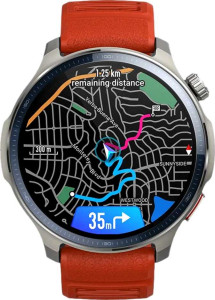
Amazfit Balance 2
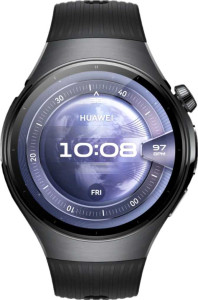
Huawei Watch 5

Amazfit Balance 2 Huawei Watch 5

Overview

When comparing the Amazfit Balance 2 and the Huawei Watch 5, two capable smartwatches emerge with surprisingly different priorities. Both share a 1.5″ AMOLED display, comprehensive sensor suites, and solid activity tracking — but they diverge sharply when it comes to battery endurance, health monitoring depth, and connectivity options. Whether you value lasting longer between charges or packing in advanced cardiac features, this head-to-head breaks down exactly where each watch shines.

Common Features

  • Both watches feature a 1.5″ screen size.
  • Both use an OLED/AMOLED display type.
  • Both watches are waterproof with an IP68 ingress protection rating.
  • Always-On Display is available on both watches.
  • The watch band is replaceable on both products.
  • Neither watch features branded damage-resistant glass.
  • Both watches monitor blood oxygenation levels.
  • Both watches include a heart rate monitor.
  • GPS is available on both watches.
  • Both watches include an accelerometer, gyroscope, compass, barometer, and temperature sensor.
  • Both watches track sleep and provide sleep reports.
  • Both watches track steps taken, distance, pace, elevation, and route.
  • Activity auto-detection is available on both watches.
  • Both watches are compatible with iOS and Android.
  • Both watches use Bluetooth 5.2.
  • Wi-Fi support is present on both watches.
  • ANT+ support is not available on either watch.
  • NFC is available on both watches.
  • Neither watch has a solar power battery or a removable battery.
  • Both watches support HRV tracking, VO2 max measurement, resting heart rate measurement, and fast/slow heart rate notifications.
  • Both watches can be used to answer calls and have call control.
  • A readiness level indicator is available on both watches.
  • Both watches can locate your phone.
  • Both watches provide activity reports, inactivity alerts, calorie tracking, goal setting, achievements, an exercise diary, and are ad-free with a free app.
  • Both watches have a battery level indicator, auto pause, passcode, and are compatible with smart scales and external heart rate monitors.
  • Neither watch has an external memory slot or a 3.5 mm audio jack socket.

Main Differences

  • ATM rating is 10 ATM on Amazfit Balance 2 and 5 ATM on Huawei Watch 5.
  • Waterproof depth rating is 45 m on Amazfit Balance 2 and 40 m on Huawei Watch 5.
  • Pixel density is 323 ppi on Amazfit Balance 2 and 310 ppi on Huawei Watch 5.
  • Resolution is 480 x 480 px on Amazfit Balance 2 and 466 x 466 px on Huawei Watch 5.
  • Thickness is 12.3 mm on Amazfit Balance 2 and 11.3 mm on Huawei Watch 5.
  • Weight is 43 g on Amazfit Balance 2 and 63 g on Huawei Watch 5.
  • Height is 47.4 mm on Amazfit Balance 2 and 46.7 mm on Huawei Watch 5.
  • Width is 47.4 mm on Amazfit Balance 2 and 46 mm on Huawei Watch 5.
  • Volume is 27.635148 cm³ on Amazfit Balance 2 and 24.27466 cm³ on Huawei Watch 5.
  • A cellular module is present on Huawei Watch 5 but not available on Amazfit Balance 2.
  • Wi-Fi version support is Wi-Fi 4 (802.11n) only on Amazfit Balance 2, while Huawei Watch 5 supports Wi-Fi 4 (802.11n), Wi-Fi 5 (802.11ac), and Wi-Fi 6 (802.11ax).
  • Battery life is 21 days on Amazfit Balance 2 and 4.5 days on Huawei Watch 5.
  • Battery power is 658 mAh on Amazfit Balance 2 and 867 mAh on Huawei Watch 5.
  • Battery life in power save mode is 67 hours on Amazfit Balance 2 and 264 hours on Huawei Watch 5.
  • Wireless charging is present on Huawei Watch 5 but not available on Amazfit Balance 2.
  • Irregular heart rate warnings are present on Huawei Watch 5 but not available on Amazfit Balance 2.
  • ECG technology is present on Huawei Watch 5 but not available on Amazfit Balance 2.
  • Fall detection is present on Huawei Watch 5 but not available on Amazfit Balance 2.
Specs Comparison
Amazfit Balance 2

Amazfit Balance 2

Huawei Watch 5

Huawei Watch 5

Design:
screen size 1.5" 1.5"
Display type OLED/AMOLED OLED/AMOLED
water resistance Waterproof Waterproof
ATM rating 10 ATM 5 ATM
Ingress Protection (IP) rating IP68 IP68
waterproof depth rating 45 m 40 m
Always-On Display
pixel density 323 ppi 310 ppi
resolution 480 x 480 px 466 x 466 px
Watch band is replaceable
has branded damage-resistant glass
thickness 12.3 mm 11.3 mm
weight 43 g 63 g
height 47.4 mm 46.7 mm
width 47.4 mm 46 mm
Has a display
has a touch screen
Has sapphire glass display
volume 27.635148 cm³ 24.27466 cm³
is designed for kids
width of band 22 mm 22 mm

Both the Amazfit Balance 2 and the Huawei Watch 5 share the same 1.5″ OLED/AMOLED display, sapphire glass protection, Always-On Display support, IP68 certification, and a 22 mm replaceable band — so on the surface they appear nearly identical in design philosophy. However, a closer look at the numbers reveals meaningful differences in several dimensions that matter to daily wearability and use.

The most striking divergence is weight: the Balance 2 comes in at just 43 g, versus 63 g for the Watch 5 — a 47% difference. In practice, that extra 20 g is noticeable over a full day of wear, particularly during workouts or sleep tracking. Counterintuitively, the Watch 5 partially offsets this with a slimmer 11.3 mm profile compared to the Balance 2's 12.3 mm, and a marginally smaller footprint (46 × 46.7 mm vs. 47.4 × 47.4 mm), meaning it sits lower on the wrist even if it weighs more. On display crispness, the Balance 2 also edges ahead with 480 × 480 px at 323 ppi versus 466 × 466 px at 310 ppi — a subtle but real improvement in text sharpness and icon clarity. For water resistance, the Balance 2 is rated at 10 ATM / 45 m versus 5 ATM / 40 m for the Watch 5, making it the stronger choice for swimming or water sports.

Overall, the Amazfit Balance 2 holds a clear design edge for users who prioritize comfort during extended wear and aquatic activities, thanks to its significantly lighter build, sharper display, and stronger water resistance. The Huawei Watch 5 counters with a sleeker, lower-profile case that may appeal to those who prefer a thinner wrist presence, but it cannot match the Balance 2's all-day comfort advantage on weight alone.
Sensors:
Monitors blood oxygenation levels
Has a heart rate monitor
has GPS
has an accelerometer
Has a temperature sensor
has a compass
Has a barometer
has a gyroscope
Has a cadence sensor
Monitors perspiration

Across every sensor listed, the Amazfit Balance 2 and Huawei Watch 5 are in complete lockstep. Both pack the full core suite: heart rate monitor, SpO2 (blood oxygen), GPS, accelerometer, gyroscope, barometer, compass, and a temperature sensor — the combination that defines a capable, modern sport and wellness smartwatch.

What this sensor set means in practice is that both watches can handle continuous health monitoring, outdoor navigation, altitude tracking, and activity recognition without gaps. The barometer adds elevation awareness useful for hiking and stair counting, while the temperature sensor expands wellness context beyond heart rate alone. Neither watch includes a cadence sensor or perspiration monitor, so dedicated runners seeking real-time step frequency data or advanced sweat analysis will find both watches equally limited on that front.

This group is a complete tie. There is no sensor advantage on either side — a user choosing between these two watches based solely on sensor capability will find identical coverage. The decision will need to rest on other specification groups.

Activity tracking:
Tracks your sleep
Tracks distance
Tracks steps taken
Measures pace
Provides sleep reports
Detects activities automatically
Has a route tracker
Tracks elevation
Has exercise tagging
Has a stroke counter for swimming
Tracks calorie intake
Designed for diving
Designed for golf

Activity tracking is another category where the Amazfit Balance 2 and Huawei Watch 5 arrive at exactly the same destination. Both cover the full spectrum of everyday fitness needs — sleep tracking with reports, step counting, distance, pace, elevation, and automatic activity detection — meaning neither requires manual workout logging for common activities.

More telling is what both watches support beyond the basics. Swim stroke counting, golf mode, and dive support push both devices firmly into multi-sport territory, catering to users with diverse athletic lifestyles rather than just casual walkers or runners. The inclusion of calorie intake tracking alongside expenditure data also signals that both watches are positioned as holistic wellness tools, not just movement counters.

With every tracked feature identical across both products, this group is a complete tie. No activity-tracking advantage exists on either side, and buyers focused on workout breadth or health monitoring depth will find no reason to prefer one over the other based on this data alone.

Connectivity:
has a cellular module
Is compatible with iOS
Is compatible with Android
Bluetooth version 5.2 5.2
supports Wi-Fi
Wi-Fi version Wi-Fi 4 (802.11n) Wi-Fi 4 (802.11n), Wi-Fi 5 (802.11ac), Wi-Fi 6 (802.11ax)
supports ANT+
has NFC

Connectivity is where a meaningful gap finally opens between these two watches. The most significant differentiator is the cellular module found exclusively in the Huawei Watch 5. This means the Watch 5 can make calls, stream data, and receive notifications entirely independently of a smartphone — a fundamental capability shift for users who want to leave their phone behind during runs, workouts, or travel without losing connectivity.

The Watch 5 also pulls ahead on Wi-Fi, supporting Wi-Fi 4, Wi-Fi 5, and Wi-Fi 6, compared to the Amazfit Balance 2's Wi-Fi 4 only. In practical terms, Wi-Fi 6 support means faster data sync speeds and better performance in congested network environments — relevant for users who sync large workout files or use the watch in busy public spaces. Both watches match on Bluetooth 5.2, NFC for contactless payments, and cross-platform compatibility with iOS and Android, so day-to-day pairing and tap-to-pay functionality is equivalent.

The Huawei Watch 5 holds a clear advantage in this category, driven by its standalone cellular capability and broader Wi-Fi support. For users who value watch independence from their phone, this difference alone could be decisive. The Balance 2 covers the connectivity essentials competently, but it cannot match the Watch 5's untethered freedom.

Battery:
battery life 21 days 4.5 days
battery power 658 mAh 867 mAh
battery life in power save mode 67 hours 264 hours
has wireless charging
has a rechargeable battery
Has a solar power battery
has a removable battery

Battery performance produces one of the starkest contrasts in this entire comparison. Despite carrying a larger 867 mAh cell versus the 658 mAh in the Amazfit Balance 2, the Huawei Watch 5 delivers just 4.5 days of rated battery life — a direct consequence of powering its cellular module and more demanding internals. The Balance 2, by contrast, claims an exceptional 21 days of normal use, meaning users could realistically go three weeks between charges. For travelers, light packers, or anyone fatigued by daily charging routines, this is a transformative difference.

Power-save mode tells an equally dramatic story in the Balance 2's favor: 67 hours for the Balance 2 versus a remarkable 264 hours for the Watch 5 — nearly 11 days. This suggests the Watch 5's power-save mode aggressively strips back features to preserve the battery that normal use drains so quickly, while the Balance 2's already-efficient normal mode leaves less room to squeeze out additional gains. The Watch 5 does offset some charging inconvenience with wireless charging, a feature the Balance 2 lacks entirely, making top-ups more effortless even if they are more frequent.

For battery longevity, the Amazfit Balance 2 wins decisively on real-world runtime despite its smaller cell — a reflection of its leaner feature load without cellular. The Watch 5's wireless charging adds convenience, but it is essentially a coping mechanism for its heavier power consumption. Users who prioritize charging less will strongly prefer the Balance 2; those who accept frequent charging in exchange for cellular independence will find the Watch 5's trade-off worthwhile.

Features:
release date June 2025 May 2025
has HRV tracking
measures VO2 max
measures resting heart rate
has fast/slow heart rate notifications
shows readiness level
Can be used to answer calls
Locates your phone
Has call control
Has notifications
has irregular heart rate warnings
Has ECG technology
Has silent alarm
Has vibrating alerts
has fall detection
Has a stopwatch
Has smart alarm
has voice commands
Has a built-in camera remote control function
Acquires GPS faster
warranty period 1 years 1 years
number of microphones 1 1
has a front camera

The shared feature set between these two watches is extensive — both support HRV tracking, VO2 max, readiness scores, call answering, notifications, voice commands, and fast GPS acquisition, forming a solid and capable foundation for health monitoring and daily smartwatch use. For the majority of users, this common ground covers virtually everything they would reach for on a daily basis.

Where the Huawei Watch 5 pulls ahead is in cardiac safety features. It adds ECG technology, irregular heart rate warnings, and fall detection — three capabilities absent from the Amazfit Balance 2. ECG provides a clinical-grade snapshot of heart rhythm that can flag atrial fibrillation, a condition that standard optical heart rate sensors can miss entirely. Irregular heart rate warnings add a passive, always-on safety net, while fall detection automatically triggers an alert if the wearer takes a hard tumble — a feature particularly valued by older users or those exercising alone in remote areas. Together, these three additions meaningfully raise the Watch 5's ceiling as a personal health and safety device.

The Huawei Watch 5 holds a clear advantage in this category, driven entirely by its health and safety feature depth. The Balance 2 is not lacking for everyday wellness tools, but users who place a premium on cardiac monitoring or personal safety — especially those with health concerns or aging family members — will find the Watch 5's additions carry real, practical weight.

App & Software:
Provides activity reports
Has inactivity alerts
Counts how many calories you've burned
Has goal setting
Has achievements
Free app
Has exercise diary
Ad-free
Has coaching
Has temperature tracking
Has period notifications
Supports routes
Has voice feedback
Has music playback
Displays fertile window notifications
Includes maps
Predicts ovulation
Predicts start date
Supports widgets
Can be personalised
Has barcode scanner on app
Tracks water intake
Has weight tracking
Has live tracking
Tracks BMI

Few spec categories produce a more comprehensive shared list than this one. Across all 25 app and software features provided, the Amazfit Balance 2 and Huawei Watch 5 are perfectly identical — every capability present on one is present on the other, and the single absent feature (barcode scanner) is missing from both.

What makes this parity notable is the breadth of what both platforms cover. Beyond standard fitness tools like activity reports, goal setting, and calorie tracking, both apps extend into reproductive health with ovulation prediction, fertile window notifications, and cycle start date forecasting — a level of wellness depth that goes well beyond typical smartwatch software. Both also include live tracking, maps, route support, and voice feedback, catering to outdoor athletes who need real-time guidance, alongside BMI, water intake, and weight tracking for users focused on broader body composition goals.

This group is a complete tie. The software ecosystems of both watches are functionally equivalent based on the provided data, and no advantage exists on either side. Users comparing these two products on app richness alone will find no differentiating factor here.

Miscellaneous:
has a battery level indicator
Has auto pause
Has passcode
Compatible with smart scales
Compatible with external heart rate monitors
has an external memory slot
has a socket for a 3.5 mm audio jack

The Miscellaneous category rounds out this comparison with a final dead heat. Every feature in this group — battery level indicator, auto pause, passcode security, compatibility with smart scales, and support for external heart rate monitors — is shared identically by both the Amazfit Balance 2 and the Huawei Watch 5.

The two shared absences are worth noting in context: neither watch offers an external memory slot or a 3.5 mm audio jack. The lack of expandable storage is standard practice for modern smartwatches, so this is no disadvantage for either. The absence of an audio jack is similarly unsurprising given current wearable design trends, and both watches support music playback through other means as established in the software category.

This group is a complete tie with no differentiating factors on either side. As a closing note across all specification groups in this comparison, the Huawei Watch 5 distinguishes itself through cellular connectivity, broader Wi-Fi support, and richer cardiac safety features, while the Amazfit Balance 2 counters with dramatically superior battery life and a lighter, more comfortable build — making the choice between them largely a question of priorities rather than overall quality.

Comparison Summary & Verdict

After weighing all the evidence, these two watches serve quite different audiences. The Amazfit Balance 2 stands out with its remarkable 21-day battery life, lighter 43 g build, and superior water resistance at 10 ATM — making it an excellent companion for endurance athletes and users who hate frequent charging. The Huawei Watch 5, on the other hand, counters with a richer health feature set including ECG technology, irregular heart rate warnings, and fall detection, plus the convenience of wireless charging and built-in cellular connectivity. Its broader Wi-Fi support and extended 264-hour power-save mode also add practical value for everyday users. In short, choose the Amazfit Balance 2 for long-haul fitness use, and the Huawei Watch 5 if advanced health monitoring and smart connectivity are your top priorities.

Amazfit Balance 2
Buy Amazfit Balance 2 if...

Buy the Amazfit Balance 2 if you prioritize an exceptionally long battery life of 21 days, a lightweight 43 g design, and deeper water resistance of up to 45 m.

Huawei Watch 5
Buy Huawei Watch 5 if...

Buy the Huawei Watch 5 if advanced health monitoring — including ECG, fall detection, and irregular heart rate warnings — plus cellular connectivity and wireless charging matter most to you.