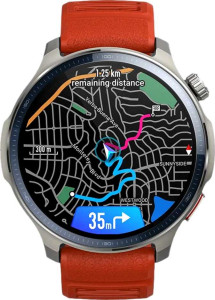
Amazfit Balance 2
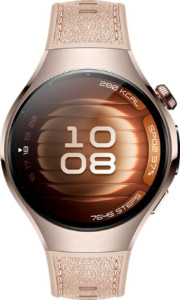
Huawei Watch 5 42mm

Amazfit Balance 2 Huawei Watch 5 42mm

Overview

When comparing the Amazfit Balance 2 and the Huawei Watch 5 42mm, two capable smartwatches emerge with remarkably different priorities. Both share a strong sensor suite, robust activity tracking, and cross-platform compatibility, yet they diverge sharply on battlegrounds like battery endurance, advanced health features, and connectivity options. Whether you value days-long independence from the charger or cutting-edge health monitoring technology, this side-by-side breakdown will help you find your ideal match.

Common Features

  • Both watches feature an OLED/AMOLED display.
  • Both watches are waterproof with an IP68 ingress protection rating.
  • Always-On Display is available on both watches.
  • The watch band is replaceable on both models.
  • Neither watch features branded damage-resistant glass.
  • Both watches have a touchscreen display.
  • Both watches monitor blood oxygenation levels.
  • Both watches include a heart rate monitor.
  • Both watches have built-in GPS.
  • Both watches include an accelerometer, gyroscope, compass, barometer, and temperature sensor.
  • Both watches track sleep and provide sleep reports.
  • Both watches track steps, distance, pace, elevation, and include a route tracker.
  • Both watches automatically detect activities.
  • Both watches are compatible with iOS and Android.
  • Both watches use Bluetooth 5.2.
  • Both watches support Wi-Fi 4 (802.11n) and have NFC.
  • Neither watch supports ANT+.
  • Both watches have a rechargeable, non-removable battery with no solar charging.
  • Both watches support HRV tracking, VO2 max measurement, resting heart rate, and fast/slow heart rate notifications.
  • Both watches can be used to answer calls, control calls, and locate your phone.
  • Both watches provide activity reports, inactivity alerts, calorie tracking, goal setting, achievements, an exercise diary, and are ad-free with a free companion app.
  • Both watches have a battery level indicator, auto pause, passcode protection, and compatibility with smart scales and external heart rate monitors.
  • Neither watch has an external memory slot or a 3.5 mm audio jack.
  • Both watches show a readiness level.

Main Differences

  • Screen size is 1.5″ on Amazfit Balance 2 and 1.38″ on Huawei Watch 5 42mm.
  • ATM rating is 10 ATM on Amazfit Balance 2 and 5 ATM on Huawei Watch 5 42mm.
  • Waterproof depth rating is 45 m on Amazfit Balance 2 and 40 m on Huawei Watch 5 42mm.
  • Pixel density is 323 ppi on Amazfit Balance 2 and 338 ppi on Huawei Watch 5 42mm.
  • Resolution is 480 x 480 px on Amazfit Balance 2 and 466 x 466 px on Huawei Watch 5 42mm.
  • Thickness is 12.3 mm on Amazfit Balance 2 and 10.5 mm on Huawei Watch 5 42mm.
  • Weight is 43 g on Amazfit Balance 2 and 51 g on Huawei Watch 5 42mm.
  • Height is 47.4 mm on Amazfit Balance 2 and 42.5 mm on Huawei Watch 5 42mm.
  • Width is 47.4 mm on Amazfit Balance 2 and 42 mm on Huawei Watch 5 42mm.
  • Volume is 27.635148 cm³ on Amazfit Balance 2 and 18.7425 cm³ on Huawei Watch 5 42mm.
  • A cellular module is present on Huawei Watch 5 42mm but not available on Amazfit Balance 2.
  • Wi-Fi support covers Wi-Fi 4 (802.11n) only on Amazfit Balance 2, while Huawei Watch 5 42mm also supports Wi-Fi 5 (802.11ac) and Wi-Fi 6 (802.11ax).
  • Battery life is 21 days on Amazfit Balance 2 and 3 days on Huawei Watch 5 42mm.
  • Battery power is 658 mAh on Amazfit Balance 2 and 540 mAh on Huawei Watch 5 42mm.
  • Battery life in power save mode is 67 hours on Amazfit Balance 2 and 264 hours on Huawei Watch 5 42mm.
  • Wireless charging is available on Huawei Watch 5 42mm but not on Amazfit Balance 2.
  • Irregular heart rate warnings are available on Huawei Watch 5 42mm but not on Amazfit Balance 2.
  • ECG technology is present on Huawei Watch 5 42mm but not available on Amazfit Balance 2.
  • Fall detection is available on Huawei Watch 5 42mm but not on Amazfit Balance 2.
Specs Comparison
Amazfit Balance 2

Amazfit Balance 2

Huawei Watch 5 42mm

Huawei Watch 5 42mm

Design:
screen size 1.5" 1.38"
Display type OLED/AMOLED OLED/AMOLED
water resistance Waterproof Waterproof
ATM rating 10 ATM 5 ATM
Ingress Protection (IP) rating IP68 IP68
waterproof depth rating 45 m 40 m
Always-On Display
pixel density 323 ppi 338 ppi
resolution 480 x 480 px 466 x 466 px
Watch band is replaceable
has branded damage-resistant glass
thickness 12.3 mm 10.5 mm
weight 43 g 51 g
height 47.4 mm 42.5 mm
width 47.4 mm 42 mm
Has a display
has a touch screen
Has sapphire glass display
volume 27.635148 cm³ 18.7425 cm³
is designed for kids
width of band 22 mm 22 mm

Both watches share a strong foundation: OLED/AMOLED panels, sapphire glass protection, Always-On Display, IP68 certification, and a 22 mm replaceable band. These are table-stakes features at this tier, and neither product cuts corners here. The real divergence lies in form factor philosophy. The Amazfit Balance 2 opts for a larger, more wrist-dominant presence — a 1.5″ screen housed in a 47.4 × 47.4 mm case — while the Huawei Watch 5 42mm takes a more restrained approach at 1.38″ across a 42.5 × 42 mm footprint. In practice, the Balance 2's bigger display makes glanceable data and navigation easier to read, particularly outdoors or during workouts, whereas the Watch 5 42mm will sit more discreetly on smaller wrists.

The thickness and weight trade-off is notable. The Huawei is meaningfully slimmer at 10.5 mm versus 12.3 mm, which directly affects how the watch feels under a shirt cuff and how premium it looks in formal contexts. However, despite its larger chassis, the Balance 2 is actually lighter at 43 g compared to the Watch 5's 51 g — a real-world advantage for all-day and sleep tracking comfort. The Watch 5's higher mass in a smaller volume (roughly 18.7 cm³ vs 27.6 cm³) suggests denser internal construction. On pixel density, the difference is marginal: 338 ppi on the Watch 5 versus 323 ppi on the Balance 2 — both are sharp enough that individual pixels are indistinguishable in daily use.

Water resistance is a clear win for the Balance 2: its 10 ATM / 45 m rating meaningfully surpasses the Watch 5's 5 ATM / 40 m, making it the more confident choice for swimming or water sports. Overall, neither watch dominates across the board — the Huawei Watch 5 42mm edges ahead on sleekness and compactness, making it the better fit for style-conscious or small-wristed users, while the Amazfit Balance 2 wins on screen real estate, lighter weight, and water durability, suiting active users who prioritize wearability and readability.

Sensors:
Monitors blood oxygenation levels
Has a heart rate monitor
has GPS
has an accelerometer
Has a temperature sensor
has a compass
Has a barometer
has a gyroscope
Has a cadence sensor
Monitors perspiration

Across every sensor listed, the Amazfit Balance 2 and Huawei Watch 5 42mm are in complete lockstep. Both carry the full suite expected of a serious fitness wearable: heart rate monitor, SpO2 tracking, GPS, accelerometer, gyroscope, barometer, compass, and a temperature sensor. This is a well-rounded package that covers the core pillars of health monitoring, navigation, and motion tracking without any gaps on either side.

The practical significance of this sensor set is substantial. The combination of GPS with a barometer means both watches can track elevation changes accurately during hikes or runs — not just flat-distance mapping. The gyroscope and accelerometer together enable reliable activity and sleep stage detection, while the temperature sensor supports skin temperature trending for recovery and menstrual cycle insights. Neither watch monitors perspiration or cadence natively, which means dedicated cyclists or runners who rely on step-rate data would need external sensors regardless of which device they choose.

Since the sensor specifications are identical across all ten data points, this category is a definitive tie. Neither the Balance 2 nor the Watch 5 42mm holds any advantage here — a user's choice between them should rest entirely on other factors such as design, battery life, or software ecosystem.

Activity tracking:
Tracks your sleep
Tracks distance
Tracks steps taken
Measures pace
Provides sleep reports
Detects activities automatically
Has a route tracker
Tracks elevation
Has exercise tagging
Has a stroke counter for swimming
Tracks calorie intake
Designed for diving
Designed for golf

Activity tracking is another area where the Amazfit Balance 2 and Huawei Watch 5 42mm arrive at exactly the same destination. Every one of the thirteen tracked capabilities — from foundational features like step counting and sleep reporting to more specialized ones like swim stroke counting, golf support, and diving mode — is present on both devices without exception.

What makes this shared feature set noteworthy is its breadth. Automatic activity detection removes the friction of manually logging workouts, while route tracking combined with elevation monitoring means both watches can serve trail runners and hikers who need a complete picture of their outdoor sessions. The inclusion of calorie intake tracking — not just burn estimation — nudges both devices toward a more holistic wellness platform rather than a pure fitness tracker. At the specialized end, dive mode and golf support are features typically reserved for premium or activity-specific watches, so finding them on both products signals a deliberate push into multi-sport versatility.

With all thirteen data points matching identically, this category is a clean tie. Neither the Balance 2 nor the Watch 5 42mm offers a broader or deeper activity tracking profile than the other based solely on the provided specs, and prospective buyers should look to other specification groups to find meaningful differentiation.

Connectivity:
has a cellular module
Is compatible with iOS
Is compatible with Android
Bluetooth version 5.2 5.2
supports Wi-Fi
Wi-Fi version Wi-Fi 4 (802.11n) Wi-Fi 4 (802.11n), Wi-Fi 5 (802.11ac), Wi-Fi 6 (802.11ax)
supports ANT+
has NFC

Connectivity is where a meaningful gap opens up between these two watches. The shared foundation is solid — both run Bluetooth 5.2, support Wi-Fi, offer NFC for contactless payments, and are compatible with both iOS and Android. But the Huawei Watch 5 42mm pulls ahead in two significant ways: it includes a cellular module and supports a wider Wi-Fi spectrum spanning Wi-Fi 4, 5, and 6, while the Amazfit Balance 2 is limited to Wi-Fi 4 (802.11n) and has no cellular capability at all.

The cellular difference is the more impactful of the two. A built-in cellular module means the Watch 5 can make calls, stream music, receive notifications, and use apps independently — without a phone nearby. For runners, cyclists, or anyone who frequently leaves their phone behind, this is a genuine lifestyle upgrade rather than a marginal spec improvement. The Balance 2, by contrast, remains tethered to a paired phone for those functions. On Wi-Fi, the practical day-to-day difference between Wi-Fi 4 and Wi-Fi 6 on a wearable is modest — firmware updates and music syncs will complete faster on the Watch 5, but this is unlikely to be a deciding factor on its own.

The Huawei Watch 5 42mm holds a clear edge in this category, driven primarily by its cellular module — a feature that fundamentally expands what the watch can do independently. Users who value phone-free functionality will find the Watch 5 meaningfully more capable, while those who always carry their phone may find the Balance 2's connectivity suite sufficient for their needs.

Battery:
battery life 21 days 3 days
battery power 658 mAh 540 mAh
battery life in power save mode 67 hours 264 hours
has wireless charging
has a rechargeable battery
Has a solar power battery
has a removable battery

Battery life is one of the starkest contrasts in this entire comparison. The Amazfit Balance 2 claims 21 days of standard battery life from a 658 mAh cell, while the Huawei Watch 5 42mm — running a smaller 540 mAh battery — manages just 3 days. That seven-fold difference in endurance almost certainly reflects the power cost of the Watch 5's cellular module, which is a constant drain even when idle. In practical terms, the Balance 2 can last through multi-week trips, extended outdoor expeditions, or simply the kind of low-maintenance daily use where charging is an afterthought. The Watch 5 user, by contrast, will be reaching for a charger roughly twice a week.

The power-save mode numbers tell an interesting counterpoint story. In this mode, the Watch 5 stretches to a remarkable 264 hours — over 11 days — compared to the Balance 2's 67 hours (under 3 days). This suggests the Watch 5's power-save mode aggressively shuts down its more power-hungry features, including likely cellular, to eke out emergency endurance. It is a useful safety net, but power-save mode typically disables the features that make a smartwatch worth wearing in the first place.

One point in the Watch 5's favor is wireless charging, which the Balance 2 lacks entirely. Frequent top-ups become less inconvenient when you can simply place the watch on a pad rather than hunting for a proprietary cable. Still, that convenience only partially offsets the charging frequency required. The Amazfit Balance 2 wins this category decisively on endurance, making it the stronger choice for anyone who prioritizes low-maintenance wear — while the Watch 5 trades runtime for the connected features that demand more power.

Features:
release date June 2025 May 2025
has HRV tracking
measures VO2 max
measures resting heart rate
has fast/slow heart rate notifications
shows readiness level
Can be used to answer calls
Locates your phone
Has call control
Has notifications
has irregular heart rate warnings
Has ECG technology
Has silent alarm
Has vibrating alerts
has fall detection
Has a stopwatch
Has smart alarm
has voice commands
Has a built-in camera remote control function
Acquires GPS faster
warranty period 1 years 1 years
number of microphones 1 1
has a front camera

The feature sets of these two watches overlap heavily, but the Huawei Watch 5 42mm carves out a notable lead in health safety features. Specifically, it adds ECG technology, irregular heart rate warnings, and fall detection — three capabilities absent on the Amazfit Balance 2. Everything else — HRV tracking, VO2 max, readiness scores, call handling, notifications, voice commands, camera remote, and fast GPS acquisition — is shared identically between both devices.

The real-world weight of those three missing features on the Balance 2 depends heavily on the user profile. For older adults, individuals with known cardiac conditions, or anyone using their watch as a passive health guardian, ECG and irregular heart rate warnings are clinically meaningful — they can flag atrial fibrillation episodes that might otherwise go unnoticed. Fall detection adds another layer of passive safety, automatically triggering an alert if the wearer takes a hard impact and becomes unresponsive. Together, these features position the Watch 5 as a more medically aware device, not just a fitness tracker.

On the shared feature side, the parity is genuinely impressive — both watches handle calls, support voice commands, provide readiness and recovery insights, and even include a camera remote shutter, which speaks to the breadth of the platform each is building on. Still, the verdict for this group is clear: the Huawei Watch 5 42mm holds a meaningful advantage, and for users who prioritize passive health monitoring and safety alerts, those three exclusive features alone could be the deciding factor in this comparison.
App & Software:
Provides activity reports
Has inactivity alerts
Counts how many calories you've burned
Has goal setting
Has achievements
Free app
Has exercise diary
Ad-free
Has coaching
Has temperature tracking
Has period notifications
Supports routes
Has voice feedback
Has music playback
Displays fertile window notifications
Includes maps
Predicts ovulation
Predicts start date
Supports widgets
Can be personalised
Has barcode scanner on app
Tracks water intake
Has weight tracking
Has live tracking
Tracks BMI

Twenty-five data points, zero differences. The app and software ecosystems of the Amazfit Balance 2 and Huawei Watch 5 42mm are identical across every tracked capability, spanning fitness, wellness, navigation, and lifestyle. Both companion apps are free and ad-free, offer full personalization and widget support, and cover a notably broad range of health dimensions — from BMI and weight tracking to water intake logging and live tracking for shared workouts or safety check-ins.

What stands out about this shared feature set is its depth in reproductive health. Both apps offer period notifications, fertile window alerts, ovulation prediction, and cycle start date forecasting — a level of menstrual health integration that was once exclusive to dedicated health apps. Paired with temperature tracking on the hardware side, this makes both platforms genuinely competitive wellness tools for a broad user demographic. The inclusion of maps, route support, coaching, and voice feedback further reinforces that both ecosystems are designed to serve serious athletes alongside everyday users.

With no differentiating data points in this group, the verdict is an unambiguous tie. Neither the Balance 2 nor the Watch 5 42mm offers a richer or more capable software experience than the other based on these specs — and prospective buyers can confidently evaluate both knowing that whichever hardware they choose, the app layer will not be a limiting factor.

Miscellaneous:
has a battery level indicator
Has auto pause
Has passcode
Compatible with smart scales
Compatible with external heart rate monitors
has an external memory slot
has a socket for a 3.5 mm audio jack

The miscellaneous category rounds out this comparison the same way several previous groups have — with a complete match across all seven data points. Both the Amazfit Balance 2 and Huawei Watch 5 42mm include a battery level indicator, auto-pause, passcode protection, and compatibility with both smart scales and external heart rate monitors. Neither offers an external memory slot or a 3.5 mm audio jack, which is consistent with the broader wearable market trend of moving away from physical ports entirely.

The compatibility with smart scales and external heart rate monitors is worth noting as a practical benefit they share equally. Smart scale integration allows weight and body composition data to feed directly into the health ecosystem without manual entry, while external heart rate monitor support benefits users who prefer chest-strap accuracy over wrist-based optical readings during intense workouts. Passcode protection, though easy to overlook, is increasingly relevant as both watches support NFC payments — securing the device adds a meaningful layer of financial protection.

No differentiation exists here based on the provided data, making this a straightforward tie. As with the app and sensor categories, the miscellaneous specs confirm that both watches are built to a consistently comparable standard of utility — and the decision between them ultimately hinges on the differentiators identified in other groups, namely connectivity, health safety features, battery endurance, and design dimensions.

Comparison Summary & Verdict

After examining every specification, it is clear that each watch serves a distinct type of user. The Amazfit Balance 2 stands out for its exceptional 21-day battery life, larger 1.5″ screen, lighter 43 g build, and superior water resistance at 10 ATM, making it the better choice for endurance-focused users and outdoor enthusiasts who rarely want to think about charging. The Huawei Watch 5 42mm, on the other hand, counters with a more compact and slimmer profile, ECG monitoring, irregular heart rate warnings, fall detection, built-in cellular connectivity, wireless charging, and broader Wi-Fi support, positioning it firmly as the premium health-focused smartwatch for users who want hospital-grade monitoring and always-on independence from their phone.

Amazfit Balance 2
Buy Amazfit Balance 2 if...

Buy the Amazfit Balance 2 if you prioritize an exceptional 21-day battery life, a larger display, and superior water resistance at a lighter weight.

Huawei Watch 5 42mm
Buy Huawei Watch 5 42mm if...

Buy the Huawei Watch 5 42mm if you want advanced health monitoring with ECG, fall detection, built-in cellular, and the convenience of wireless charging.