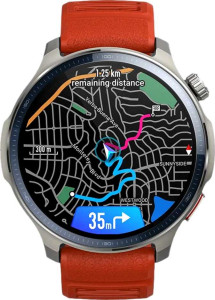
Amazfit Balance 2
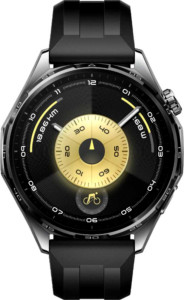
Huawei Watch GT 6

Amazfit Balance 2 Huawei Watch GT 6

Overview

When choosing between the Amazfit Balance 2 and the Huawei Watch GT 6, shoppers face a genuinely competitive matchup between two feature-rich smartwatches. Both share a strong sensor suite, OLED displays, and broad health-tracking capabilities, yet they diverge sharply in areas like battery performance, connectivity options, and water resistance ratings. This detailed spec comparison breaks down exactly where each watch leads and where it falls short.

Common Features

  • Both watches feature an OLED/AMOLED display.
  • Both watches are waterproof.
  • Always-On Display is available on both watches.
  • The watch band is replaceable on both watches.
  • Neither watch has branded damage-resistant glass.
  • Both watches have a sapphire glass display.
  • Both watches have a touch screen.
  • Blood oxygenation level monitoring is available on both watches.
  • A heart rate monitor is present on both watches.
  • GPS is available on both watches.
  • An accelerometer is present on both watches.
  • A temperature sensor is available on both watches.
  • A compass is present on both watches.
  • A barometer is available on both watches.
  • A gyroscope is present on both watches.
  • Sleep tracking is available on both watches.
  • Both watches track distance, steps taken, pace, and elevation.
  • Automatic activity detection is available on both watches.
  • Neither watch has a cellular module.
  • Both watches are compatible with iOS and Android.
  • NFC is available on both watches.
  • Neither watch supports ANT+.
  • Neither watch has a solar power battery or a removable battery.
  • HRV tracking is available on both watches.
  • VO2 max measurement is available on both watches.
  • Both watches measure resting heart rate and provide fast/slow heart rate notifications.
  • A readiness level indicator is available on both watches.
  • Both watches can be used to answer calls and have call control.
  • Phone locating functionality is available on both watches.
  • Both watches provide activity reports, inactivity alerts, calorie counting, goal setting, achievements, an exercise diary, and a free ad-free app.

Main Differences

  • Screen size is 1.5″ on Amazfit Balance 2 and 1.47″ on Huawei Watch GT 6.
  • ATM rating is 10 ATM on Amazfit Balance 2 and 5 ATM on Huawei Watch GT 6.
  • Ingress Protection rating is IP68 on Amazfit Balance 2 and IP69 on Huawei Watch GT 6.
  • Pixel density is 323 ppi on Amazfit Balance 2 and 317 ppi on Huawei Watch GT 6.
  • Resolution is 480 x 480 px on Amazfit Balance 2 and 466 x 466 px on Huawei Watch GT 6.
  • Thickness is 12.3 mm on Amazfit Balance 2 and 11 mm on Huawei Watch GT 6.
  • Weight is 43 g on Amazfit Balance 2 and 51.3 g on Huawei Watch GT 6.
  • Height is 47.4 mm on Amazfit Balance 2 and 46 mm on Huawei Watch GT 6.
  • Width is 47.4 mm on Amazfit Balance 2 and 46 mm on Huawei Watch GT 6.
  • Volume is 27.635148 cm³ on Amazfit Balance 2 and 23.276 cm³ on Huawei Watch GT 6.
  • A stroke counter for swimming is available on Amazfit Balance 2 but not on Huawei Watch GT 6.
  • Golf mode is available on Amazfit Balance 2 but not on Huawei Watch GT 6.
  • Bluetooth version is 5.2 on Amazfit Balance 2 and 6 on Huawei Watch GT 6.
  • Wi-Fi support is present on Amazfit Balance 2 but not available on Huawei Watch GT 6.
  • Battery power is 658 mAh on Amazfit Balance 2 and 867 mAh on Huawei Watch GT 6.
  • Battery life in training mode is 240 hours on Amazfit Balance 2 and 40 hours on Huawei Watch GT 6.
  • Wireless charging is available on Huawei Watch GT 6 but not on Amazfit Balance 2.
  • Irregular heart rate warnings are available on Huawei Watch GT 6 but not on Amazfit Balance 2.
  • Faster GPS acquisition is present on Amazfit Balance 2 but not on Huawei Watch GT 6.
Specs Comparison
Amazfit Balance 2

Amazfit Balance 2

Huawei Watch GT 6

Huawei Watch GT 6

Design:
screen size 1.5" 1.47"
Display type OLED/AMOLED OLED/AMOLED
water resistance Waterproof Waterproof
ATM rating 10 ATM 5 ATM
Ingress Protection (IP) rating IP68 IP69
Always-On Display
pixel density 323 ppi 317 ppi
resolution 480 x 480 px 466 x 466 px
Watch band is replaceable
has branded damage-resistant glass
thickness 12.3 mm 11 mm
weight 43 g 51.3 g
height 47.4 mm 46 mm
width 47.4 mm 46 mm
Has a display
has a touch screen
Has sapphire glass display
volume 27.635148 cm³ 23.276 cm³
is designed for kids

Both the Amazfit Balance 2 and the Huawei Watch GT 6 share a strong design foundation: OLED/AMOLED displays with Always-On support, sapphire glass protection, replaceable bands, and full touchscreen interaction. Where they diverge is in the details that matter for daily wear and visibility. The Balance 2 sports a larger 1.5″ screen at 480 x 480 px and 323 ppi, compared to the GT 6's 1.47″ panel at 466 x 466 px and 317 ppi. In practice, the Balance 2's edge in screen real estate and pixel density translates to slightly sharper text and a more spacious interface — a meaningful difference when reading notifications or navigating menus on your wrist.

On water resistance, the two watches take different approaches. The Balance 2 carries a 10 ATM rating alongside IP68, making it more suitable for swimming at depth or water sports. The GT 6 counters with an IP69 rating — which certifies resistance to high-pressure, high-temperature water jets — alongside a 5 ATM rating. For most users, the Balance 2's 10 ATM offers broader aquatic versatility, while the GT 6's IP69 is more relevant in rugged or industrial splash scenarios.

The physical profile tells an interesting story: the GT 6 is thinner at 11 mm versus the Balance 2's 12.3 mm, and has a slightly smaller footprint (46 x 46 mm vs. 47.4 x 47.4 mm), yet it weighs noticeably more at 51.3 g compared to the Balance 2's 43 g. For all-day and sleep tracking comfort, the Balance 2's lower weight is a tangible advantage despite being marginally bulkier. Overall, the Balance 2 holds a clear edge in this group — its larger, sharper display, superior ATM depth rating, and significantly lighter build make it the more practical daily companion.

Sensors:
Monitors blood oxygenation levels
Has a heart rate monitor
has GPS
has an accelerometer
Has a temperature sensor
has a compass
Has a barometer
has a gyroscope
Has a cadence sensor
Monitors perspiration

Across every sensor listed, the Amazfit Balance 2 and the Huawei Watch GT 6 are in complete lockstep. Both pack the full core suite: heart rate monitor, SpO2 tracking, GPS, accelerometer, gyroscope, barometer, compass, and a temperature sensor. This is a strong hardware foundation — the combination of GPS, barometer, and motion sensors enables accurate outdoor workout tracking, elevation mapping, and navigation, while SpO2 and heart rate together support meaningful health monitoring around the clock.

Neither watch includes a cadence sensor or perspiration monitor, so runners who rely on dedicated stride cadence data or advanced sweat-based hydration tracking will find both watches equally limited in that respect. These omissions are consistent across the segment and unlikely to be deciding factors for the majority of users.

With no differences anywhere in this spec group, the sensor comparison is a dead heat. Neither watch claims an advantage here — a user choosing between the two based solely on sensor capability has no reason to favor one over the other.

Activity tracking:
Tracks your sleep
Tracks distance
Tracks steps taken
Measures pace
Provides sleep reports
Detects activities automatically
Has a route tracker
Tracks elevation
Has multi-sport mode
Has exercise tagging
Has a stroke counter for swimming
Tracks calorie intake
Designed for diving
Designed for golf

For the vast majority of tracking needs, these two watches are functionally identical. Sleep tracking with reports, automatic activity detection, route tracking, elevation, pace, multi-sport mode, calorie intake, and exercise tagging — all present on both. This is a comprehensive baseline that comfortably covers runners, hikers, cyclists, and general fitness users without either watch conceding ground to the other.

The meaningful separations emerge in sport-specific features. The Amazfit Balance 2 includes a stroke counter for swimming, which the Huawei Watch GT 6 lacks — a genuine advantage for pool swimmers who want to track stroke efficiency and lap technique rather than just distance and pace. More notably, the Balance 2 also supports a dedicated golf mode, absent on the GT 6. For golfers, this is a significant functional gap: golf-specific tracking typically includes course mapping and shot analysis that no generic multi-sport mode can replicate.

Both watches are rated for diving activity, which aligns with the Balance 2's higher ATM rating noted in the Design category. But in this group, the Balance 2 holds a clear edge — its addition of swim stroke counting and golf tracking meaningfully broadens its appeal to two distinct user groups that the GT 6 simply does not serve at the same level.

Connectivity:
has a cellular module
Is compatible with iOS
Is compatible with Android
Bluetooth version 5.2 6
supports Wi-Fi
supports ANT+
has NFC

Neither watch offers a cellular module, so both require a paired smartphone for data sync and notifications — that expectation is the same across the board. Where the two diverge is in the specifics of how they connect and what they can connect to. The Huawei Watch GT 6 runs on Bluetooth 6, a newer standard than the Bluetooth 5.2 found in the Amazfit Balance 2. In practical terms, Bluetooth 6 brings improvements in connection reliability and efficiency, which can translate to more stable phone pairing and marginally better power consumption during data transmission.

The trade-off comes with Wi-Fi. The Balance 2 supports Wi-Fi connectivity, while the GT 6 does not. This matters for users who want faster firmware updates or data syncing without relying solely on a Bluetooth link to a nearby phone. On the contactless payments front, both watches include NFC, and both support iOS and Android — so platform flexibility and tap-to-pay capability are equally matched.

This group ends in a genuine trade-off rather than a clean win for either side. The GT 6's newer Bluetooth 6 standard gives it an edge in wireless connection quality, while the Balance 2's Wi-Fi support adds a connectivity layer the GT 6 lacks entirely. Which advantage matters more depends on the user — those who prioritize a rock-solid phone connection may lean toward the GT 6, while those who value wire-free syncing flexibility will find the Balance 2 more accommodating.

Battery:
battery power 658 mAh 867 mAh
battery life in training mode 240 hours 40 hours
has wireless charging
has a rechargeable battery
Has a solar power battery
has a removable battery

The battery story here is dominated by one extraordinary number: the Amazfit Balance 2 claims 240 hours of battery life in training mode — six times longer than the Huawei Watch GT 6's 40 hours. What makes this especially striking is that the Balance 2 achieves this with a smaller battery cell at 658 mAh, versus the GT 6's 867 mAh. This points to a significant difference in power efficiency — whether through software optimization, display management, or GPS processing — that allows the Balance 2 to dramatically outlast the GT 6 during continuous activity tracking despite drawing from a smaller reservoir.

For endurance athletes and multi-day adventurers, this gap is decisive. A watch that can sustain 240 hours in training mode can accompany ultra-marathon runners, long-distance hikers, or expedition athletes through events that would require the GT 6 to be recharged multiple times. Even for everyday users, fewer charges per week means less friction and more consistent health data continuity.

The GT 6 does recover some ground with wireless charging, a convenience the Balance 2 lacks — when the GT 6 does need topping up, doing so without a proprietary cable is a genuine quality-of-life advantage. Still, in this group the Balance 2 holds a commanding lead: its vastly superior training mode endurance is a more impactful real-world differentiator than the GT 6's wireless charging convenience.

Features:
release date June 2025 September 2025
has HRV tracking
measures VO2 max
measures resting heart rate
has fast/slow heart rate notifications
shows readiness level
Can be used to answer calls
Locates your phone
Has call control
Has notifications
has irregular heart rate warnings
Has ECG technology
Has silent alarm
Has vibrating alerts
has fall detection
Has a stopwatch
Has smart alarm
has voice commands
Has a built-in camera remote control function
Acquires GPS faster
warranty period 1 years 1 years
number of microphones 1 1
has a front camera

Functionally, these two watches are remarkably well-matched across the features category. Both deliver a full suite of health and connectivity tools — HRV tracking, VO2 max estimation, readiness scores, call answering, voice commands, camera remote control, and notification management all feature on both devices. For the vast majority of users, the day-to-day feature experience will feel essentially equivalent.

Two specific points separate them. The Huawei Watch GT 6 includes irregular heart rate warnings, a passive cardiac monitoring feature that can flag abnormal rhythm patterns without the user initiating a check — a meaningful safety addition for users with cardiovascular concerns or those simply wanting an extra layer of passive health oversight. The Amazfit Balance 2 counters with faster GPS acquisition, which in practice means shorter wait times at the start of outdoor workouts before tracking locks in — a small but consistently appreciated quality-of-life benefit for runners and cyclists who hate standing still waiting for a signal fix.

Neither advantage clearly outweighs the other in absolute terms — the GT 6's edge matters more to health-conscious users prioritizing cardiac monitoring, while the Balance 2's GPS responsiveness appeals more to active users who train outdoors frequently. Warranty period and microphone count are identical, leaving this group as a narrow split that comes down to which of those two differentiators aligns with the individual user's priorities.

App & Software:
Provides activity reports
Has inactivity alerts
Counts how many calories you've burned
Has goal setting
Has achievements
Free app
Has exercise diary
Ad-free
Has coaching
Has temperature tracking
Has period notifications
Supports routes
Has voice feedback
Has music playback
Displays fertile window notifications
Includes maps
Predicts ovulation
Predicts start date
Supports widgets
Can be personalised
Has barcode scanner on app
Tracks water intake
Has weight tracking
Has live tracking
Tracks BMI

Rarely does a spec group land this cleanly: across all 25 app and software features listed, the Amazfit Balance 2 and the Huawei Watch GT 6 are in complete agreement. Both companion apps are free, ad-free, and cover the full spectrum of wellness and fitness management — activity reports, goal setting, exercise diary, coaching, live tracking, and body metrics like BMI and weight tracking are all present on both.

The breadth of shared features is genuinely impressive at this tier. Reproductive health tracking — including period notifications, fertile window alerts, ovulation prediction, and cycle start date forecasting — is available on both, making either watch a capable option for users who prioritize that functionality. Similarly, both apps include maps and route support, music playback control, voice feedback during workouts, and full widget and personalization options, leaving no meaningful gap between them in day-to-day software usability.

With no differentiating data points anywhere in this category, the verdict is an unambiguous tie. Users should base their software experience expectations on factors outside this group — the apps, as specced, offer identical capabilities on both watches.

Miscellaneous:
has a battery level indicator
Has auto pause
Has passcode
Compatible with smart scales
Compatible with external heart rate monitors
Is compatible with Windows
has an external memory slot
Is compatible with Mac OS X
has a socket for a 3.5 mm audio jack

The miscellaneous category wraps up with another clean sweep: every single spec listed is identical between the Amazfit Balance 2 and the Huawei Watch GT 6. Both include a battery level indicator, auto pause, passcode protection, and compatibility with smart scales and external heart rate monitors — the latter being particularly useful for users who prefer chest strap accuracy during high-intensity training over wrist-based optical readings.

Neither watch supports Windows or Mac OS X desktop connectivity, has an external memory slot, or includes a 3.5 mm audio jack — limitations that are standard across this category of smartwatch and unlikely to surprise or disadvantage buyers in either camp.

With no separating data points anywhere in this group, the result is a straightforward tie. The shared compatibility with smart scales and external monitors is worth noting as a genuine ecosystem convenience for health-focused users, but since both watches offer it equally, it does not shift the balance between them.

Comparison Summary & Verdict

After examining every specification, both watches prove to be highly capable, but they cater to different priorities. The Amazfit Balance 2 stands out with its remarkable 240-hour training battery life, Wi-Fi connectivity, higher ATM water resistance, swim stroke counting, and golf mode, making it the stronger choice for endurance athletes and outdoor enthusiasts. The Huawei Watch GT 6, on the other hand, offers a slimmer and lighter build, a newer Bluetooth 6 standard, wireless charging, irregular heart rate warnings, and a higher IP69 ingress protection rating, appealing to those who prioritize everyday comfort and convenience. Neither watch is a clear universal winner; your ideal pick depends entirely on how and where you plan to use it.

Amazfit Balance 2
Buy Amazfit Balance 2 if...

Buy the Amazfit Balance 2 if you need exceptional battery life for long training sessions, want Wi-Fi connectivity, or regularly swim and play golf.

Huawei Watch GT 6
Buy Huawei Watch GT 6 if...

Buy the Huawei Watch GT 6 if you prefer a lighter, slimmer watch with wireless charging, the latest Bluetooth 6, and irregular heart rate warnings for everyday health monitoring.