Amazfit Balance 2
Huawei Watch GT 6 41mm

Amazfit Balance 2 Huawei Watch GT 6 41mm

Overview

When choosing between the Amazfit Balance 2 and the Huawei Watch GT 6 41mm, the decision is far from straightforward. Both smartwatches share a strong foundation — OLED displays, sapphire glass, comprehensive health sensors, and broad smartphone compatibility — yet they diverge sharply on form factor, battery performance, connectivity options, and sport-specific features. Whether you prioritize endurance on the wrist or a slimmer, lighter everyday companion will shape which of these two contenders earns a place in your daily life.

Common Features

  • Both watches feature an OLED/AMOLED display.
  • Both watches are waterproof.
  • Always-On Display is available on both watches.
  • The watch band is replaceable on both watches.
  • Neither watch has branded damage-resistant glass.
  • Both watches have a sapphire glass display.
  • Both watches have a touchscreen.
  • Blood oxygenation level monitoring is available on both watches.
  • A heart rate monitor is present on both watches.
  • GPS is built into both watches.
  • Both watches include an accelerometer, gyroscope, compass, barometer, and temperature sensor.
  • Sleep tracking and sleep reports are available on both watches.
  • Both watches track steps, distance, pace, elevation, and routes.
  • Automatic activity detection is supported on both watches.
  • Neither watch has a cellular module.
  • Both watches are compatible with iOS and Android.
  • NFC is supported on both watches.
  • Neither watch supports ANT+.
  • Neither watch has a solar power battery or a removable battery.
  • HRV tracking, VO2 max measurement, and resting heart rate measurement are available on both watches.
  • Fast and slow heart rate notifications are supported on both watches.
  • A readiness level indicator is available on both watches.
  • Both watches support answering calls and call control.
  • A phone locator feature is available on both watches.
  • Activity reports, inactivity alerts, calorie tracking, goal setting, achievements, an exercise diary, and an ad-free free app are available on both watches.
  • A battery level indicator, auto pause, passcode, smart scale compatibility, and external heart rate monitor compatibility are present on both watches.
  • Neither watch is compatible with Windows or Mac OS X.
  • Neither watch has an external memory slot.

Main Differences

  • Screen size is 1.5″ on Amazfit Balance 2 and 1.32″ on Huawei Watch GT 6 41mm.
  • ATM rating is 10 ATM on Amazfit Balance 2 and 5 ATM on Huawei Watch GT 6 41mm.
  • Ingress Protection rating is IP68 on Amazfit Balance 2 and IP69 on Huawei Watch GT 6 41mm.
  • Pixel density is 323 ppi on Amazfit Balance 2 and 352 ppi on Huawei Watch GT 6 41mm.
  • Resolution is 480 x 480 px on Amazfit Balance 2 and 466 x 466 px on Huawei Watch GT 6 41mm.
  • Thickness is 12.3 mm on Amazfit Balance 2 and 10 mm on Huawei Watch GT 6 41mm.
  • Weight is 43 g on Amazfit Balance 2 and 37.5 g on Huawei Watch GT 6 41mm.
  • Height is 47.4 mm on Amazfit Balance 2 and 41.3 mm on Huawei Watch GT 6 41mm.
  • Width is 47.4 mm on Amazfit Balance 2 and 41.3 mm on Huawei Watch GT 6 41mm.
  • Volume is 27.635148 cm³ on Amazfit Balance 2 and 17.0569 cm³ on Huawei Watch GT 6 41mm.
  • A stroke counter for swimming is available on Amazfit Balance 2 but not on Huawei Watch GT 6 41mm.
  • Golf mode is present on Amazfit Balance 2 but not on Huawei Watch GT 6 41mm.
  • Bluetooth version is 5.2 on Amazfit Balance 2 and 6 on Huawei Watch GT 6 41mm.
  • Wi-Fi support is present on Amazfit Balance 2 but not on Huawei Watch GT 6 41mm.
  • Battery life is 21 days on Amazfit Balance 2 and 14 days on Huawei Watch GT 6 41mm.
  • Battery power is 658 mAh on Amazfit Balance 2 and 540 mAh on Huawei Watch GT 6 41mm.
  • Battery life in training mode is 240 hours on Amazfit Balance 2 and 25 hours on Huawei Watch GT 6 41mm.
  • Wireless charging is available on Huawei Watch GT 6 41mm but not on Amazfit Balance 2.
  • Irregular heart rate warnings are available on Huawei Watch GT 6 41mm but not on Amazfit Balance 2.
  • Faster GPS acquisition is present on Amazfit Balance 2 but not on Huawei Watch GT 6 41mm.
Specs Comparison
Amazfit Balance 2

Amazfit Balance 2

Huawei Watch GT 6 41mm

Huawei Watch GT 6 41mm

Design:
screen size 1.5" 1.32"
Display type OLED/AMOLED OLED/AMOLED
water resistance Waterproof Waterproof
ATM rating 10 ATM 5 ATM
Ingress Protection (IP) rating IP68 IP69
Always-On Display
pixel density 323 ppi 352 ppi
resolution 480 x 480 px 466 x 466 px
Watch band is replaceable
has branded damage-resistant glass
thickness 12.3 mm 10 mm
weight 43 g 37.5 g
height 47.4 mm 41.3 mm
width 47.4 mm 41.3 mm
Has a display
has a touch screen
Has sapphire glass display
volume 27.635148 cm³ 17.0569 cm³
is designed for kids

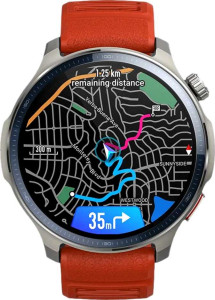
Both watches share a strong foundation: OLED/AMOLED panels, Always-On Display, sapphire glass, replaceable bands, and touchscreen interaction — so neither compromises on core display quality or everyday wearability. The real divergence lies in form factor. The Amazfit Balance 2 is a noticeably larger watch, with a 47.4 × 47.4 mm case, 12.3 mm thickness, and a 43 g weight, giving it a bold, statement presence on the wrist. The Huawei Watch GT 6 41mm, by contrast, measures 41.3 × 41.3 mm, is just 10 mm thick, and weighs only 37.5 g — translating to a significantly more compact and lighter experience that is less intrusive during sleep tracking or long daily wear.

On screen clarity, the trade-off is interesting: the Balance 2 offers a larger 1.5″ display at 480 × 480 px, but its pixel density of 323 ppi trails behind the GT 6's 352 ppi on its 1.32″ panel. In practice, the GT 6's higher pixel density means sharper text and finer detail despite the smaller canvas, while the Balance 2 compensates with more raw screen real estate — better for dashboards or reading longer content at a glance.

On water resistance, both are rated waterproof, but with a nuanced split: the Balance 2 holds a stronger 10 ATM rating, making it more suitable for swimming and sustained water pressure, while the GT 6 carries IP69 certification, which adds resistance to high-pressure water jets — useful in specific industrial or outdoor scenarios but less relevant for typical swimmers. Overall, the GT 6 41mm has a clear edge for wearers who prioritize a slim, lightweight, and refined design, while the Balance 2 suits those who prefer a larger screen and deeper water-resistance depth.
Sensors:
Monitors blood oxygenation levels
Has a heart rate monitor
has GPS
has an accelerometer
Has a temperature sensor
has a compass
Has a barometer
has a gyroscope
Has a cadence sensor
Monitors perspiration

Across the entire sensor suite, the Amazfit Balance 2 and Huawei Watch GT 6 41mm are in complete lockstep. Both pack GPS, heart rate monitoring, SpO2 tracking, a temperature sensor, barometer, compass, accelerometer, and gyroscope — covering the full range of health, navigation, and motion-tracking capabilities expected from a modern premium smartwatch.

This breadth of sensors matters in practice: the barometer enables elevation tracking and weather trend detection; the gyroscope combined with the accelerometer allows for accurate movement recognition and fall detection; and the temperature sensor opens the door to body vitals monitoring beyond just heart rate. Neither watch cuts corners here, and neither gains ground over the other — every sensor category checked for one is equally checked for the other.

The verdict for this group is a dead tie. With identical sensor configurations and no differentiating feature on either side — including the shared absence of a cadence sensor and perspiration monitor — hardware capability alone cannot separate these two watches. A buyer focused purely on sensor coverage will find no reason to choose one over the other; the decision will need to rest on other spec groups.

Activity tracking:
Tracks your sleep
Tracks distance
Tracks steps taken
Measures pace
Provides sleep reports
Detects activities automatically
Has a route tracker
Tracks elevation
Has multi-sport mode
Has exercise tagging
Has a stroke counter for swimming
Tracks calorie intake
Designed for diving
Designed for golf

For the vast majority of users, these two watches offer an essentially identical activity tracking experience. Sleep monitoring with detailed reports, step and distance tracking, pace measurement, automatic activity detection, route tracking, elevation, multi-sport mode, exercise tagging, calorie intake tracking, and even diving support — all of it is present on both the Amazfit Balance 2 and the Huawei Watch GT 6 41mm. That is a comprehensive and well-rounded feature set that comfortably covers casual fitness users through to serious endurance athletes.

The meaningful gaps emerge at the sport-specific level. The Balance 2 includes a stroke counter for swimming and is designed for golf, while the GT 6 supports neither. A stroke counter is a genuine asset for swimmers who want to monitor technique and training load, not just distance — its absence on the GT 6 makes it a noticeably weaker companion for pool workouts. Golf mode, meanwhile, is a niche but valuable feature for golfers who want course awareness and shot tracking directly from their wrist.

The Amazfit Balance 2 holds a clear edge in this category. While both watches are nearly equivalent for general fitness and outdoor activity tracking, the Balance 2 extends its utility meaningfully to swimmers and golfers — two distinct user groups who would find the GT 6 41mm falling short for their specific needs.

Connectivity:
has a cellular module
Is compatible with iOS
Is compatible with Android
Bluetooth version 5.2 6
supports Wi-Fi
supports ANT+
has NFC

Shared ground first: neither watch includes a cellular module, both support iOS and Android, and both feature NFC for contactless payments — so the core connectivity experience is comparable for most everyday users. The divergence comes down to two specific but meaningful specs: Bluetooth version and Wi-Fi support.

The Huawei Watch GT 6 41mm runs on Bluetooth 6, a newer standard compared to the Balance 2's Bluetooth 5.2. In real-world terms, Bluetooth 6 brings improvements in connection reliability and efficiency, which can translate to more stable audio streaming and a more consistent link to a paired phone. The Balance 2, meanwhile, is the only one of the two to support Wi-Fi — a capability that enables faster data syncing, firmware updates, and potential app interactions without needing the paired phone nearby or a Bluetooth handoff.

These two advantages pull in opposite directions, making this a trade-off rather than a clear sweep. Users who prioritize a cutting-edge, low-latency wireless connection to their phone will lean toward the GT 6 41mm, while those who value the added flexibility of direct Wi-Fi connectivity — especially for syncing on the go — will find the Amazfit Balance 2 the more versatile option. On balance, Wi-Fi's practical utility for standalone data handling gives the Balance 2 a narrow edge in connectivity for most users.

Battery:
battery life 21 days 14 days
battery power 658 mAh 540 mAh
battery life in training mode 240 hours 25 hours
has wireless charging
has a rechargeable battery
Has a solar power battery
has a removable battery

Battery life is where the Amazfit Balance 2 pulls away decisively. Its 658 mAh cell delivers a rated 21 days of typical use versus the Huawei Watch GT 6 41mm's 540 mAh and 14 days — a 50% longevity advantage that has very real implications for travelers, minimalists, or anyone who finds frequent charging a friction point. Three weeks between charges means the Balance 2 can comfortably outlast a two-week trip without a charger in the bag.

The training mode figures tell an even starker story. The Balance 2 sustains GPS-active workouts for up to 240 hours, compared to just 25 hours on the GT 6 — a gap so large it reframes the GT 6 as a watch for casual exercisers rather than endurance athletes who need continuous GPS logging over days or multi-day adventures. For ultramarathon runners, cyclists, or hikers undertaking extended expeditions, this difference is disqualifying for the GT 6.

The GT 6 does offer one consolation: wireless charging, which the Balance 2 lacks. When the GT 6 does need topping up, the convenience of simply placing it on a pad rather than fumbling with a proprietary cable is a genuine quality-of-life benefit. Still, that advantage is largely offset by how much less frequently the Balance 2 needs charging at all. Overall, the Amazfit Balance 2 holds a commanding edge in this category — its superior capacity and dramatically longer runtime make it the stronger performer for nearly every use case.

Features:
release date June 2025 September 2025
has HRV tracking
measures VO2 max
measures resting heart rate
has fast/slow heart rate notifications
shows readiness level
Can be used to answer calls
Locates your phone
Has call control
Has notifications
has irregular heart rate warnings
Has ECG technology
Has silent alarm
Has vibrating alerts
has fall detection
Has a stopwatch
Has smart alarm
has voice commands
Has a built-in camera remote control function
Acquires GPS faster
warranty period 1 years 1 years
number of microphones 1 1
has a front camera

Feature parity between these two watches is remarkably high. HRV tracking, VO2 max, resting heart rate, fast/slow heart rate notifications, readiness scores, call answering and control, notifications, silent and vibrating alerts, stopwatch, voice commands, camera remote, and a one-year warranty — all present on both. For the overwhelming majority of users, day-to-day feature access will feel essentially identical.

The two differentiators that do exist point in opposite directions. The Huawei Watch GT 6 41mm adds irregular heart rate warnings, a clinically meaningful feature that can flag potential arrhythmias passively in the background — something that matters especially to older users or those with a family history of heart conditions. The Amazfit Balance 2, on the other hand, offers faster GPS acquisition, which reduces the wait time before a workout begins registering accurately. For runners and cyclists who want to start moving immediately without standing still waiting for a satellite lock, this is a tangible daily convenience.

Neither differentiator is universally more important — it depends entirely on the user's priorities. Those with a focus on cardiac health monitoring will find the GT 6's irregular heart rate warnings more meaningful, while active users who frequently start GPS-tracked workouts will appreciate the Balance 2's quicker satellite lock. This group is effectively a near-tie with context-dependent advantages on each side, and neither watch can claim a broad overall edge in features.

App & Software:
Provides activity reports
Has inactivity alerts
Counts how many calories you've burned
Has goal setting
Has achievements
Free app
Has exercise diary
Ad-free
Has coaching
Has temperature tracking
Has period notifications
Supports routes
Has voice feedback
Has music playback
Displays fertile window notifications
Includes maps
Predicts ovulation
Predicts start date
Supports widgets
Can be personalised
Has barcode scanner on app
Tracks water intake
Has weight tracking
Has live tracking
Tracks BMI

Rarely does a spec group produce a result this unambiguous: across all 25 app and software data points, the Amazfit Balance 2 and Huawei Watch GT 6 41mm are in complete agreement. Every feature — from activity reports, goal setting, and coaching, to women's health tracking (period notifications, fertile window, ovulation and start date prediction), to nutrition and body metrics (water intake, weight, BMI) — is present on both, and absent on neither.

The depth of this shared software suite is worth appreciating. Both apps are free and ad-free, include maps and route support with live tracking, offer music playback and voice feedback, and support widgets and personalization. This is not a bare-bones feature list — it represents a genuinely comprehensive wellness and fitness platform that covers casual users, serious athletes, and health-conscious individuals equally well on both sides.

The verdict here is an absolute tie. There is not a single differentiating data point in this category. A buyer choosing between these two watches will find no software or app-level reason to favor one over the other — this decision must be driven entirely by other specification groups.

Miscellaneous:
has a battery level indicator
Has auto pause
Has passcode
Compatible with smart scales
Compatible with external heart rate monitors
Is compatible with Windows
has an external memory slot
Is compatible with Mac OS X
has a socket for a 3.5 mm audio jack

The Miscellaneous category yields yet another complete tie. Every data point — battery level indicator, auto pause, passcode protection, smart scale compatibility, and support for external heart rate monitors — is identical across the Amazfit Balance 2 and the Huawei Watch GT 6 41mm. The shared absences are equally aligned: no external memory slot, no 3.5mm audio jack, and no desktop OS compatibility with Windows or Mac.

The functional highlights worth noting are the shared ones. Compatibility with external heart rate monitors is a meaningful plus for serious athletes who prefer chest strap accuracy over optical wrist-based readings during intense training. Smart scale integration allows for a more unified body metrics picture within each ecosystem. Auto pause, while standard on modern sports watches, ensures workout data integrity without manual intervention during stops.

With no differentiating feature on either side, this group is a complete tie. As with the App & Software and Sensors categories, buyers will need to look elsewhere — design, battery, or activity tracking — to find the distinctions that matter most to their individual needs.

Comparison Summary & Verdict

After reviewing every specification, the Amazfit Balance 2 and the Huawei Watch GT 6 41mm emerge as genuinely different tools built for different priorities. The Amazfit Balance 2 stands out with its larger 1.5″ screen, exceptional 21-day battery life (with a staggering 240 hours in training mode), built-in Wi-Fi, stroke counter for swimming, and golf mode — making it the stronger choice for fitness enthusiasts and endurance athletes who need a versatile, long-lasting companion. The Huawei Watch GT 6 41mm, on the other hand, wins on wearability with its slimmer 10 mm profile and lighter 37.5 g frame, a sharper 352 ppi display, Bluetooth 6, wireless charging, and irregular heart rate warnings — positioning it as the better everyday smartwatch for those who value refined design and health monitoring convenience.

Amazfit Balance 2
Buy Amazfit Balance 2 if...

Buy the Amazfit Balance 2 if you need exceptional battery endurance, Wi-Fi connectivity, and sport-specific features like a swim stroke counter and golf mode for active, varied workouts.

Huawei Watch GT 6 41mm
Buy Huawei Watch GT 6 41mm if...

Buy the Huawei Watch GT 6 41mm if you prefer a slimmer, lighter watch with wireless charging, a sharper display, and irregular heart rate warnings for refined everyday health tracking.