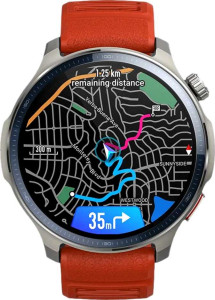
Amazfit Balance 2
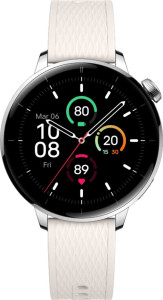
OnePlus Watch 3 43mm

Amazfit Balance 2 OnePlus Watch 3 43mm

Overview

When choosing between the Amazfit Balance 2 and the OnePlus Watch 3 43mm, shoppers are faced with two capable smartwatches that share a strong foundation — OLED displays, heart rate monitoring, GPS, and NFC — yet diverge sharply in areas like battery life, sensor depth, and sport-specific capabilities. In this detailed comparison, we break down every specification to help you decide which watch truly fits your lifestyle.

Common Features

  • Both watches feature an OLED/AMOLED display.
  • Both watches are waterproof.
  • Always-On Display is available on both watches.
  • The watch band is replaceable on both watches.
  • Neither watch has branded damage-resistant glass.
  • Both watches have a touchscreen display.
  • Neither watch is designed for kids.
  • Blood oxygenation level monitoring is available on both watches.
  • A heart rate monitor is present on both watches.
  • GPS is available on both watches.
  • An accelerometer is present on both watches.
  • A compass is present on both watches.
  • A gyroscope is present on both watches.
  • Neither watch has a cadence sensor.
  • Neither watch monitors perspiration.
  • Both watches track sleep and provide sleep reports.
  • Both watches track distance, steps taken, pace, elevation, and route.
  • Activity auto-detection is available on both watches.
  • Neither watch has a cellular module.
  • Both watches are compatible with Android.
  • Both watches support Bluetooth 5.2.
  • Both watches support Wi-Fi 4 (802.11n).
  • Neither watch supports ANT+.
  • NFC is available on both watches.
  • Neither watch supports wireless charging.
  • Both watches have a rechargeable battery.
  • Neither watch has a solar power battery.
  • Neither watch has a removable battery.
  • HRV tracking is available on both watches.
  • VO2 max measurement is available on both watches.
  • Resting heart rate measurement is available on both watches.
  • Fast and slow heart rate notifications are available on both watches.
  • Readiness level monitoring is available on both watches.
  • Both watches can be used to answer calls and have call control.
  • Notifications are supported on both watches.
  • Both watches provide activity reports and have inactivity alerts.
  • Calorie burn tracking is available on both watches.
  • Goal setting and achievements are available on both watches.
  • Neither watch has a barcode scanner on its app.
  • Water intake and weight tracking are available on both watches.
  • A battery level indicator is present on both watches.
  • Neither watch is compatible with Windows or Mac OS X.
  • Neither watch has an external memory slot.
  • Neither watch has a 3.5 mm audio jack socket.

Main Differences

  • Screen size is 1.5″ on the Amazfit Balance 2 and 1.32″ on the OnePlus Watch 3 43mm.
  • ATM rating is 10 ATM on the Amazfit Balance 2 and 5 ATM on the OnePlus Watch 3 43mm.
  • Ingress Protection rating is IP68 on the Amazfit Balance 2 and IP67 on the OnePlus Watch 3 43mm.
  • Pixel density is 323 ppi on the Amazfit Balance 2 and 352 ppi on the OnePlus Watch 3 43mm.
  • Resolution is 480 x 480 px on the Amazfit Balance 2 and 466 x 466 px on the OnePlus Watch 3 43mm.
  • Thickness is 12.3 mm on the Amazfit Balance 2 and 11 mm on the OnePlus Watch 3 43mm.
  • Weight is 43 g on the Amazfit Balance 2 and 37.8 g on the OnePlus Watch 3 43mm.
  • Height is 47.4 mm on the Amazfit Balance 2 and 43.2 mm on the OnePlus Watch 3 43mm.
  • Width is 47.4 mm on the Amazfit Balance 2 and 43.2 mm on the OnePlus Watch 3 43mm.
  • Sapphire glass display is present on the Amazfit Balance 2 but not available on the OnePlus Watch 3 43mm.
  • Volume is 27.635148 cm³ on the Amazfit Balance 2 and 20.52864 cm³ on the OnePlus Watch 3 43mm.
  • A temperature sensor is present on the Amazfit Balance 2 but not available on the OnePlus Watch 3 43mm.
  • A barometer is present on the Amazfit Balance 2 but not available on the OnePlus Watch 3 43mm.
  • Multi-sport mode is available on the Amazfit Balance 2 but not on the OnePlus Watch 3 43mm.
  • Diving design is present on the Amazfit Balance 2 but not on the OnePlus Watch 3 43mm.
  • Golf design is present on the Amazfit Balance 2 but not on the OnePlus Watch 3 43mm.
  • iOS compatibility is available on the Amazfit Balance 2 but not on the OnePlus Watch 3 43mm.
  • Wi-Fi connectivity is supported on the Amazfit Balance 2 but not on the OnePlus Watch 3 43mm.
  • Battery life is 21 days on the Amazfit Balance 2 and 2.5 days on the OnePlus Watch 3 43mm.
  • Battery power is 658 mAh on the Amazfit Balance 2 and 354 mAh on the OnePlus Watch 3 43mm.
  • Battery life in training mode is 240 hours on the Amazfit Balance 2 and 36 hours on the OnePlus Watch 3 43mm.
  • Battery life in power save mode is 67 hours on the Amazfit Balance 2 and 168 hours on the OnePlus Watch 3 43mm.
  • Faster GPS acquisition is available on the Amazfit Balance 2 but not on the OnePlus Watch 3 43mm.
Specs Comparison
Amazfit Balance 2

Amazfit Balance 2

OnePlus Watch 3 43mm

OnePlus Watch 3 43mm

Design:
screen size 1.5" 1.32"
Display type OLED/AMOLED OLED/AMOLED
water resistance Waterproof Waterproof
ATM rating 10 ATM 5 ATM
Ingress Protection (IP) rating IP68 IP67
Always-On Display
pixel density 323 ppi 352 ppi
resolution 480 x 480 px 466 x 466 px
Watch band is replaceable
has branded damage-resistant glass
thickness 12.3 mm 11 mm
weight 43 g 37.8 g
height 47.4 mm 43.2 mm
width 47.4 mm 43.2 mm
Has a display
has a touch screen
Has sapphire glass display
volume 27.635148 cm³ 20.52864 cm³
is designed for kids

The most immediately noticeable design split is size and wearability. The Amazfit Balance 2 sports a larger 1.5″ display on a 47.4 × 47.4 mm case weighing 43 g, while the OnePlus Watch 3 43mm is meaningfully more compact at 1.32″, 43.2 × 43.2 mm, and just 37.8 g. That 5+ gram difference and smaller footprint make the OnePlus a noticeably lighter presence on the wrist, which matters during sleep tracking or prolonged wear. The Balance 2's larger panel, however, offers more screen real estate for glanceable data and easier touch interactions — a genuine trade-off rather than a clear-cut win.

Display sharpness is close but favors the OnePlus: its 352 ppi slightly outpaces the Balance 2's 323 ppi, though both use OLED/AMOLED panels with always-on capability, so real-world visual quality will be excellent on either. Where the Balance 2 pulls decisively ahead is durability. It carries a sapphire glass display — one of the hardest materials used in watchmaking, highly resistant to everyday scratches — while the OnePlus Watch 3 uses no sapphire glass. Combined with a stronger water resistance rating of 10 ATM / IP68 versus the OnePlus's 5 ATM / IP67, the Balance 2 is built to handle more demanding environments, from swimming laps to accidental drops.

Overall, the OnePlus Watch 3 43mm has the edge for users who prioritize a sleek, lightweight form factor, while the Amazfit Balance 2 wins on durability and screen size — making it the stronger choice for active or outdoor use where scratch resistance and deeper water protection genuinely matter.

Sensors:
Monitors blood oxygenation levels
Has a heart rate monitor
has GPS
has an accelerometer
Has a temperature sensor
has a compass
Has a barometer
has a gyroscope
Has a cadence sensor
Monitors perspiration

Both watches share a solid common foundation — heart rate monitor, blood oxygen tracking, GPS, accelerometer, gyroscope, and compass are all present on each device. For most fitness and navigation use cases, this overlap means neither watch leaves users short on essential health and movement data.

The meaningful divergence comes down to two sensors the Amazfit Balance 2 carries that the OnePlus Watch 3 does not: a temperature sensor and a barometer. A wrist-based temperature sensor enables continuous body temperature monitoring, useful for detecting illness trends or menstrual cycle tracking. The barometer is arguably even more impactful for active users — it measures real-time atmospheric pressure to deliver accurate altitude readings and weather change alerts, something GPS alone cannot reliably provide. For hikers, trail runners, or cyclists, the absence of a barometer on the OnePlus Watch 3 is a tangible gap.

The Amazfit Balance 2 holds a clear edge in this category. Its expanded sensor suite makes it the more capable choice for health-conscious users and outdoor athletes, while the OnePlus Watch 3 covers everyday fitness tracking needs but falls short for more demanding or health-focused applications.

Activity tracking:
Tracks your sleep
Tracks distance
Tracks steps taken
Measures pace
Provides sleep reports
Detects activities automatically
Has a route tracker
Tracks elevation
Has multi-sport mode
Has exercise tagging
Tracks calorie intake
Designed for diving
Designed for golf

For everyday fitness tracking, these two watches are virtually identical — both cover sleep tracking with reports, step counting, distance, pace, elevation, route tracking, automatic activity detection, calorie intake, and exercise tagging. Users who stick to running, walking, cycling, or gym workouts will find either watch equally capable on paper.

The separation emerges when the activity scope broadens. The Amazfit Balance 2 supports multi-sport mode, which allows seamless switching between different activities within a single session — valuable for triathletes or anyone combining disciplines in one workout. Beyond that, it is explicitly designed for diving and golf, two highly specialized use cases. Golf mode typically includes course maps, shot tracking, and stroke counting, while dive support goes well beyond standard waterproofing to track depth and dive metrics. The OnePlus Watch 3 supports none of these three features.

For general users, the gap is negligible. But for anyone who plays golf, dives, or trains across multiple disciplines, the Amazfit Balance 2 is the clear winner in this category — its activity tracking breadth is meaningfully wider, making it the more versatile sports companion of the two.

Connectivity:
has a cellular module
Is compatible with iOS
Is compatible with Android
Bluetooth version 5.2 5.2
supports Wi-Fi
Wi-Fi version Wi-Fi 4 (802.11n) Wi-Fi 4 (802.11n)
supports ANT+
has NFC

At the core, both watches share Bluetooth 5.2 and NFC — the former ensuring stable, energy-efficient pairing with a smartphone, the latter enabling contactless payments. Neither offers a cellular module, so both require a paired phone for full functionality. For most users, this is the expected baseline in this product category.

Two differences stand out, however. First, iOS compatibility: the Amazfit Balance 2 works with both Android and iPhone, while the OnePlus Watch 3 is Android-only. This is a hard wall — iPhone users simply cannot use the OnePlus Watch 3, making it a non-starter for a significant portion of the market. Second, the Balance 2 supports Wi-Fi, which allows it to sync data, download updates, and potentially stream music independently of a Bluetooth connection when on a known network. The OnePlus Watch 3 lacks Wi-Fi entirely, making it more dependent on an active phone connection for these tasks.

The Amazfit Balance 2 wins this category without much contest. Its broader platform compatibility removes a major purchase barrier, and Wi-Fi support adds a layer of connectivity independence that the OnePlus Watch 3 cannot match. The OnePlus is a capable option, but strictly for Android users who do not need wireless syncing beyond Bluetooth.

Battery:
battery life 21 days 2.5 days
battery power 658 mAh 354 mAh
battery life in training mode 240 hours 36 hours
battery life in power save mode 67 hours 168 hours
has wireless charging
has a rechargeable battery
Has a solar power battery
has a removable battery

The battery gap between these two watches is dramatic in normal use. The Amazfit Balance 2 is rated at 21 days on a 658 mAh cell, compared to just 2.5 days for the OnePlus Watch 3 on a 354 mAh battery. That near-9x difference in daily runtime is not a minor convenience factor — it fundamentally changes how each watch fits into a lifestyle. The Balance 2 can be worn through multi-week trips without access to a charger, while the OnePlus demands charging roughly every other day, much like a smartwatch with a richer but more power-hungry OS experience.

Training mode tells a similar story: the Balance 2 sustains 240 hours of active workout tracking versus 36 hours for the OnePlus — a significant advantage for ultra-endurance athletes or anyone using GPS-heavy activities frequently. The one reversal comes in power save mode, where the OnePlus Watch 3 actually stretches to 168 hours compared to the Balance 2's 67 hours. This suggests the OnePlus can aggressively throttle its functions when needed, but this mode typically disables most smartwatch features, limiting its practical usefulness.

Neither watch offers wireless charging, putting them on equal footing there. Overall, the Amazfit Balance 2 has a commanding advantage in this category — its battery longevity in both standard and training modes makes it the far more self-sufficient option for users who prioritize going days or weeks between charges.

Features:
release date June 2025 July 2025
has HRV tracking
measures VO2 max
measures resting heart rate
has fast/slow heart rate notifications
shows readiness level
Can be used to answer calls
Has call control
Has notifications
has irregular heart rate warnings
Has ECG technology
Has silent alarm
Has vibrating alerts
has fall detection
Has a stopwatch
Has smart alarm
has voice commands
internal storage 32GB 32GB
Has a built-in camera remote control function
Acquires GPS faster
has a front camera

Across this feature set, the two watches are remarkably well-matched. Health intelligence staples — HRV tracking, VO2 max, resting heart rate, readiness level, and heart rate alerts — are identical on both. So are communication and interaction features: call answering, call control, notifications, voice commands, silent and vibrating alerts, stopwatch, and camera remote control all appear on each device. Even internal storage is identical at 32GB on both. For the vast majority of everyday smartwatch use cases, these two are functionally equivalent.

The sole differentiator in this entire category is faster GPS acquisition, which the Amazfit Balance 2 supports and the OnePlus Watch 3 does not. In practice, quicker GPS lock means less standing around waiting for a signal before a run or ride begins — a small but genuinely appreciated quality-of-life advantage for users who train outdoors regularly and want to start moving immediately.

This is the most evenly matched category in the comparison so far. The Amazfit Balance 2 technically edges ahead thanks to faster GPS acquisition, but the margin is narrow and only meaningfully relevant to outdoor athletes. For users who do not rely heavily on GPS workouts, this group is effectively a tie.

App & Software:
Provides activity reports
Has inactivity alerts
Counts how many calories you've burned
Has goal setting
Has achievements
Has barcode scanner on app
Tracks water intake
Has weight tracking

This is a clean sweep for parity. Every single spec in this category — activity reports, inactivity alerts, calorie burn tracking, goal setting, achievements, water intake tracking, and weight tracking — is identical between the Amazfit Balance 2 and the OnePlus Watch 3. Both also lack a barcode scanner in their companion apps, so neither has an edge in nutrition logging convenience either.

The shared feature set reflects a well-rounded wellness ecosystem on both platforms. Goal setting and achievements encourage behavioral consistency, inactivity alerts address sedentary habits, and the combination of calorie, water, and weight tracking gives users a reasonably complete picture of their daily health without needing a separate app for each metric.

Based strictly on the provided data, this category is a complete tie. There is no differentiator to analyze — both watches deliver an identical app and software experience across every tracked spec, and a purchase decision in this category offers no grounds to favor one over the other.

Miscellaneous:
has a battery level indicator
Is compatible with Windows
has an external memory slot
Is compatible with Mac OS X
has a socket for a 3.5 mm audio jack

The miscellaneous specs for these two watches are identical across every data point provided. Both display a battery level indicator, neither supports Windows or Mac OS X desktop pairing, neither offers an external memory slot, and neither includes a 3.5mm audio jack — all of which are standard limitations for modern smartwatches in this segment.

The absence of desktop OS compatibility is worth noting as context: both watches are designed to function exclusively within a mobile ecosystem, meaning PC or Mac users cannot manage their device natively through a desktop application based on these specs. The lack of expandable storage is equally typical, and with 32GB of internal storage confirmed in the Features category, neither watch is likely to leave users feeling constrained.

This category is a complete tie. Every listed spec lands identically for the Amazfit Balance 2 and the OnePlus Watch 3, and none of the shared limitations represent a meaningful disadvantage for either product relative to the other. This group offers no basis for differentiation in a purchase decision.

Comparison Summary & Verdict

After examining every specification, both watches serve distinct audiences. The Amazfit Balance 2 stands out as the more versatile outdoor and fitness companion, delivering an exceptional 21-day battery life, a deeper water resistance rating of 10 ATM, a sapphire glass display, a barometer, a temperature sensor, multi-sport and diving modes, and broad compatibility including iOS. It is the clear choice for serious athletes and adventurers. The OnePlus Watch 3 43mm, meanwhile, appeals to Android-focused users who want a lighter, more compact design at 37.8 g and 11 mm thin, with a slightly sharper pixel density of 352 ppi and a notably longer power-save mode endurance of 168 hours. Choose the Amazfit Balance 2 for depth of features and endurance; choose the OnePlus Watch 3 43mm for a sleeker everyday Android experience.

Amazfit Balance 2
Buy Amazfit Balance 2 if...

Buy the Amazfit Balance 2 if you need a feature-rich sports watch with outstanding 21-day battery life, 10 ATM water resistance, a sapphire glass display, and iOS compatibility.

OnePlus Watch 3 43mm
Buy OnePlus Watch 3 43mm if...

Buy the OnePlus Watch 3 43mm if you are an Android user who prefers a lighter, slimmer smartwatch with a sharper display and an extended power-save mode of up to 168 hours.