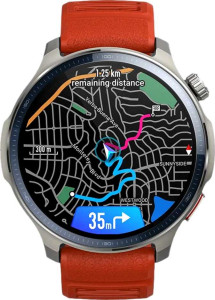
Amazfit Balance 2
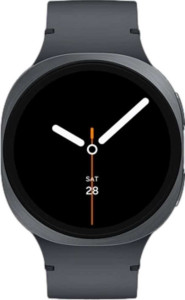
Samsung Galaxy Watch8 LTE 44mm

Amazfit Balance 2 Samsung Galaxy Watch8 LTE 44mm

Overview

Welcome to our in-depth comparison of the Amazfit Balance 2 and the Samsung Galaxy Watch8 LTE 44mm. These two smartwatches share a surprising amount of common ground, yet diverge significantly when it comes to battery life, health-monitoring capabilities, and connectivity options. Whether you prioritize endurance on the wrist or advanced cardiac features, this side-by-side breakdown will help you find the right fit for your lifestyle.

Common Features

  • Both products feature an OLED/AMOLED display type.
  • Both products have an IP68 ingress protection rating.
  • Both products support Always-On Display.
  • Both products have a resolution of 480 x 480 px.
  • Both products have a replaceable watch band.
  • Branded damage-resistant glass is not available on either product.
  • Both products have a touchscreen display.
  • Both products monitor blood oxygenation levels.
  • Both products have a heart rate monitor.
  • Both products have built-in GPS.
  • Both products include an accelerometer, gyroscope, compass, barometer, and temperature sensor.
  • Both products track sleep and provide sleep reports.
  • Both products track distance, steps taken, pace, elevation, and include a route tracker.
  • Both products detect activities automatically.
  • Both products are compatible with Android.
  • Both products support Wi-Fi 4 (802.11n).
  • Both products have NFC.
  • ANT+ is not supported on either product.
  • Both products have a rechargeable battery with no solar charging and no removable battery.
  • Both products support HRV tracking, VO2 max measurement, resting heart rate measurement, and fast/slow heart rate notifications.
  • Both products show a readiness level and can be used to answer calls, control calls, and locate your phone.
  • Both products provide activity reports, inactivity alerts, calorie tracking, goal setting, achievements, an exercise diary, and are ad-free with a free app.
  • Both products have a battery level indicator, auto pause, passcode protection, and are compatible with smart scales and external heart rate monitors.
  • Neither product is compatible with Windows or Mac OS X, and neither has an external memory slot.

Main Differences

  • Screen size is 1.5″ on Amazfit Balance 2 and 1.47″ on Samsung Galaxy Watch8 LTE 44mm.
  • Amazfit Balance 2 is rated as waterproof while Samsung Galaxy Watch8 LTE 44mm is rated as water resistant.
  • ATM rating is 10 ATM on Amazfit Balance 2 and 5 ATM on Samsung Galaxy Watch8 LTE 44mm.
  • Waterproof depth rating is 45 m on Amazfit Balance 2 and 50 m on Samsung Galaxy Watch8 LTE 44mm.
  • Pixel density is 323 ppi on Amazfit Balance 2 and 327 ppi on Samsung Galaxy Watch8 LTE 44mm.
  • Thickness is 12.3 mm on Amazfit Balance 2 and 8.6 mm on Samsung Galaxy Watch8 LTE 44mm.
  • Weight is 43 g on Amazfit Balance 2 and 34 g on Samsung Galaxy Watch8 LTE 44mm.
  • Height is 47.4 mm on Amazfit Balance 2 and 46 mm on Samsung Galaxy Watch8 LTE 44mm.
  • Width is 47.4 mm on Amazfit Balance 2 and 43.7 mm on Samsung Galaxy Watch8 LTE 44mm.
  • Volume is 27.635148 cm³ on Amazfit Balance 2 and 17.28772 cm³ on Samsung Galaxy Watch8 LTE 44mm.
  • Band width is 22 mm on Amazfit Balance 2 and 20 mm on Samsung Galaxy Watch8 LTE 44mm.
  • Multi-sport mode is available on Amazfit Balance 2 but not on Samsung Galaxy Watch8 LTE 44mm.
  • Diving mode is supported on Amazfit Balance 2 but not on Samsung Galaxy Watch8 LTE 44mm.
  • Golf mode is supported on Amazfit Balance 2 but not on Samsung Galaxy Watch8 LTE 44mm.
  • A cellular module is present on Samsung Galaxy Watch8 LTE 44mm but not on Amazfit Balance 2.
  • iOS compatibility is available on Amazfit Balance 2 but not on Samsung Galaxy Watch8 LTE 44mm.
  • Bluetooth version is 5.2 on Amazfit Balance 2 and 5.3 on Samsung Galaxy Watch8 LTE 44mm.
  • Battery life is 21 days on Amazfit Balance 2 and 2 days on Samsung Galaxy Watch8 LTE 44mm.
  • Battery capacity is 658 mAh on Amazfit Balance 2 and 435 mAh on Samsung Galaxy Watch8 LTE 44mm.
  • Wireless charging is available on Samsung Galaxy Watch8 LTE 44mm but not on Amazfit Balance 2.
  • Irregular heart rate warnings are available on Samsung Galaxy Watch8 LTE 44mm but not on Amazfit Balance 2.
  • ECG technology is present on Samsung Galaxy Watch8 LTE 44mm but not on Amazfit Balance 2.
  • Fall detection is available on Samsung Galaxy Watch8 LTE 44mm but not on Amazfit Balance 2.
Specs Comparison
Amazfit Balance 2

Amazfit Balance 2

Samsung Galaxy Watch8 LTE 44mm

Samsung Galaxy Watch8 LTE 44mm

Design:
screen size 1.5" 1.47"
Display type OLED/AMOLED OLED/AMOLED
water resistance Waterproof Water resistant
ATM rating 10 ATM 5 ATM
Ingress Protection (IP) rating IP68 IP68
waterproof depth rating 45 m 50 m
Always-On Display
pixel density 323 ppi 327 ppi
resolution 480 x 480 px 480 x 480 px
Watch band is replaceable
has branded damage-resistant glass
thickness 12.3 mm 8.6 mm
weight 43 g 34 g
height 47.4 mm 46 mm
width 47.4 mm 43.7 mm
Has a display
has a touch screen
Has sapphire glass display
volume 27.635148 cm³ 17.28772 cm³
is designed for kids
width of band 22 mm 20 mm

Both watches share the same 480 x 480 px OLED/AMOLED panel with virtually identical pixel densities (323 ppi vs 327 ppi), so display sharpness is effectively a tie. The Amazfit Balance 2 does offer a marginally larger 1.5″ screen compared to the Galaxy Watch8's 1.47″, but the difference is negligible in daily use. More meaningfully, both feature an Always-On Display and sapphire glass, so neither cuts corners on visibility or scratch resistance.

Where the two watches diverge sharply is physical form factor. The Samsung Galaxy Watch8 is dramatically slimmer at 8.6 mm thick versus 12.3 mm for the Amazfit, and lighter at 34 g versus 43 g. Its smaller footprint (46 x 43.7 mm vs 47.4 x 47.4 mm) and nearly half the volume (17.3 cm³ vs 27.6 cm³) make it noticeably more wrist-friendly, particularly for smaller wrists or all-day wear comfort. The Amazfit's 22 mm band is wider than the Galaxy Watch8's 20 mm, which adds to its bulkier presence on the wrist.

On water resistance, the specs tell a slightly mixed story: the Amazfit carries a higher 10 ATM rating (generally implying greater pressure tolerance) while the Galaxy Watch8 is rated to a deeper 50 m versus 45 m, with both sharing IP68 certification. For most users, both are more than adequate for swimming and showering. Overall, the Samsung Galaxy Watch8 has a clear design edge for those prioritizing a slim, lightweight profile, while the Amazfit Balance 2 suits users who prefer a larger, more prominent watch presence.

Sensors:
Monitors blood oxygenation levels
Has a heart rate monitor
has GPS
has an accelerometer
Has a temperature sensor
has a compass
Has a barometer
has a gyroscope
Has a cadence sensor
Monitors perspiration

Across every sensor listed, the Amazfit Balance 2 and Samsung Galaxy Watch8 are in complete lockstep. Both carry the full suite expected of a serious fitness wearable: heart rate monitor, SpO2 (blood oxygenation), GPS, accelerometer, gyroscope, temperature sensor, compass, and barometer. This is a strong foundation — the barometer enables elevation tracking for hikers and stair counters, GPS allows route mapping without a phone, and the temperature sensor supports recovery and wellness insights.

Neither watch includes a cadence sensor or perspiration monitoring, so both share the same ceiling when it comes to advanced athletic metrics. Cadence data, relevant to cyclists and runners seeking stride efficiency, would require an external accessory on either device. The absence of sweat analysis is similarly consistent — this remains a niche feature largely absent from mainstream wearables at this tier.

This category is a straightforward tie. There is no sensor-based reason to choose one over the other — every health and motion input available on one is equally available on the other. The decision between these two watches will need to rest on other specification groups entirely.

Activity tracking:
Tracks your sleep
Tracks distance
Tracks steps taken
Measures pace
Provides sleep reports
Detects activities automatically
Has a route tracker
Tracks elevation
Has multi-sport mode
Has exercise tagging
Has a stroke counter for swimming
Tracks calorie intake
Designed for diving
Designed for golf

For everyday fitness tracking, these two watches are essentially identical. Sleep tracking with reports, step counting, distance, pace, elevation, route tracking, automatic activity detection, swim stroke counting, and calorie intake monitoring are all present on both. This shared foundation is comprehensive enough to satisfy the vast majority of casual-to-intermediate fitness users without any compromise on either side.

The real separation emerges in specialized sport support. The Amazfit Balance 2 includes multi-sport mode, golf tracking, and is designed for diving — three features entirely absent from the Galaxy Watch8. Multi-sport mode is particularly valuable for triathletes or users who chain activities in a single session, allowing seamless transitions between sport profiles without stopping a workout. Golf mode typically offers course mapping and shot tracking, catering to a specific but dedicated user segment. Diving support extends usability well beyond standard swim tracking into structured underwater activities.

The Amazfit Balance 2 holds a clear edge in this category. Users with diverse or specialized athletic routines — especially golfers, divers, or multi-discipline athletes — gain tangible, practical value from features the Galaxy Watch8 simply does not offer. For users whose activity profile is more general, the gap narrows considerably, but on paper the Amazfit is the more versatile activity-tracking device.

Connectivity:
has a cellular module
Is compatible with iOS
Is compatible with Android
Bluetooth version 5.2 5.3
supports Wi-Fi
Wi-Fi version Wi-Fi 4 (802.11n) Wi-Fi 4 (802.11n)
supports ANT+
has NFC

Two connectivity differences stand out immediately and carry significant real-world weight. First, the Samsung Galaxy Watch8 includes a cellular (LTE) module, while the Amazfit Balance 2 does not. This means the Galaxy Watch8 can make calls, stream music, and receive notifications entirely independently of a smartphone — a meaningful freedom for runners or commuters who prefer to leave their phone behind. Second, the Galaxy Watch8 is Android-only, whereas the Amazfit Balance 2 supports both Android and iOS. iPhone users are categorically locked out of the Samsung, making the Amazfit the only viable option in this comparison for that audience.

On the wireless protocol side, both watches match on Wi-Fi 4 (802.11n) and NFC — the latter enabling contactless payments on both devices. The Galaxy Watch8 edges ahead with Bluetooth 5.3 versus the Amazfit's 5.2, a minor but real improvement in connection stability and efficiency that most users are unlikely to notice in day-to-day use. Neither supports ANT+, so third-party gym equipment pairing via that protocol is off the table for both.

The connectivity verdict splits by user profile. The Galaxy Watch8 wins for Android users who want standalone cellular independence. But the Amazfit Balance 2 is the only choice for iOS users, and also serves Android users who have no need for LTE and want broader platform flexibility. The cellular capability is the single most impactful differentiator in this group.

Battery:
battery life 21 days 2 days
battery power 658 mAh 435 mAh
has wireless charging
has a rechargeable battery
Has a solar power battery
has a removable battery

Battery life is where these two watches diverge most dramatically. The Amazfit Balance 2 is rated for 21 days on a 658 mAh cell, while the Samsung Galaxy Watch8 manages just 2 days from a 435 mAh battery. That is not a marginal difference — it is a fundamental lifestyle distinction. The Amazfit can last through multi-week trips, sleep tracking streaks, and extended outdoor adventures without ever needing a charger, while the Galaxy Watch8 demands a nightly or every-other-night charging habit that many users find disruptive, particularly for continuous sleep monitoring.

The Galaxy Watch8 does recover one practical point with wireless charging, a convenience the Amazfit lacks. For users already in a wireless charging ecosystem, topping up the Samsung requires no cables and minimal friction — which somewhat softens the burden of its frequent charging needs. Still, the convenience of wireless charging cannot offset the sheer frequency with which it needs to be used compared to the Amazfit.

The Amazfit Balance 2 holds an overwhelming advantage in this category. A 21-day rated battery versus 2 days is one of the starkest trade-offs in this entire comparison, and for users who prioritize uninterrupted wear, travel readiness, or simply freedom from daily charging routines, the Amazfit is the clear winner. The Galaxy Watch8's wireless charging is a welcome feature, but it addresses a problem largely of its own making.

Features:
release date June 2025 July 2025
has HRV tracking
measures VO2 max
measures resting heart rate
has fast/slow heart rate notifications
shows readiness level
Can be used to answer calls
Locates your phone
Has call control
Has notifications
has irregular heart rate warnings
Has ECG technology
Has silent alarm
Has vibrating alerts
has fall detection
Has a stopwatch
Has smart alarm
has voice commands
internal storage 32GB 32GB
Has a built-in camera remote control function
Acquires GPS faster

The feature sets of these two watches overlap heavily — HRV tracking, VO2 max, resting heart rate, readiness scores, call handling, notifications, voice commands, camera remote, fast GPS acquisition, and 32GB of internal storage are all present on both. For the majority of smartwatch use cases, neither device leaves users wanting for core functionality.

The meaningful separation comes down to three health-safety features exclusive to the Samsung Galaxy Watch8: ECG (electrocardiogram) monitoring, irregular heart rate warnings, and fall detection. These are not trivial additions. ECG enables on-demand heart rhythm checks that can flag signs of atrial fibrillation — a clinically significant capability that the Amazfit Balance 2 simply cannot replicate. Irregular heart rate warnings provide passive, continuous screening without user initiation, and fall detection can automatically alert emergency contacts if a hard fall is detected and the user is unresponsive. Together, these three features position the Galaxy Watch8 meaningfully ahead for older users, those with cardiovascular concerns, or anyone who values a wearable that can act as a health safety net.

The Samsung Galaxy Watch8 takes a clear edge in this category. The Amazfit Balance 2 is well-equipped for wellness and fitness monitoring, but the absence of ECG, arrhythmia detection, and fall detection represents a genuine gap in health-critical functionality — one that will matter considerably depending on the user's priorities and circumstances.
App & Software:
Provides activity reports
Has inactivity alerts
Counts how many calories you've burned
Has goal setting
Has achievements
Free app
Has exercise diary
Ad-free
Has coaching
Has temperature tracking
Has period notifications
Supports routes
Has voice feedback
Has music playback
Has food diary
Includes maps
Predicts start date
Supports widgets
Can be personalised
Has barcode scanner on app
Tracks water intake
Has weight tracking
Tracks BMI

Rarely does a spec group land as a perfect draw, but App & Software is exactly that. Every single feature listed — from activity reports, goal setting, and coaching to food diary, water intake tracking, BMI, and menstrual cycle prediction — is present on both watches. Notably, both apps are free and ad-free, which is worth highlighting given that some competing platforms monetize through subscriptions or in-app upsells for features like coaching or advanced analytics.

The breadth of what both platforms cover is genuinely impressive at this tier. The inclusion of maps and route support, voice feedback during workouts, music playback control, and full body composition tracking (weight, BMI) means neither watch's companion app feels stripped down. The one shared omission is a barcode scanner for food logging — users who rely on scanning packaged foods for calorie tracking will need to enter data manually on either platform.

This category is a complete tie. There is no software or app-based reason to favor one watch over the other — the experience on paper is functionally identical across every dimension provided. Users should weigh this group as neutral and let other categories drive their decision.

Miscellaneous:
has a battery level indicator
Has auto pause
Has passcode
Compatible with smart scales
Compatible with external heart rate monitors
Is compatible with Windows
has an external memory slot
Is compatible with Mac OS X
has a socket for a 3.5 mm audio jack

The Miscellaneous category yields another clean sweep of shared specs. Both watches include a battery level indicator, auto pause, passcode security, smart scale compatibility, and support for external heart rate monitors. The last two points are worth noting for fitness-focused users — smart scale integration allows body composition data to flow seamlessly into a unified health profile, and external HR monitor support means users can pair chest straps for more precise cardiac readings during intense workouts.

On the absence side, neither watch offers an external memory slot, a 3.5mm audio jack, or compatibility with Windows or Mac OS X as a standalone connected device. None of these omissions are surprising for modern smartwatches, and none represent a practical disadvantage for the typical user in this category.

This group is a straightforward tie — every spec aligns identically across both products. As with the App & Software group, there is no differentiating factor here to tip the scales either way, and users should look to other categories where the two watches genuinely diverge to inform their final decision.

Comparison Summary & Verdict

After examining every specification, it is clear that both watches serve distinct audiences. The Amazfit Balance 2 stands out for its extraordinary 21-day battery life, broader platform compatibility including iOS, a higher ATM water resistance rating, and dedicated modes for diving, golf, and multi-sport use, making it the stronger companion for adventurers and endurance-focused users. The Samsung Galaxy Watch8 LTE 44mm, on the other hand, wins on safety and health monitoring with its ECG technology, irregular heart rate warnings, and fall detection, while adding LTE cellular connectivity and wireless charging in a noticeably slimmer and lighter body. Android users who want a health-first, always-connected watch will find it the more compelling choice.

Amazfit Balance 2
Buy Amazfit Balance 2 if...

Buy the Amazfit Balance 2 if you need an exceptional battery life of up to 21 days, iOS compatibility, or dedicated sport modes including diving and golf.

Samsung Galaxy Watch8 LTE 44mm
Buy Samsung Galaxy Watch8 LTE 44mm if...

Buy the Samsung Galaxy Watch8 LTE 44mm if you are an Android user who wants built-in LTE connectivity, ECG monitoring, fall detection, and a slimmer, lighter design with wireless charging.